|
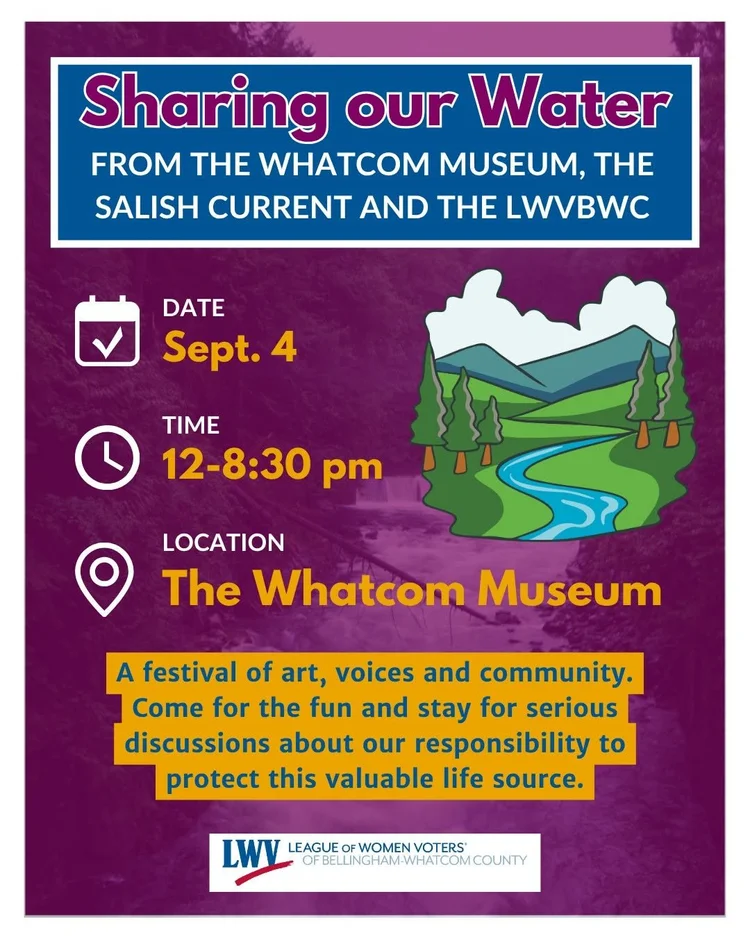
Friends, Aaron has a line he uses about this work. In his marriage, when he and his wife are not getting along, they can barely figure out what's for dinner. When they are getting along, they could just about put a person on the moon. That is the whole idea here. Relationships come first, and good solutions follow. The Nooksack runs low in summer over gravel where salmon need deep, cool water, and high in winter into fields and living rooms. The watershed has also entered a water rights adjudication, a court process that will spend years sorting out who may use how much water. That makes the question of how we treat each other in the meantime enormously consequential. On August 6th, nearly thirty people came together on the Lummi Peninsula: fishers and farmers, mayors and county staff, tribal leaders, a state representative, and leaders from several of the county's environmental organizations. Many of them have given decades to this river. Some come from families who have been stewarding this place for generations. Everyone gathered around a single question: what might be possible when we work together? Eleven days later that question found another room. On August 17th the Washington State Department of Ecology held a regional roundtable in Whatcom County, one of several the agency has hosted across the state's watersheds this summer to hear what each basin wants for its own future. Many of the people who had sat in the circle on the 6th were in that room, and what they carried into it was a shared willingness to work as one community. Ecology's leaders spoke afterward about how ready this county seemed to move forward together, and even more importantly, we’re continuing to hear and sense that message from many of you, too. A lot of hands are making this possible. Lummi Nation and the Nooksack Indian Tribe have carried the work of protecting this river, its salmon, and the life it supports for generations, and their leadership continues to shape everything that happens here. The Whatcom Community Foundation has supported this project from early on, showing up for the difficult conversations as well as the good ones. Water for Whatcom has been making the case for collaborative solutions, and our groups have actively cross-pollinated in conversations and gatherings over the past several months. Whatcom Family Farmers, the Ag Water Board, the Whatcom Conservation District, RE Sources, the Whatcom Land Trust, the WRIA 1 Watershed Management Project, staff and elected leaders across our cities and county, and many others have been at this for years or decades. Our small team is fortunate to support the storytelling, relationship building, and convening in this moment, and we are grateful to everyone who keeps investing in the health of this place. Tom Tebb, former director of Ecology's Office of the Columbia River, helped architect the Yakima River Basin Integrated Plan, a regional example of what becomes possible when groups start showing up together. He told us that visions and plans are the easy part once you have the relationships. We believe that too. There is real urgency ahead. The salmon, the farms, the forests, and the towns in the floodplain are all working against the clock. What gives us hope is how often we hear now that our neighbors who call this place home are closer to a shared path than we have been in a very long time. That closeness belongs to everyone who has been showing up, and it is starting to crack open doors that have been closed for some time. Thank you. We hope to see you Friday at the Whatcom Museum, and again on November 19th at the Pickford. Details below. Much love and respect, Ethan, on behalf of the Water Wars (how to avoid) team: Aaron, Jeff, and Christopher
|