
Common Waters Circle: Portage Channel
The Nooksack River, in northwestern Washington state, is caught between two extremes. In summer, thinning snowpack and dwindling rainfall leaves it running shallow over gravel that salmon need deep and cool to lay their eggs in. In winter, the same river swells past its banks into the fields and living rooms of the people who've built their lives beside it.
The Nooksack and adjacent watersheds are now entering a water rights adjudication process, a legal reckoning with scarcity. But ask anyone who farms or fishes here, and they'll tell you the harder truth runs both directions at once: droughts that keep coming more often in the summer, and floods that keep coming bigger in the winter.
On August 6th, nearly thirty senior leaders from across Whatcom County set both truths on the table and sat down to listen. Fishers, farmers, civil servants, developers, and environmental advocates gathered on the Lummi Peninsula for an evening made possible with support from the Whatcom Community Foundation.
We've been practicing this kind of gathering for a while now. Last summer, we circled our chairs in blueberry fields and a dairy farm, both out in the floodplains. Last fall, we walked an upland restoration site along the South Fork, land the Nooksack Tribe and Whatcom Land Trust have been slowly coaxing back to health. This spring, we were guests on Lummi Nation lands.
Each has followed a similar shape: local volunteers keeping the evening running, a meal drawn from the watershed itself, and quiet documentation through film and photography. Smaller meals, coffees, and countless phone calls have kept the thread from going slack in between.
Eleven days later, a regional roundtable hosted by the Washington State Department of Ecology would ask this community to say something about its future to the state. August 6th was both preparation for that room and a natural step on its own, part of a process this community keeps returning to. Nooksack Indian Tribe leadership had hoped to be part of the circle and sent their regrets for a scheduling conflict, an absence that was felt and named.
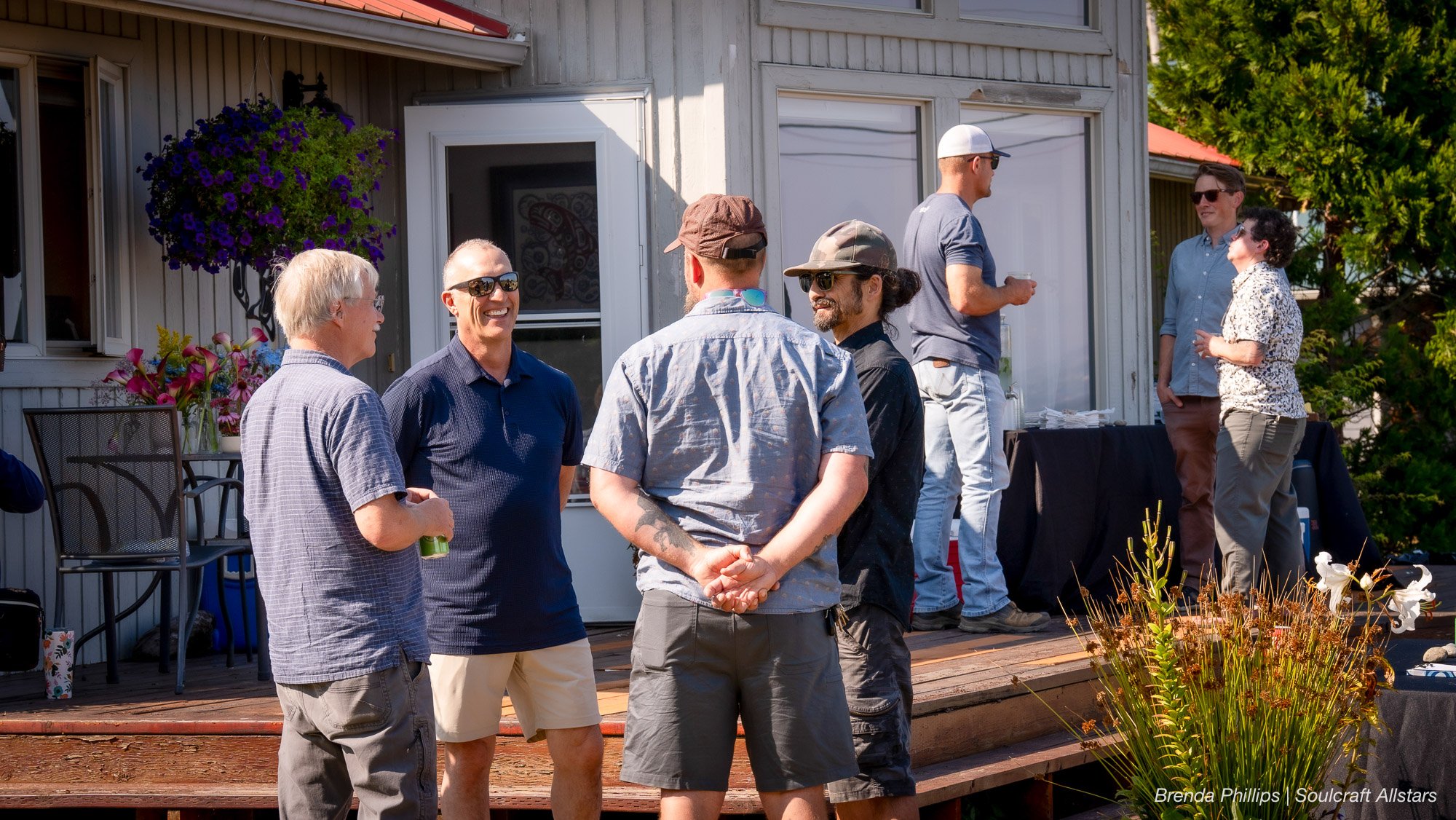
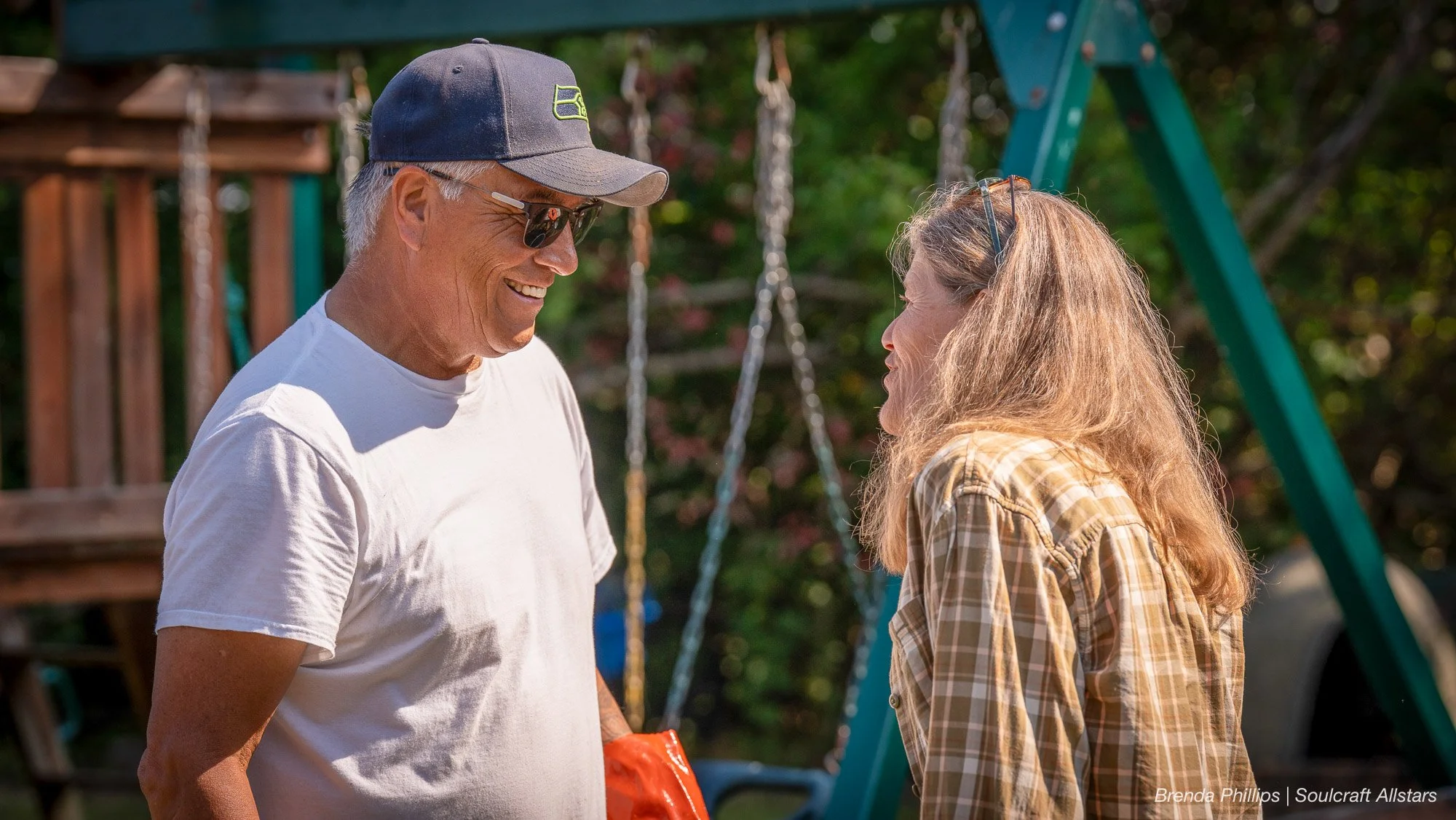
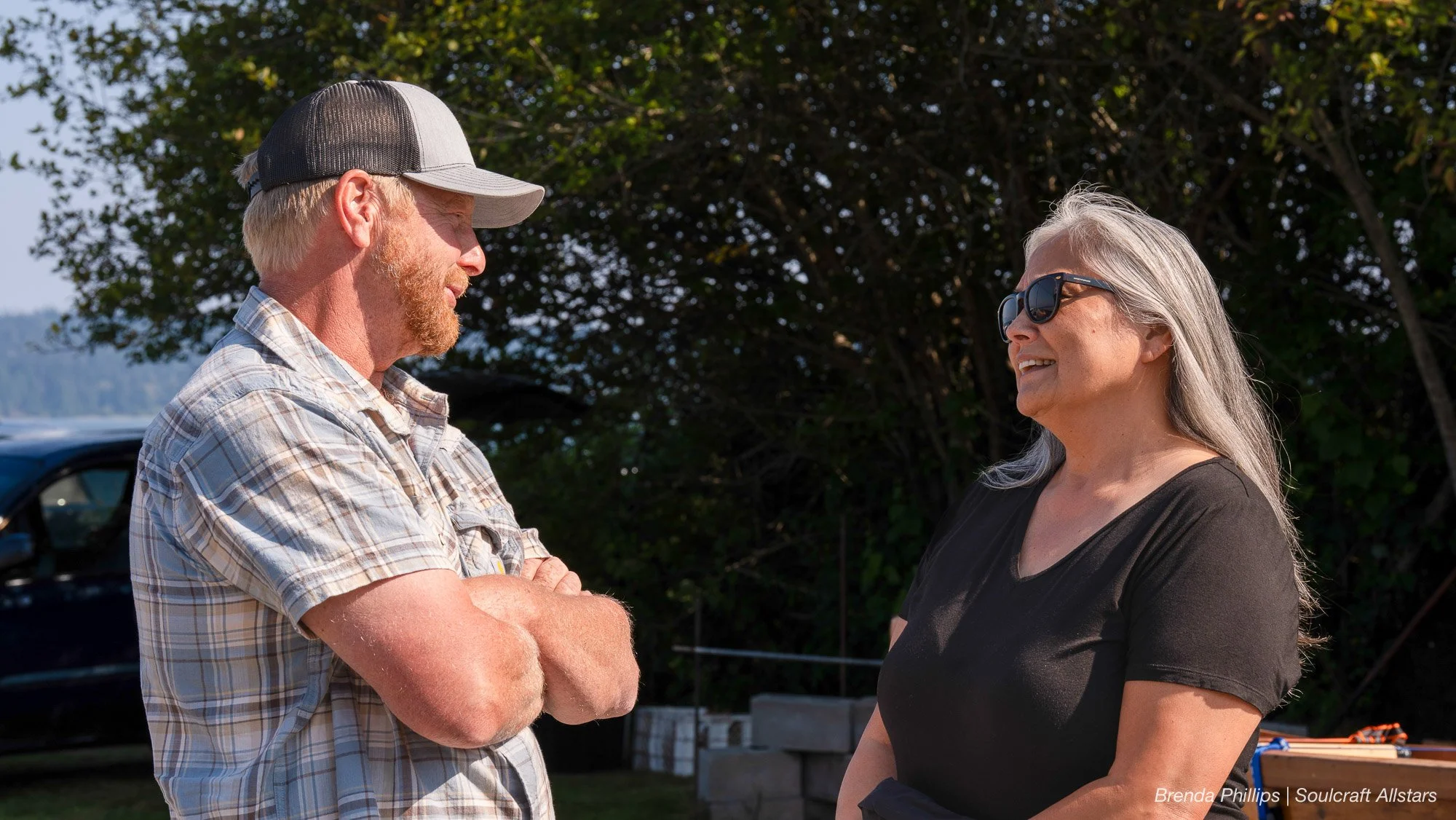
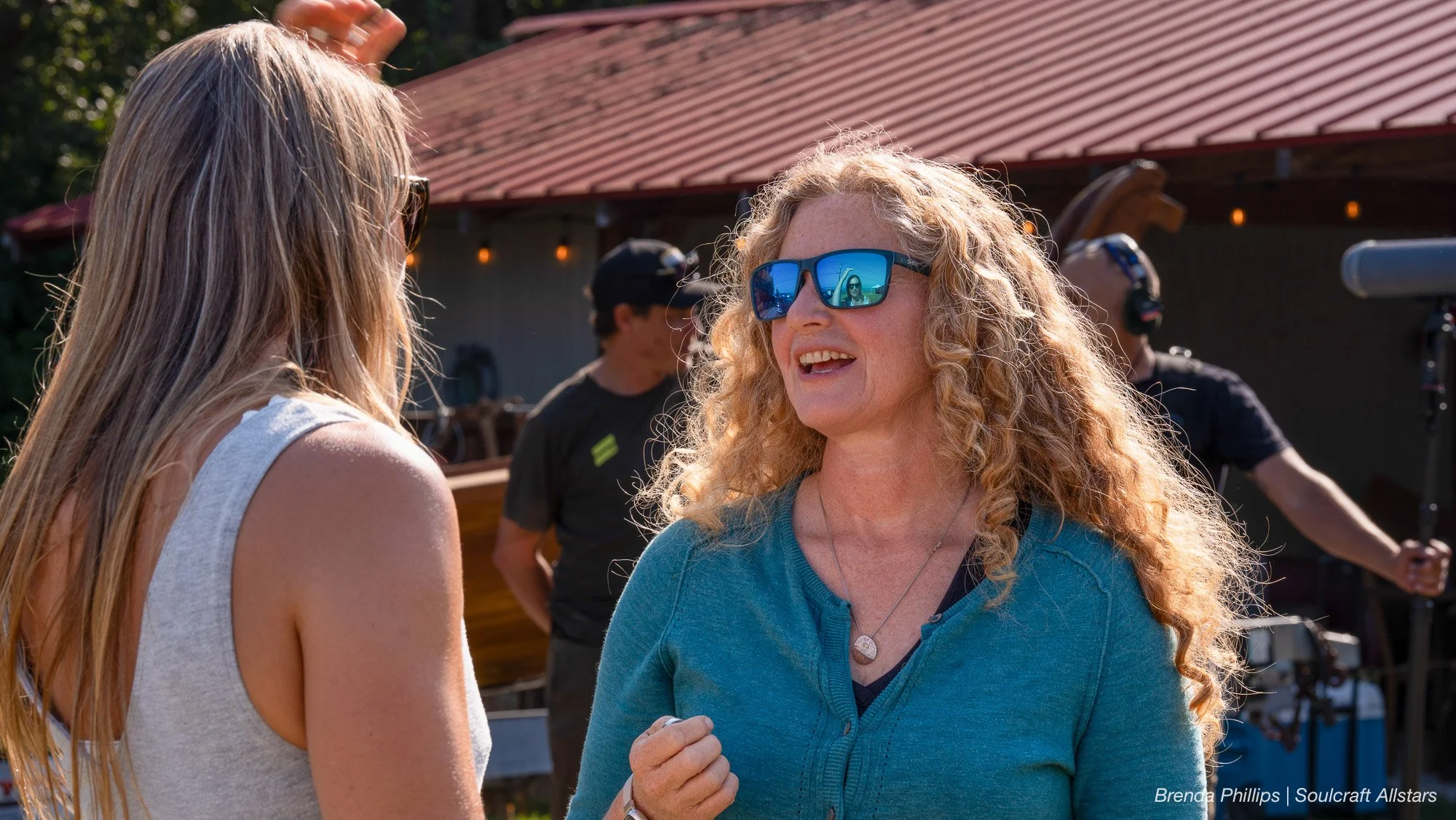
Dana Wilson, Lummi fisherman and former Council member, and Aaron Straight, filmmaker and founder of Water Wars, opened the circle. Lummi Council Chairman Tony Hillaire offered a thoughtful word of encouragement, and Rena Priest, Lummi member and former Washington State Poet Laureate, read a poem and told the story of Salmon Woman, the one who reminds us that the fish were never separate from the people, only related to them differently than we sometimes remember.
Mauri Ingram of the Whatcom Community Foundation set the context for the gathering, and Aaron and Ethan Smith, also of the Water Wars team, laid out the project's vision and the shape of the work ahead. Everyone, one at a time, said their name and what had brought them there, before Jeffrey Bos, of the Water Wars team, named the deeper practice underneath it: relationality, and listening at levels most conversations never attempt.
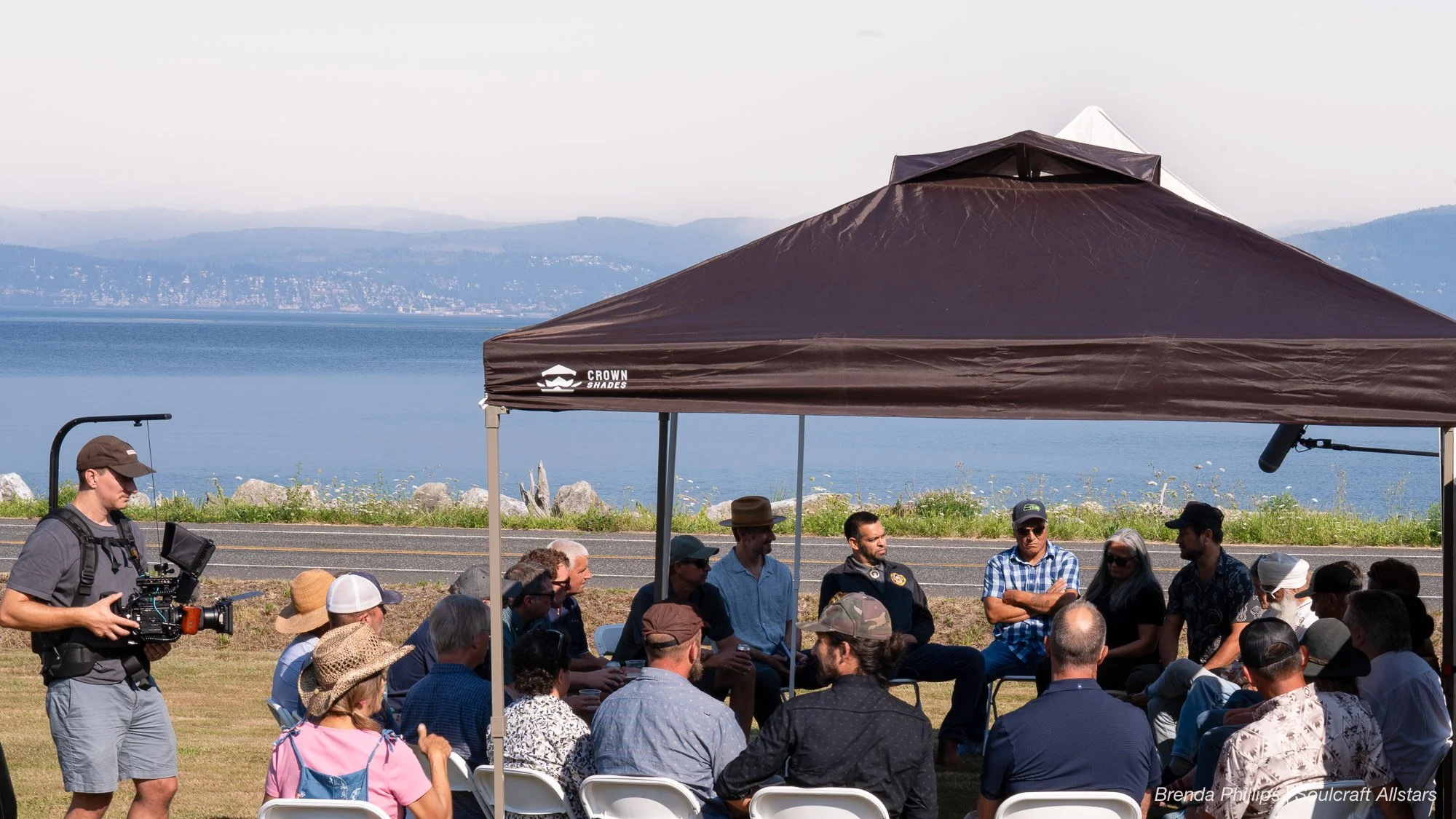
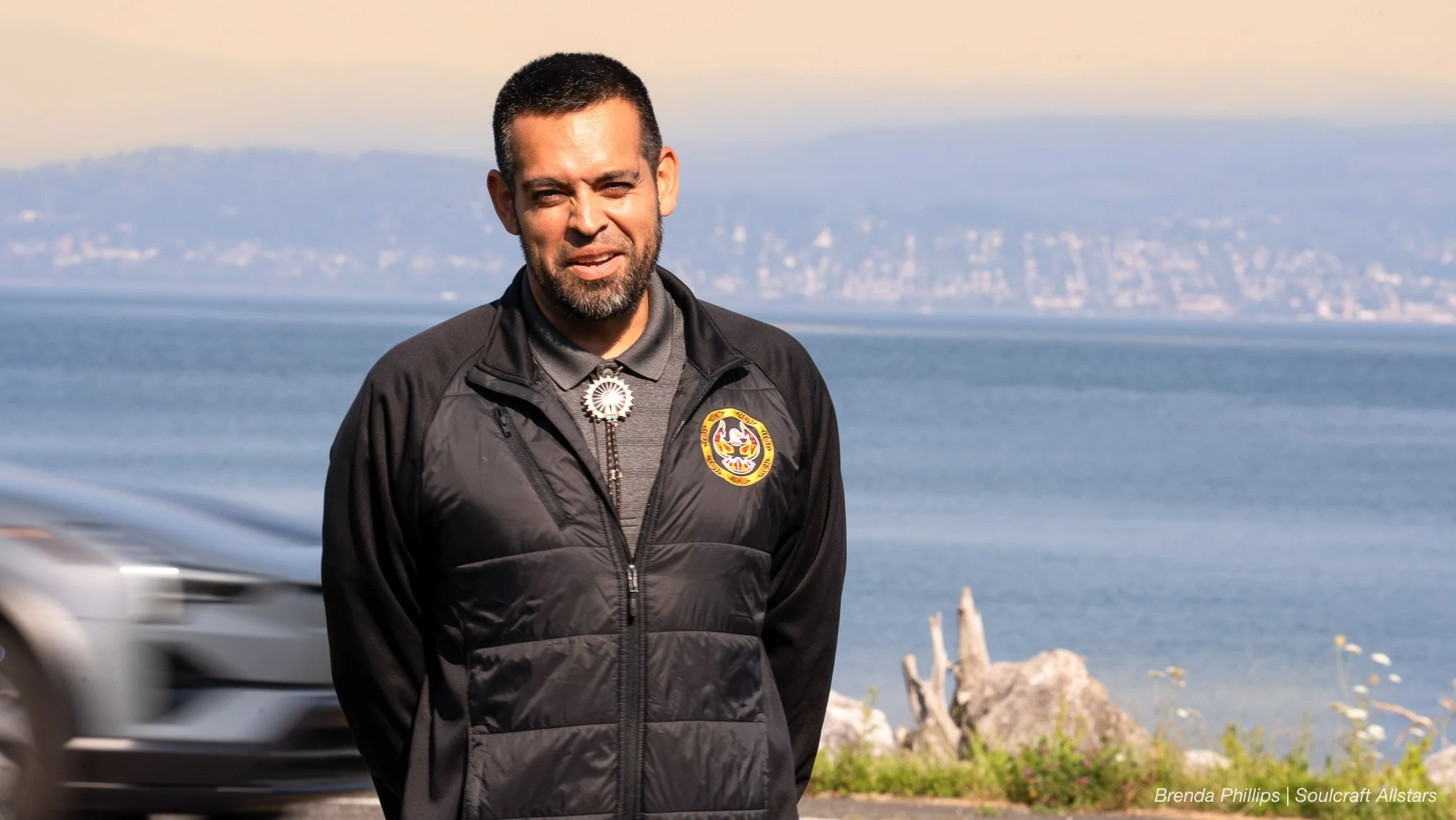
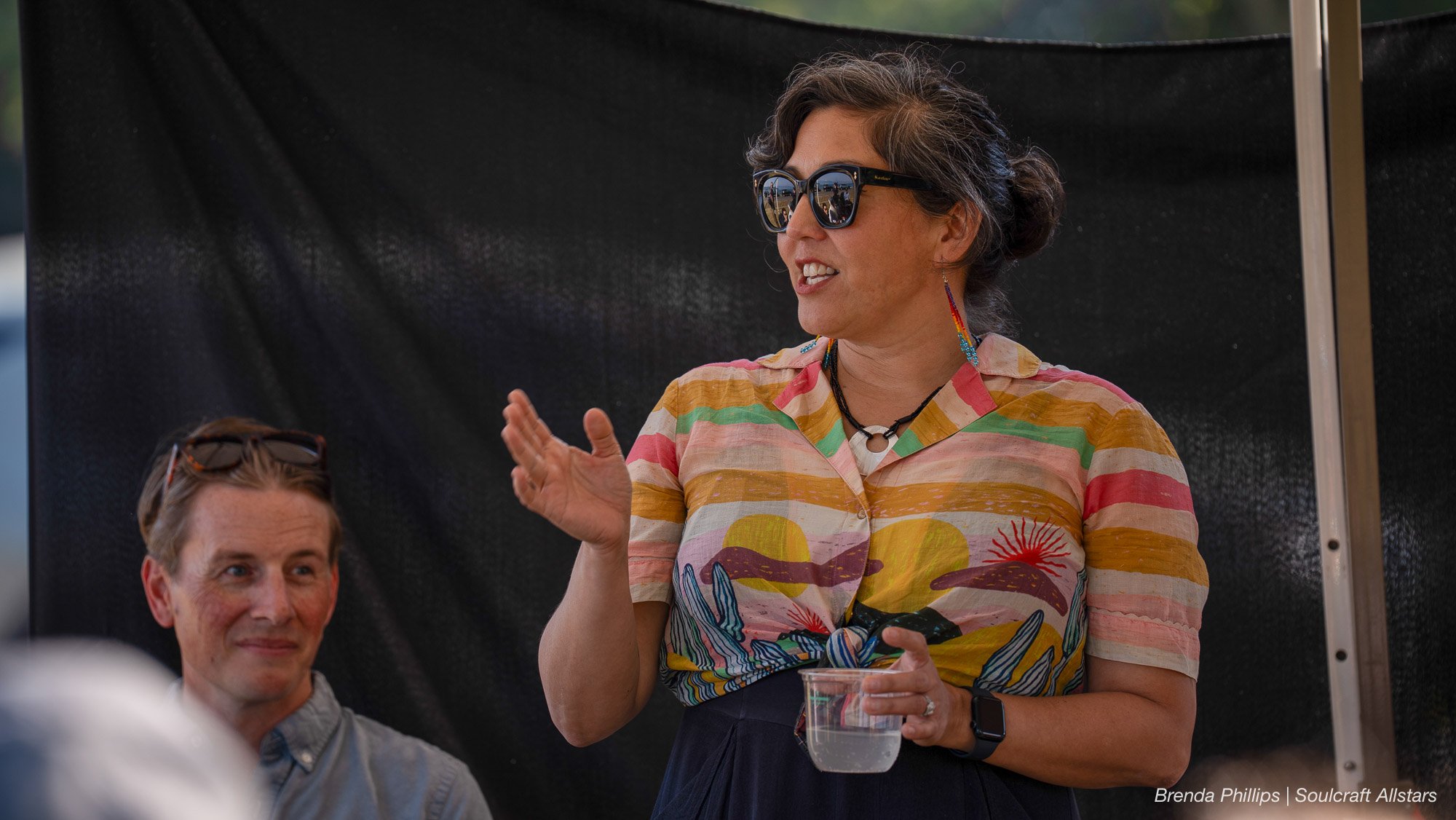
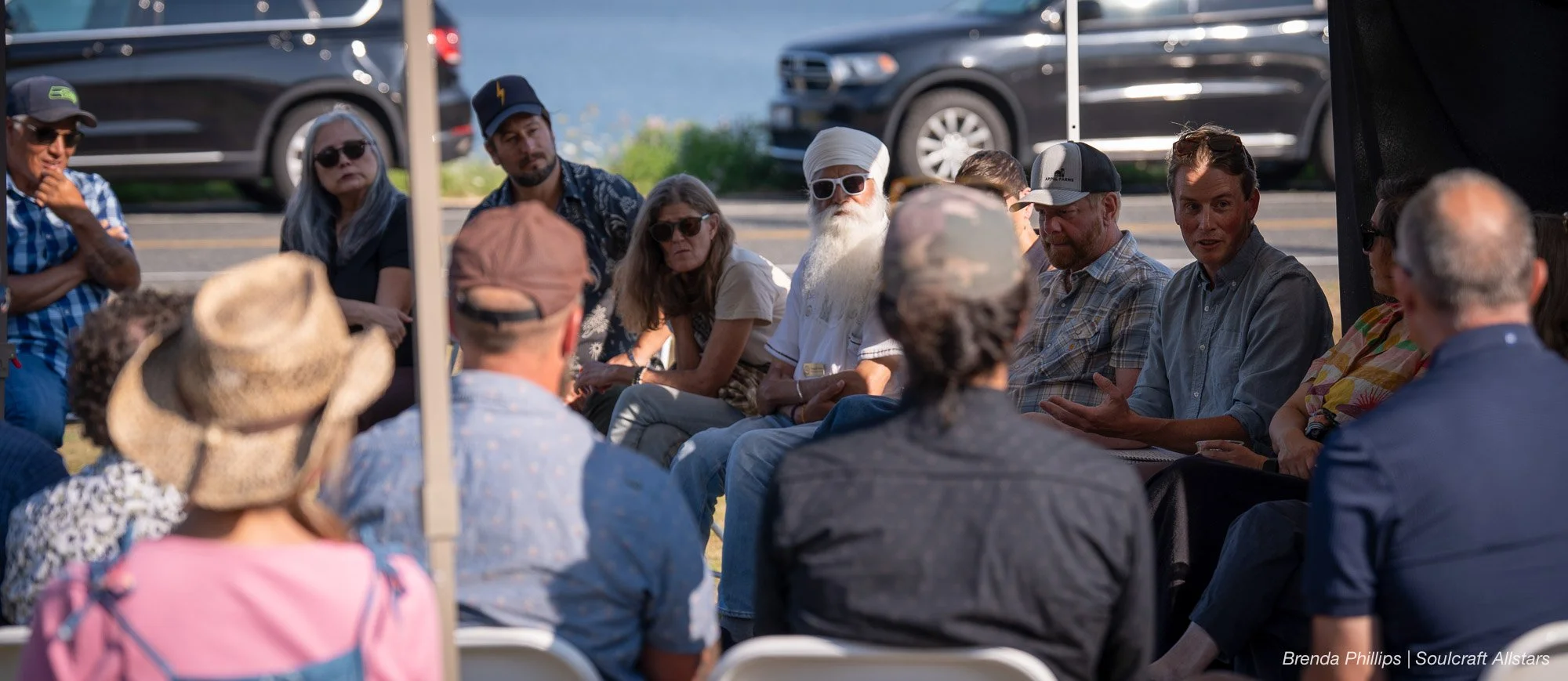
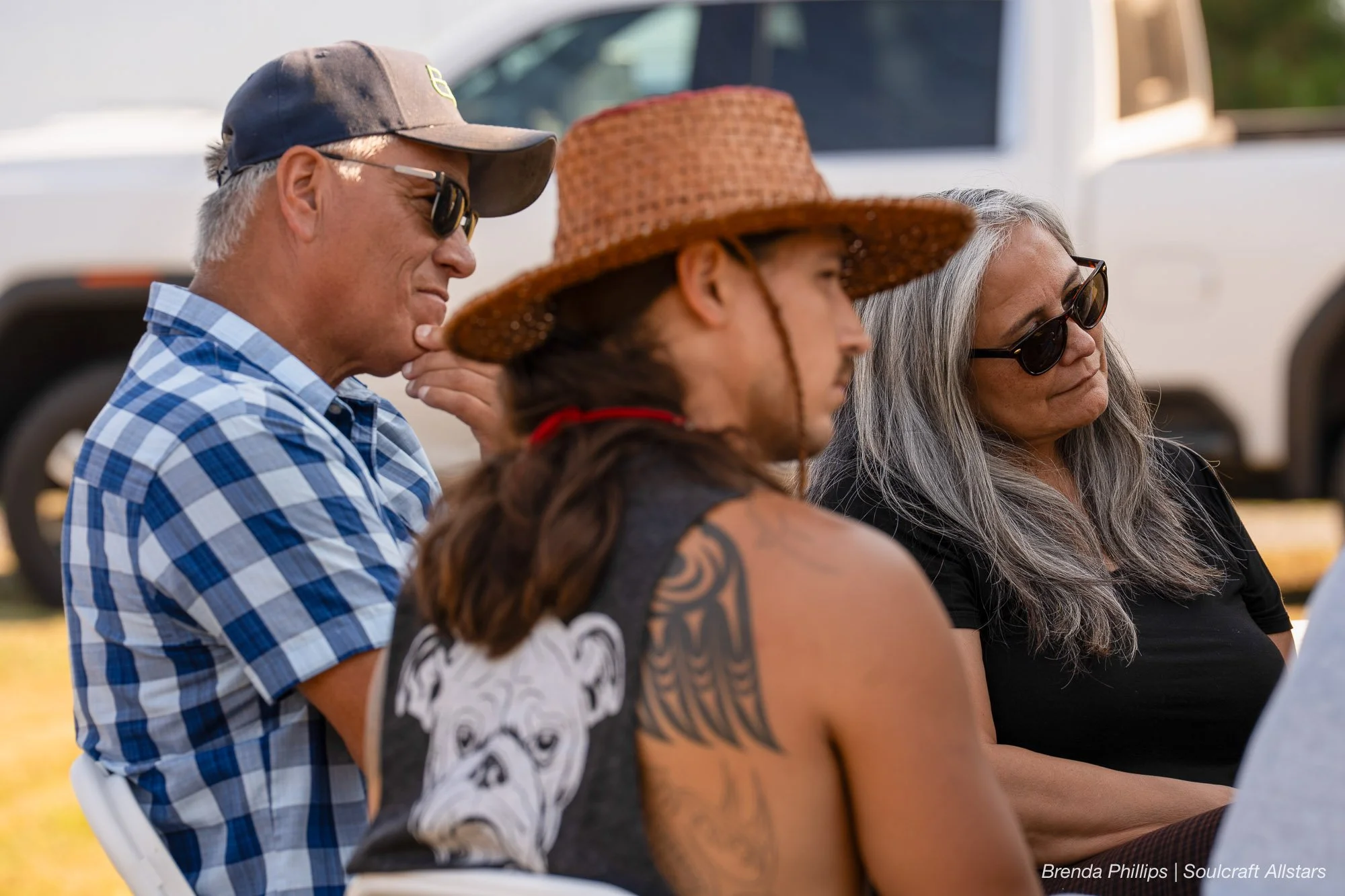
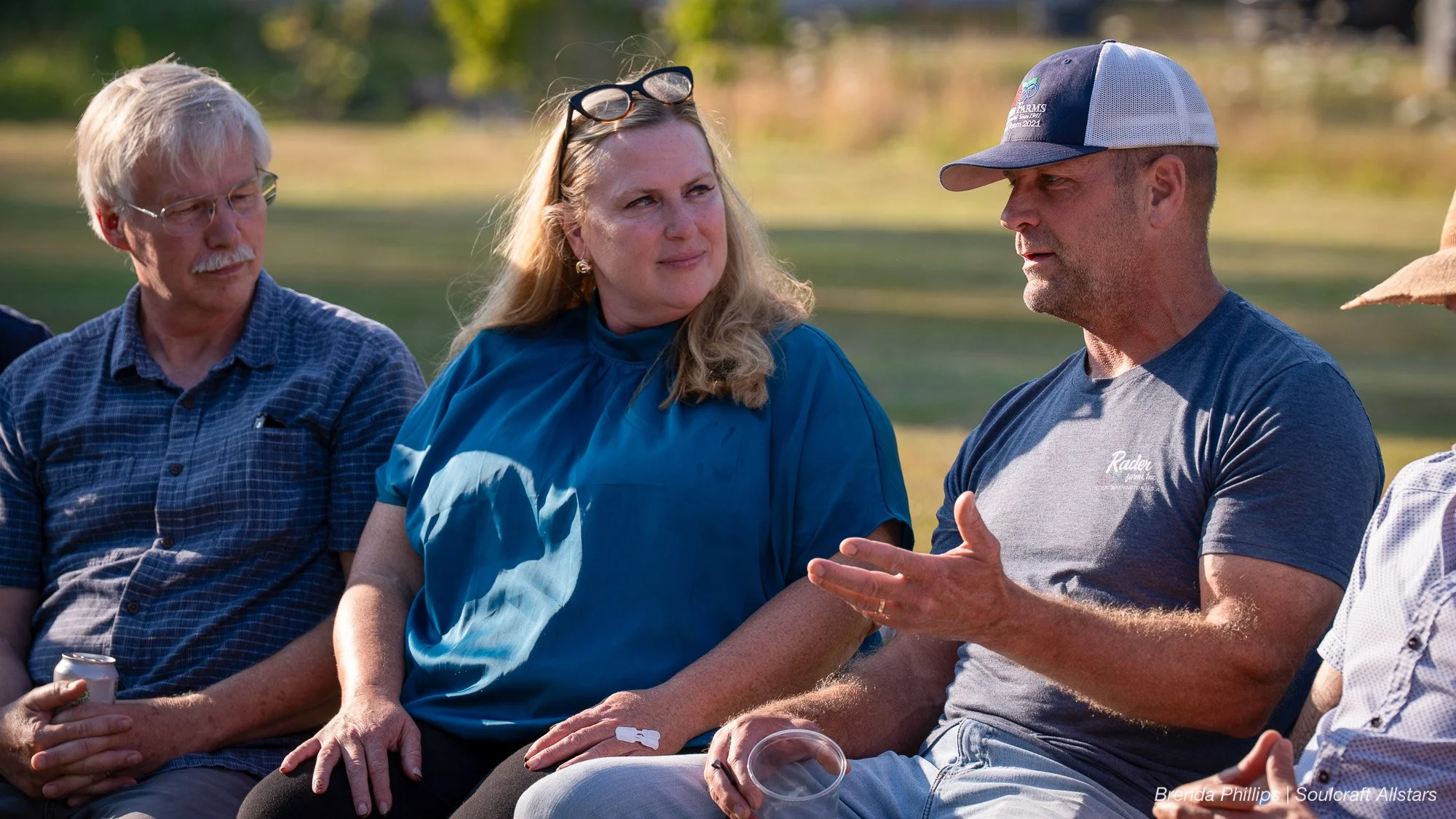
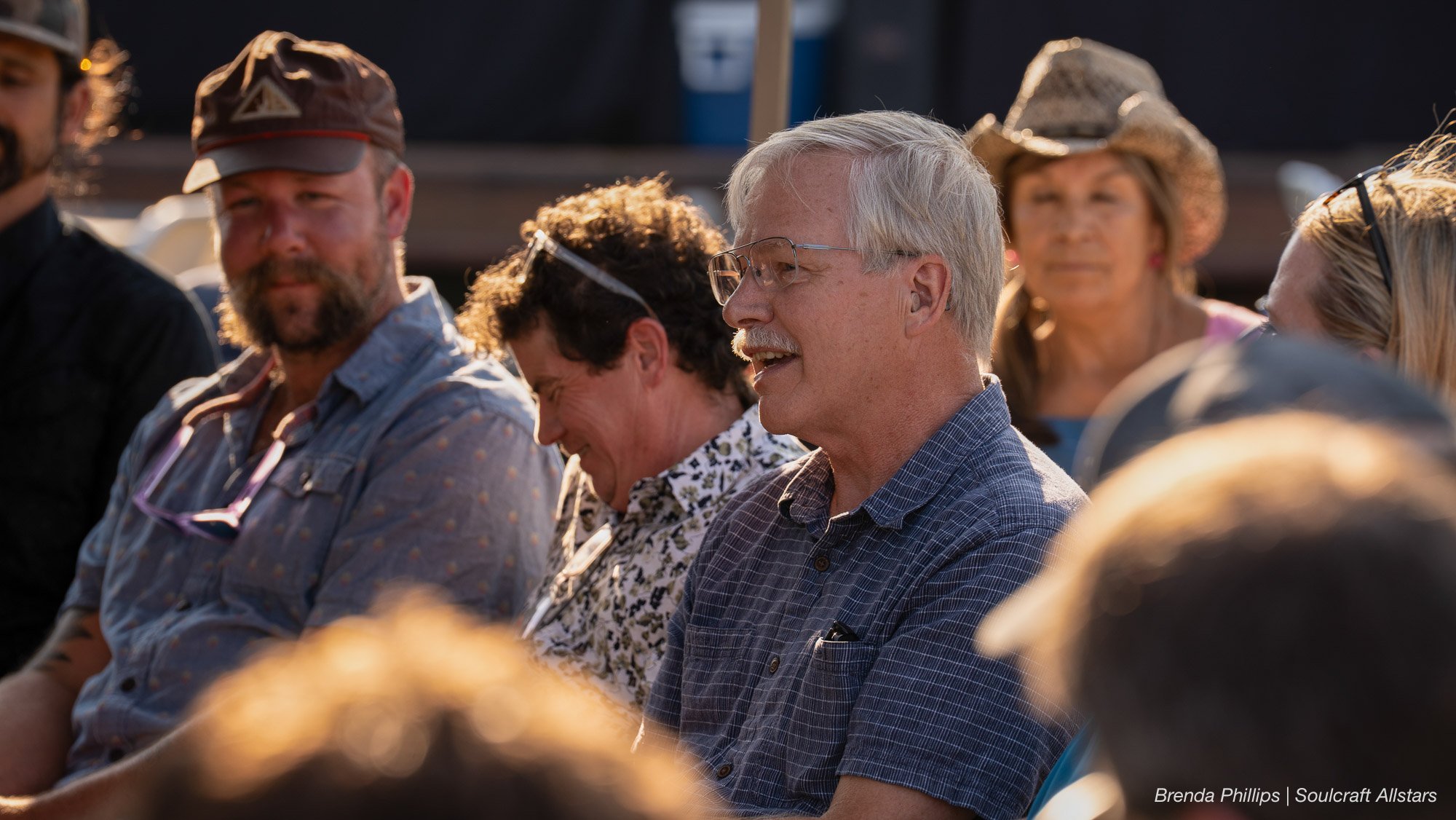
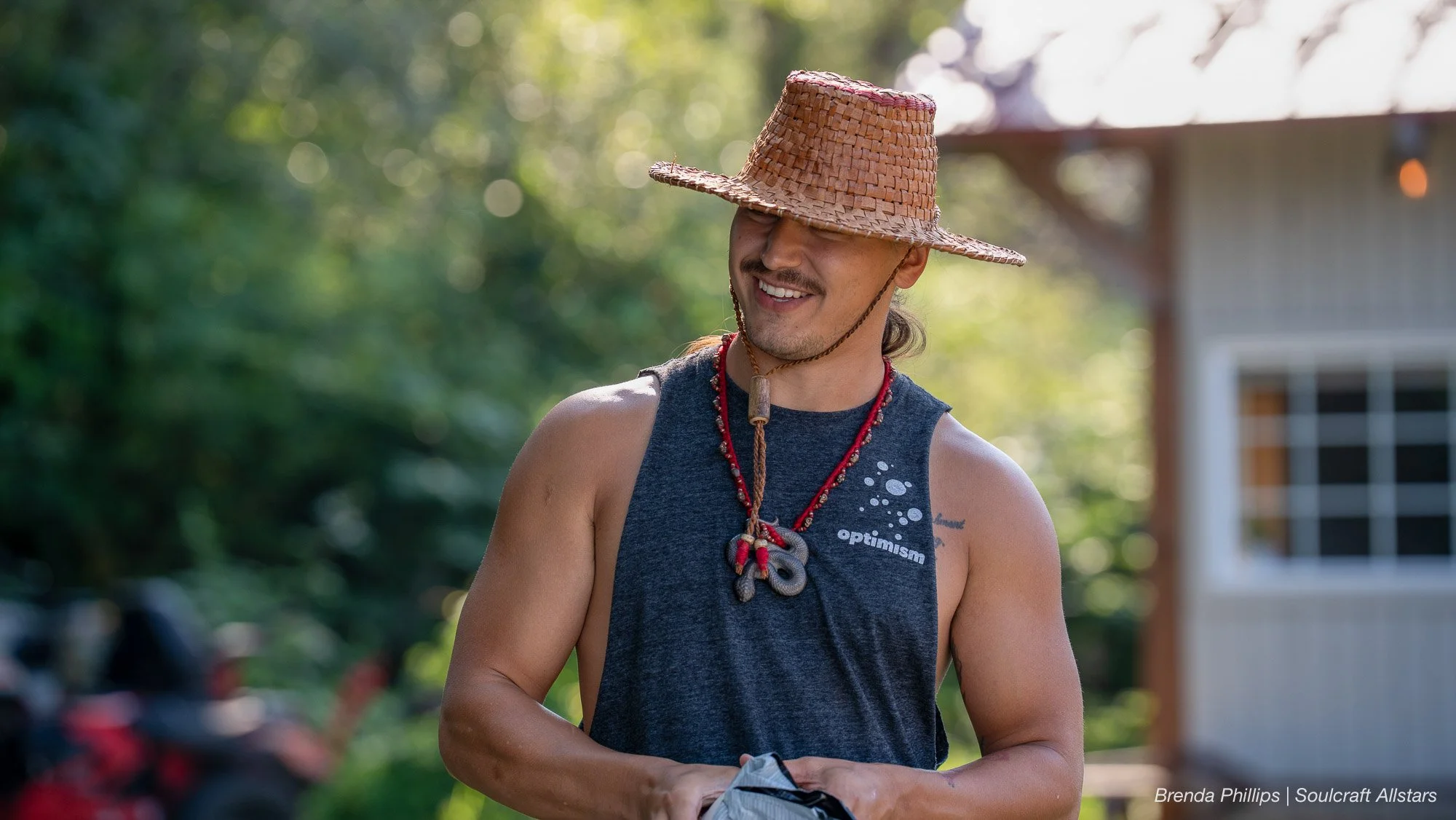
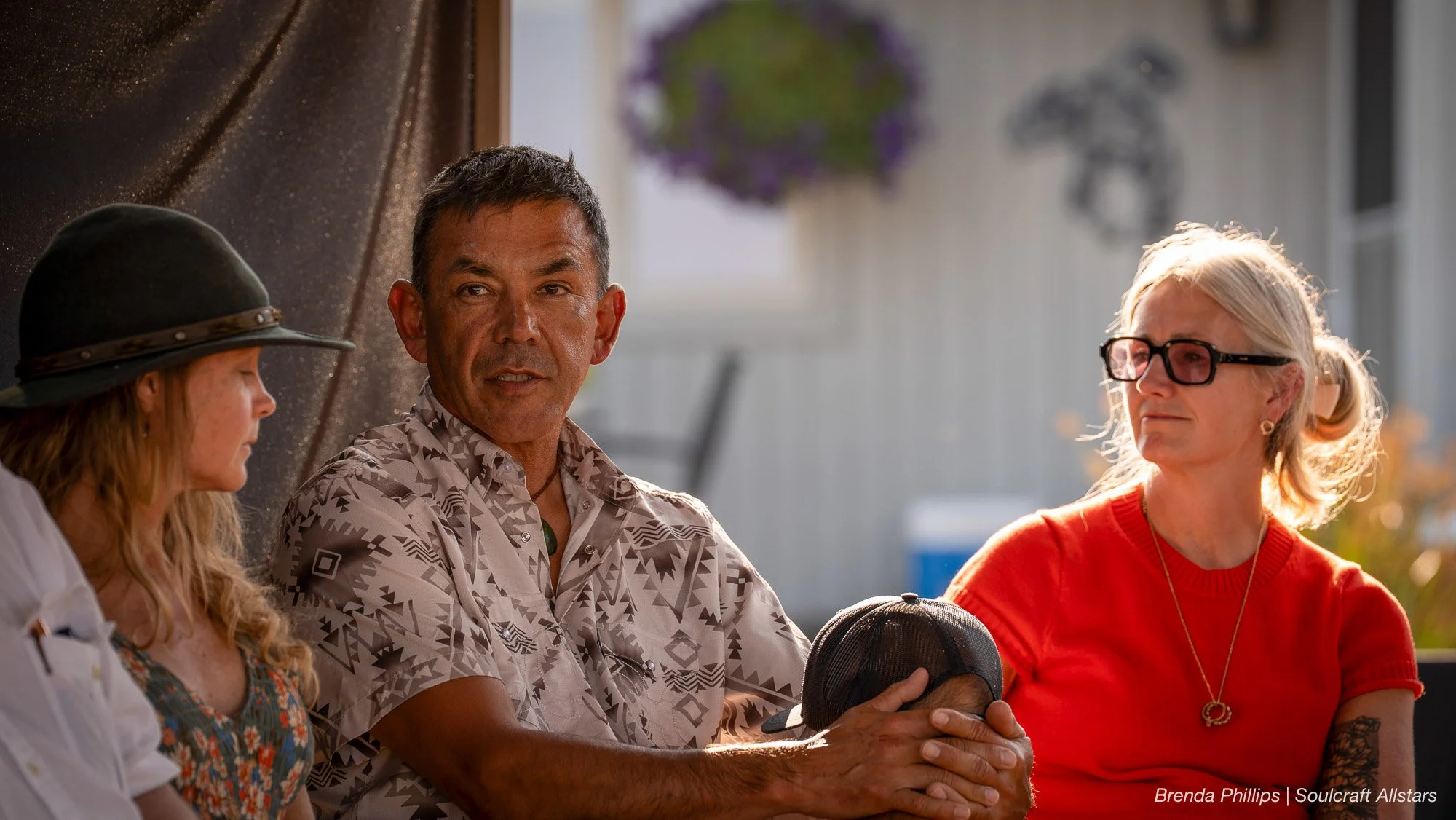
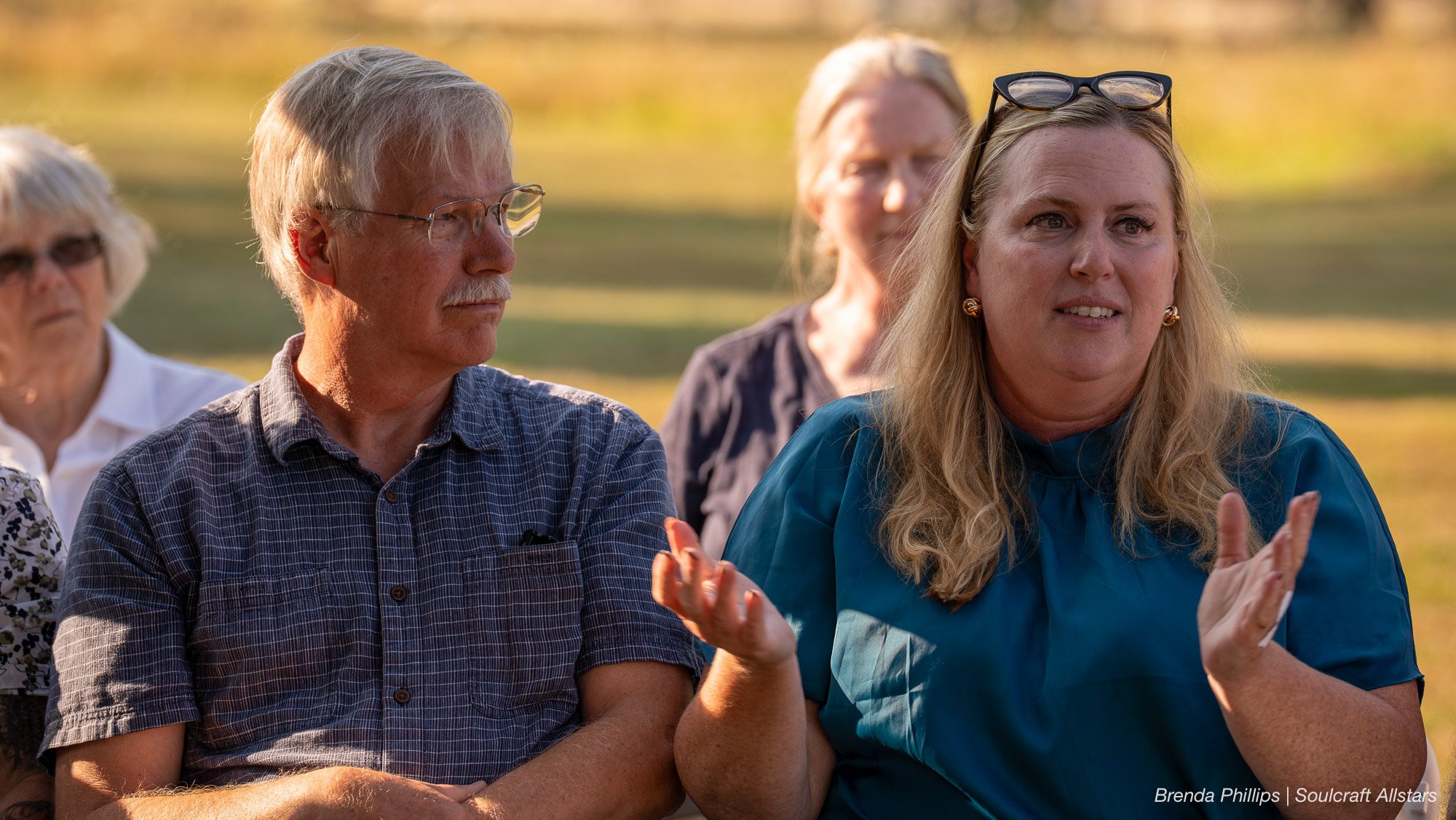
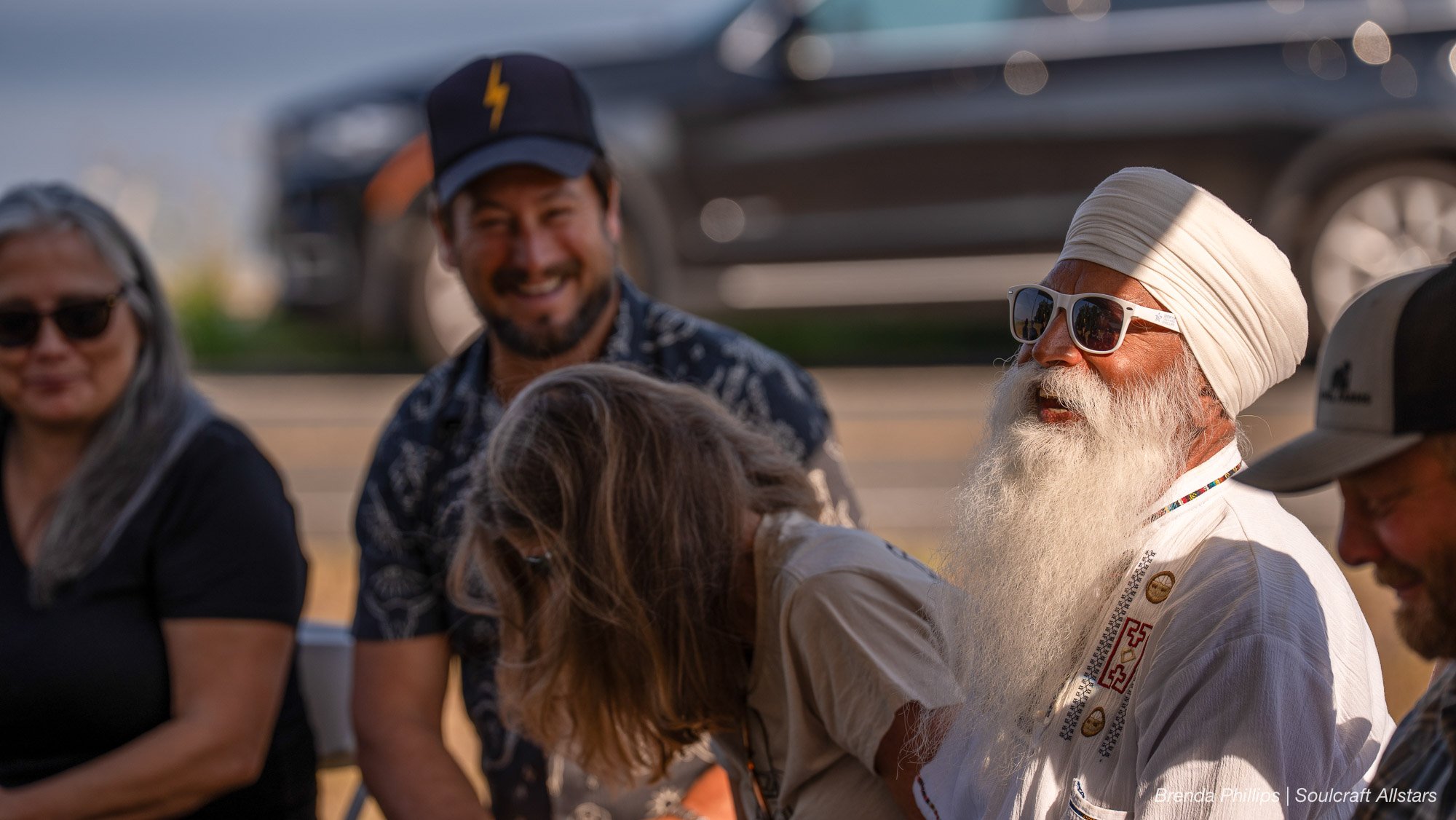
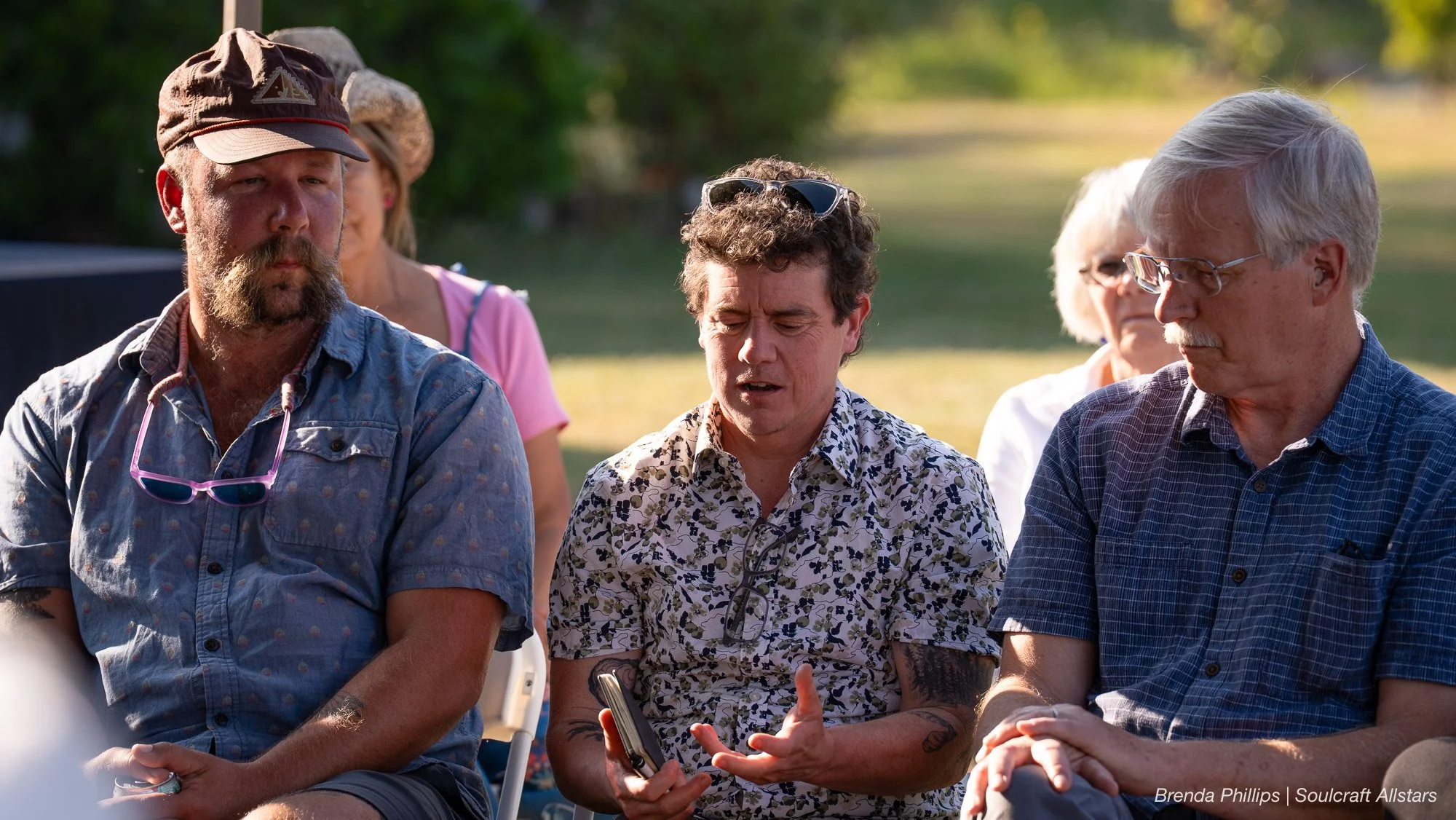
To the east, across the bay, the sun's last light colored Bellingham and Mt. Baker, intensified by a thin haze of wildfire smoke drifting in from the north. The circle broke into small groups, self-assembled with instructions to include a range of perspectives, to sit with one question: what might be possible when we work together?
Guides asked each group to hold three horizons at once. In the near term: what's already working well, and what needs to be let go. In the long arc: what might be true 170 years from now, a span long enough that our narratives of winning, losing, and survival start to sound like noise. And in between: the opportunities that open doors to those preferred futures. Groups were also asked to answer from seats other than their own, a farmer's, a tribal member's, a fisherman's, the state's, a child not yet born, the salmon's, before carrying what they'd found back to the larger circle.
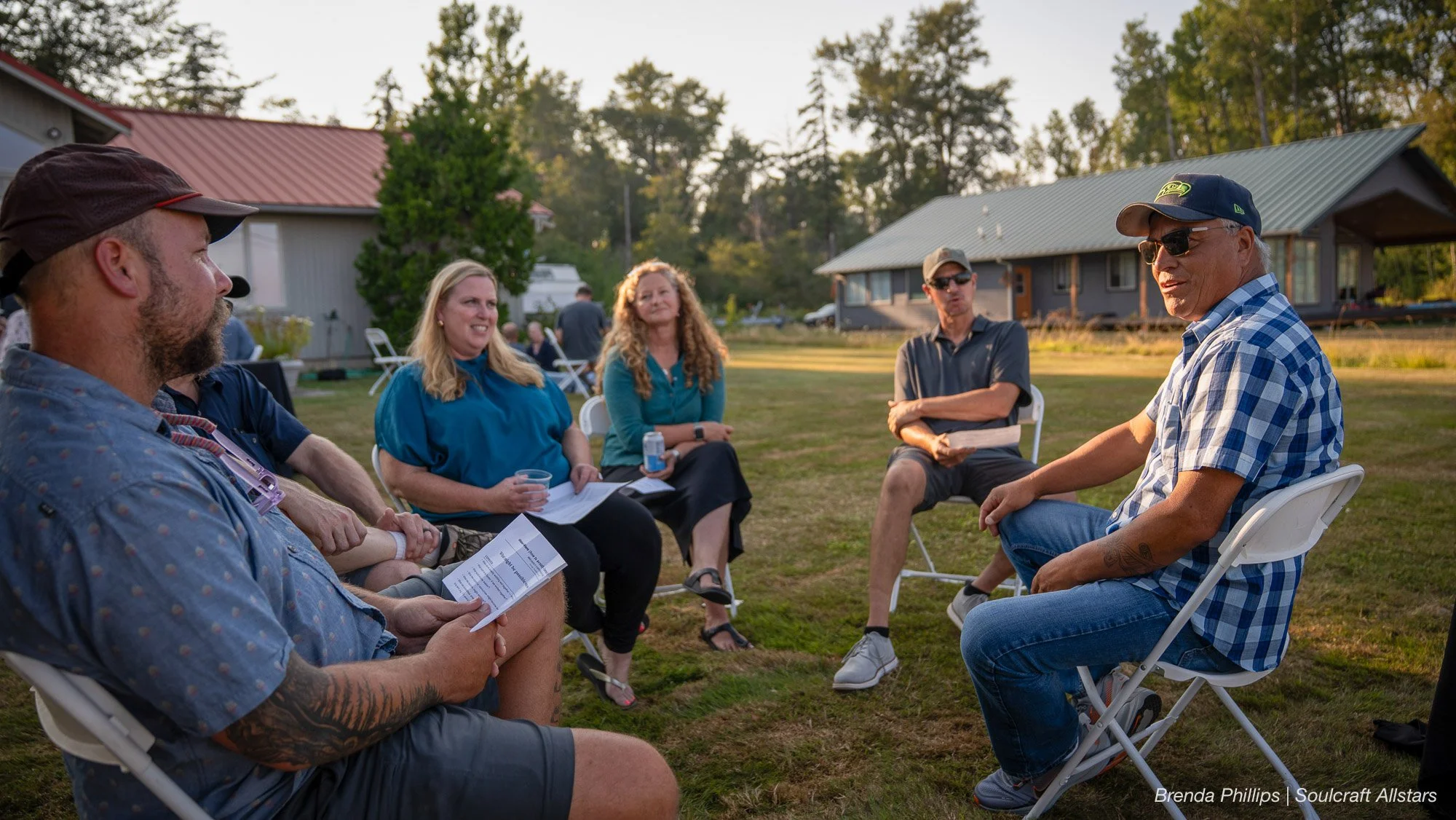
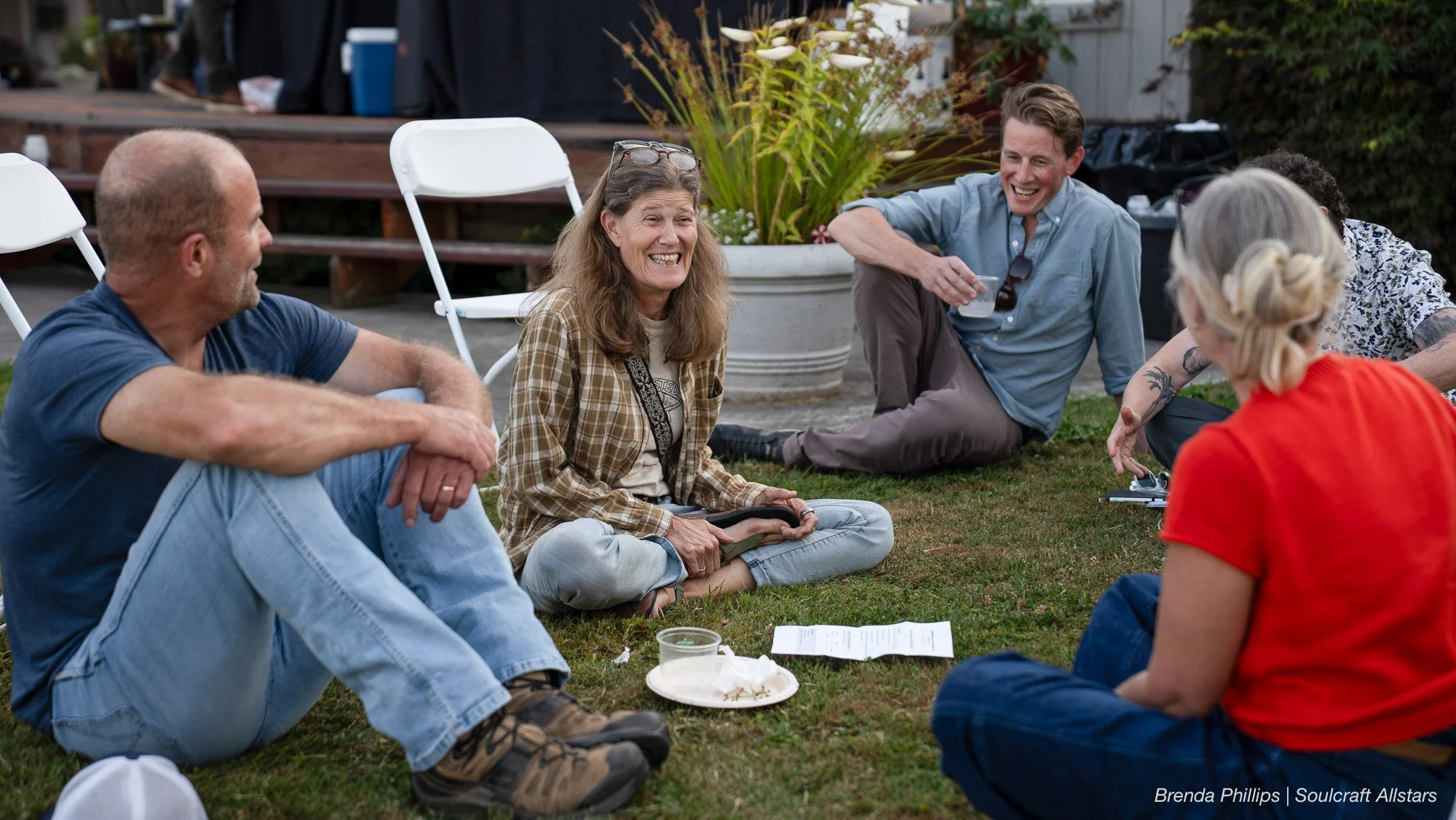
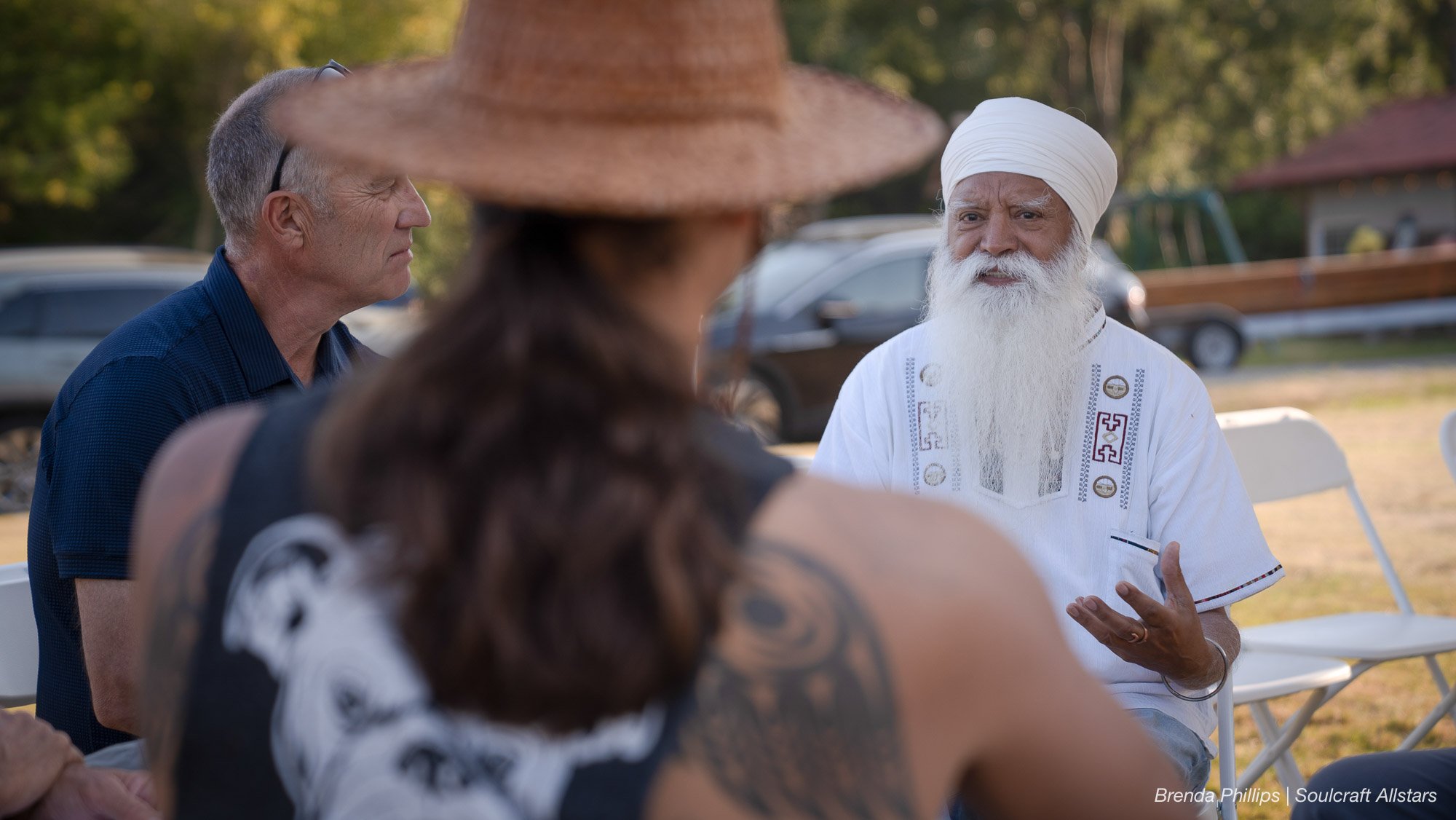
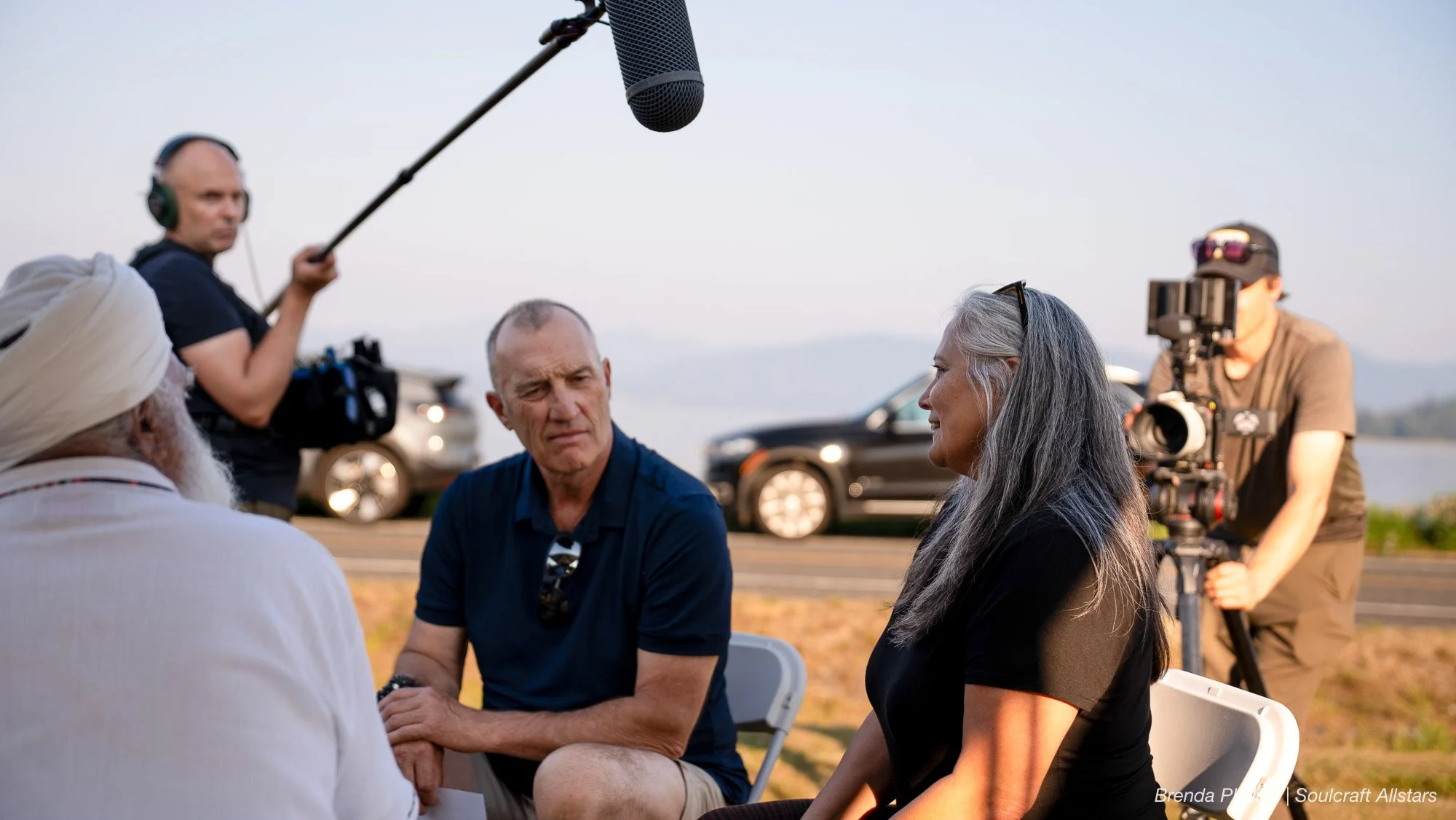
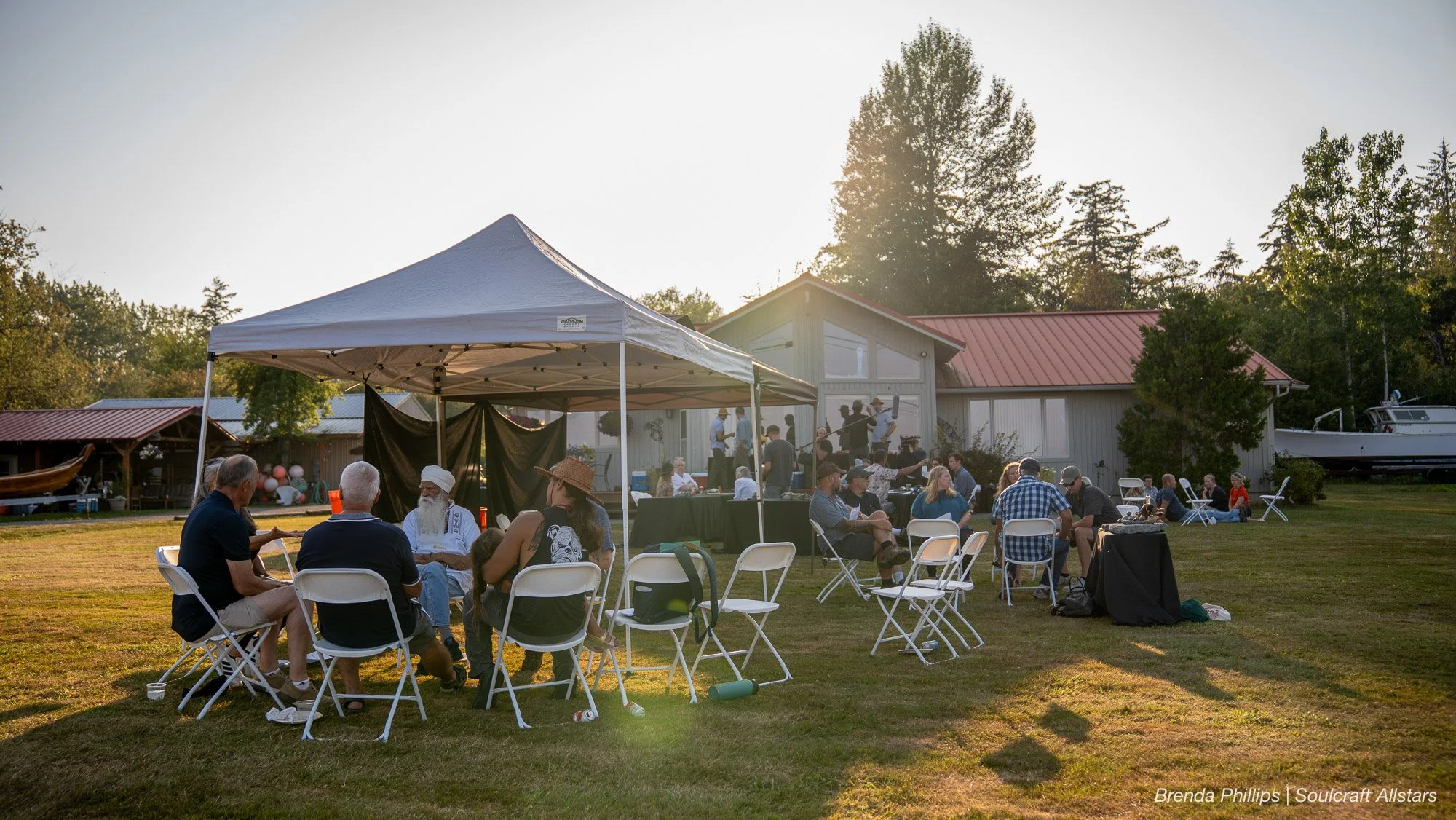
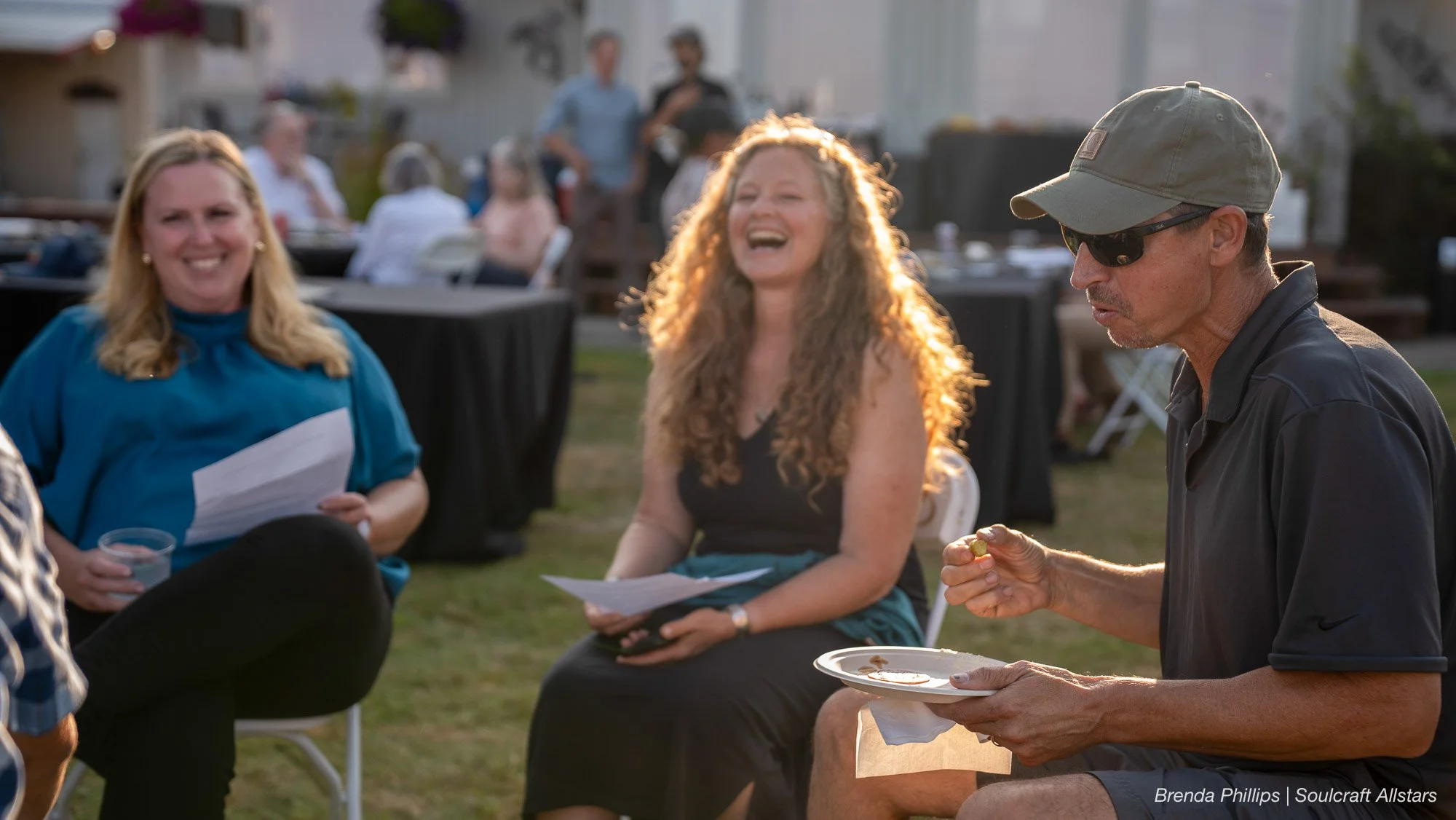
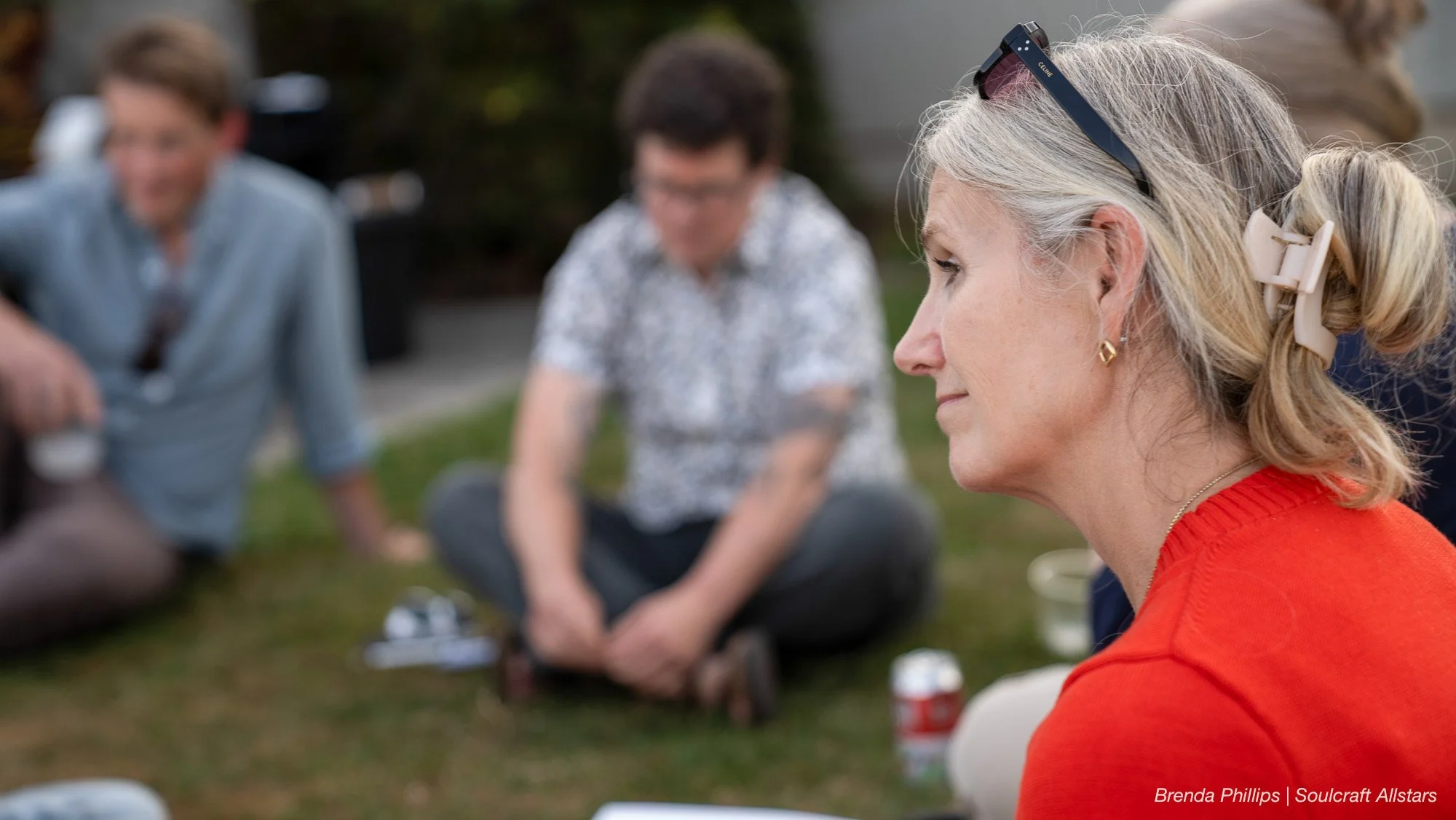
A cautious hope moved through the circle and sharpened into a real question: what struggle is actually worth our combined effort, and what are we willing to work for, not just wish for? Raven Borsey, Lummi anthropologist, his young daughter perched on his knee, spoke to the value of breakthroughs crossing old divides, a farmer's insight reaching a fisherman, a county worker's fix reaching a tribal elder, benefit moving sideways instead of staying put. More than one non-tribal attendee said, unprompted, that Indigenous voices at the table weren't a courtesy, they were the reason the conversation could happen at all.
Greg Ebe, potato farmer, reframed sacrifice as something owed to the people we call family, not to strangers or abstractions. Others returned again and again to the plain work of actually listening rather than waiting for a turn to speak.
Satpal Sidhu, Whatcom County Executive, spoke to the cost of walking on eggshells, how the fear of offending blocks the kind of communication that actually lets people grow. Kim Lund, Mayor of Bellingham, named the courage it takes to say plainly what isn't working, since that honesty is what lets a community change together.
Jay Julius, Lummi fisherman and Council member, spoke to suffering: that what happens here has never been only personal, it belongs to the salmon, to the river, to everything we're in relationship with. Rich Appel, dairy farmer, picked the word up after him, turning it over to understand what it actually means for each person carrying it. And Lisa Wilson, Lummi salmon activist, asked the question that seemed to matter most: how do we finally move past the relationship barrier this community has stood at for so long, out of the comfortable work of discovering each other and into what comes next?
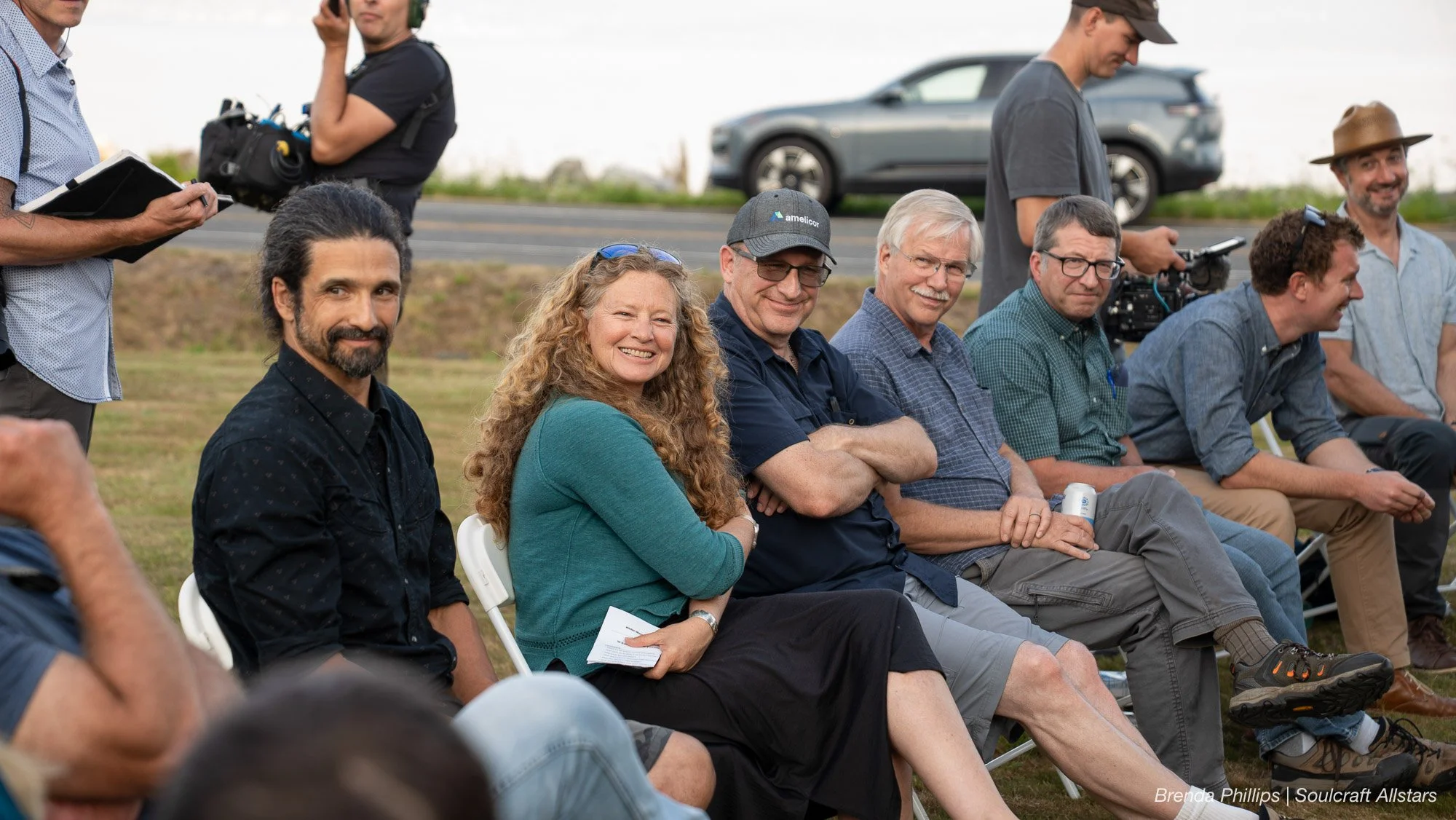
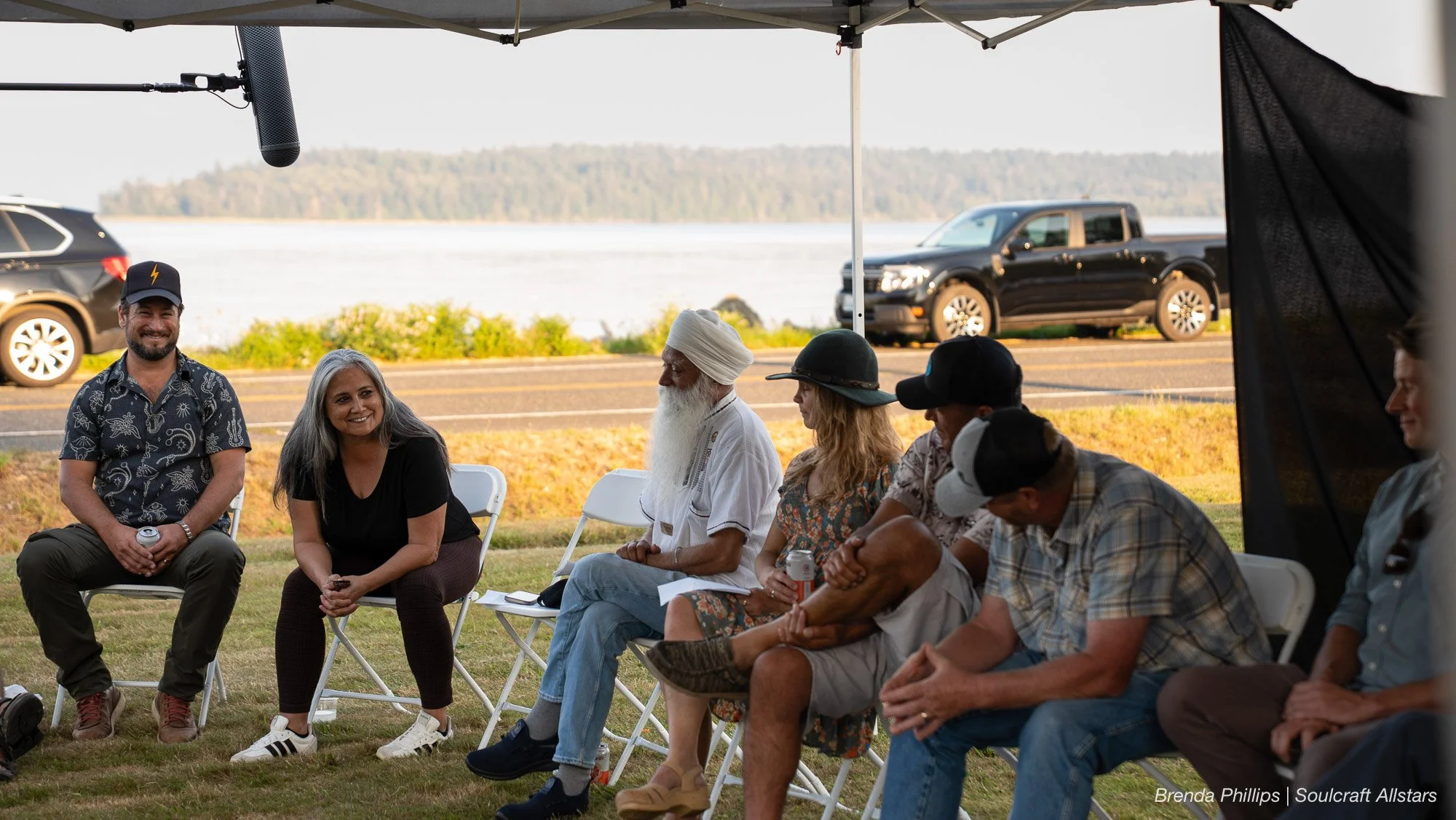
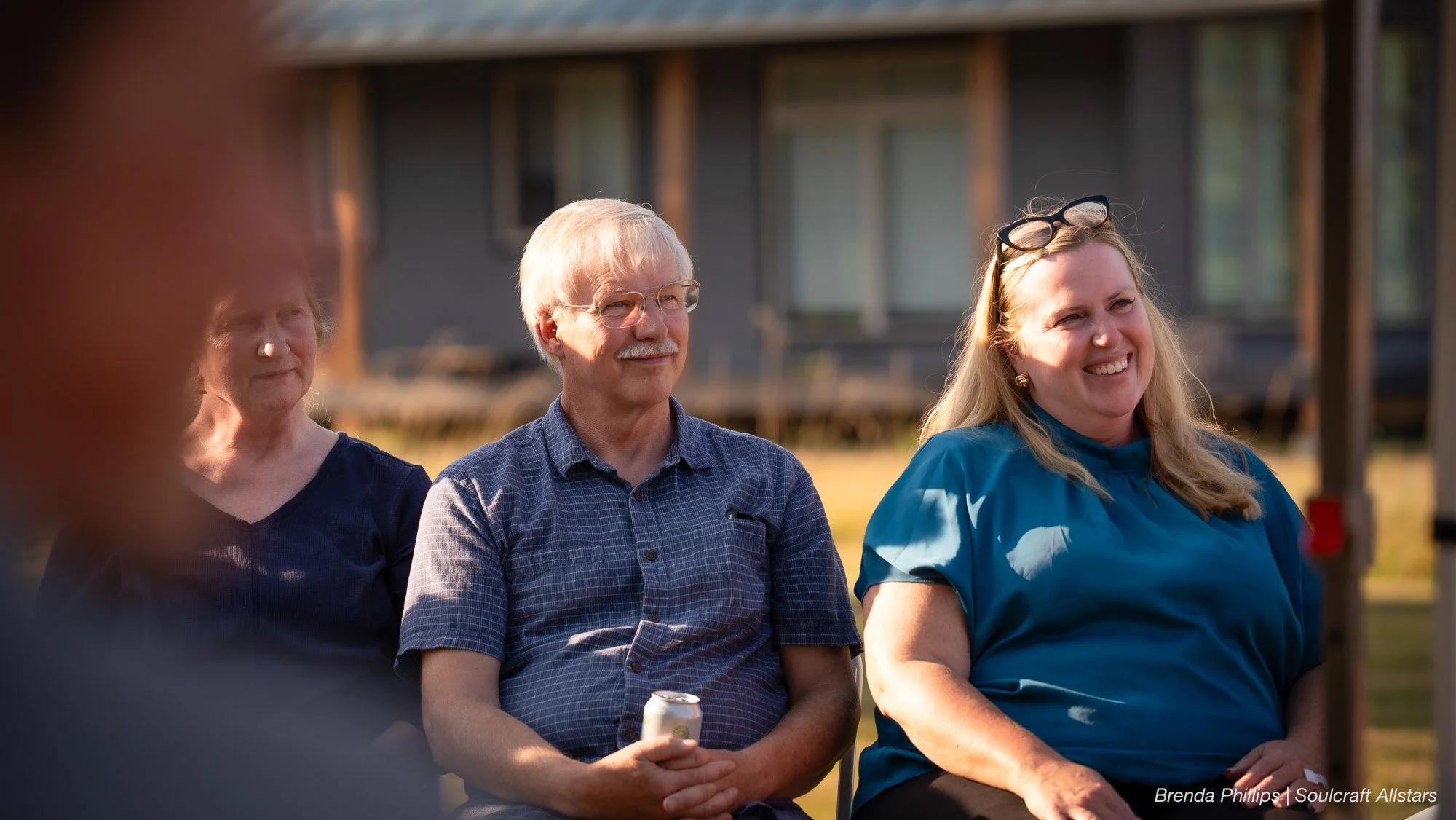
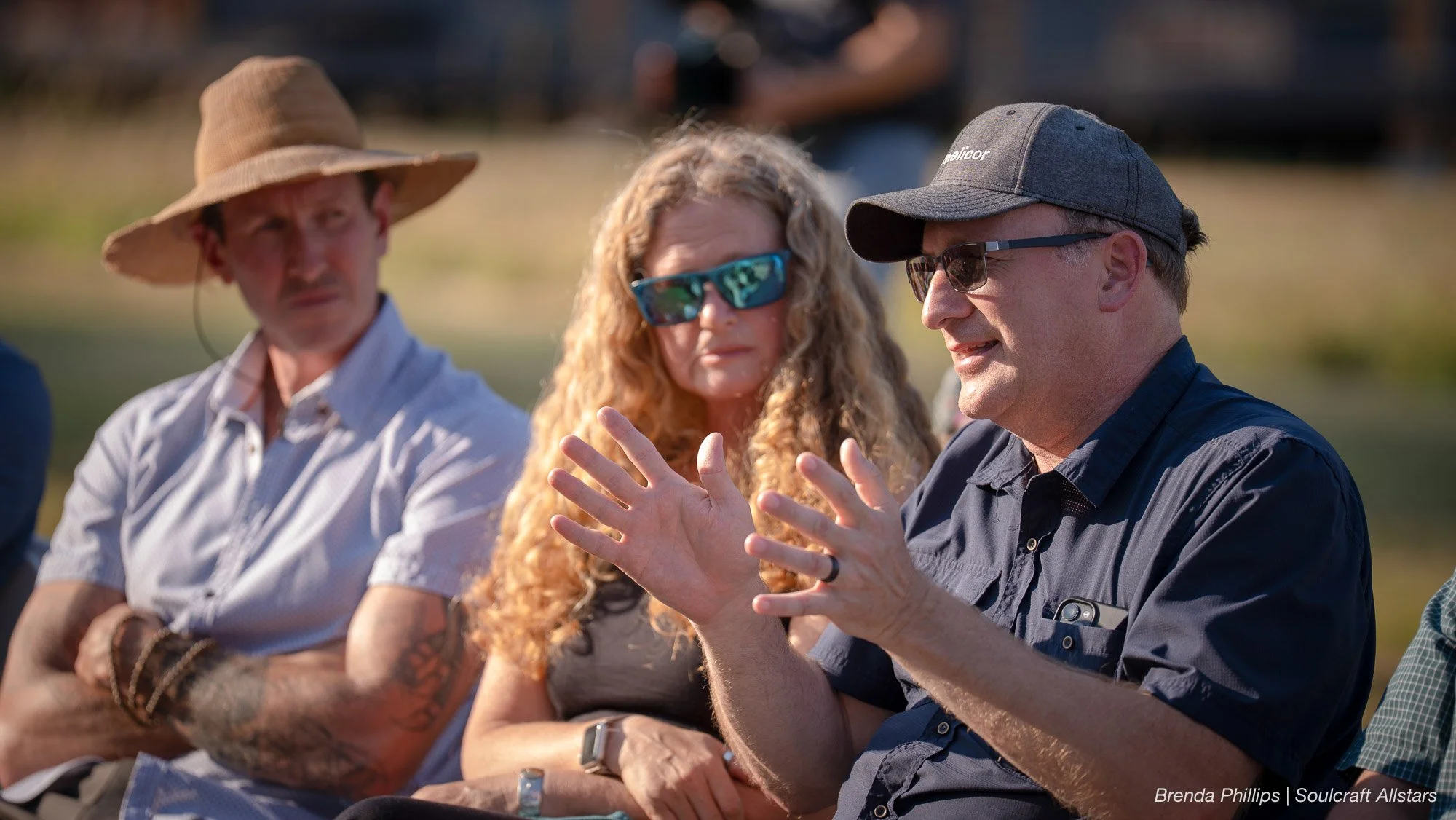
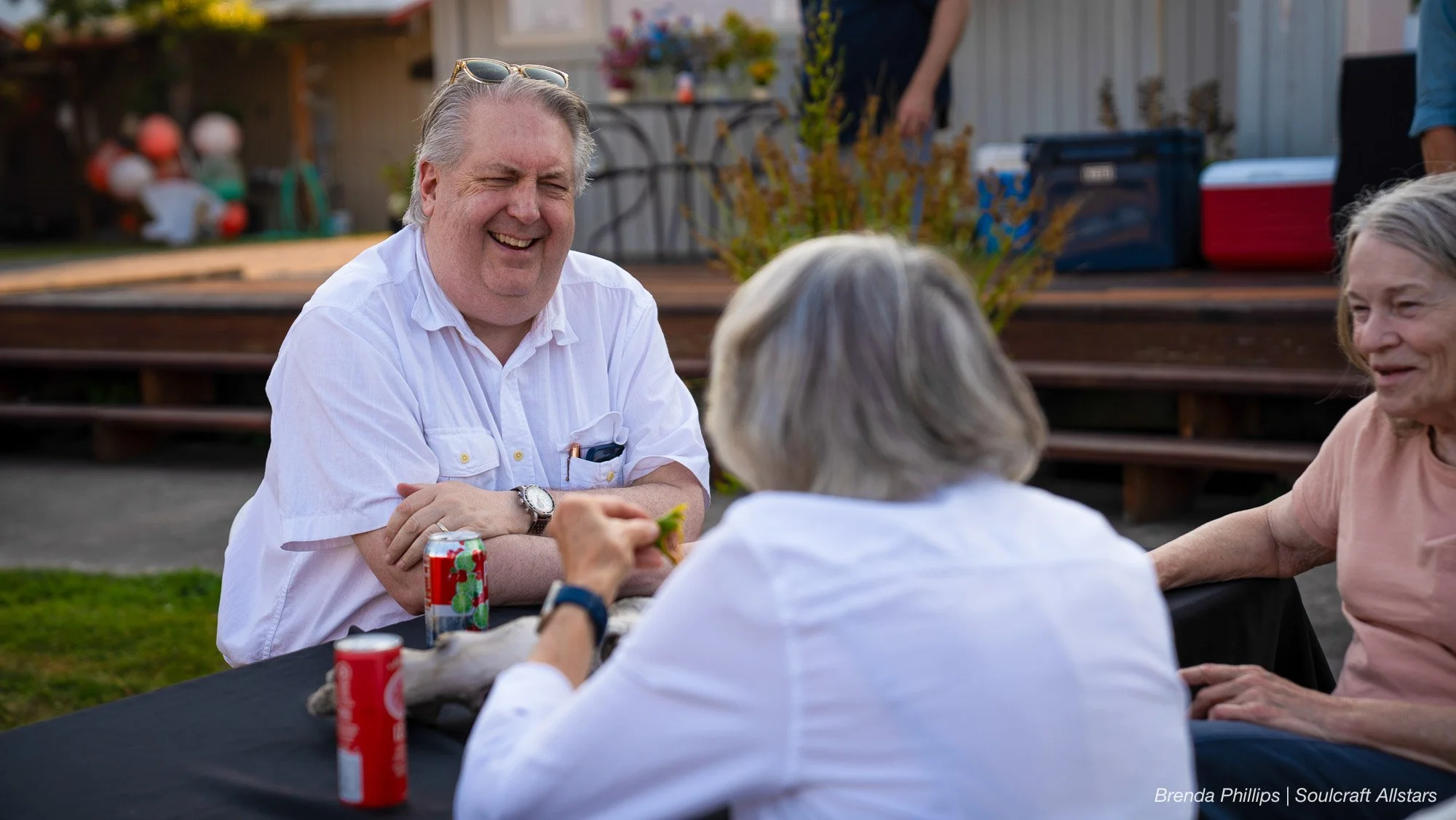
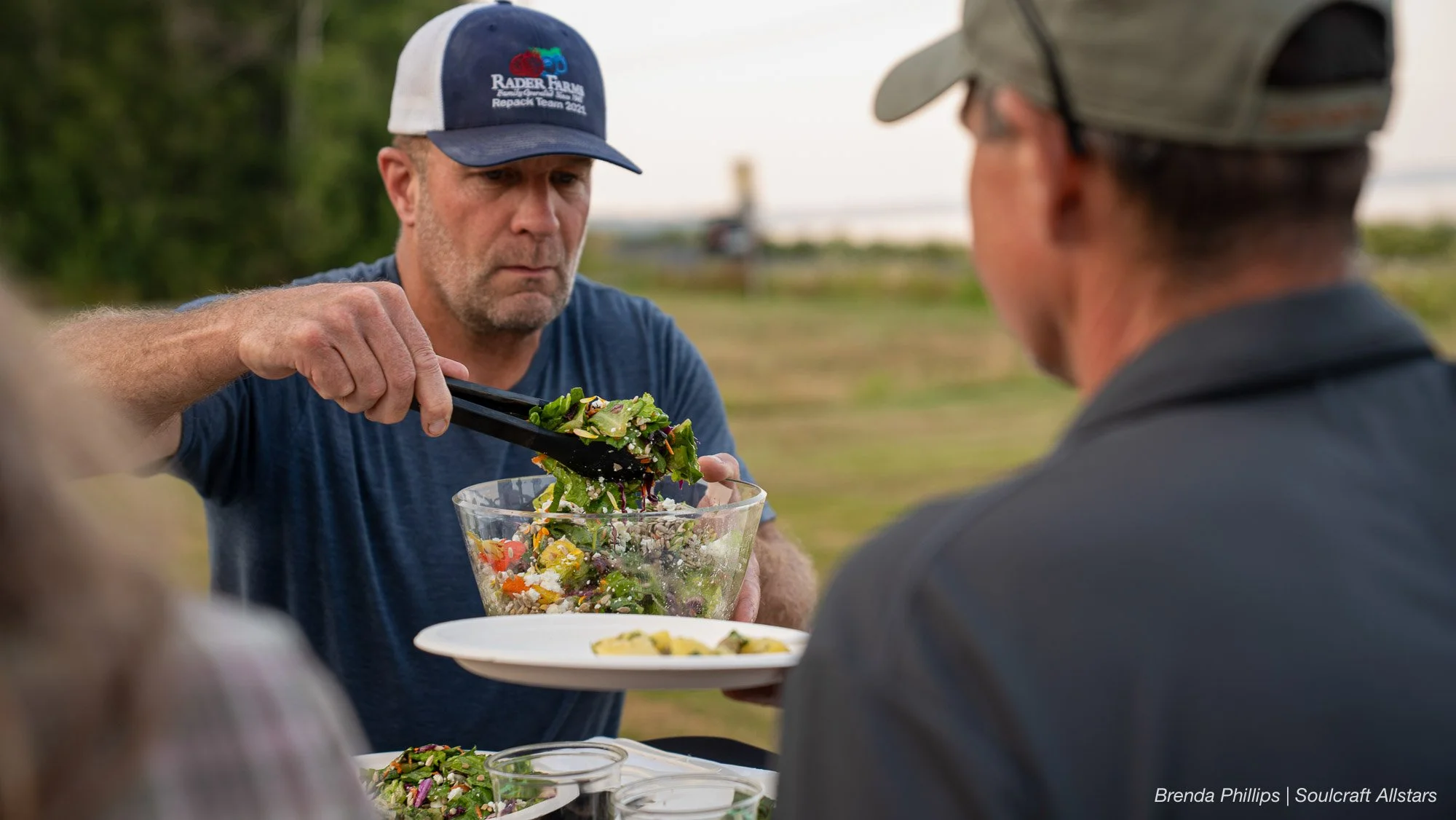
The circle became a table. Jay offered closing words before Rich blessed the meal. Terry Hillaire, salmon chef and Lummi elder, served Chinook cooked over a traditional salmon bake, and Dana brought Dungeness crab pulled from the water that morning.
Jesse Straight and Hanako Dionne prepared greens and a potato dish sourced locally. Conversation loosened from there, drifting between the day's harder questions and ordinary things, children, harvests, weather.
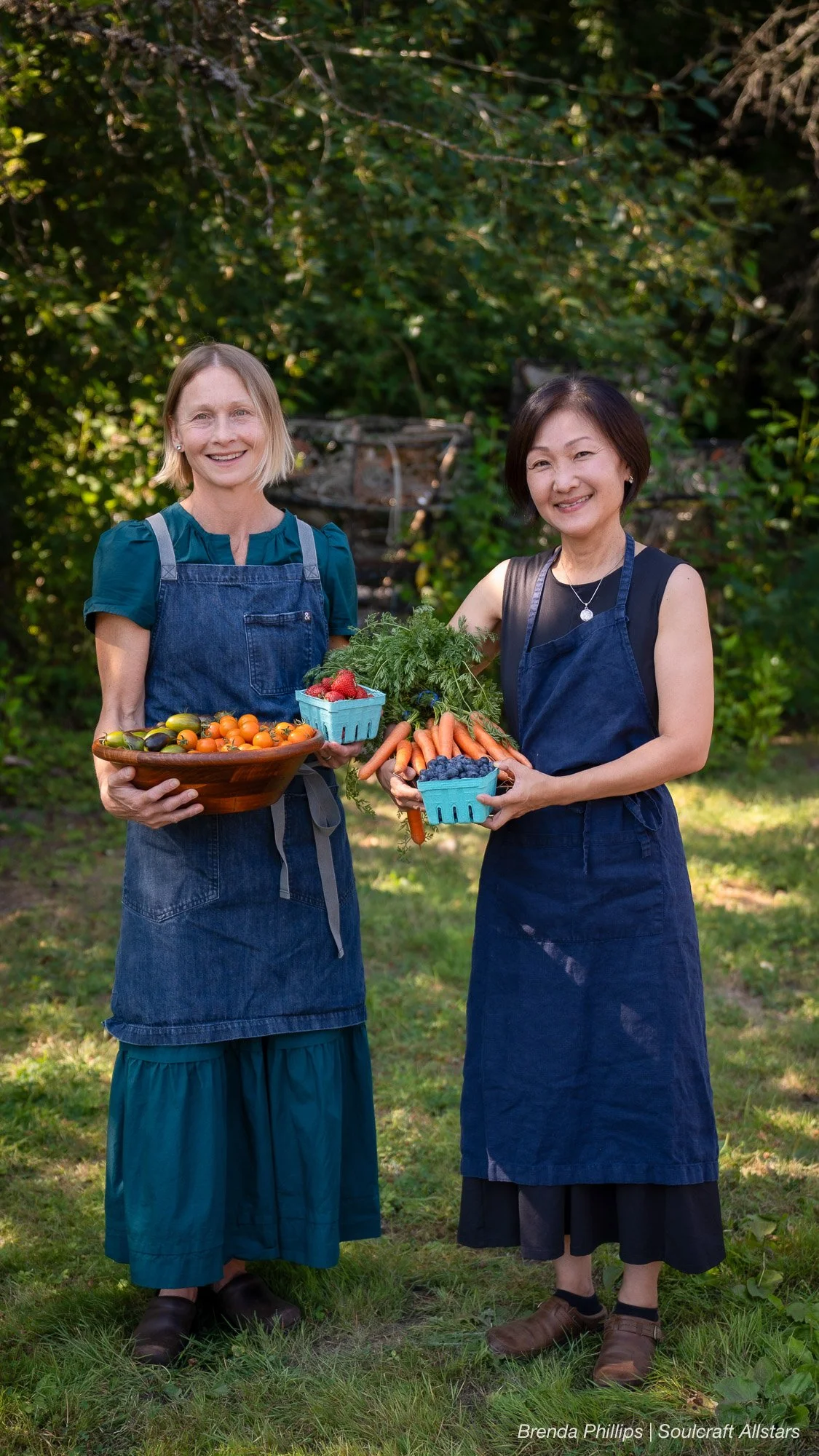
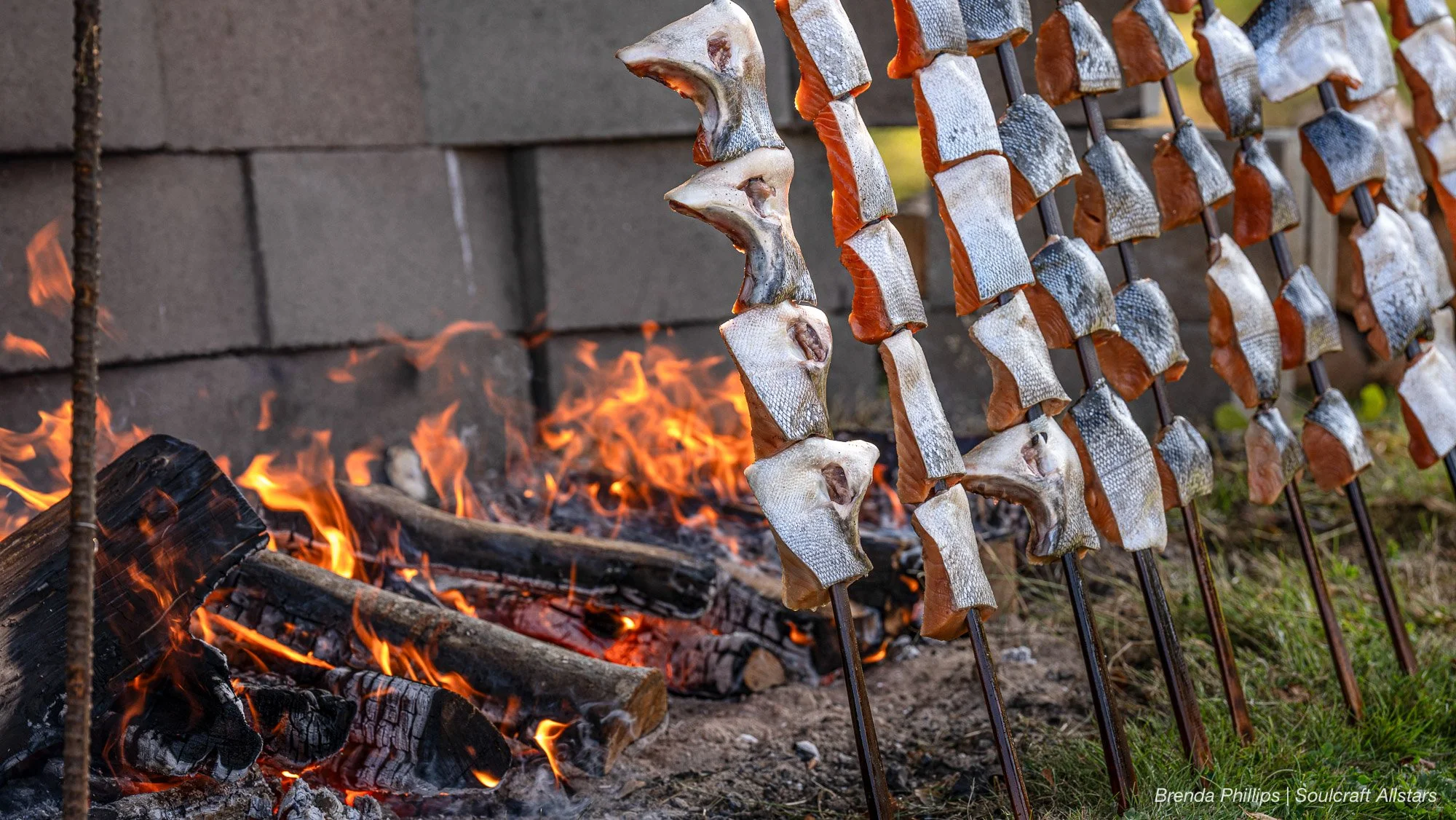
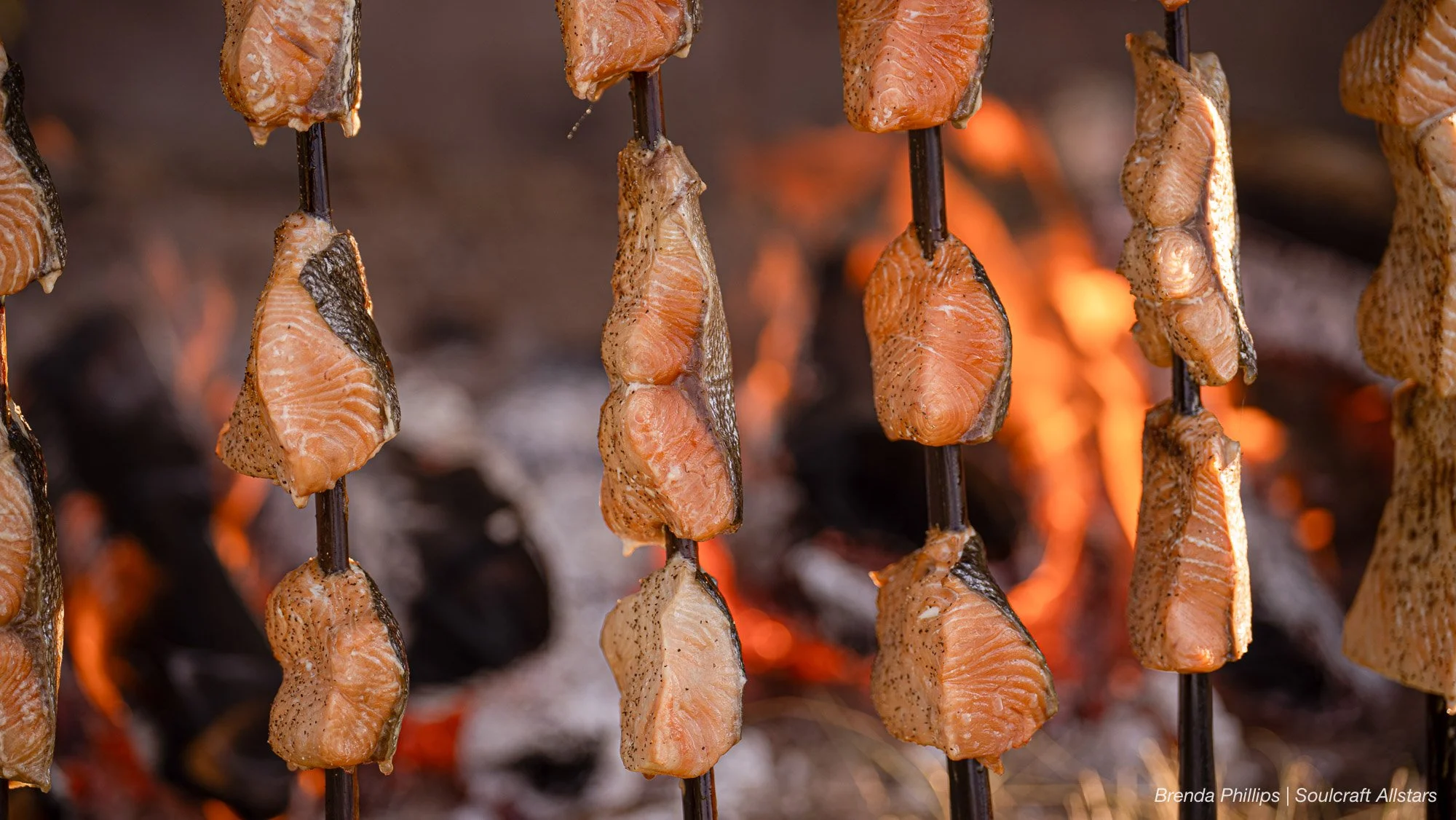
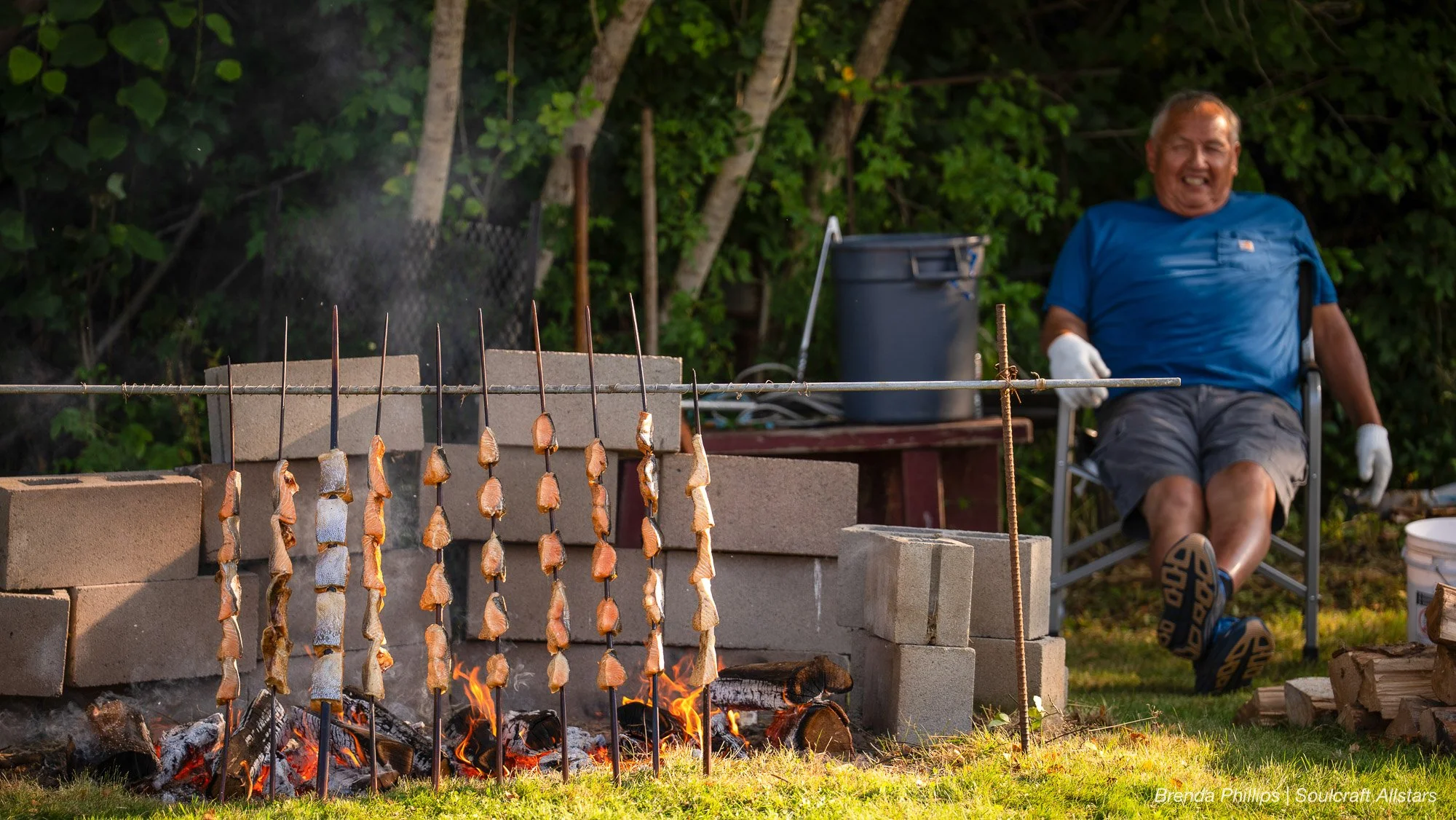
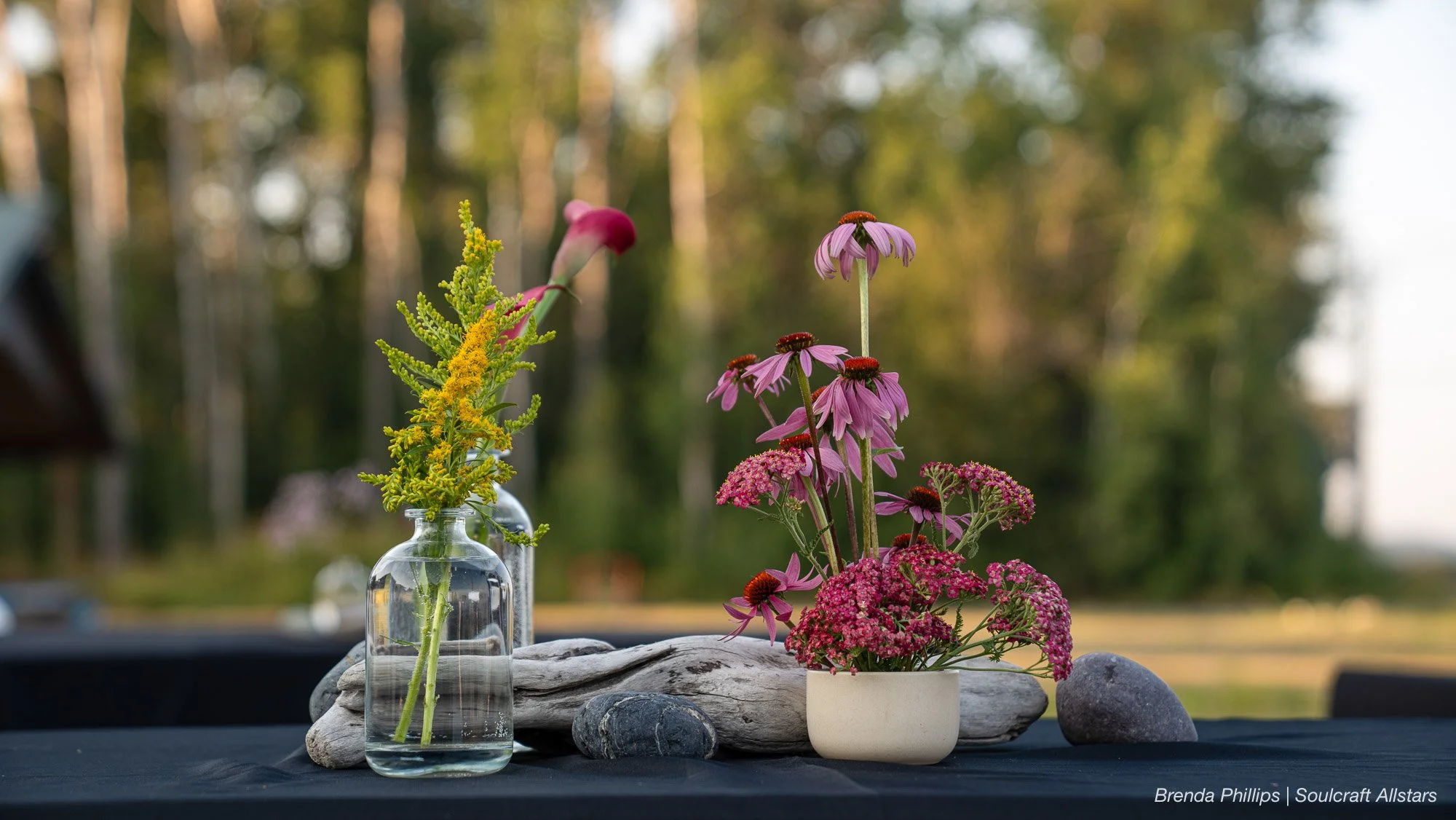
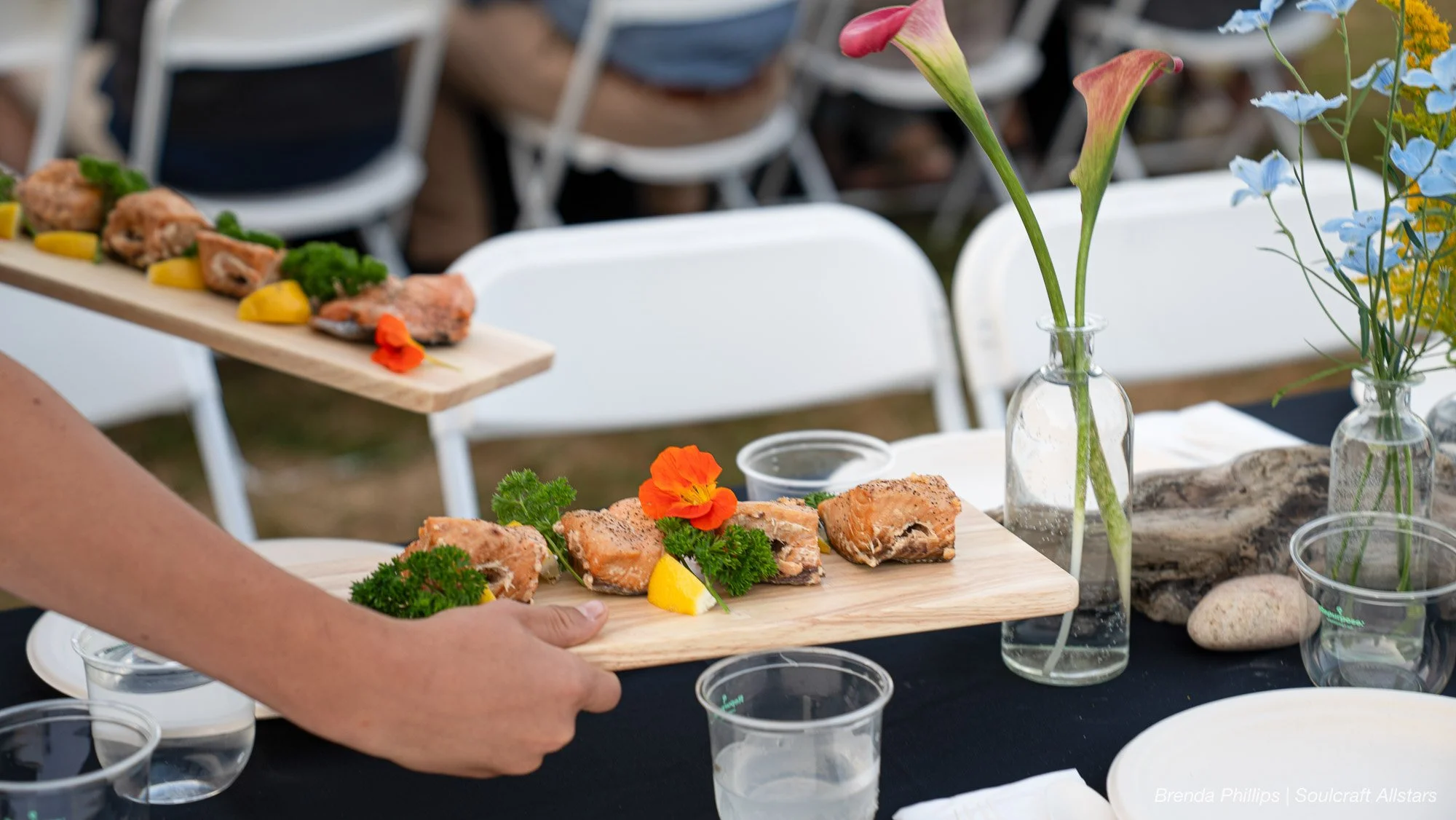

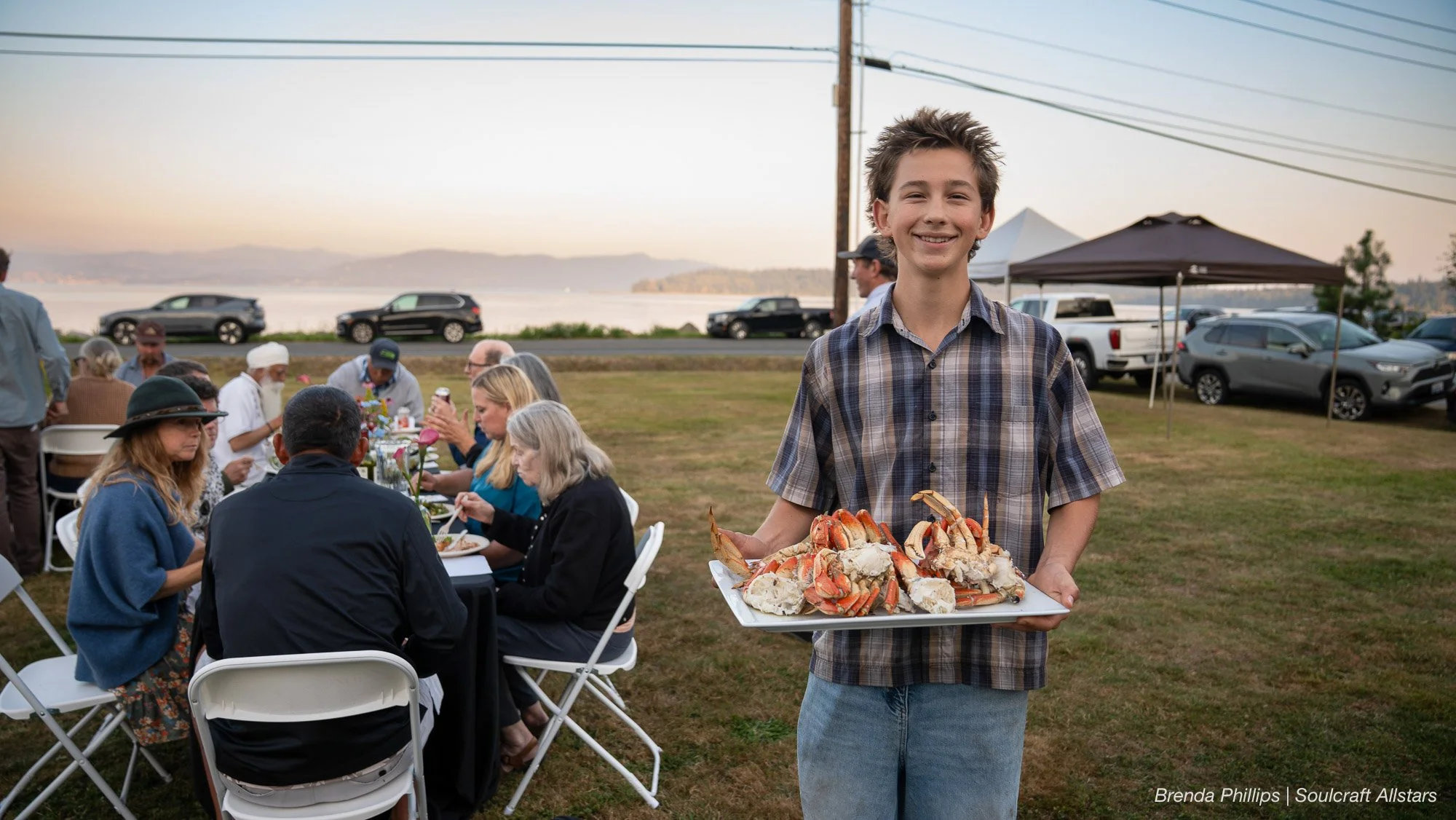
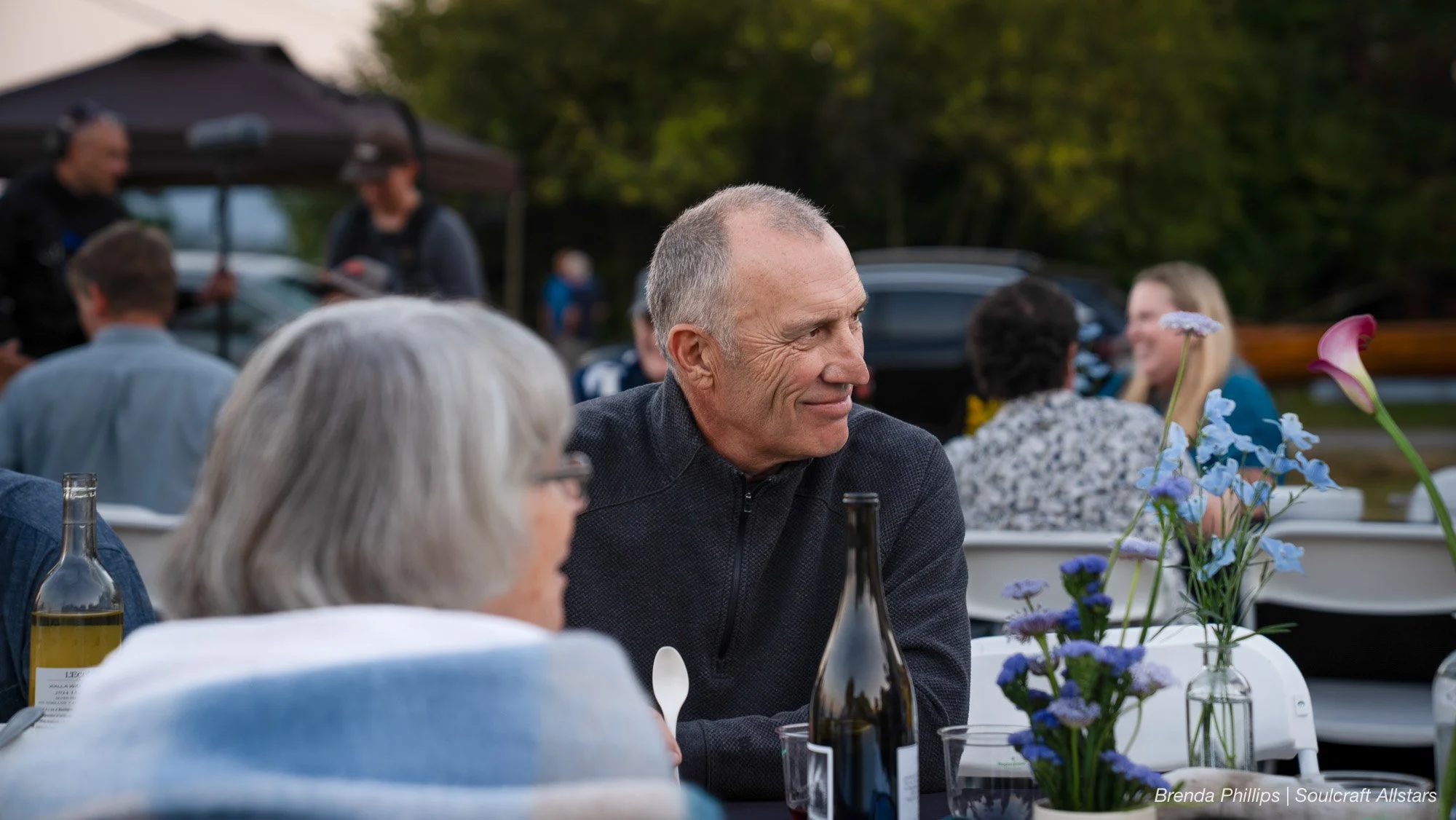
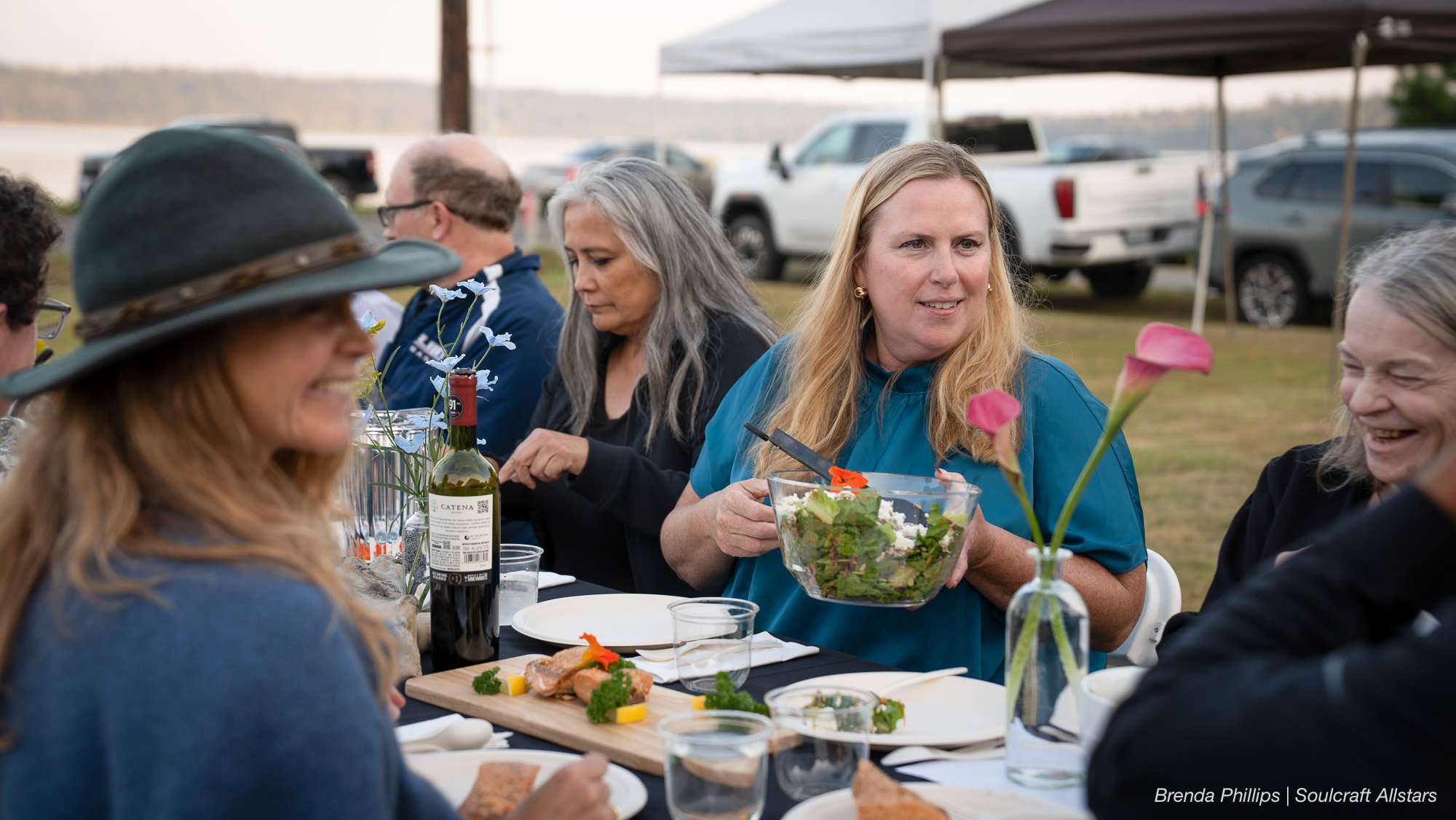
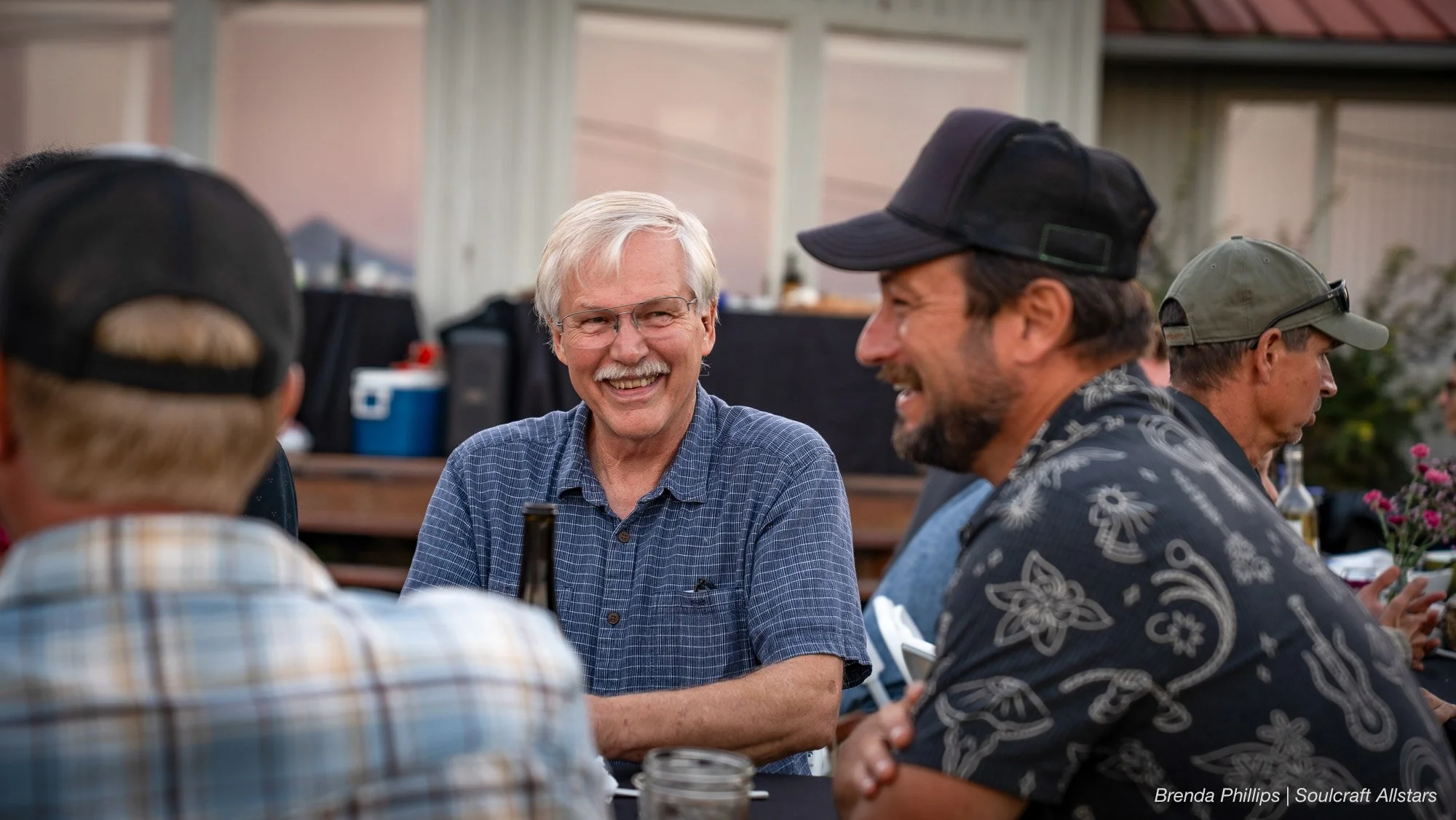
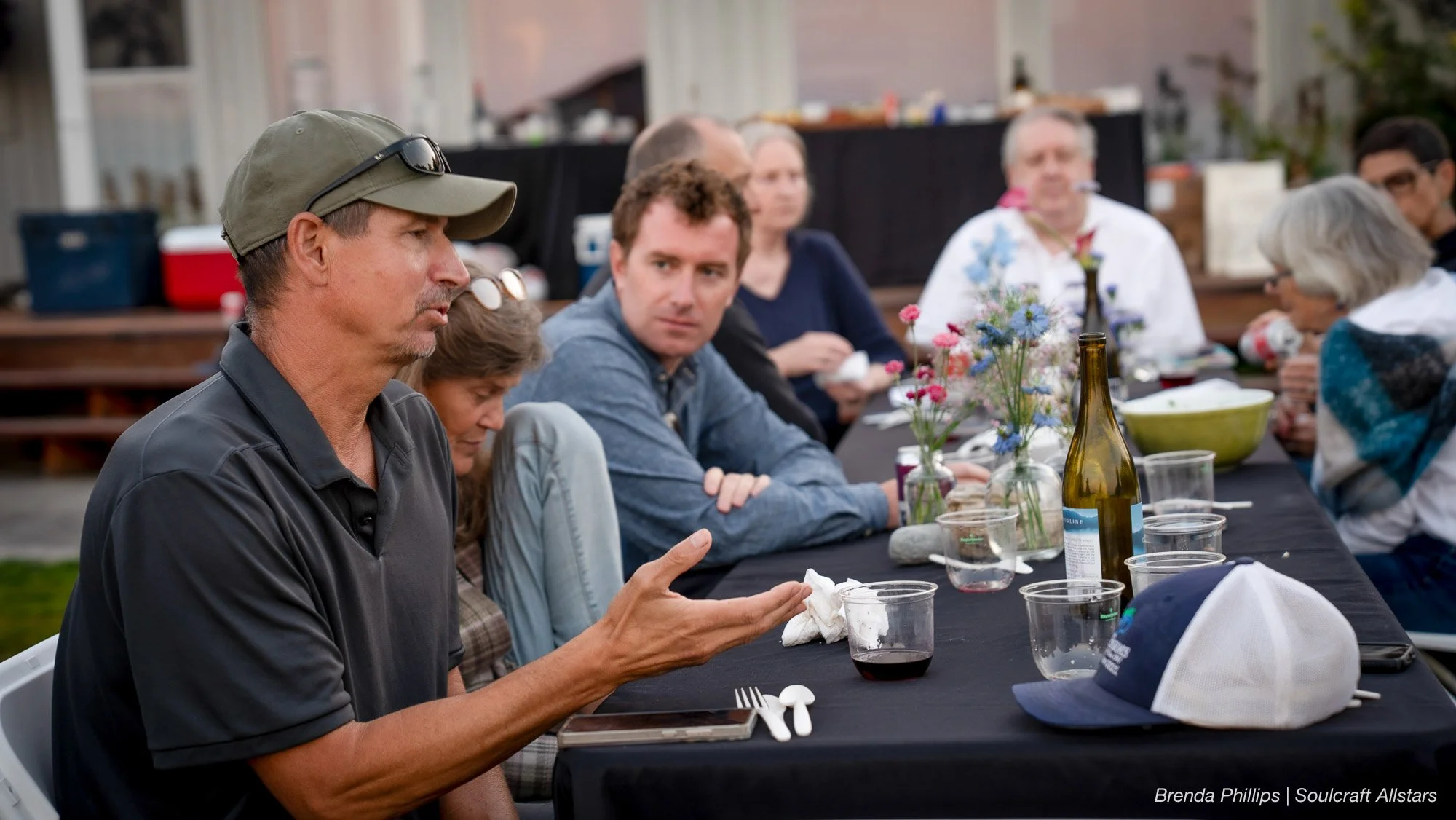
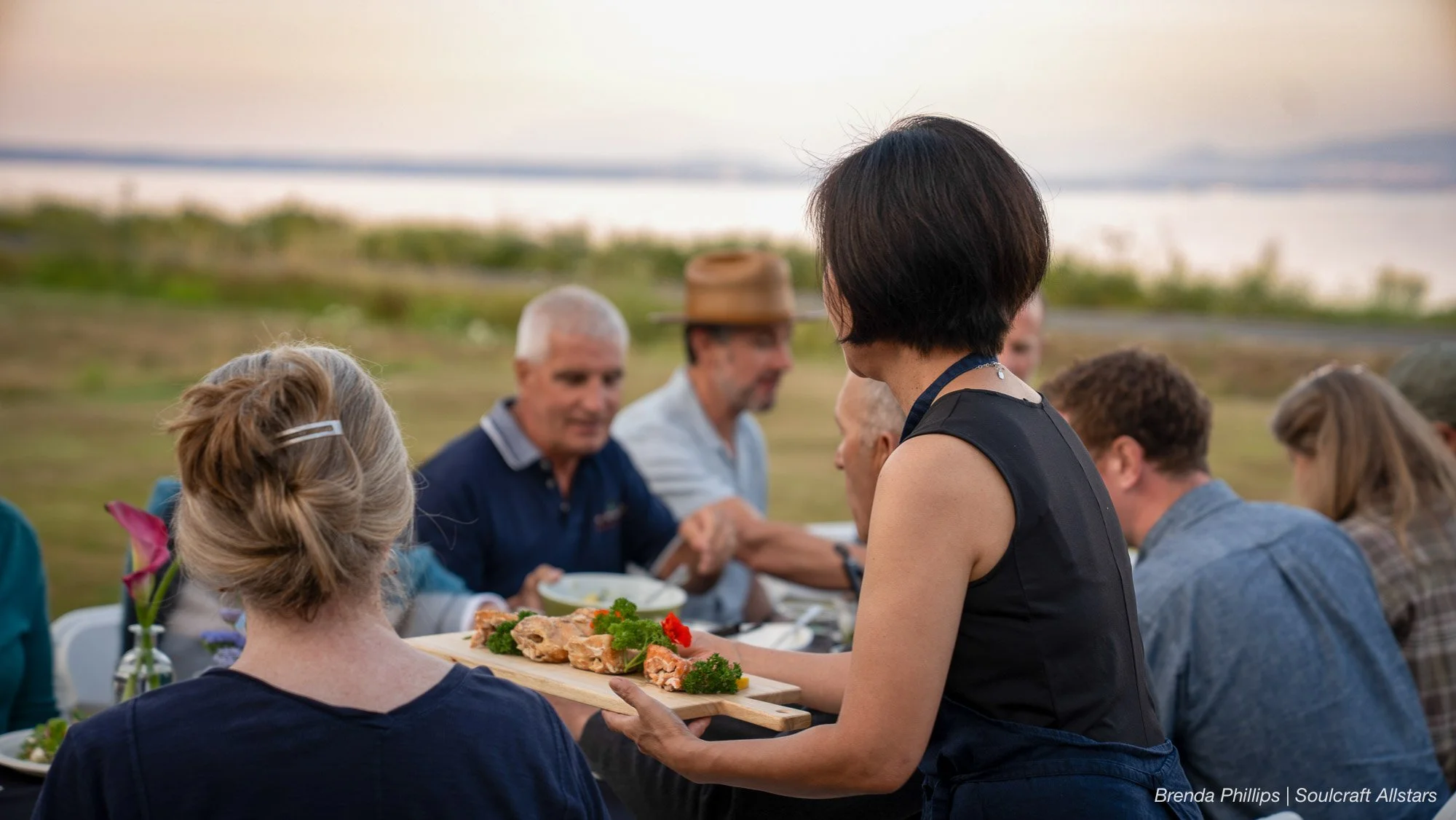
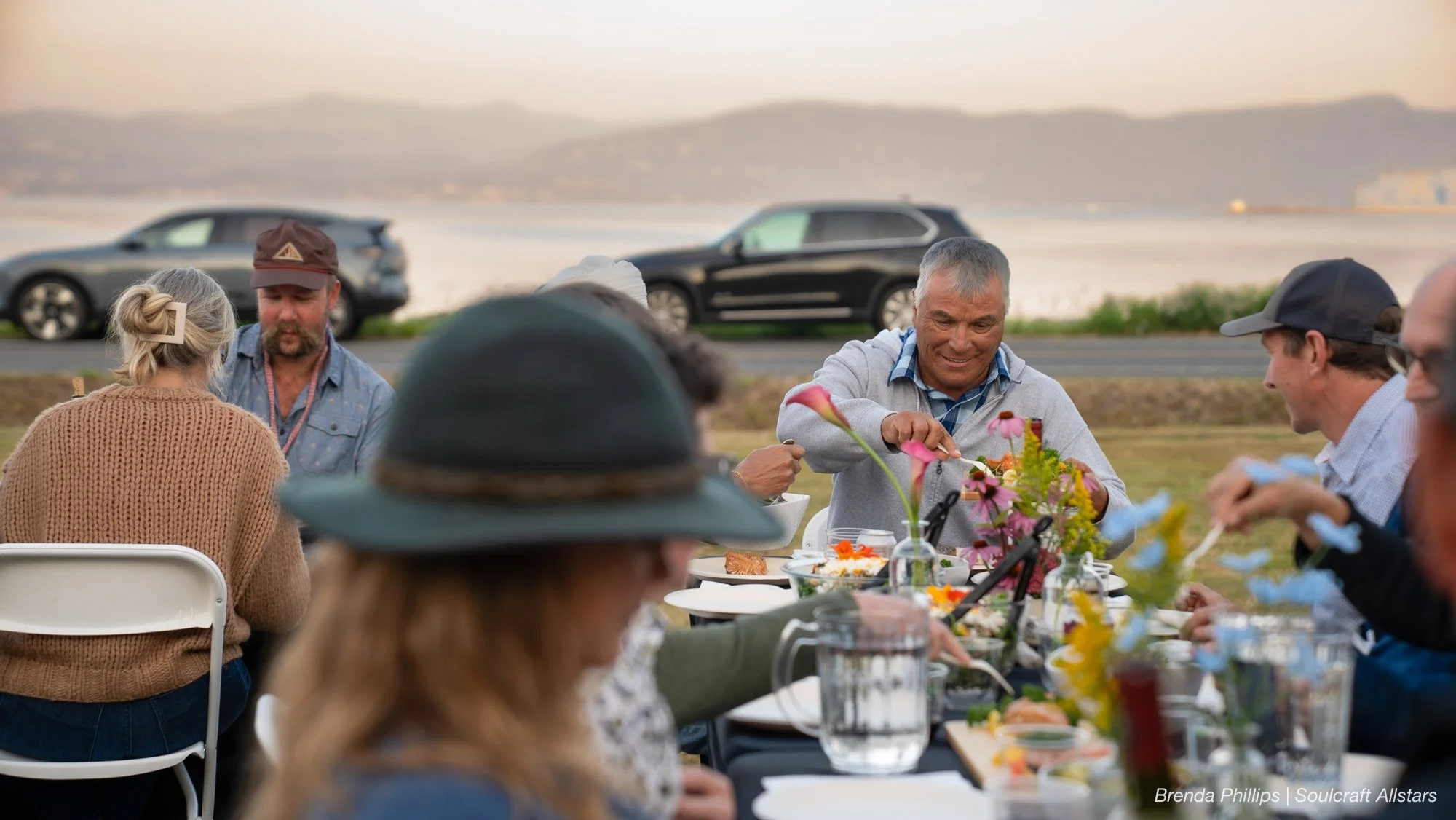
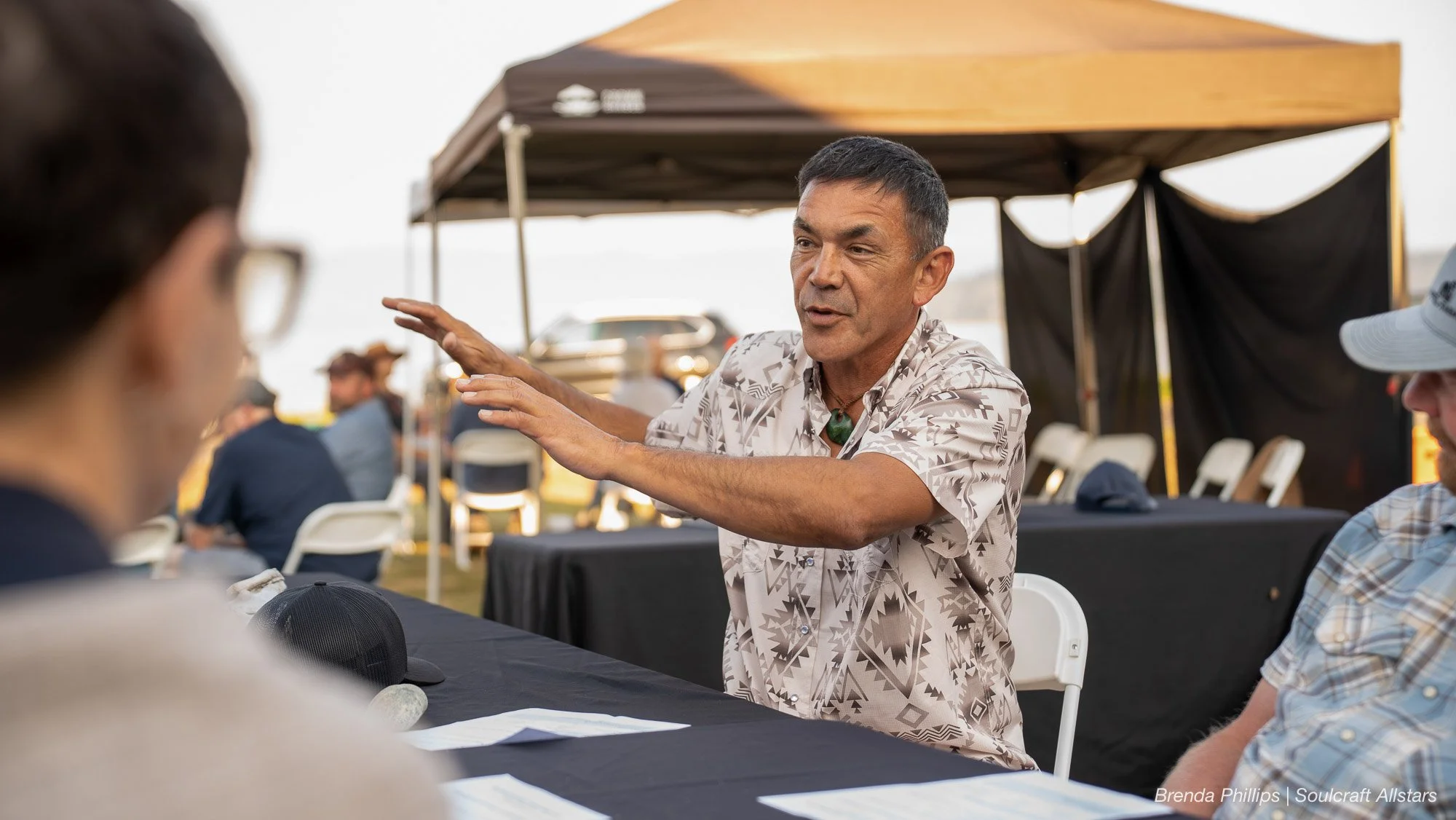
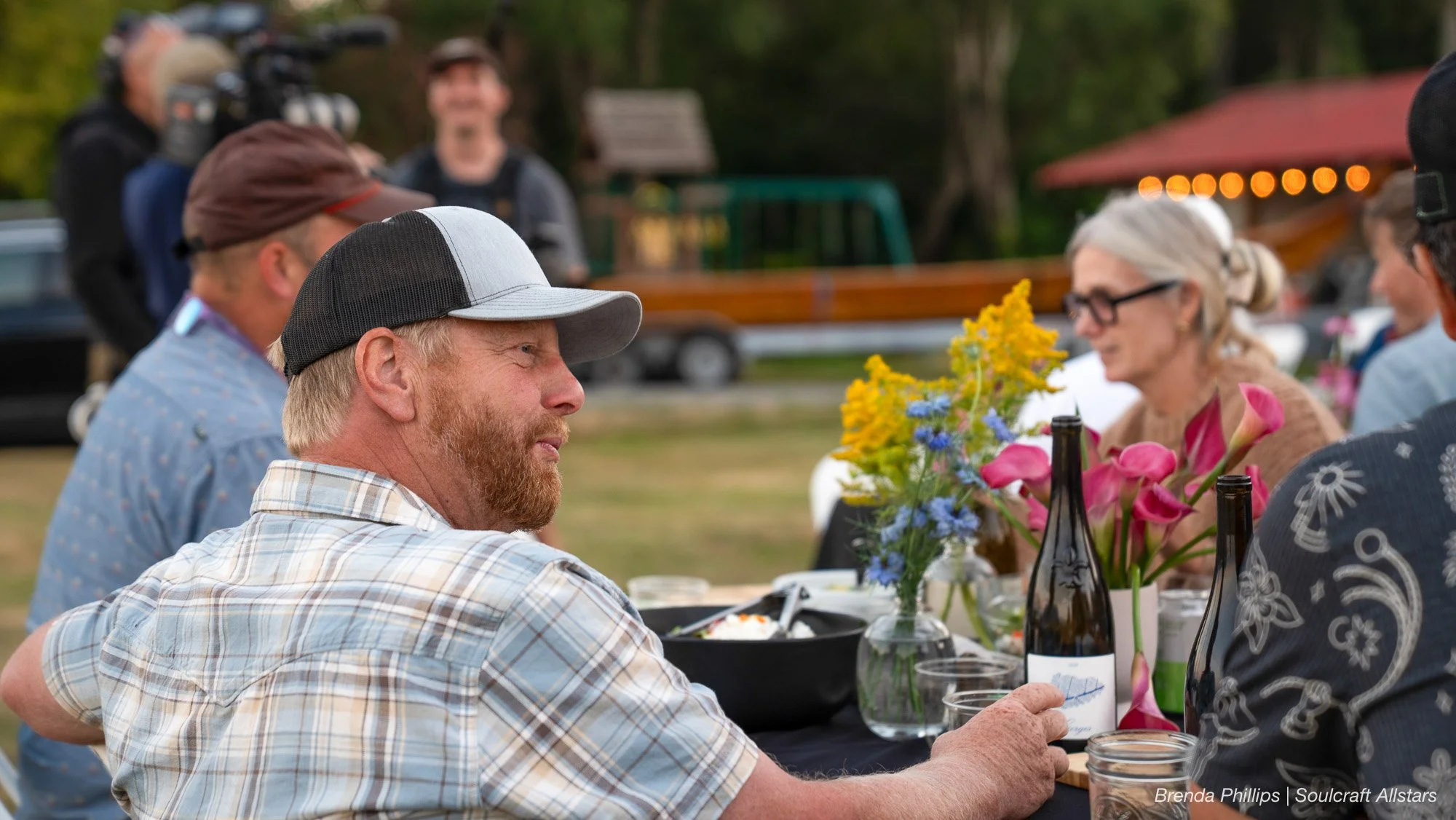
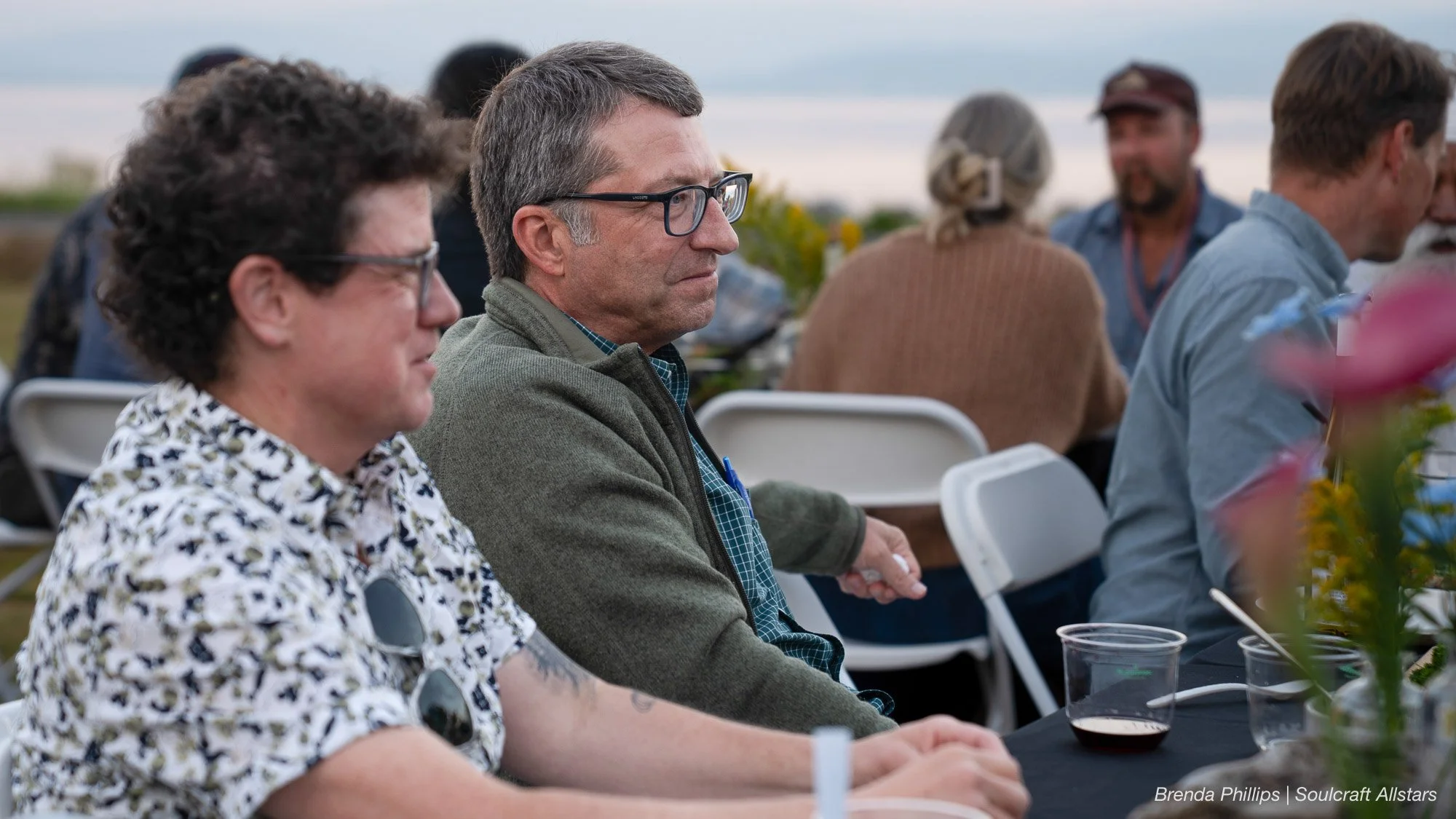
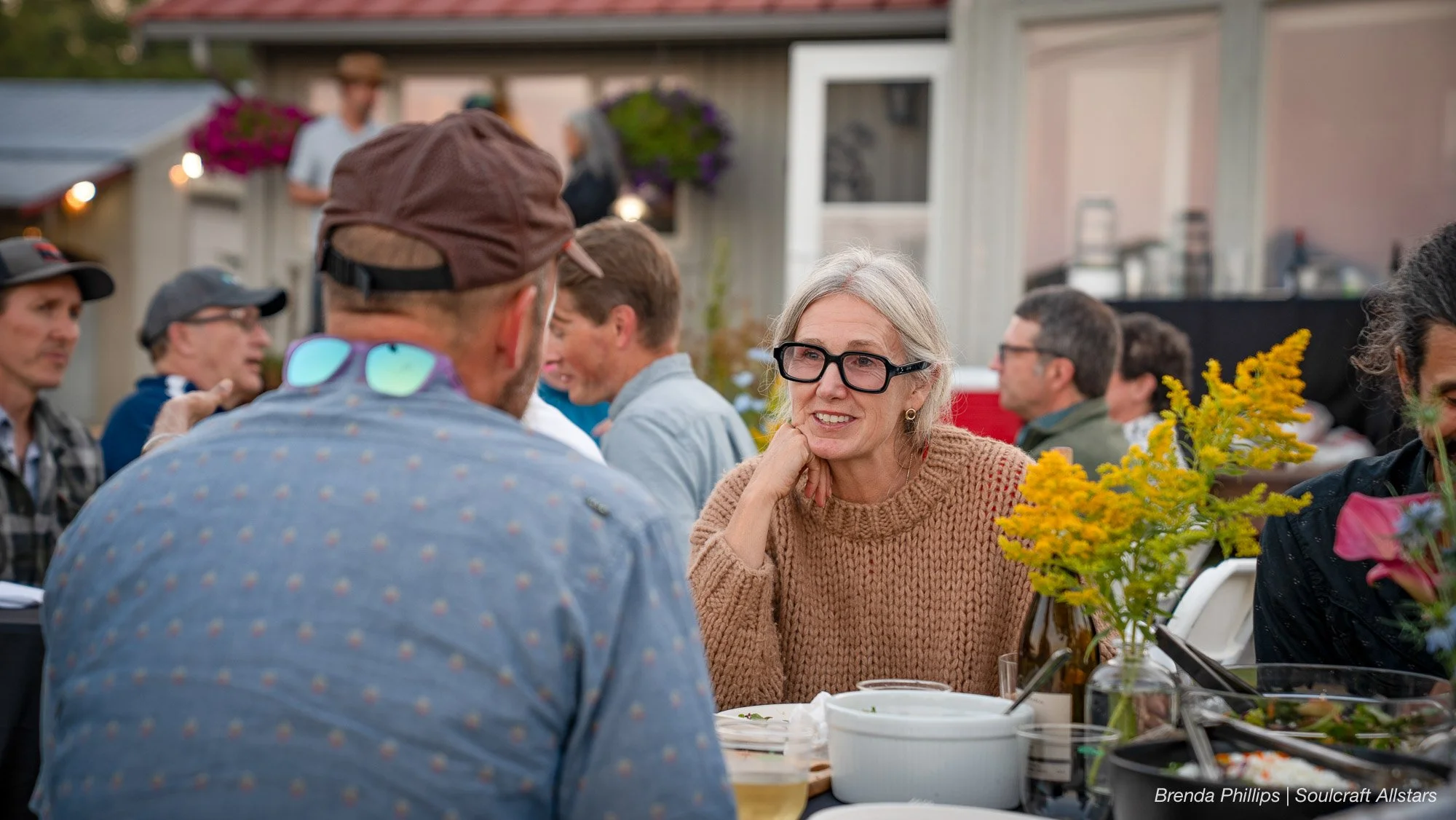
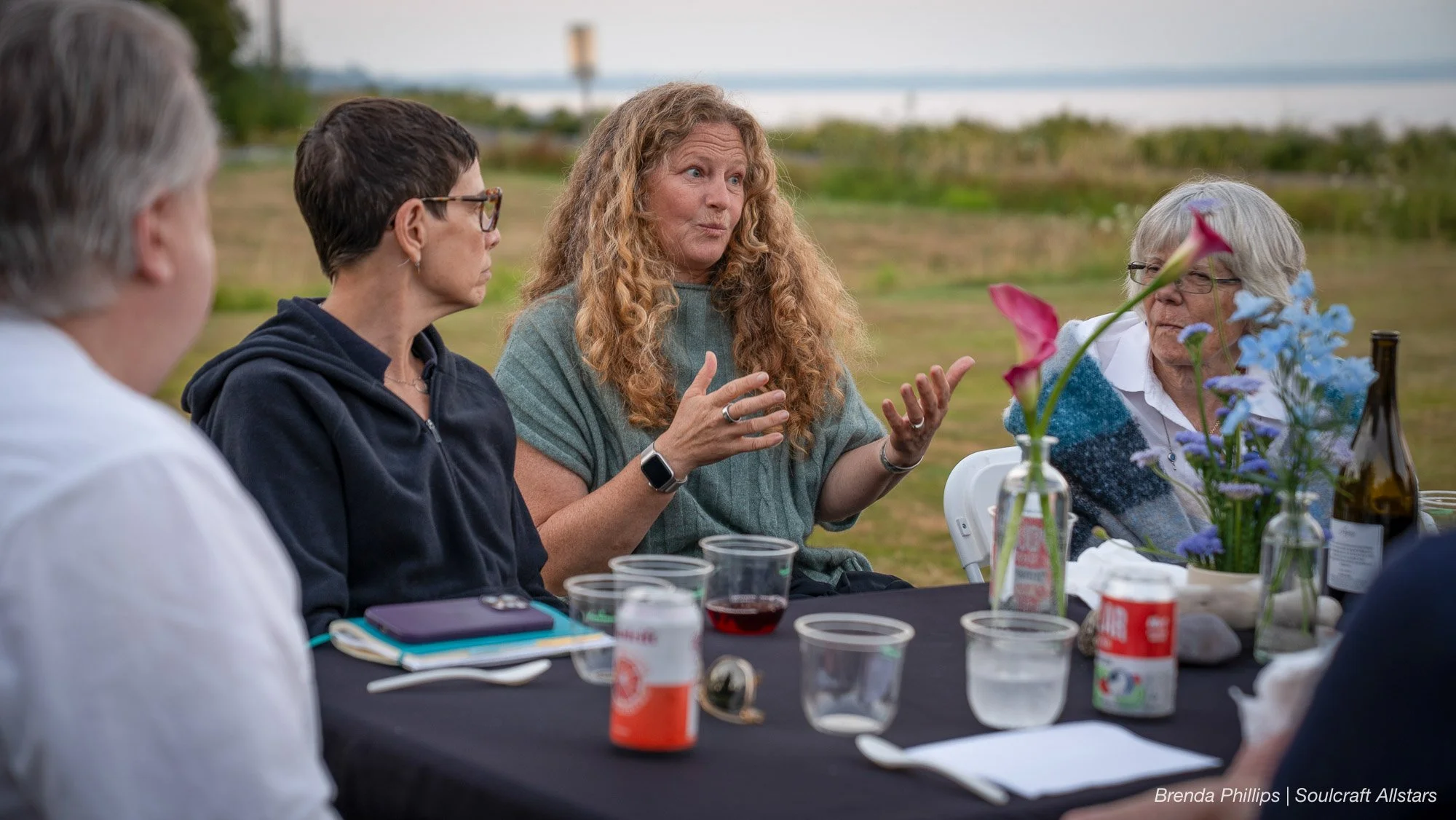
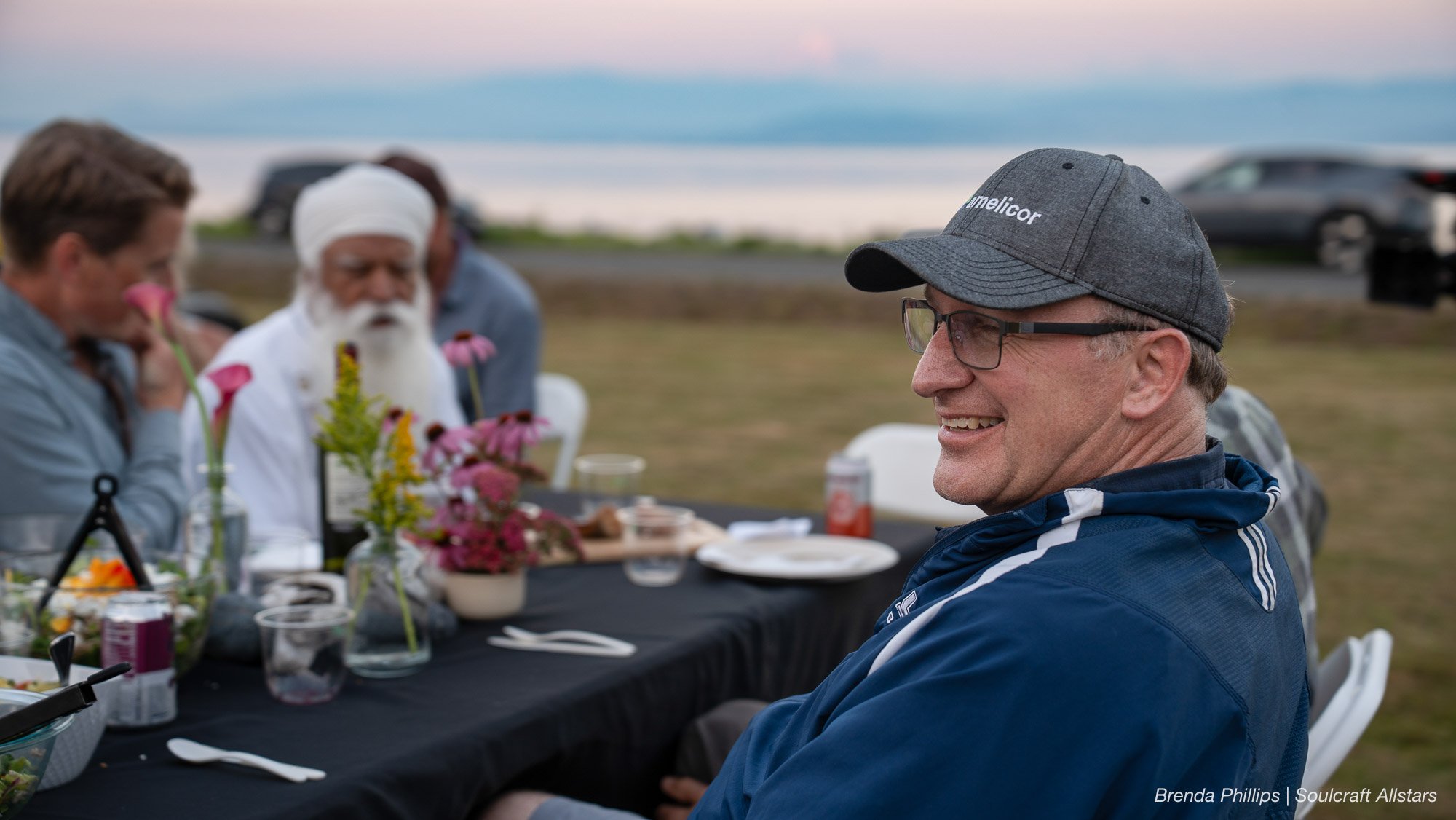
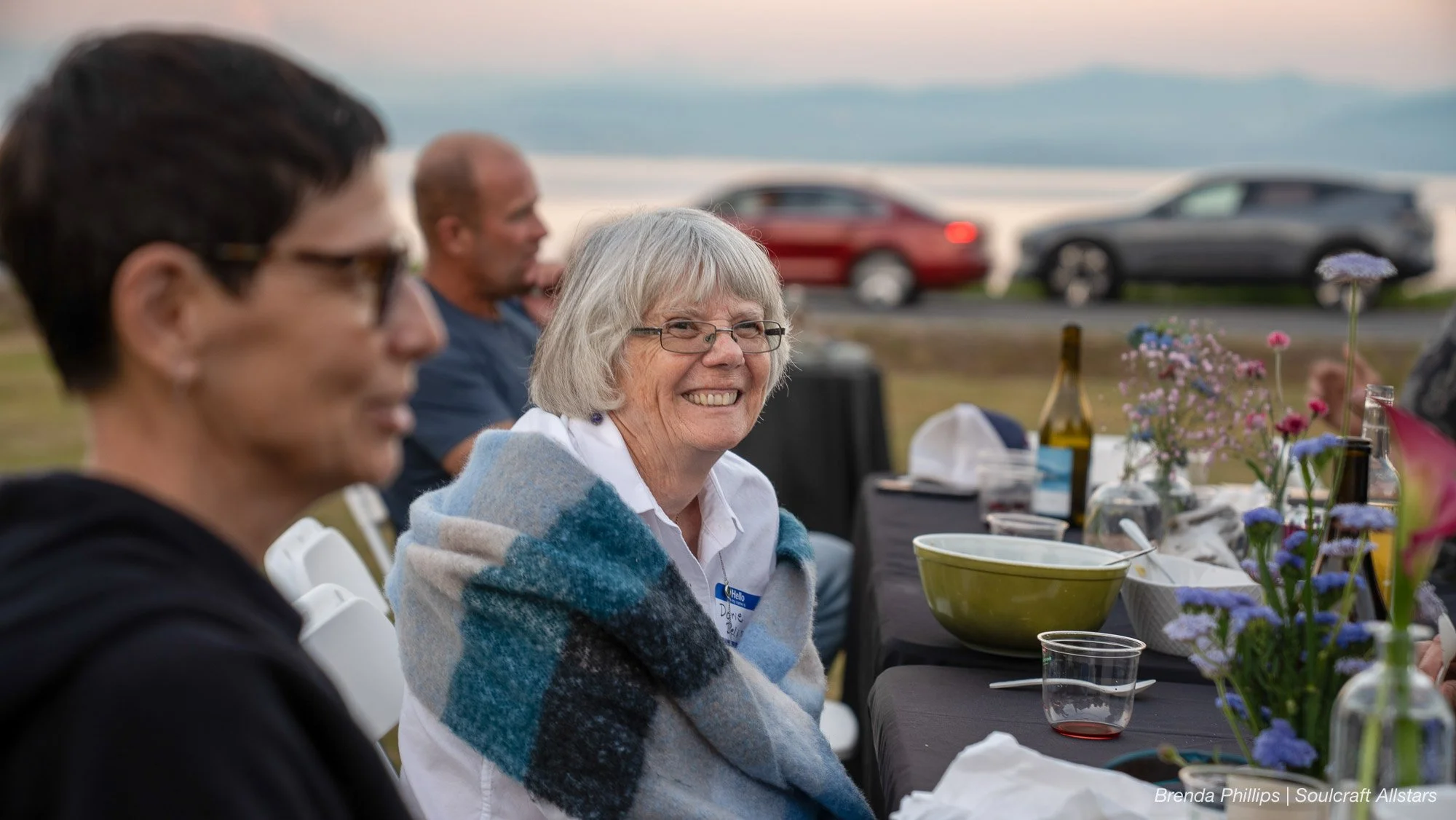
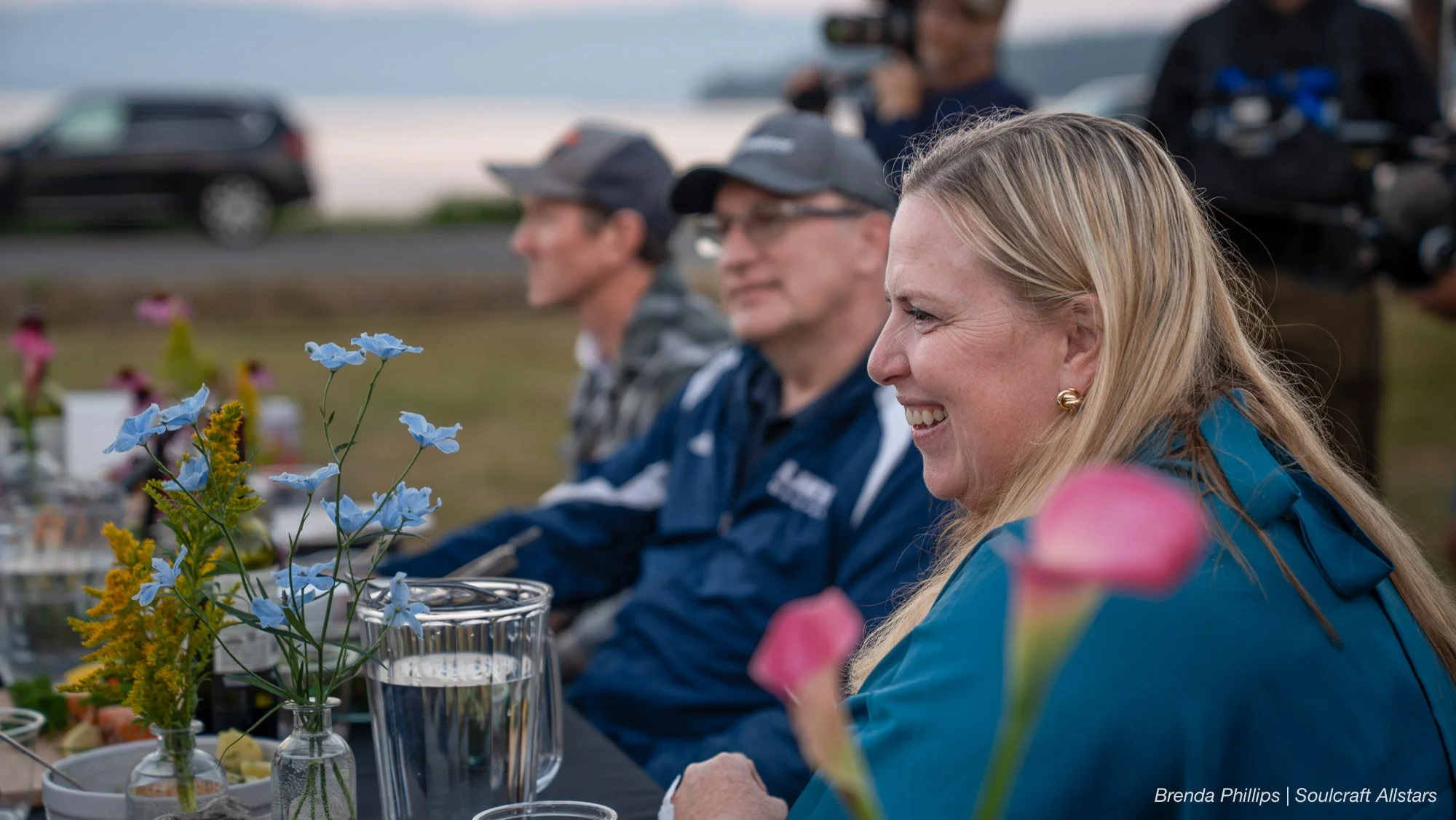
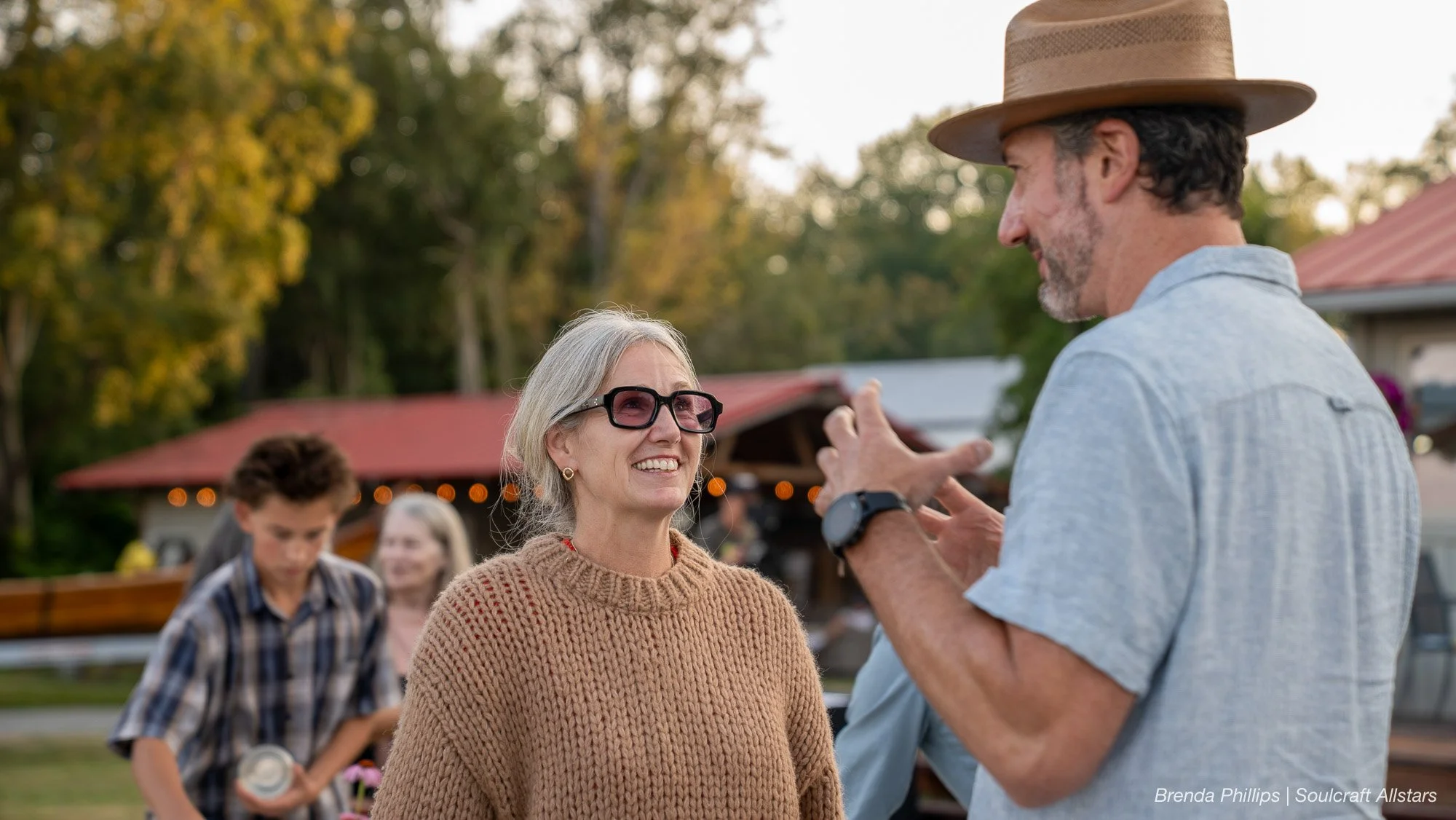
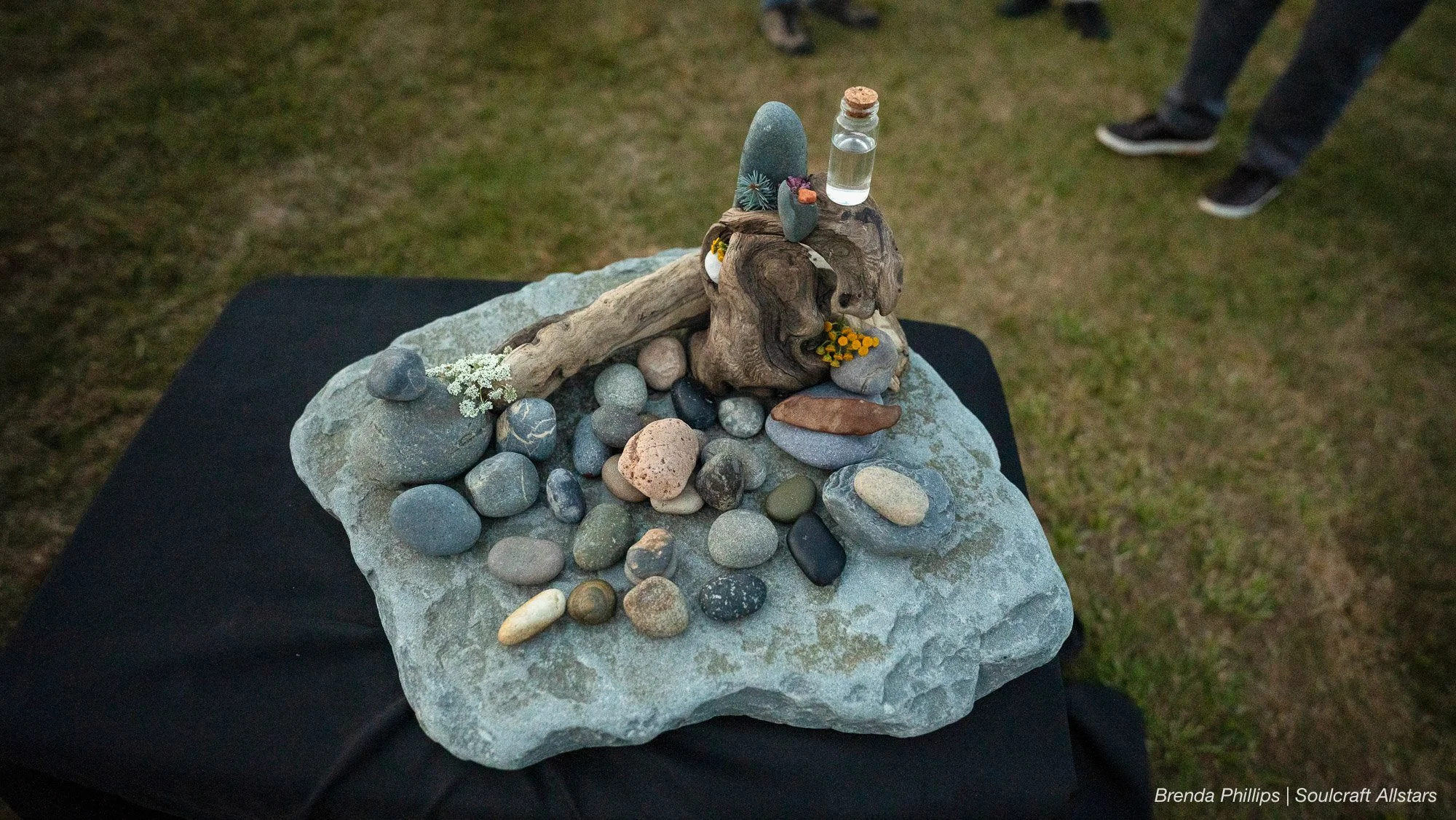
As light faded and the evening's cohort of mosquitoes took flight, Christopher Remmers, classically trained artist with the Water Wars team, gathered the circle once more and passed out small stones collected from the river, asking each person to hold theirs and think of a word or phrase they were ready to leave behind. One by one, people set their stones into a sculpture of driftwood and river rock at the center, offering their reflection to the river rather than to each other.
Christopher closed by reading a passage from John Ruskin:
"When we build, let us think that we build forever. Let it not be for present delight nor for present use alone. Let it be such work as our descendants will thank us for; and let us think, as we lay stone on stone, that a time is to come when those stones will be held sacred because our hands have touched them, and that people will say, as they look upon the labor and wrought substance of them, 'See! This our mothers and fathers did for us.'"
The evening closed on the same question Lisa had raised hours earlier, now returned to by the whole circle: as these relationships deepen, how do we move past old barriers to do the difficult work that comes next?
If there was one message the evening left unanimous, it was something State Representative Alicia Rule put plainly as the circle closed: imagine these groups carrying one voice to the state and to Congress. That's a movement no one could say no to. Together, this community can do far more than any of us could do apart.
That message didn't stay just a feeling. Eleven days later, many of the same voices carried it into the Department of Ecology's regional roundtable, one of several the state has hosted across its watersheds this summer. Ecology's own leaders left that room saying this community had arrived more ready to work together than anywhere else they'd sat down to listen. Both moments matter in their own right, part of the same slow, ongoing work of showing up for each other, and for this river, gathering by gathering, for as long as it takes.
Who Was in the Circle
Tribal Leadership & Voices
Raven Borsey, Lummi Tribal Member & Anthropologist
Terry Hillaire, Salmon Chef; Former Lummi Fisheries Commissioner
Tony Hillaire, Chairman, Lummi Indian Business Council
Jay Julius, Fisherman; Member, Lummi Indian Business Council; Founder & President, Se'Si'Le
Rena Priest, Lummi Tribal Member; Former Washington State Poet Laureate
Dana Wilson, Fisherman; Former Lummi Indian Business Council Member
Lisa Wilson, Former Lummi Indian Business Council Member & Salmon Defense Board Member
Farming & Agriculture
Rich Appel, Owner, Appel Family Dairy; President, Whatcom Family Farmers
Dorie Belisle, Co-owner, Bellewood Farms & Distillery
Greg Ebe, Owner/Manager, Ebe Farms
Fred Likkel, Executive Director, Whatcom Family Farmers
Brad Rader, Owner, Rader Farms; Vice President, Whatcom Family Farmers
Gavin Willis, Executive Director, Ag Water Board of Whatcom County; Executive Director, Washingon Red Raspberry Commission
Civic & Elected Leadership
Chris Elder, Farmland Preservation Program Manager, King County
Paula Harris, Flood Planning & Mitigation Manager, Whatcom County
Scott Korthuis, Mayor, City of Lynden
Kim Lund, Mayor, City of Bellingham
John Perry, Mayor, City of Everson
Alicia Rule, State Representative, Washington State House of Representatives
Satpal Sidhu, Whatcom County Executive
Gary Stoyka, Natural Resources Program Manager, Whatcom County
Environmental & Community Organizations
Perry Eskridge, Government Affairs, Building Industry Association of Whatcom County
Mauri Ingram, President & CEO, Whatcom Community Foundation
Brandy Reed, Executive Director, Whatcom Conservation District
Ander Russell, Co-Executive Director, RE Sources
Rachel Vasak, Executive Director, Whatcom Land Trust
Carl Weimer, Environmental Consultant; Former Whatcom County Council Member
Water Wars (how to avoid) Team
Aaron Straight, Jeffrey Bos, Ethan Smith, Christopher Remmers
With gratitude also to Jesse Straight, Hanako Dionne, Zurai Straight, Noah Westgate, and Jamie Valenta for making the evening run, and to the Soulcraft Allstars film crew for documenting it with such care.
Regretfully Declined:
Anna Brewer, Vice-Chairwoman, Nooksack Tribal Council
Eric Hirst, Environmental Consultant
Tom Tebb, Former Direcror, WA Dept. of Ecology Office of Columbia River
Joe Timmons, State Representative, Washington State House of Representatives
