Common Waters: Delta
“We all believe. We all belong.”
Those words came from the children. And they carried the whole day.
Whatcom County has a water problem. Everyone who lives here knows it. The Nooksack River drains this watershed from the Cascades to the Salish Sea, flowing through lands with a long memory, past farms and tribal fishing grounds and neighborhoods that are closer to each other than their histories might suggest. It also flows through a history of broken promises, rerouted rivers, and a century of legal battles over who gets to say what the water is for.
Over the past year, Water Wars (how to avoid) has co-hosted a series of events asking a simple question: what happens when the people who share this river actually share time together?
On May 2nd, on a clear and beautiful spring day, nearly 100 people found part of the answer.
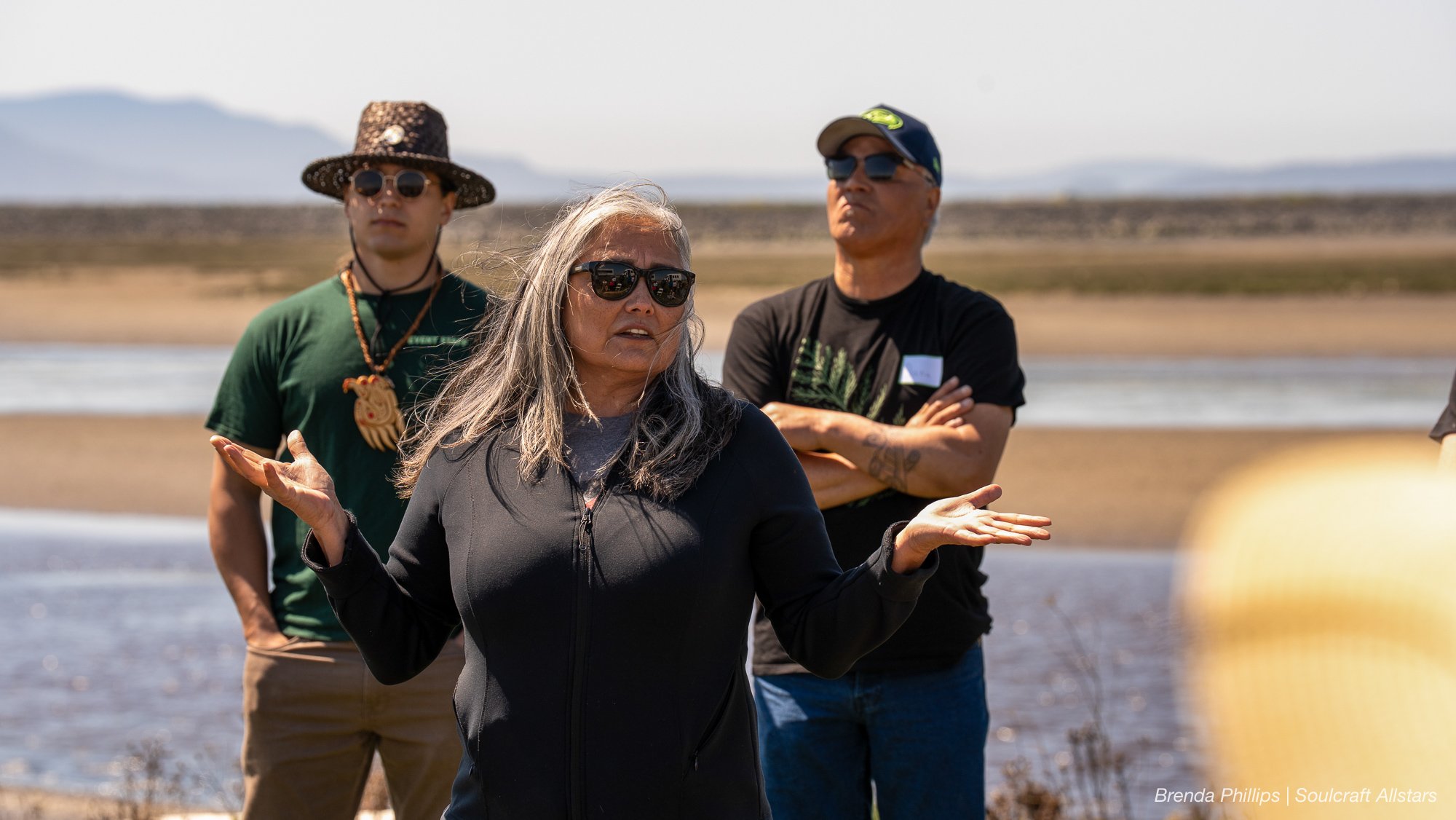
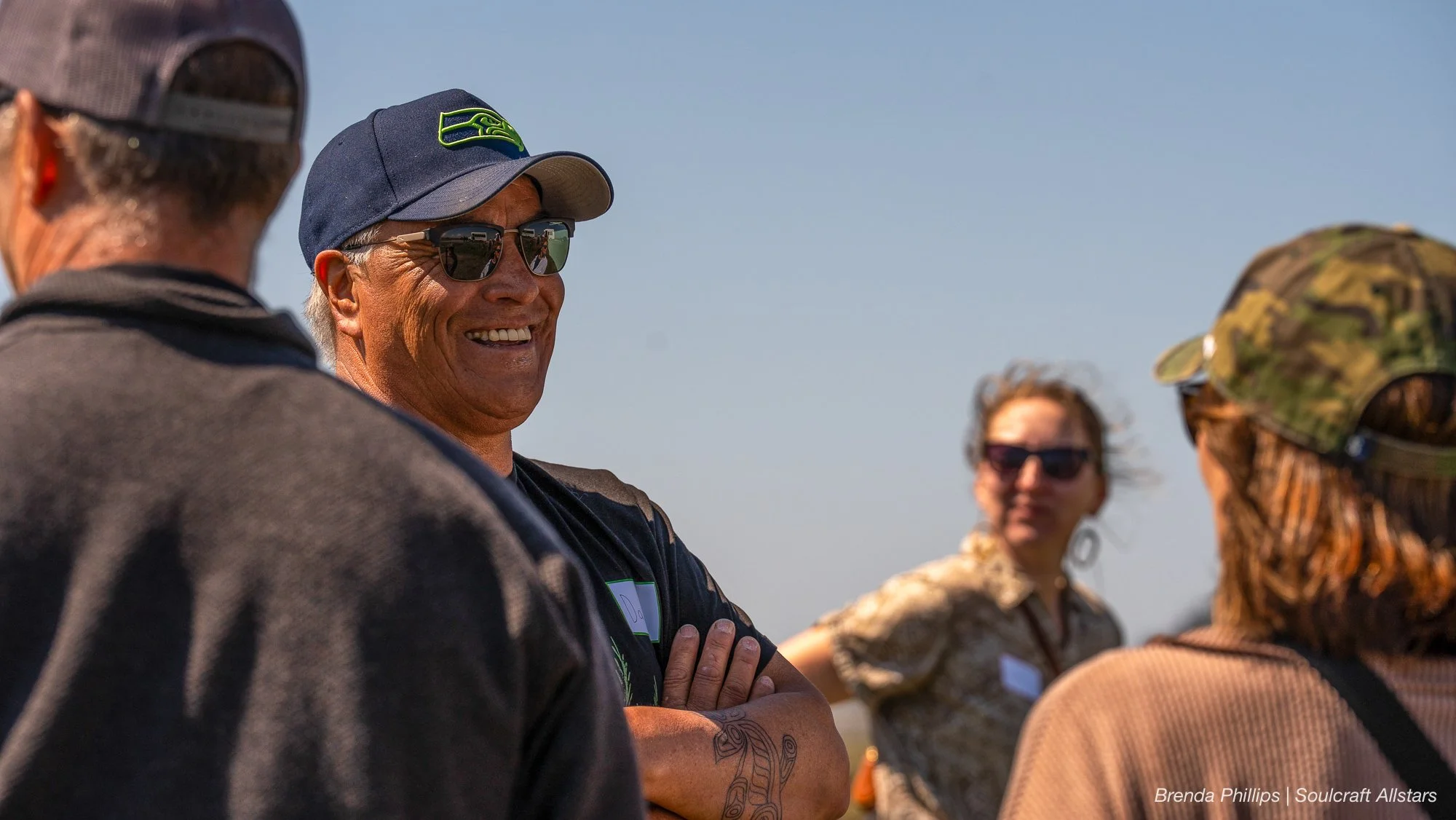
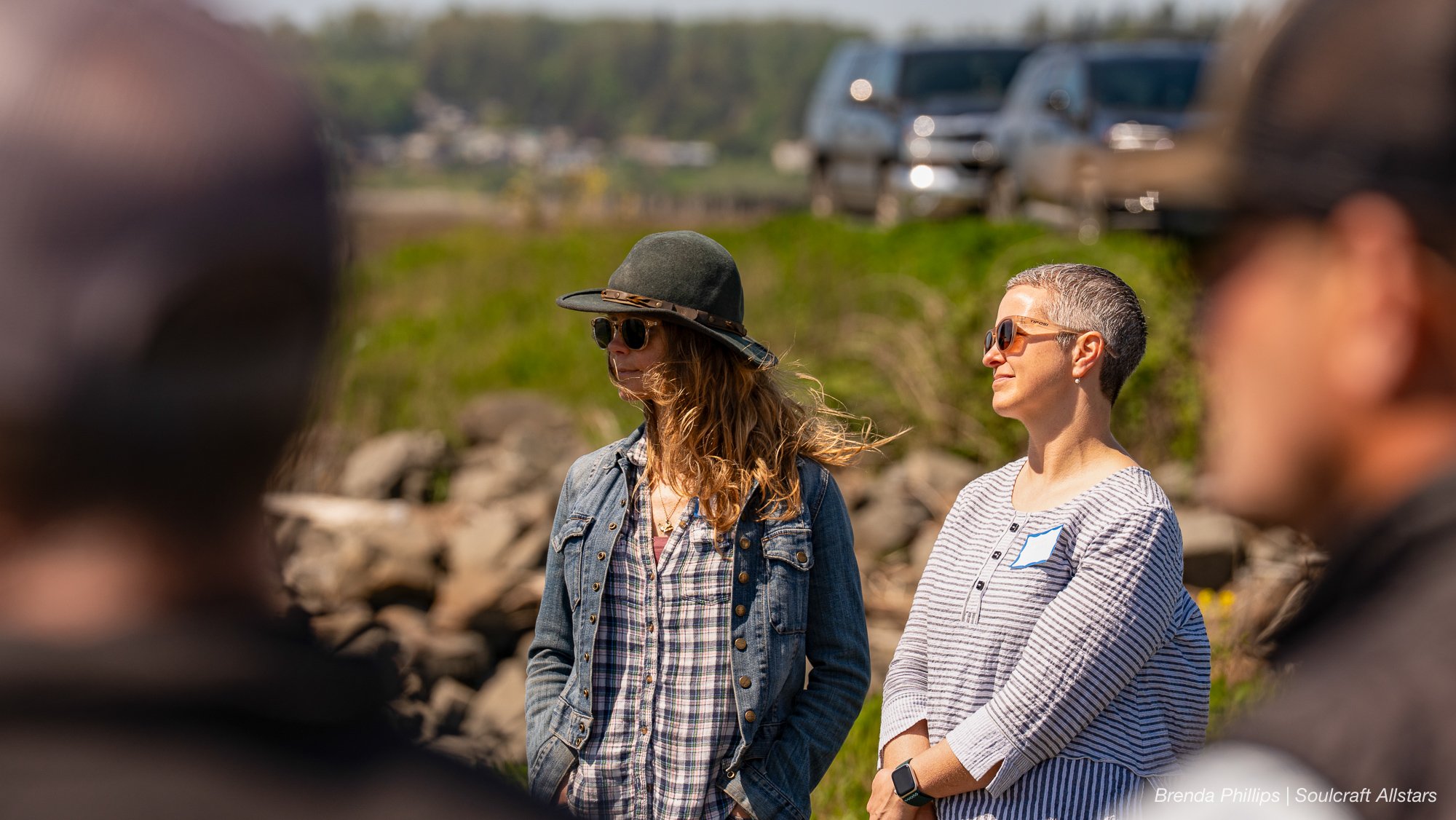
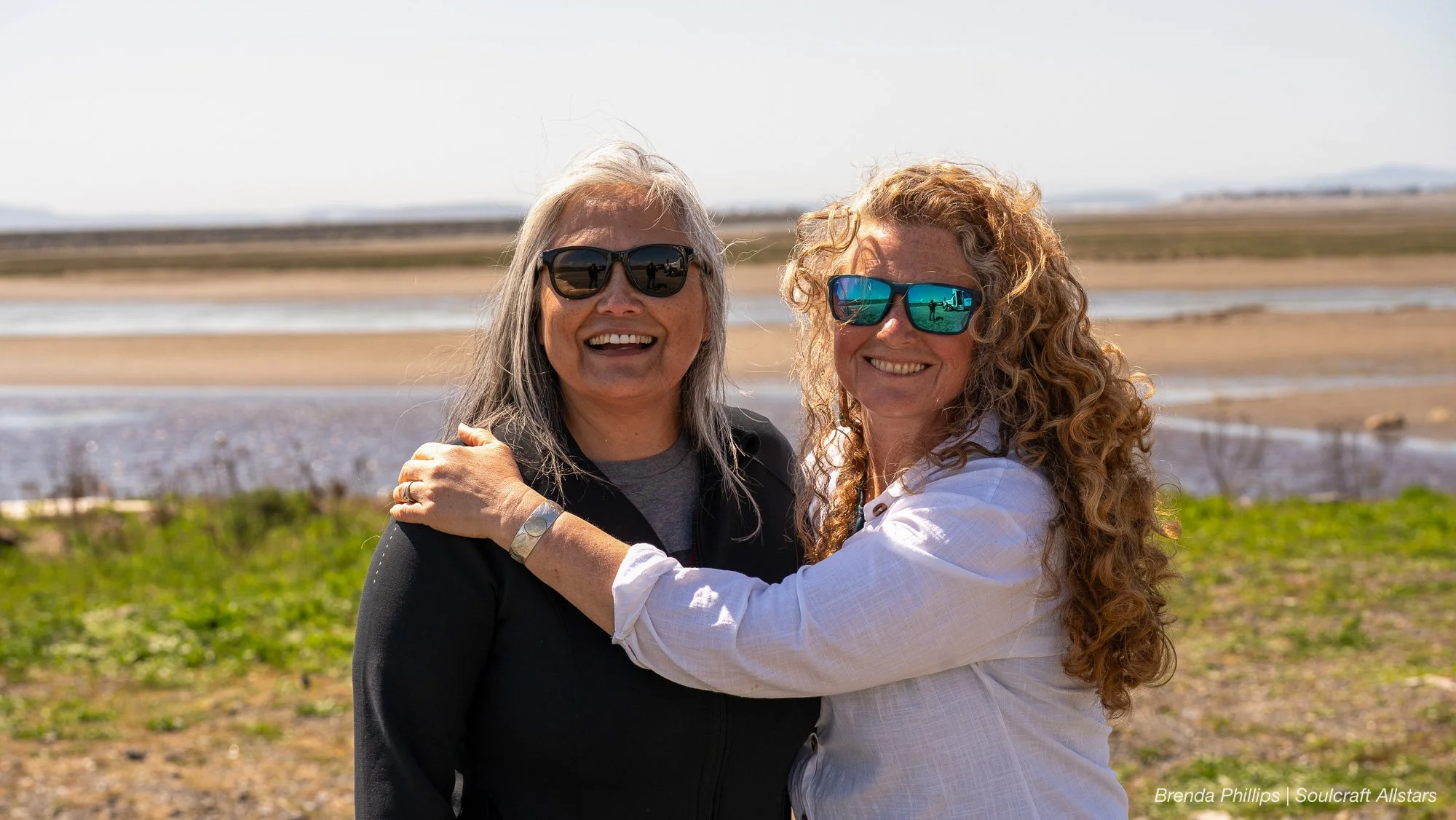
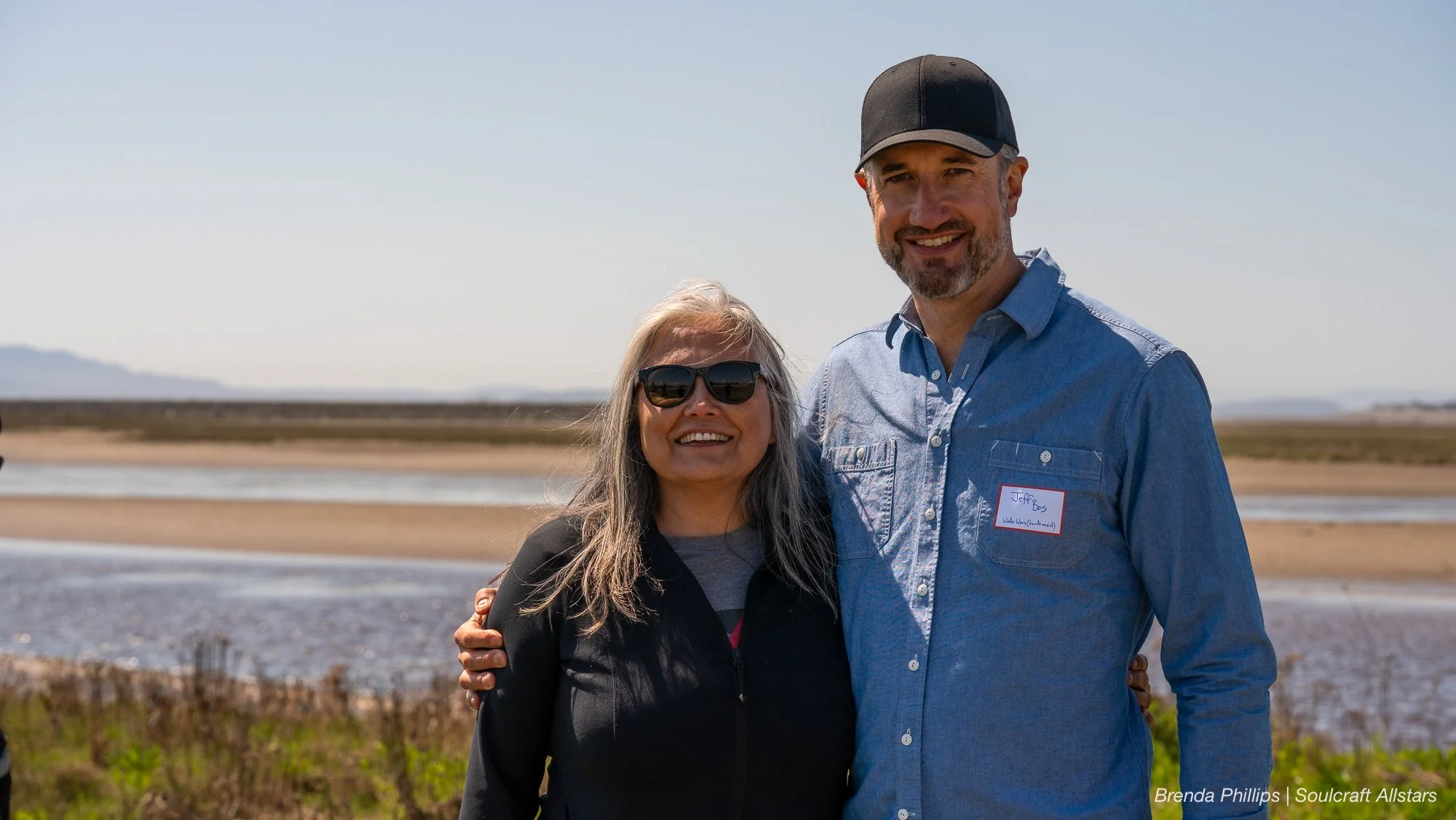
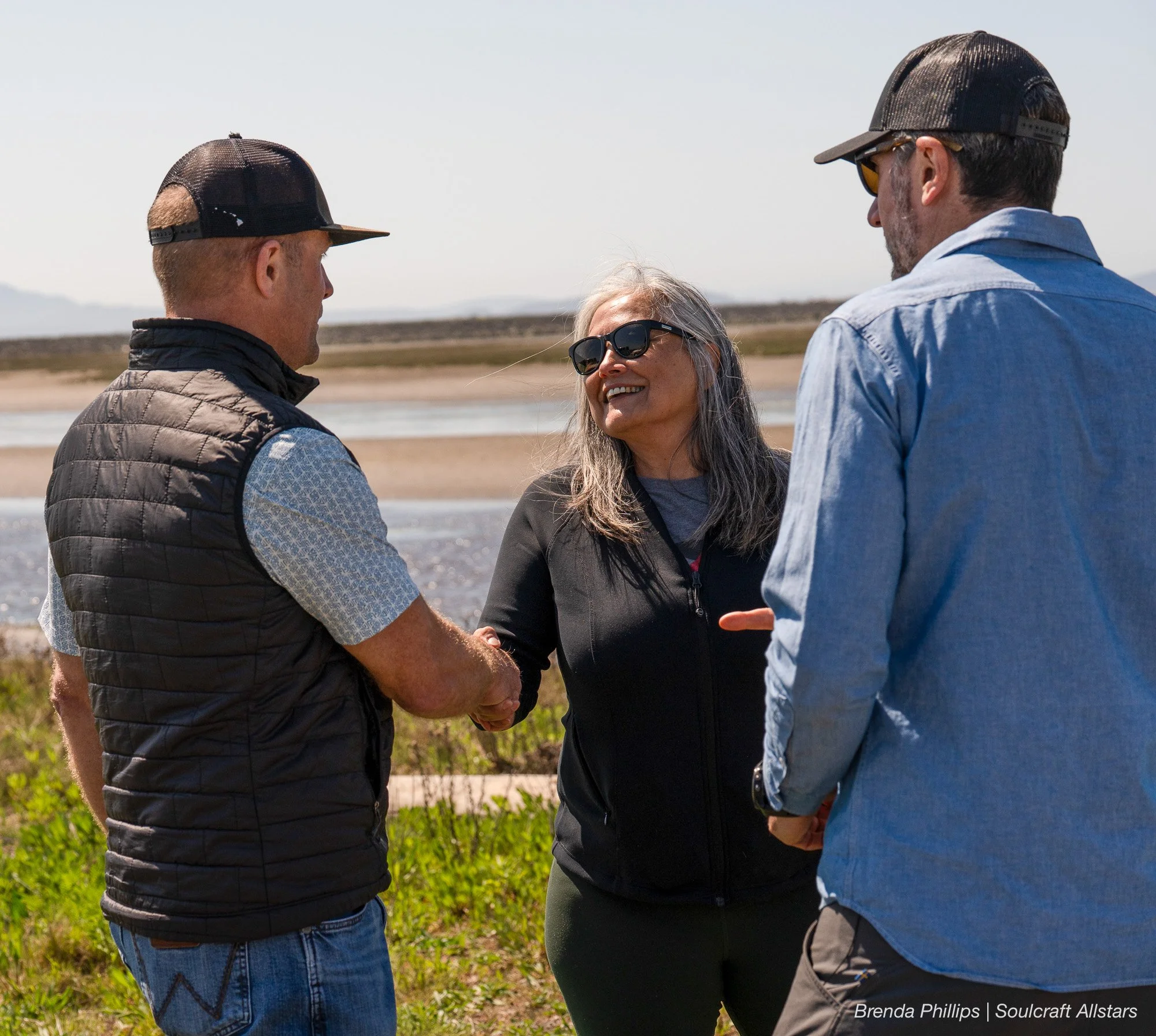
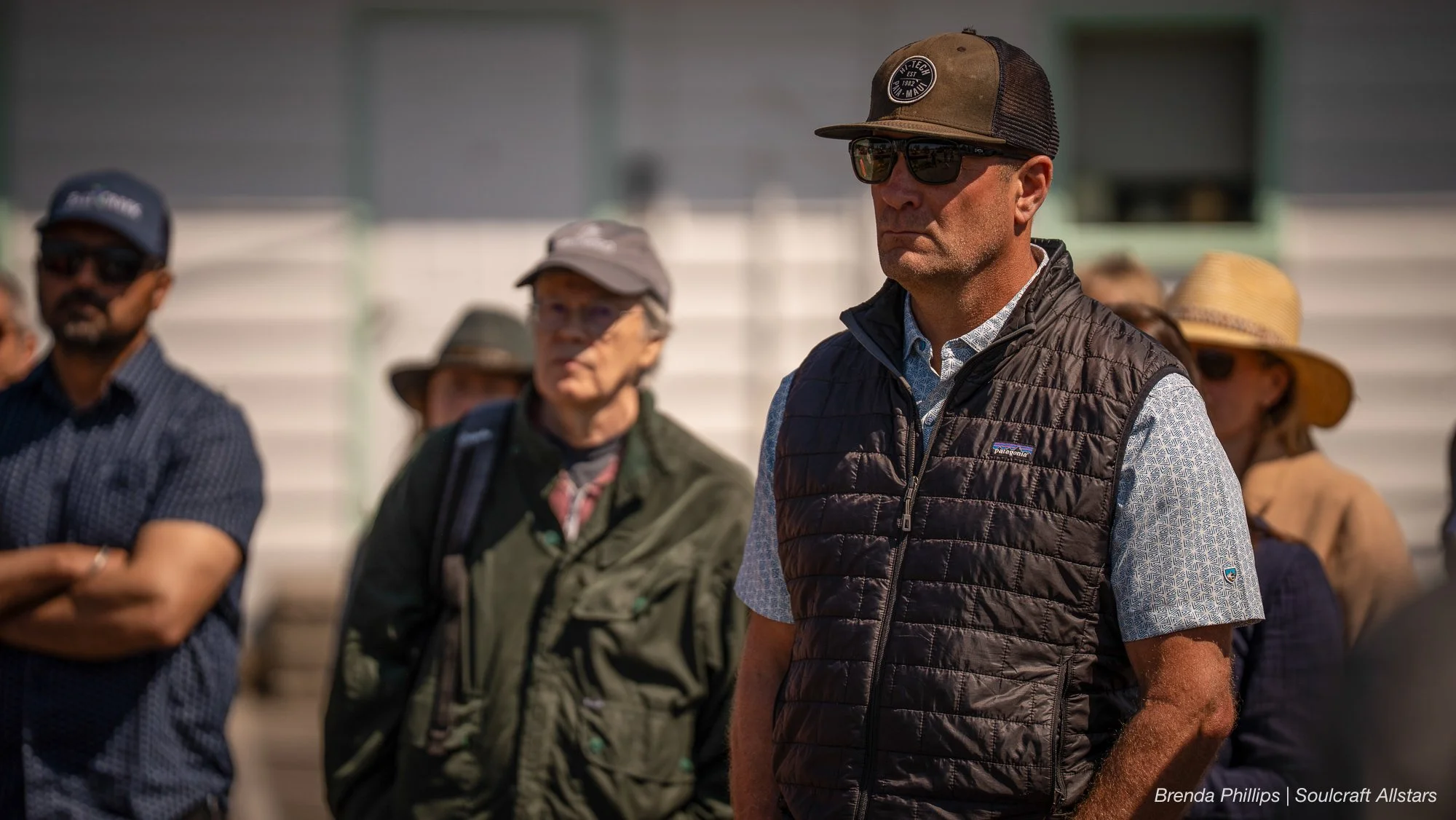
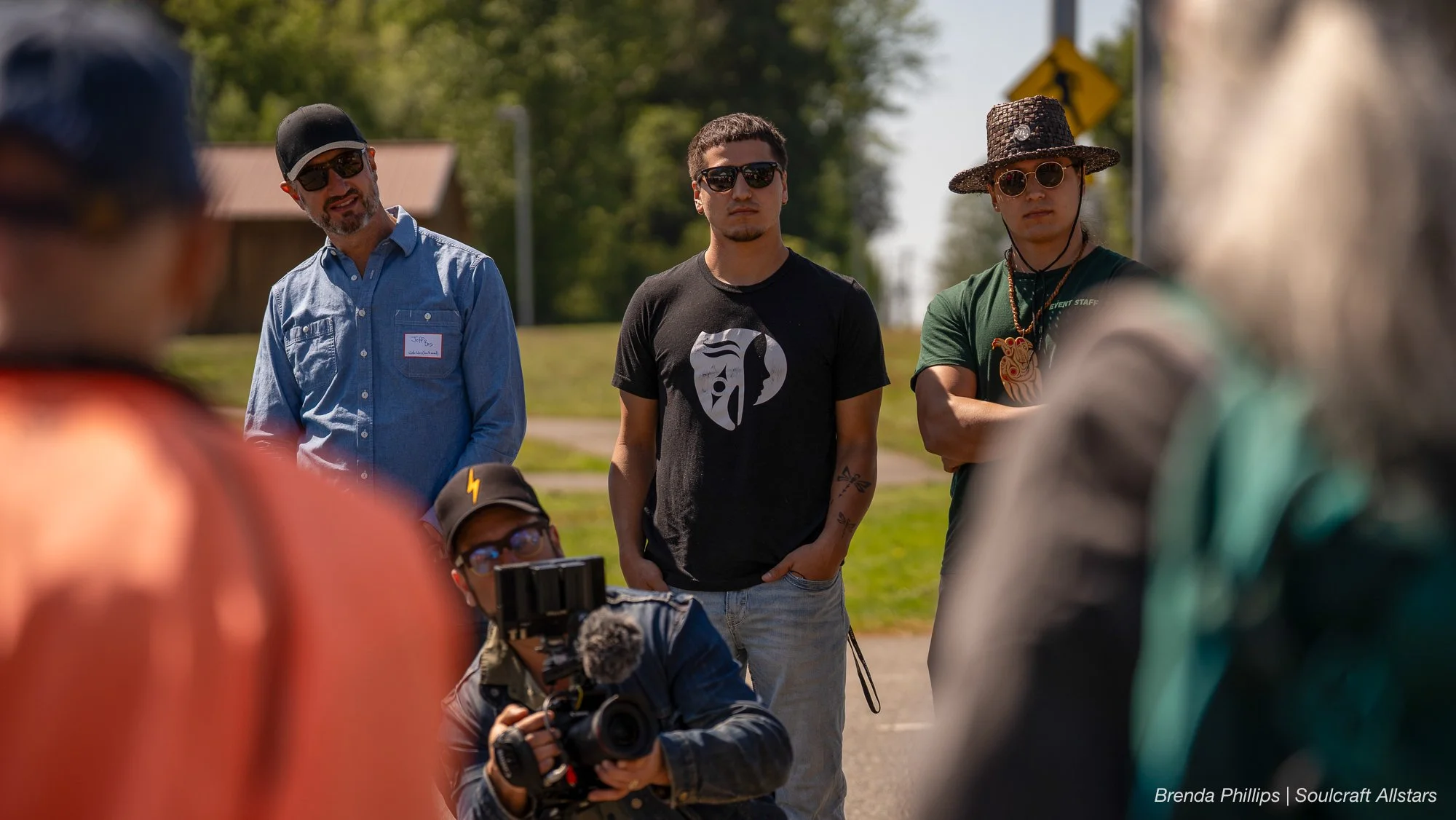
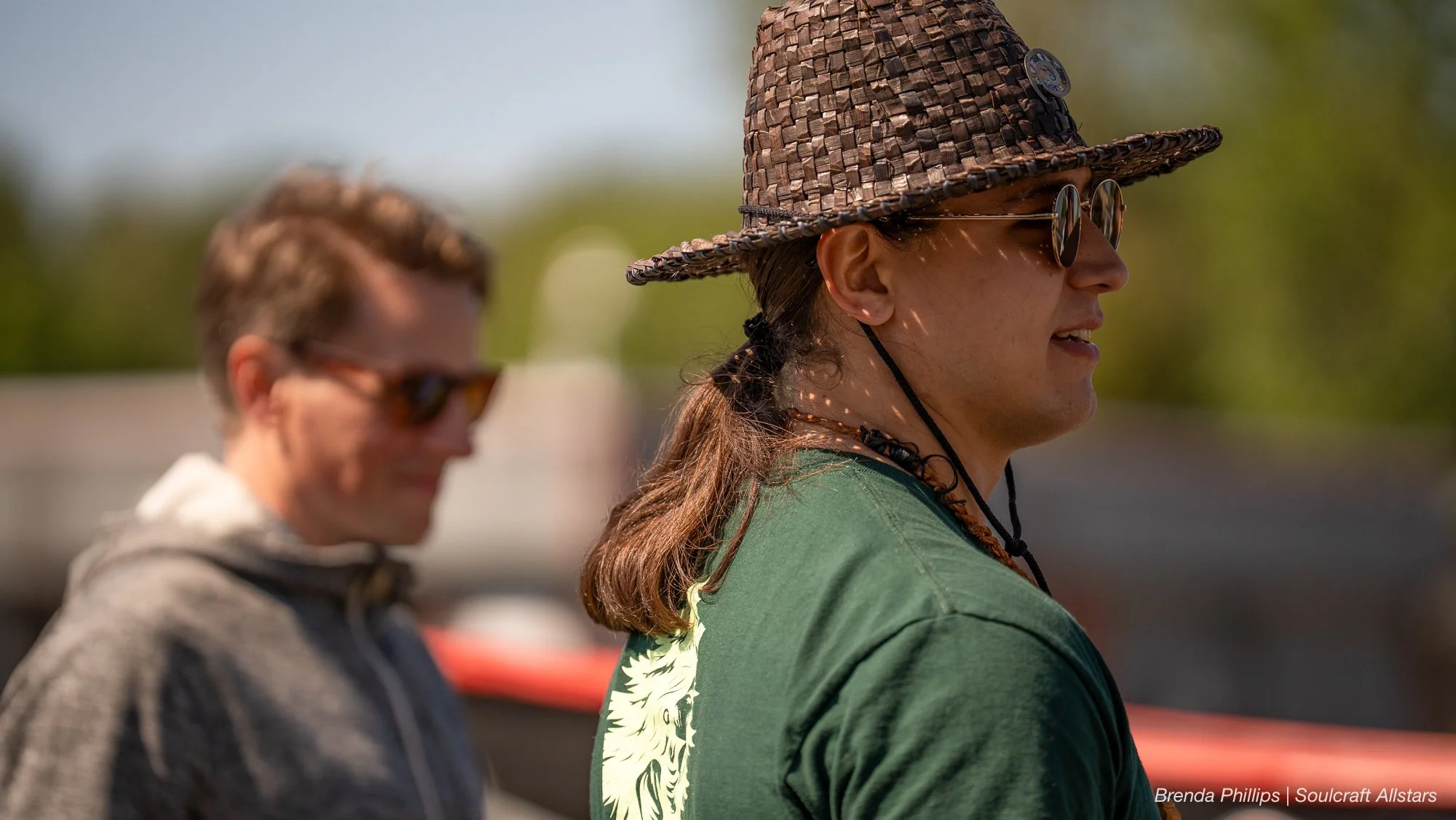
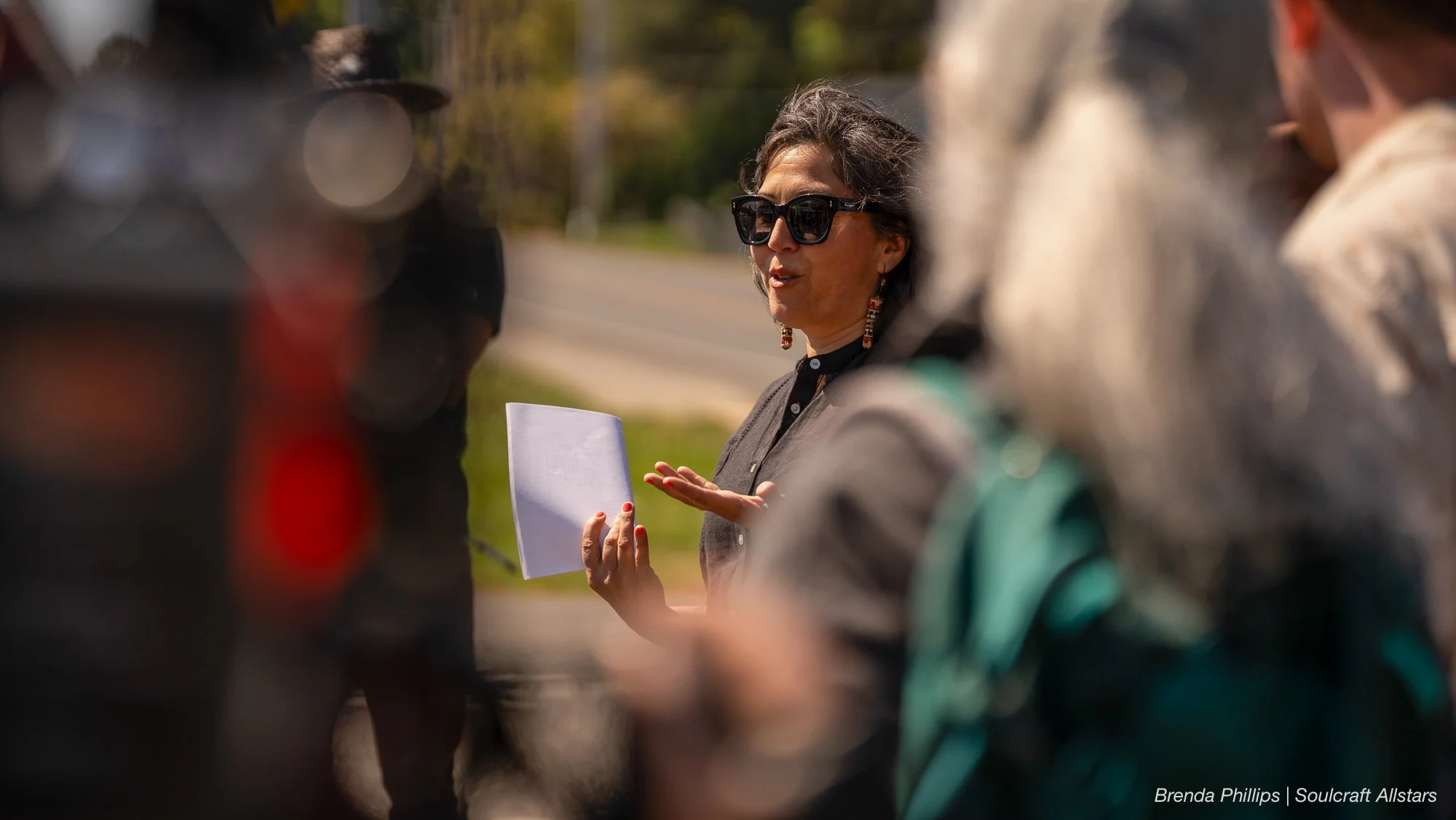
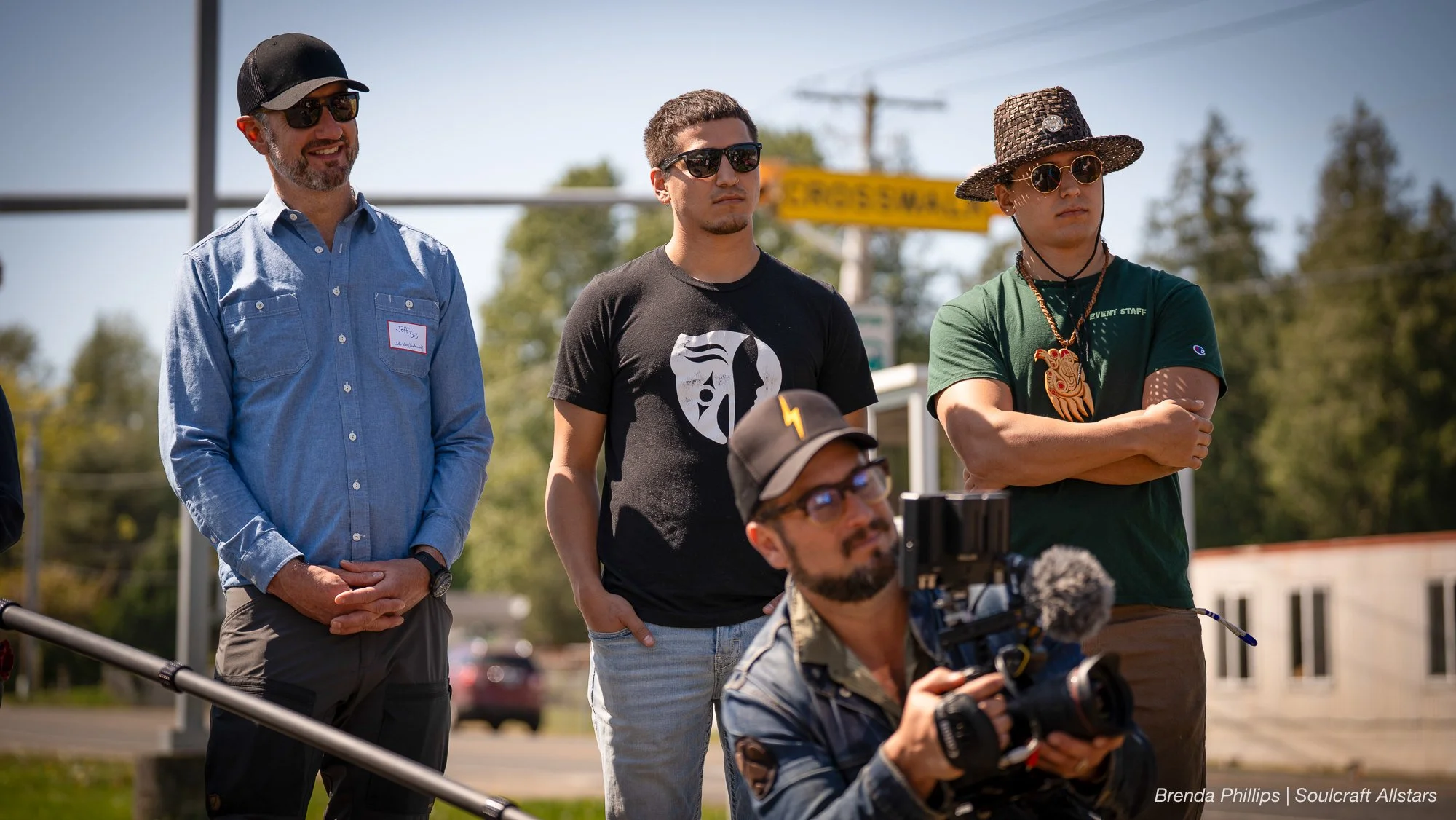
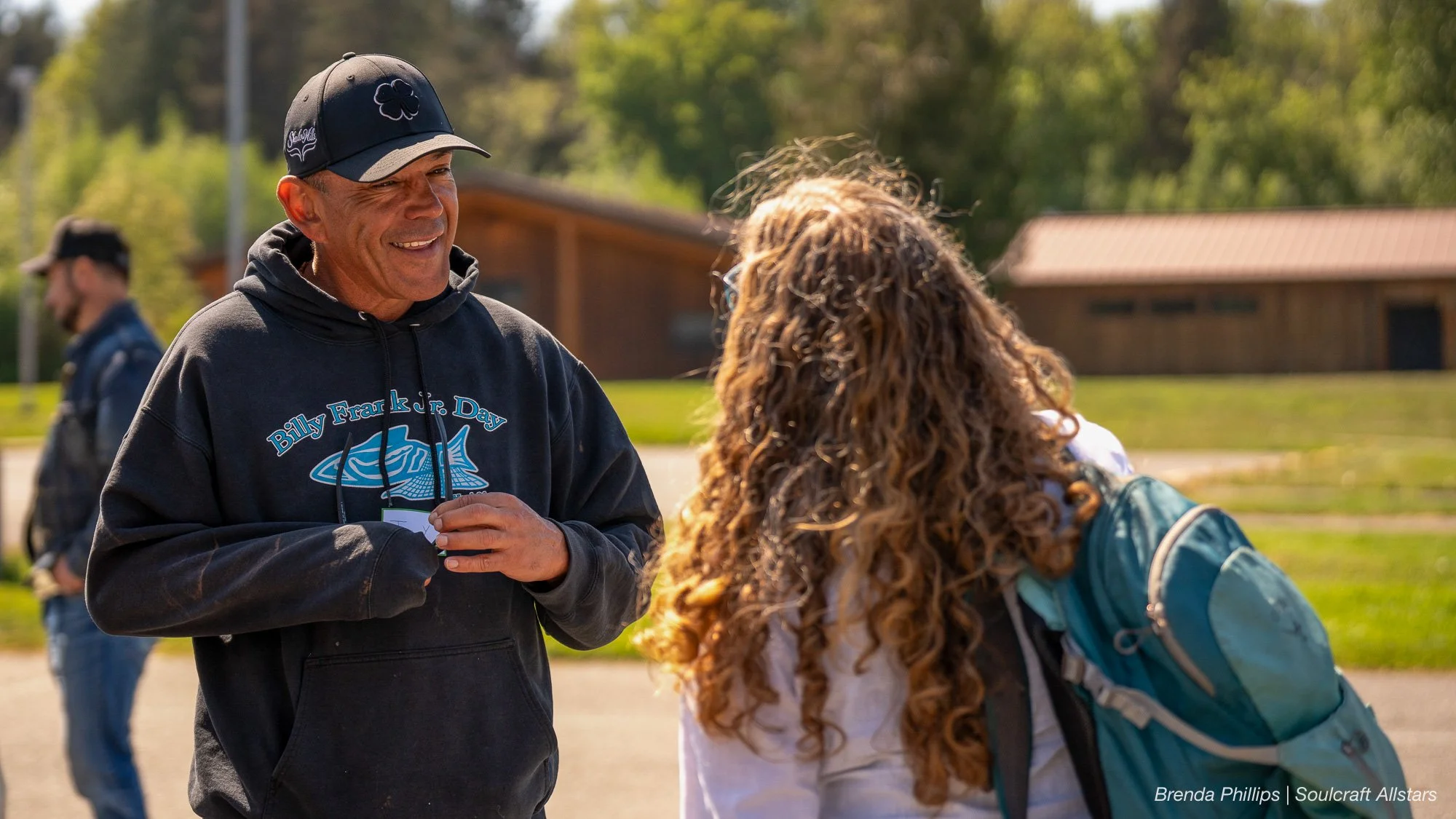
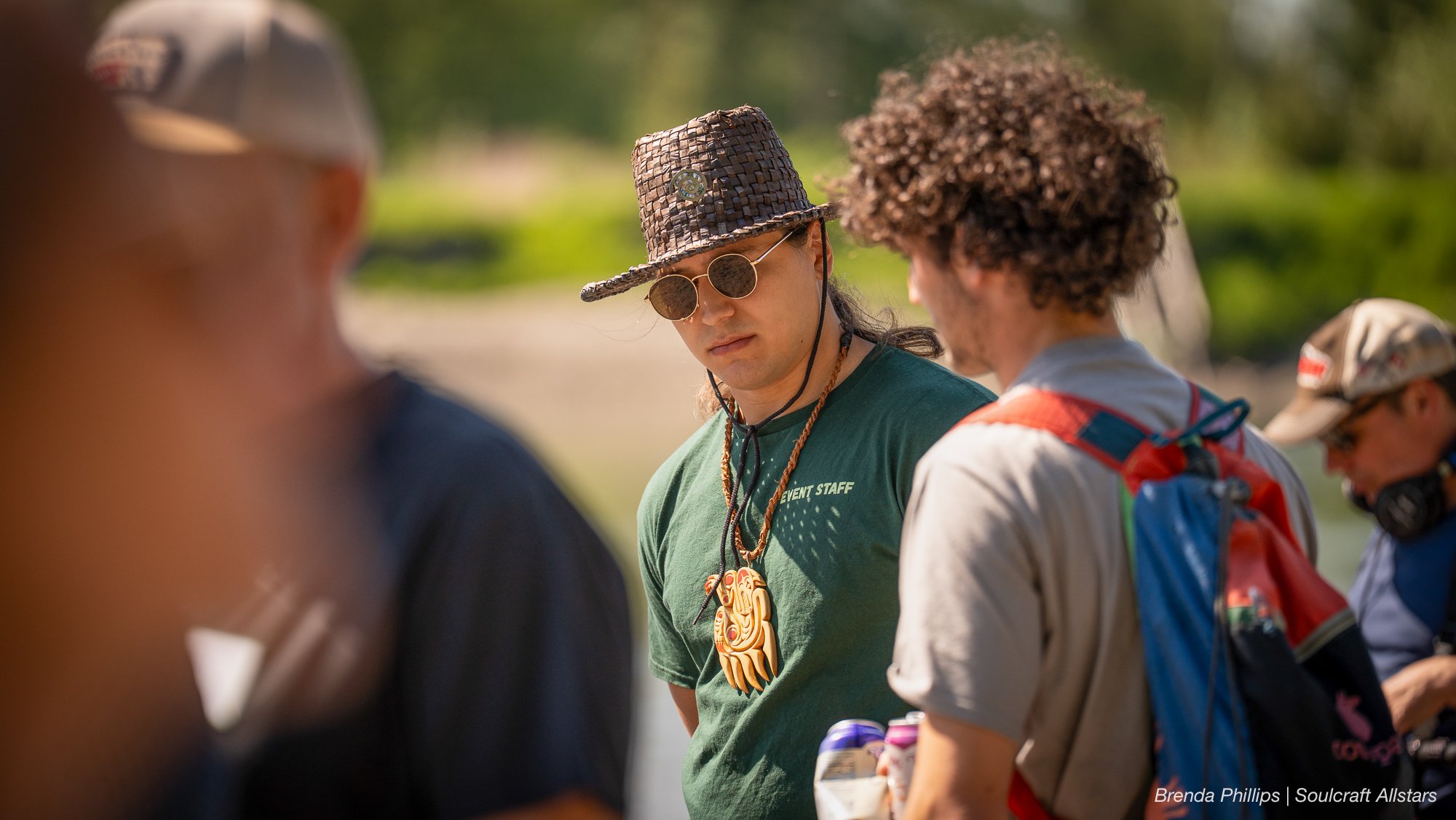
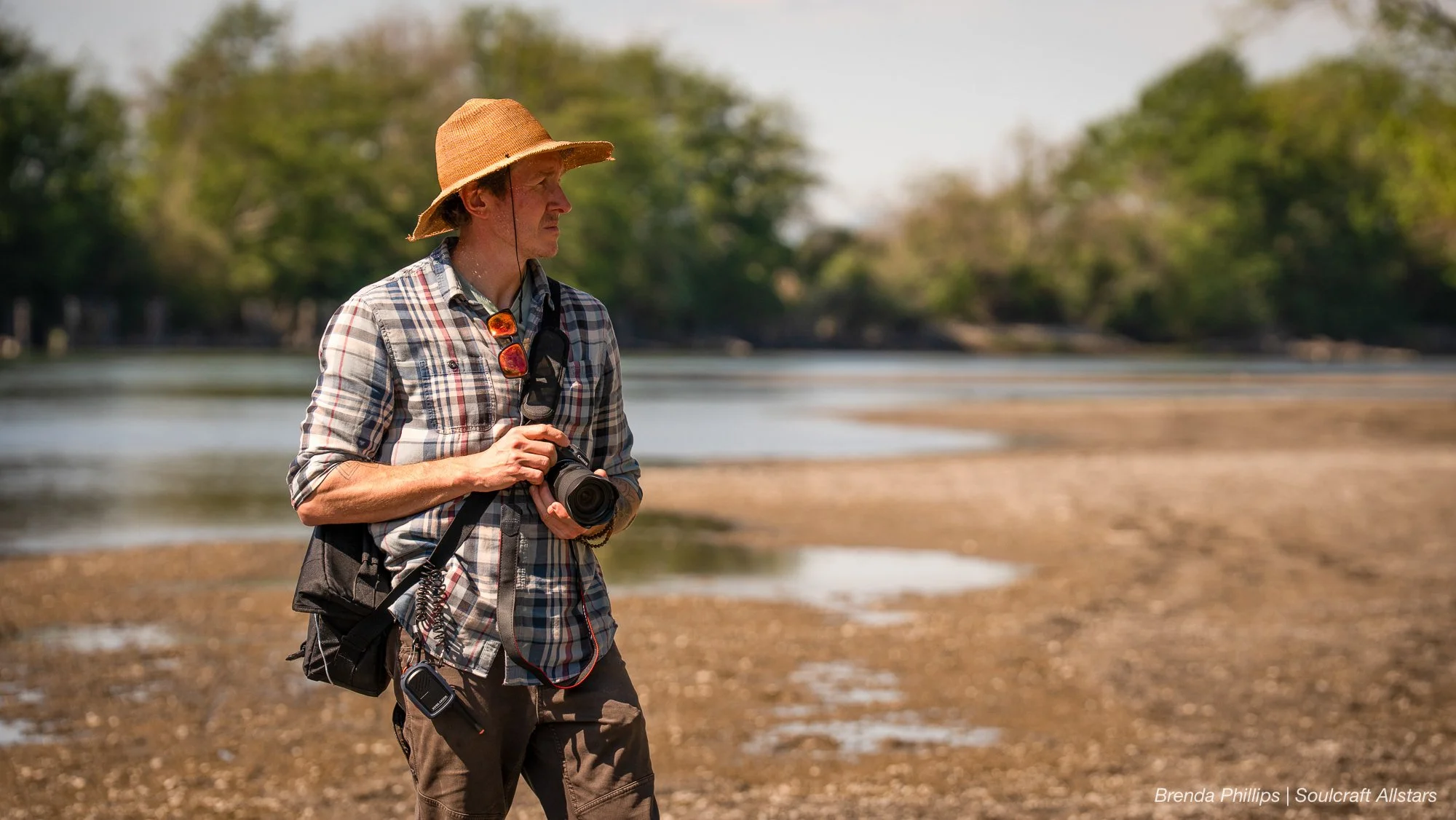
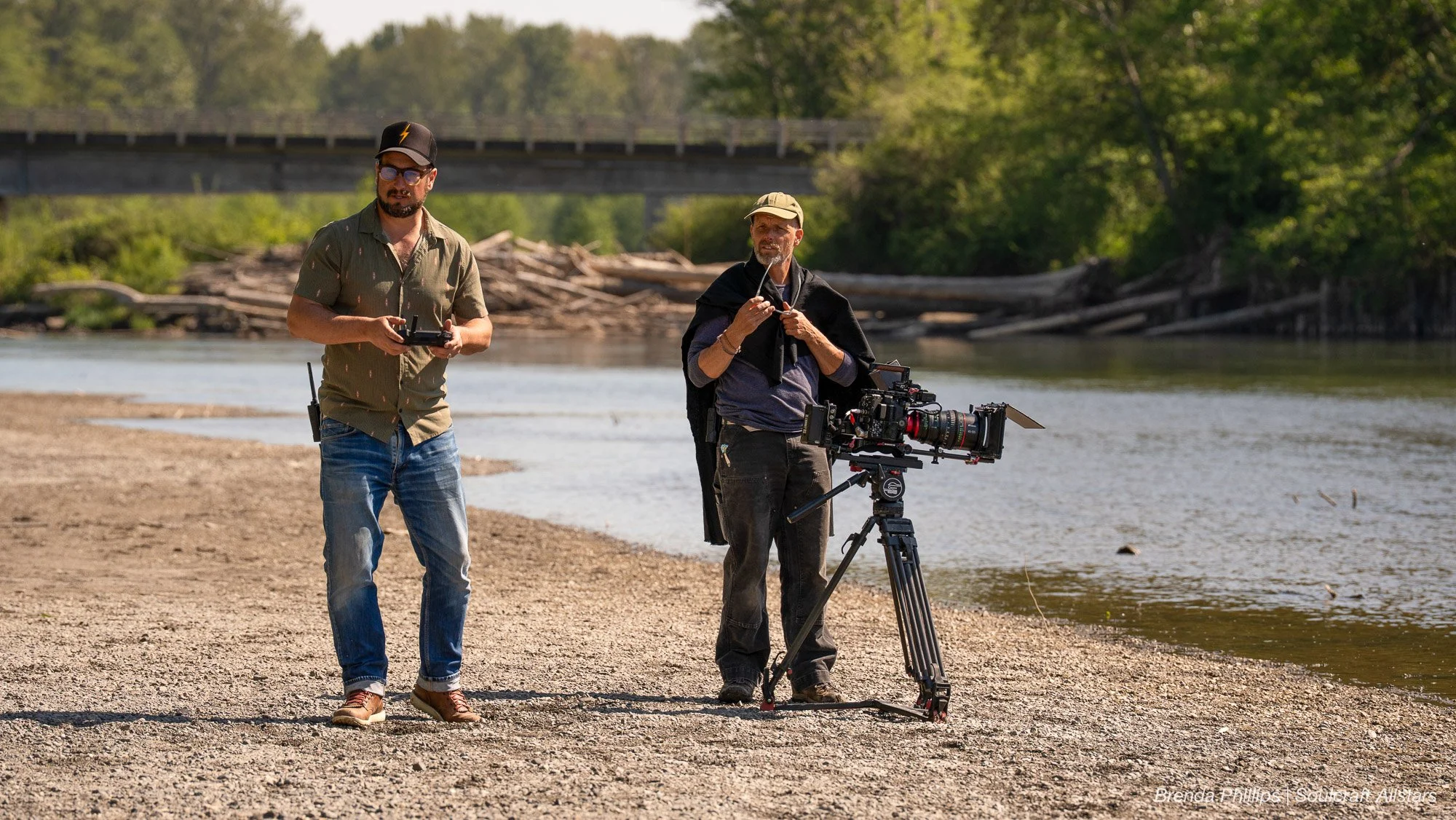
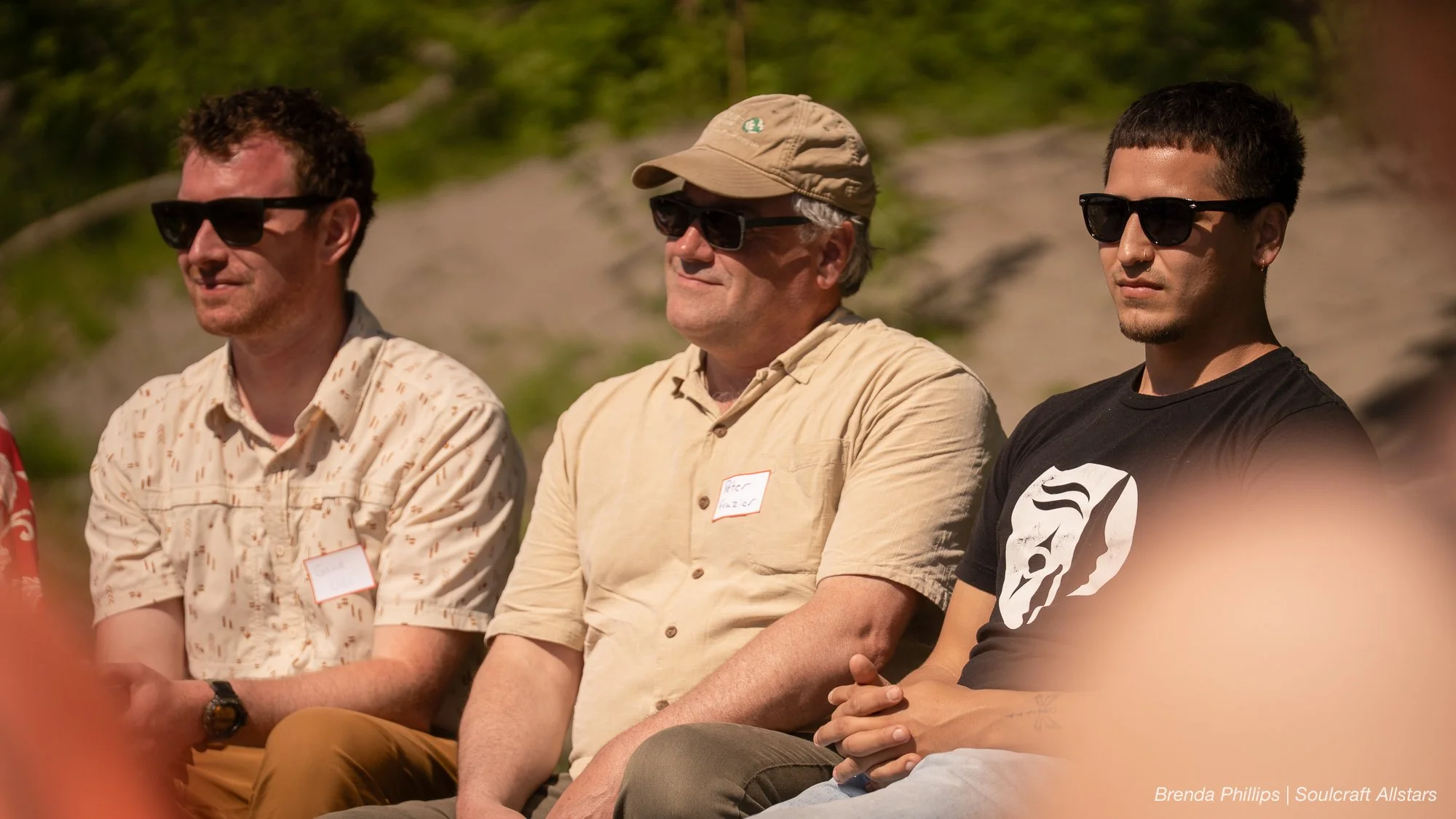
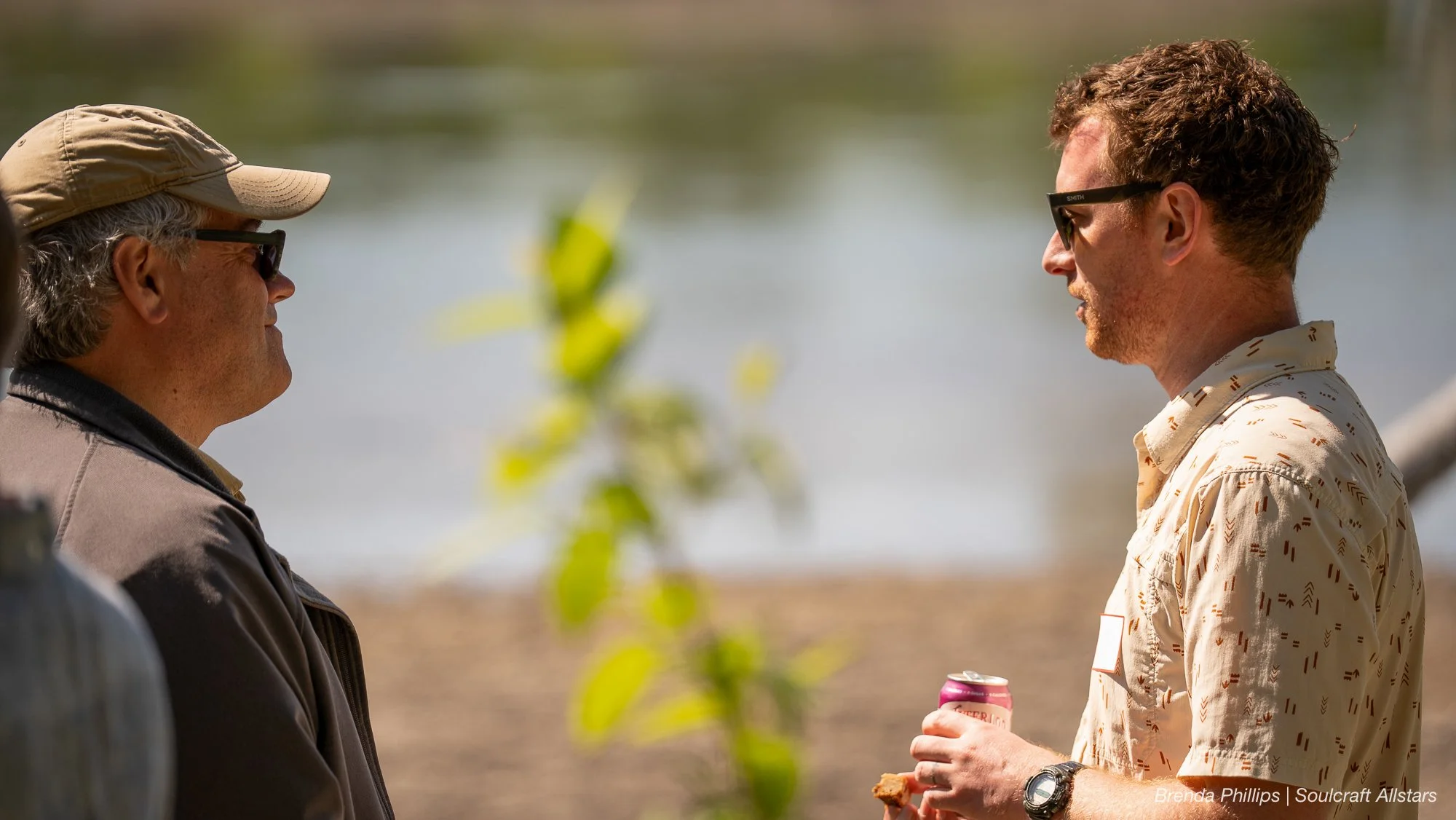
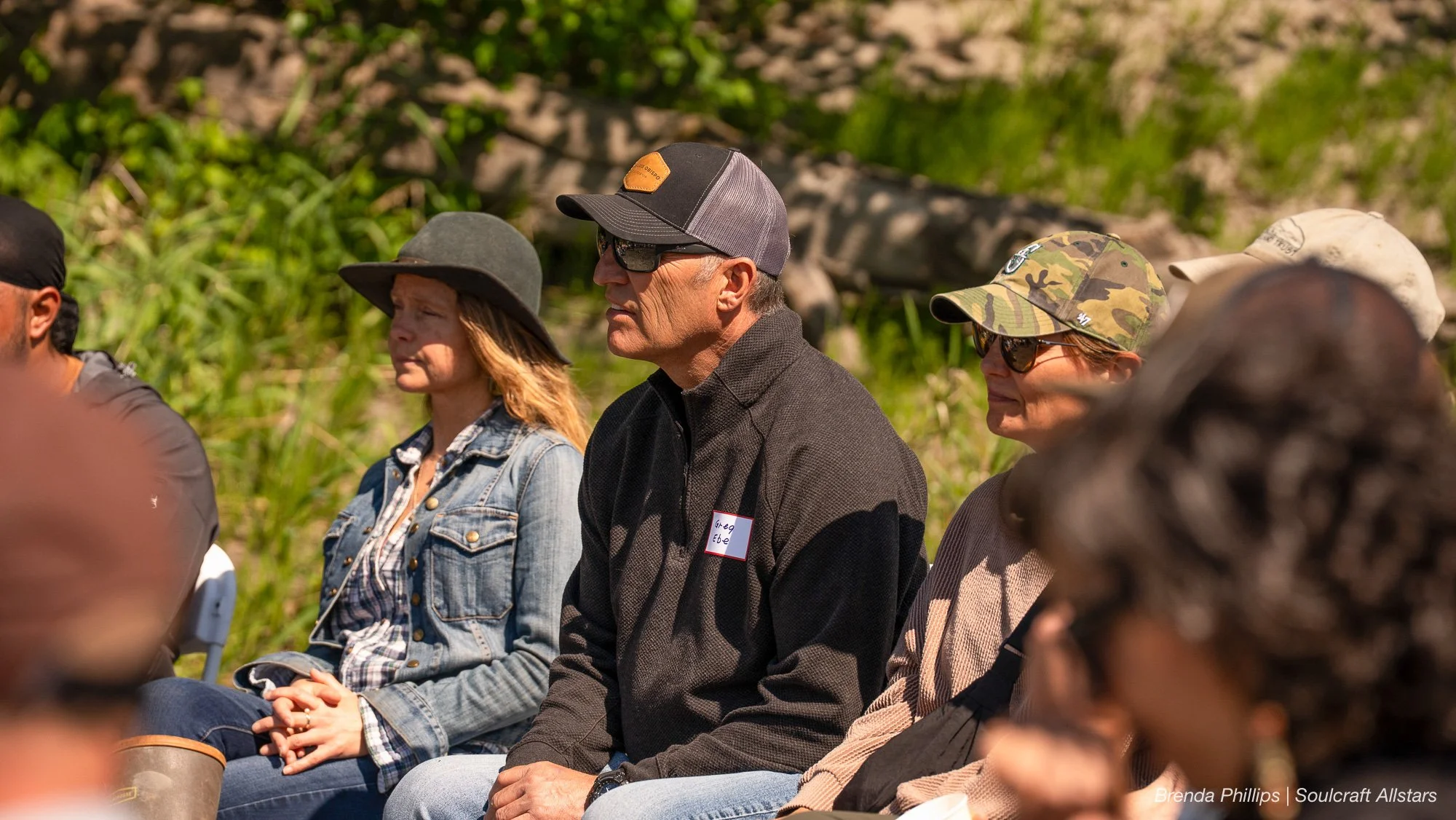
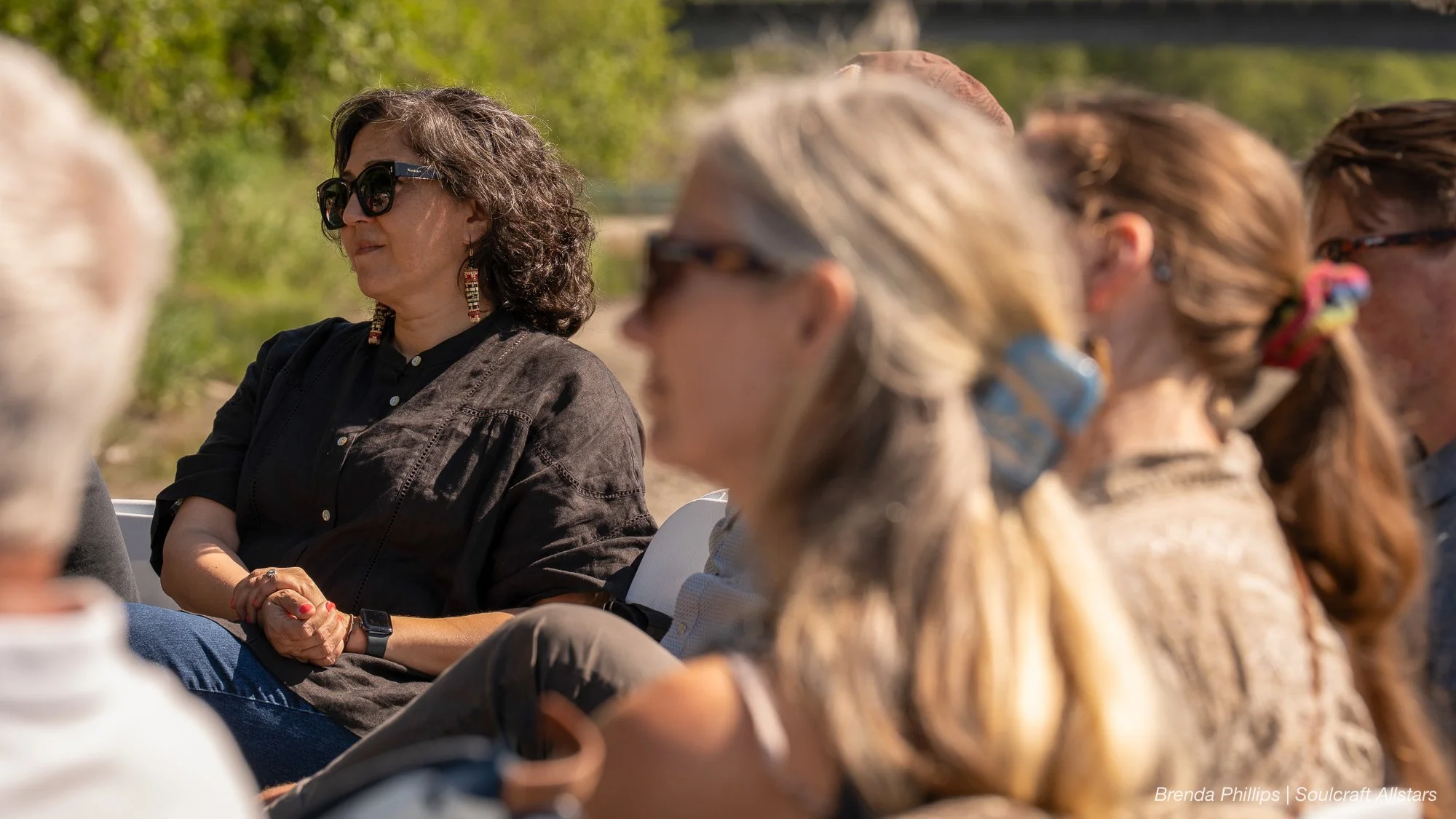
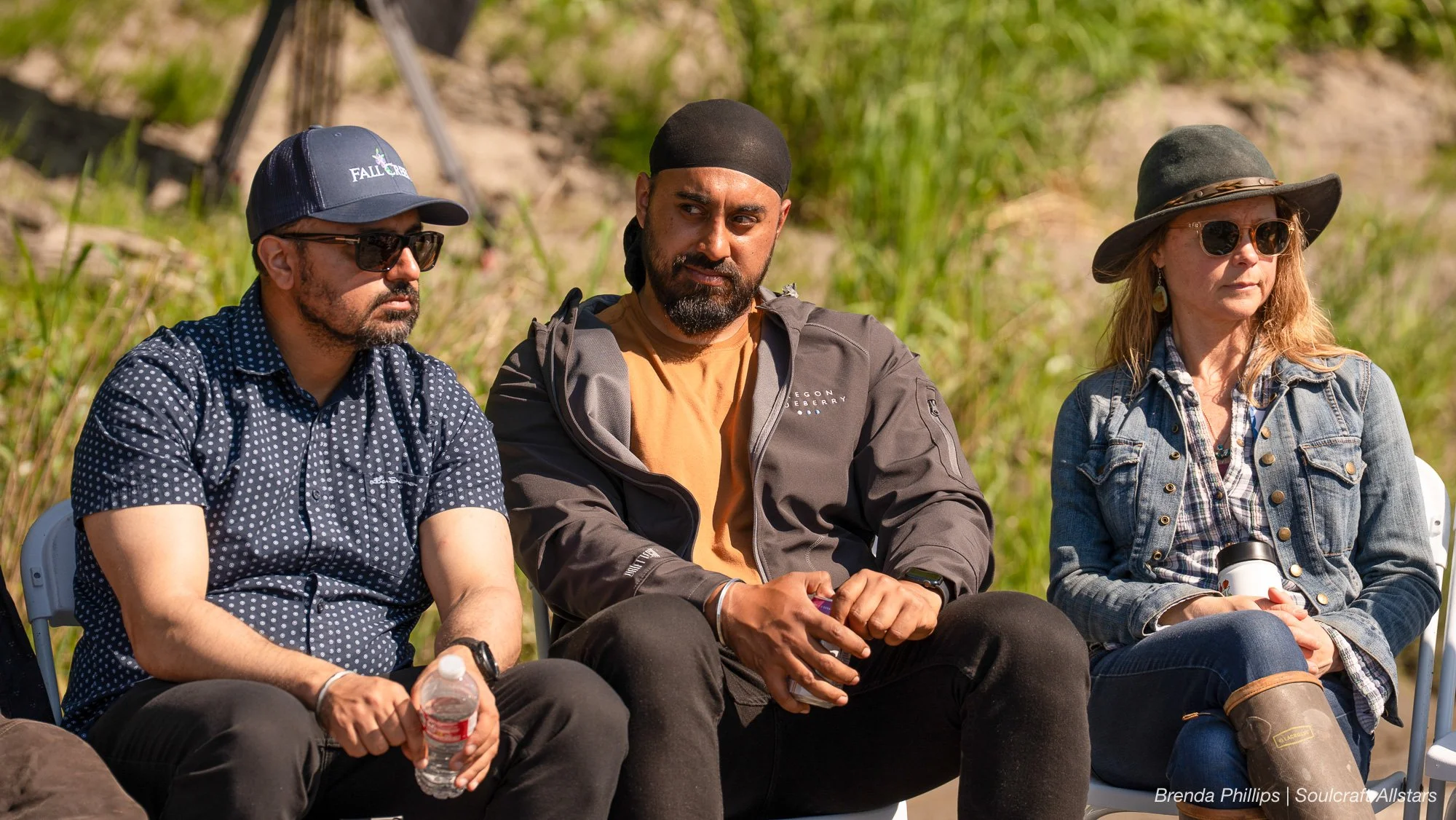
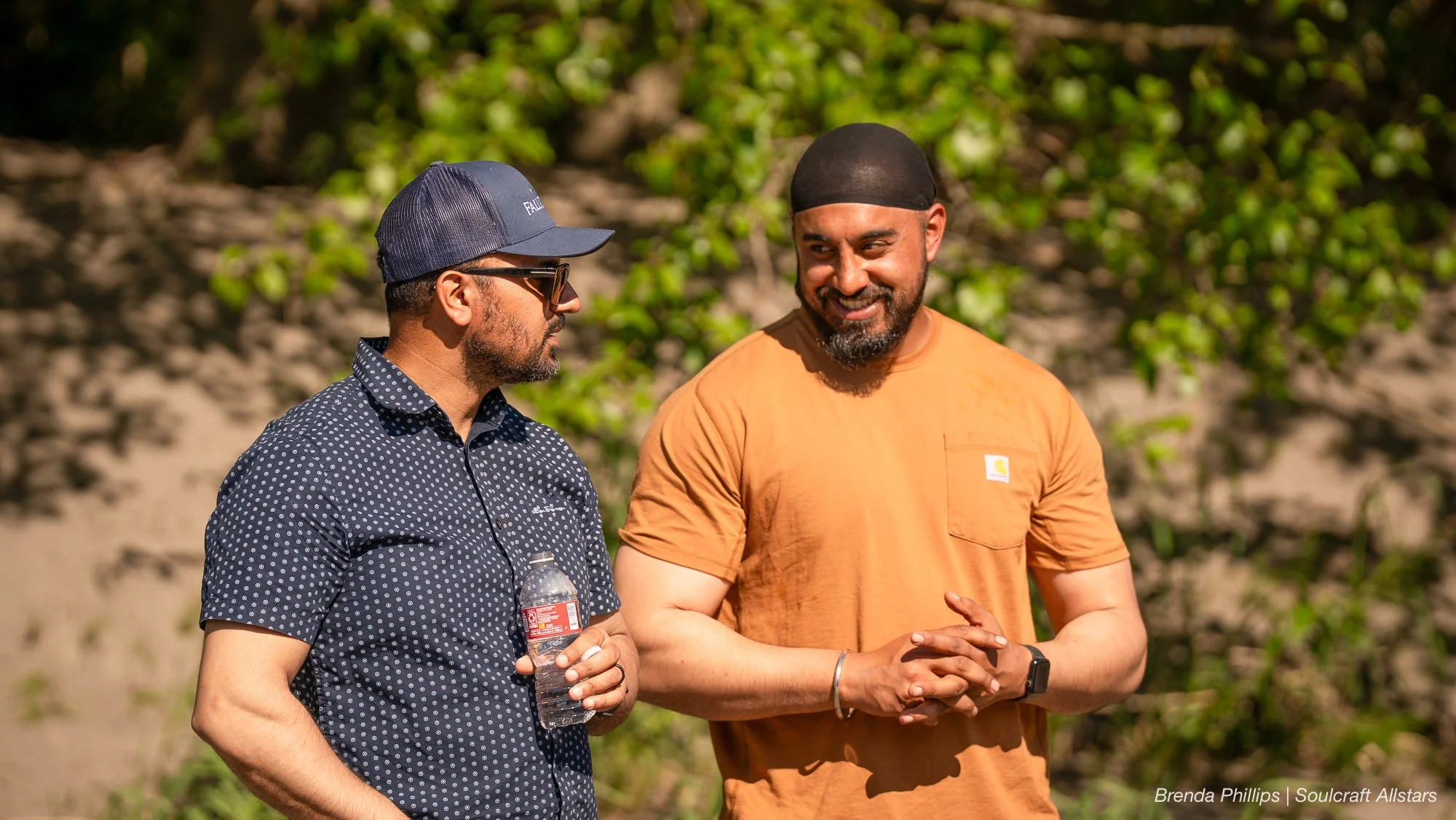
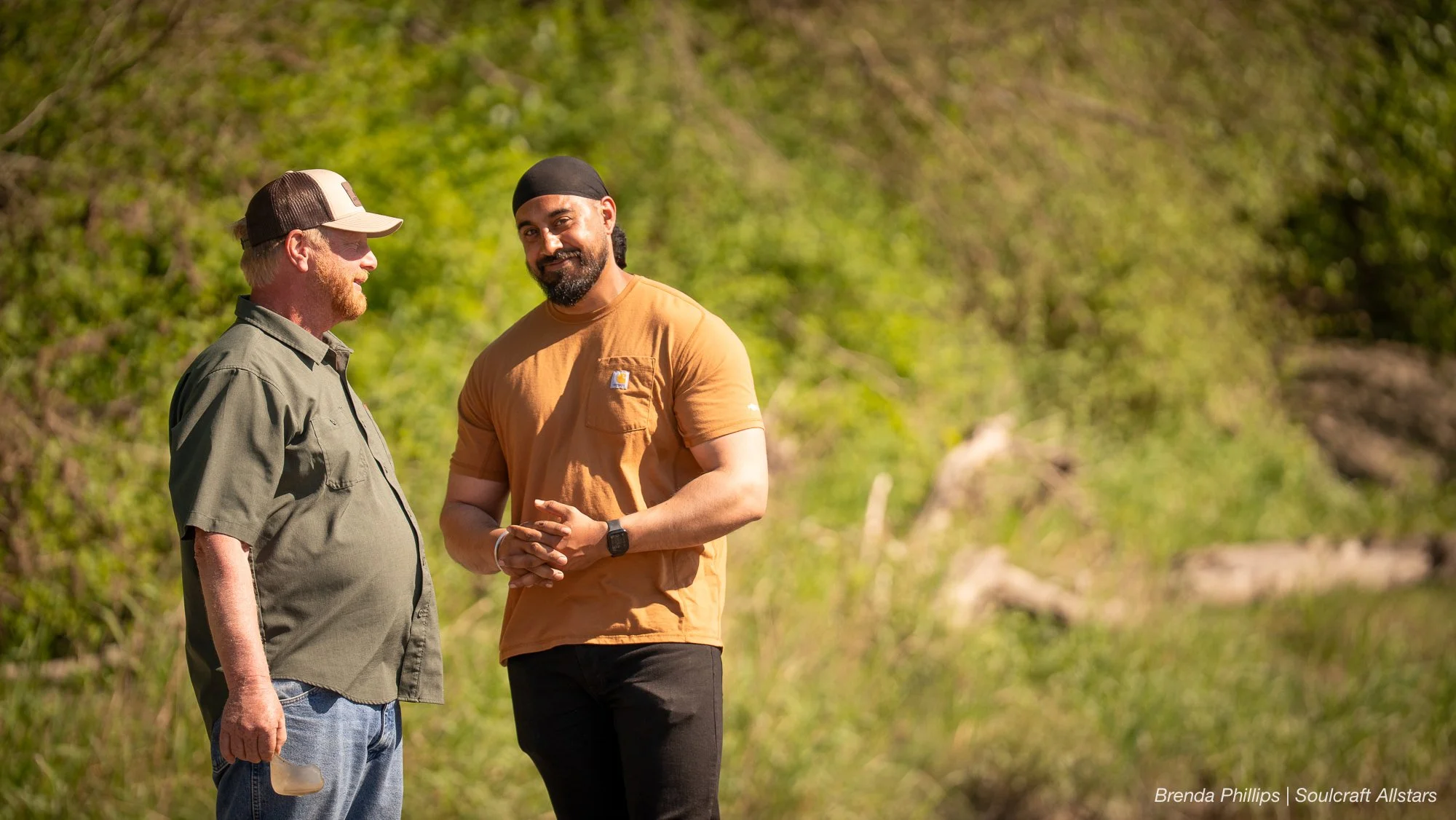
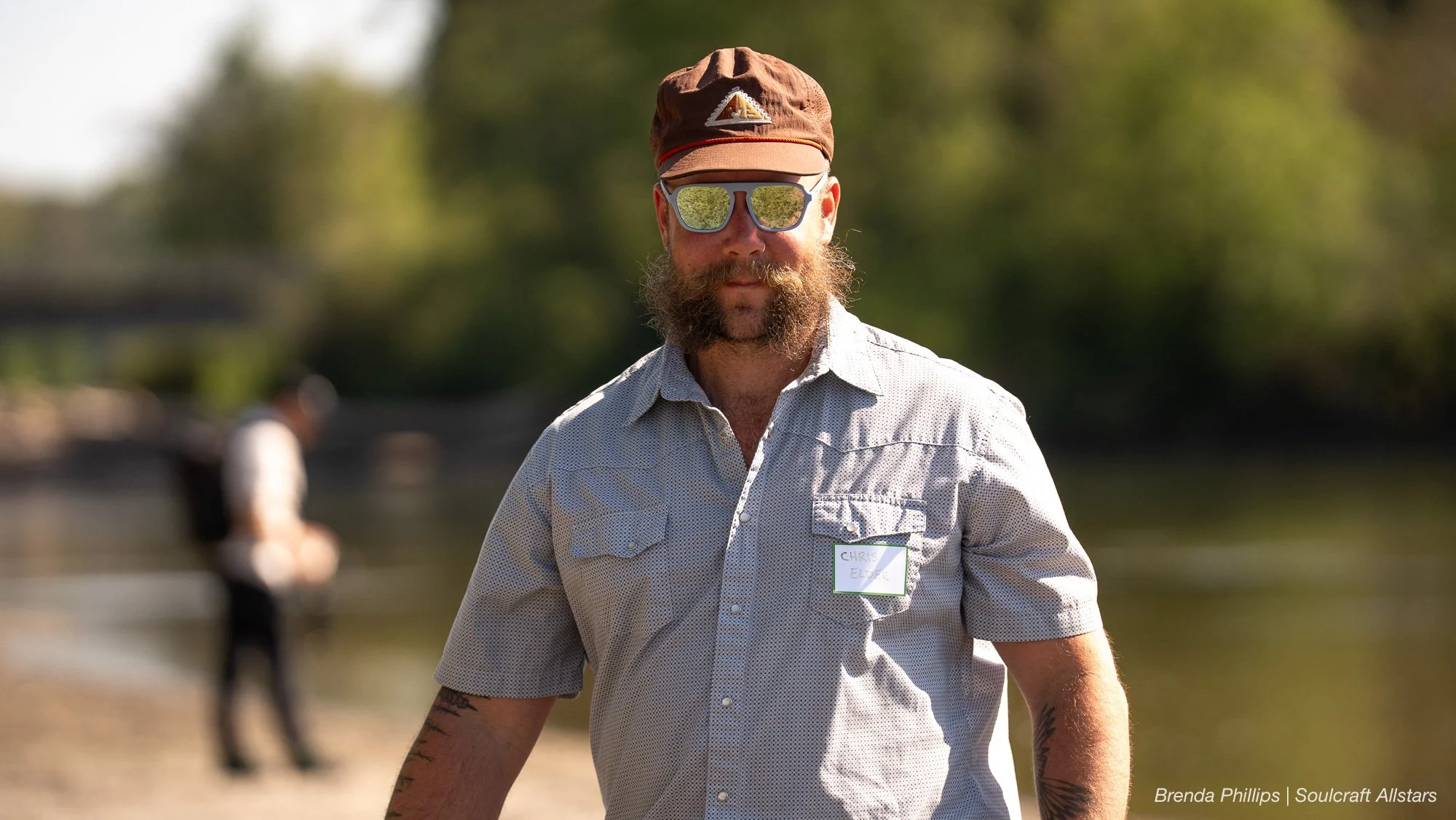
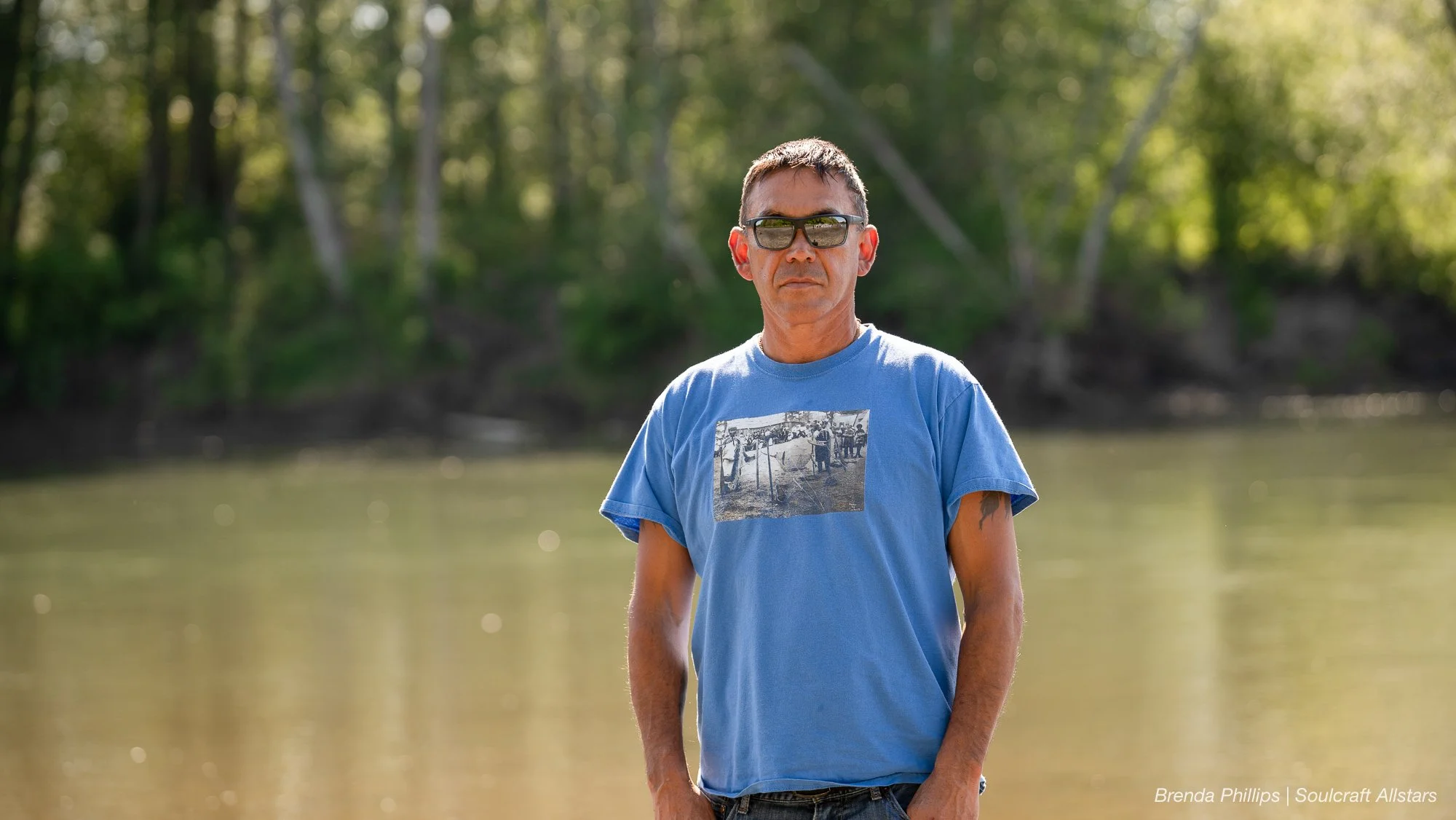
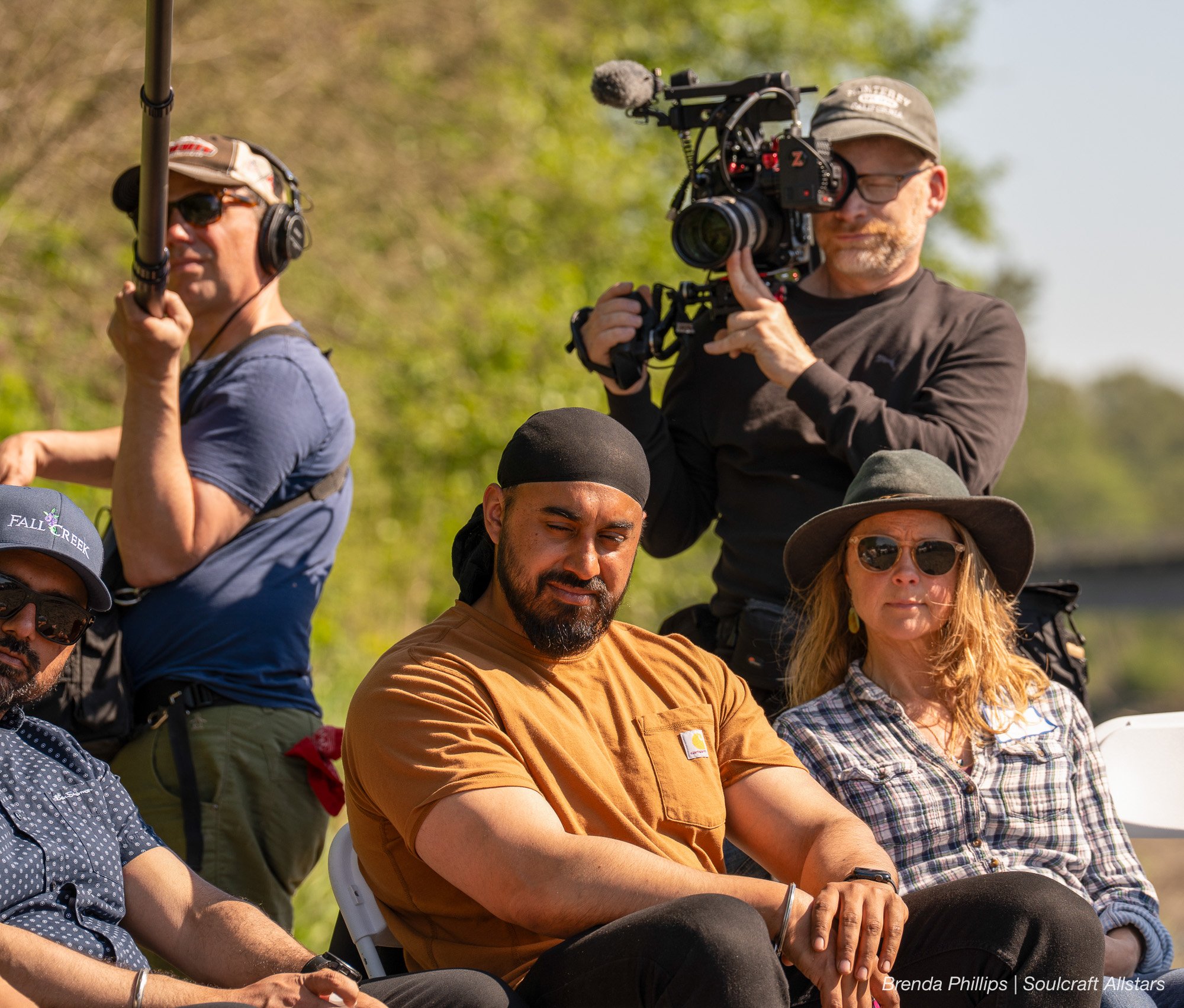
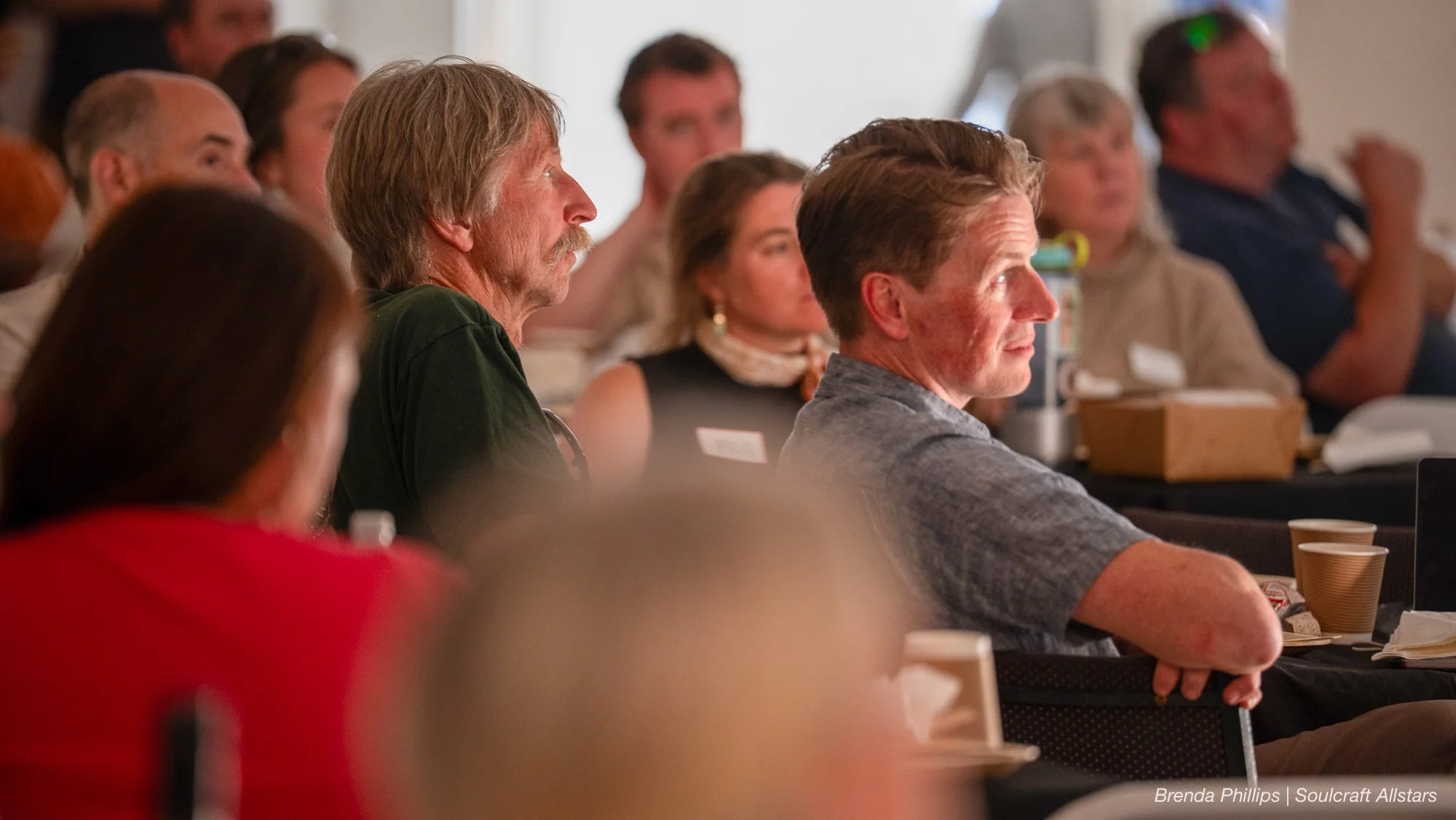
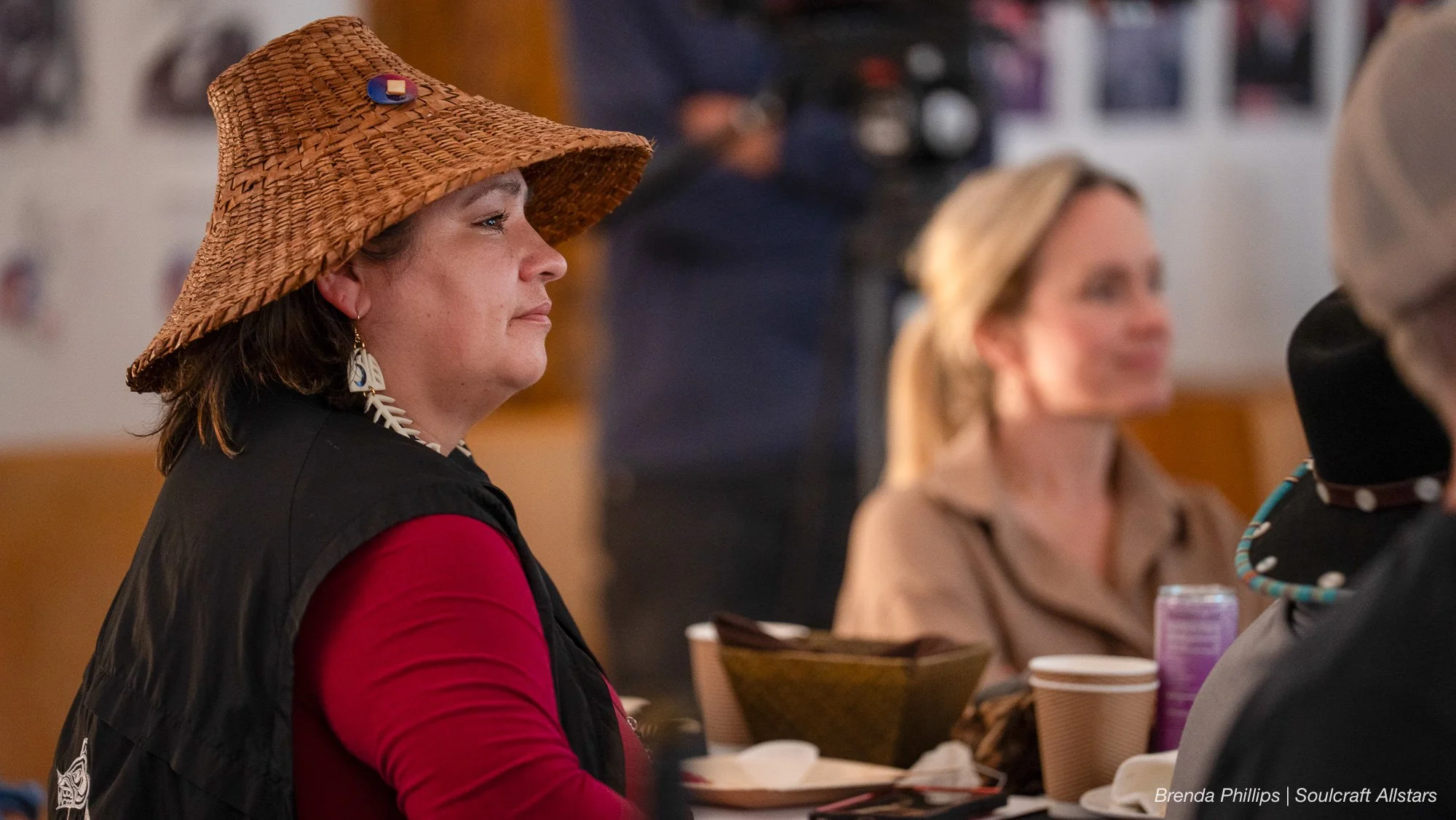
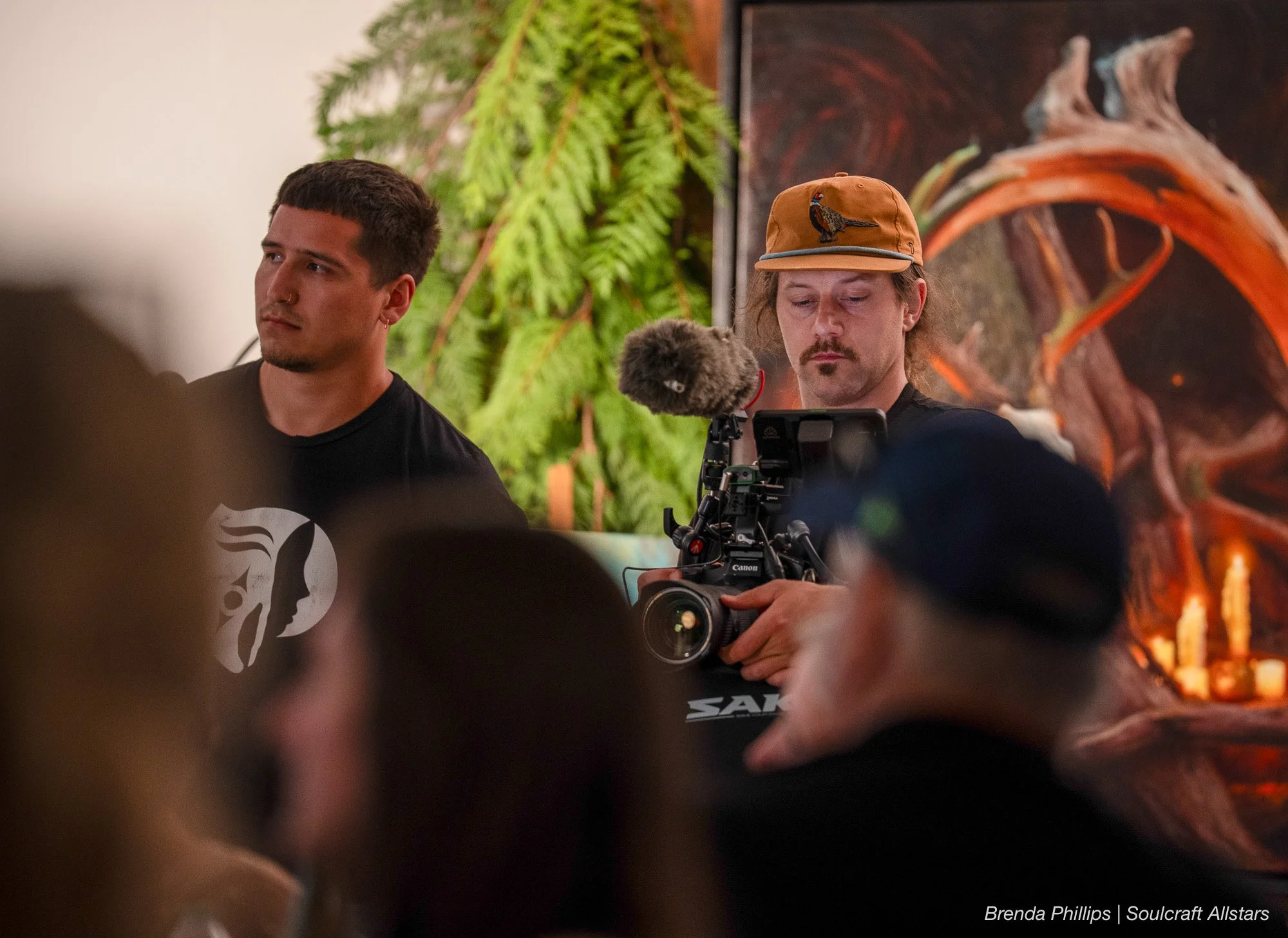
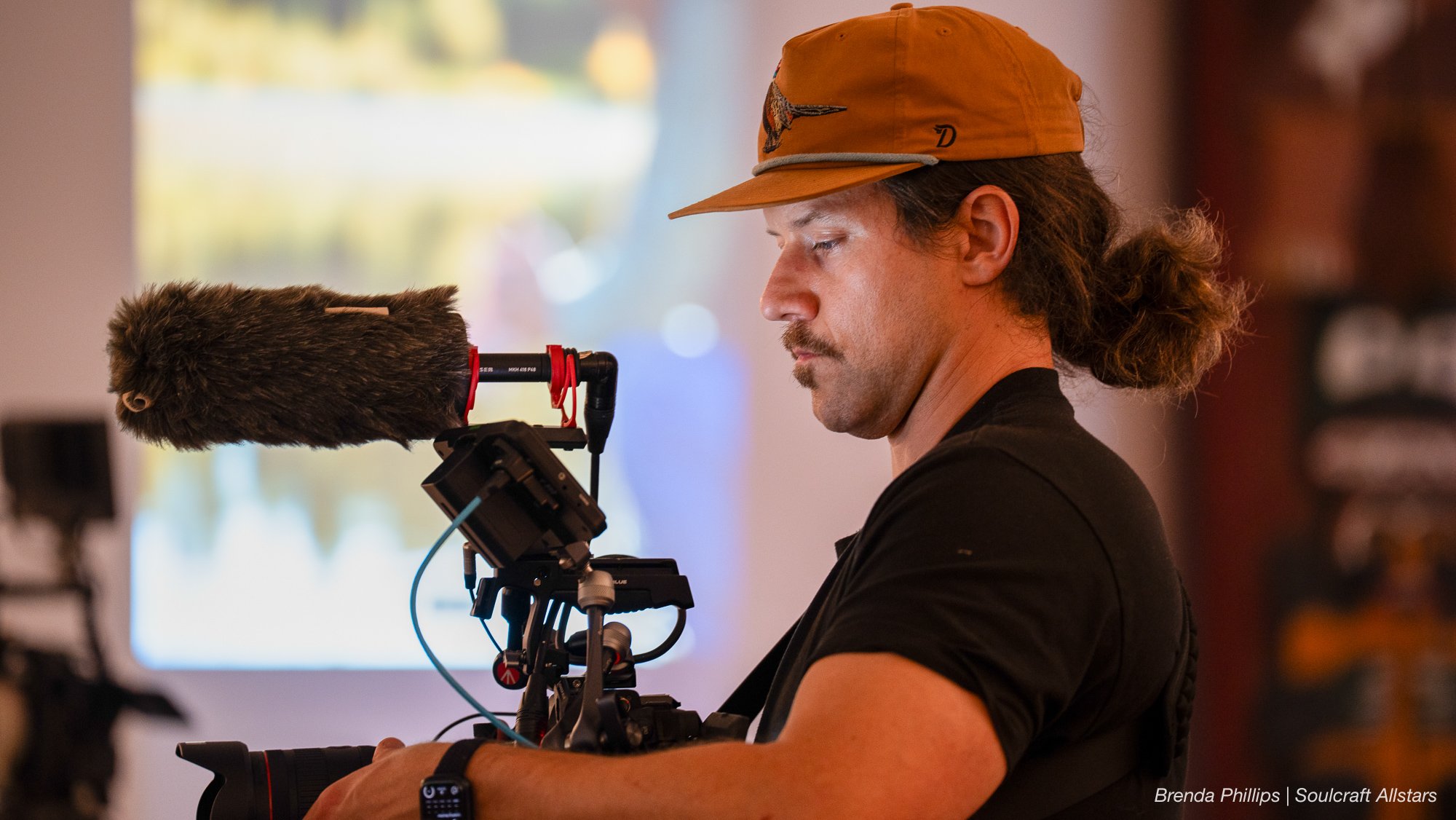
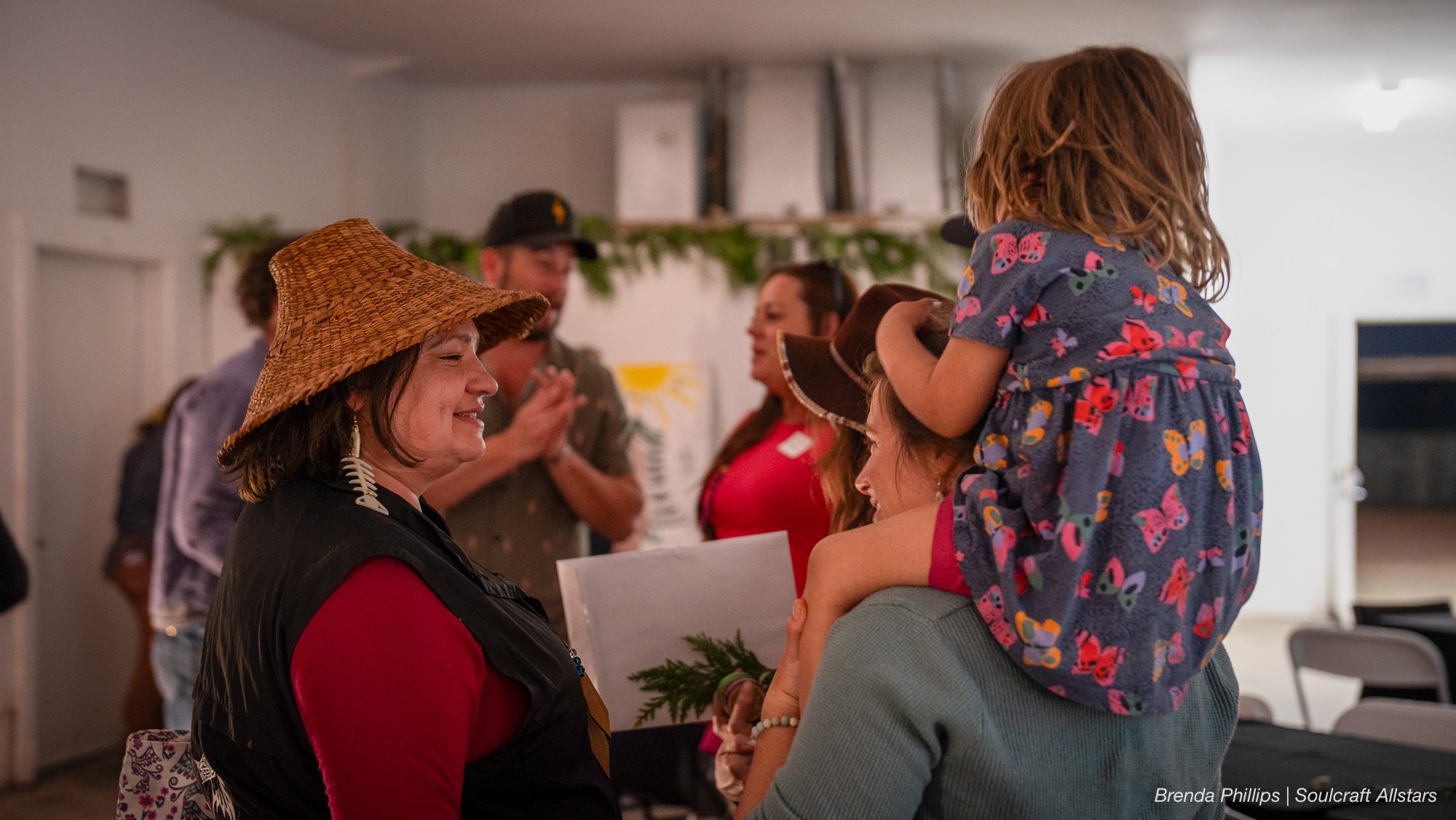
We gathered on Lummi Nation lands at the mouth of the Nooksack River. Farmers. Lummi and Nooksack knowledge-holders. Civic leaders. Elders. Educators. A film crew. And children.
This was the third Common Waters gathering. The first took us to the farms and floodplains where the Nooksack braids through the valley. The second brought us upstream to a Nooksack Tribe cultural and ecological restoration site along the South Fork. This one was an invitation downstream to the delta. To Lummi Nation. Extended by our Lummi hosts.
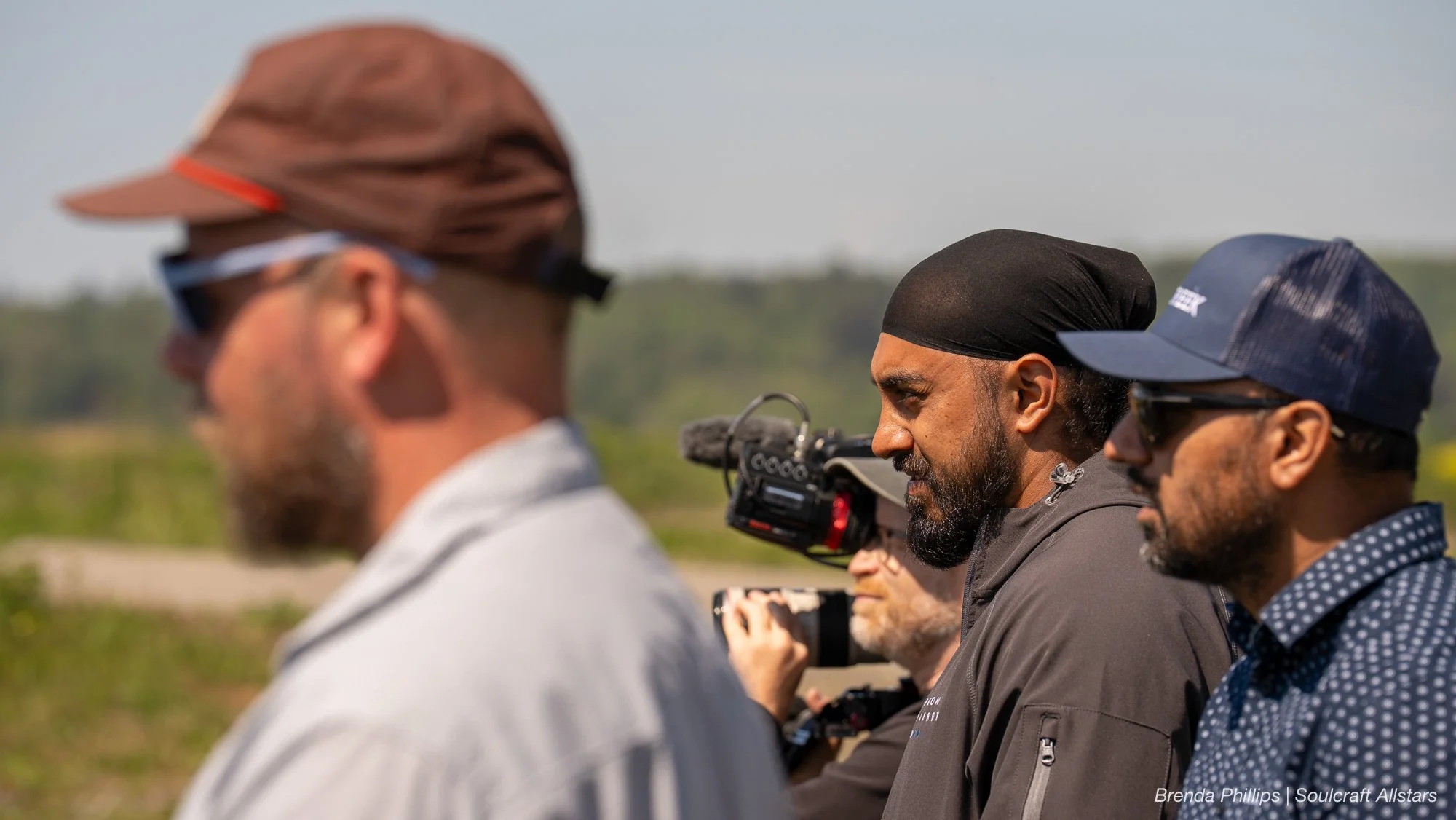
Our role in each has been simple and demanding at the same time: work with those hosts to shape the space, hold the through‑line of relationship, and then walk alongside people as they decide what to do with what happens there.
It was a generous invitation. Well over 100 people expressed interest, exceeding our capacity.
The Circle
Guests arrived just before noon at Stommish Grounds, the central gathering place on Lummi Nation where canoes are stored, where kids play basketball, a short walk from the school and community center. A warm, clear morning. People from across the county found each other in small circles in the parking lot, then gradually widened into one.
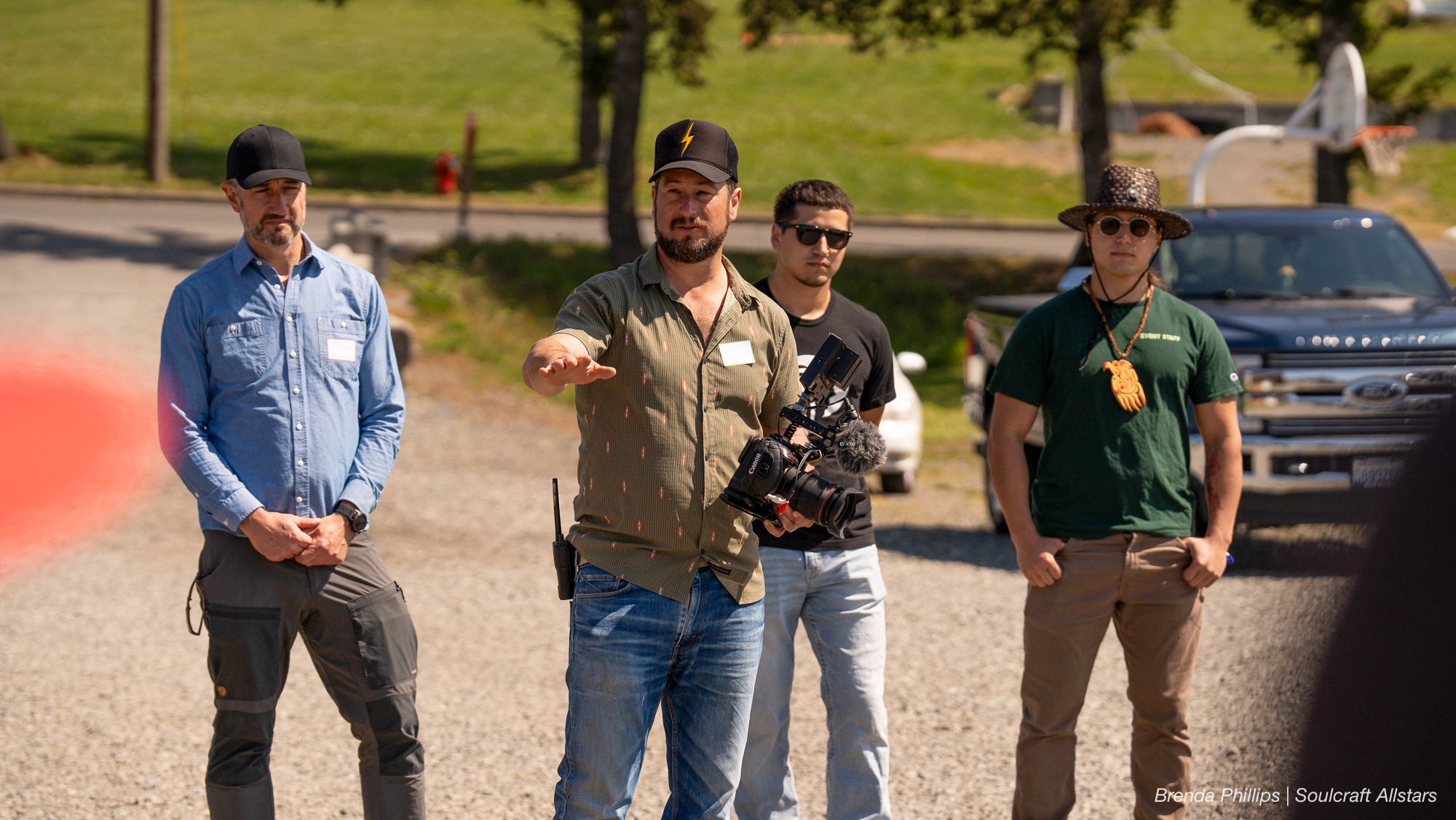
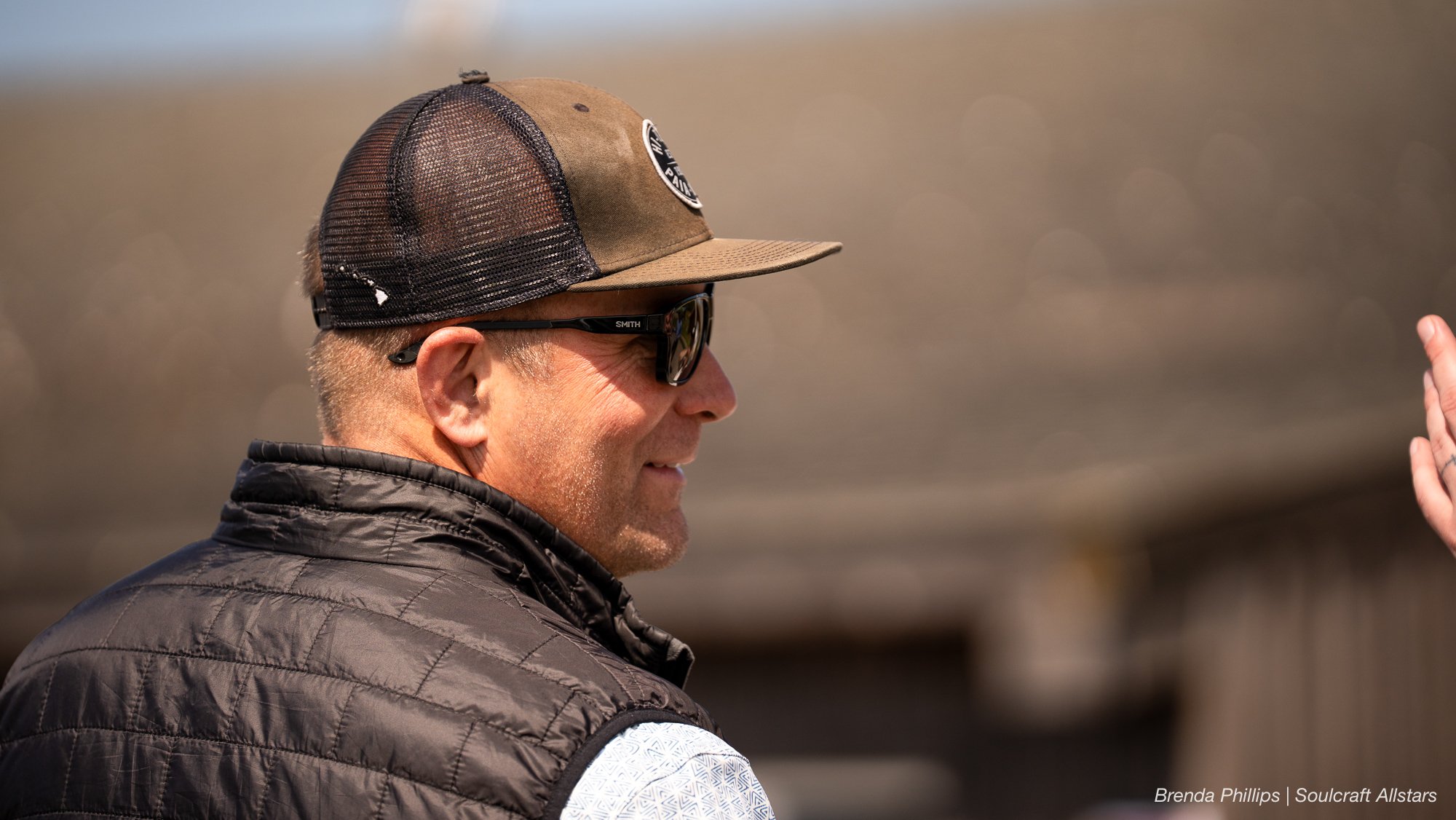
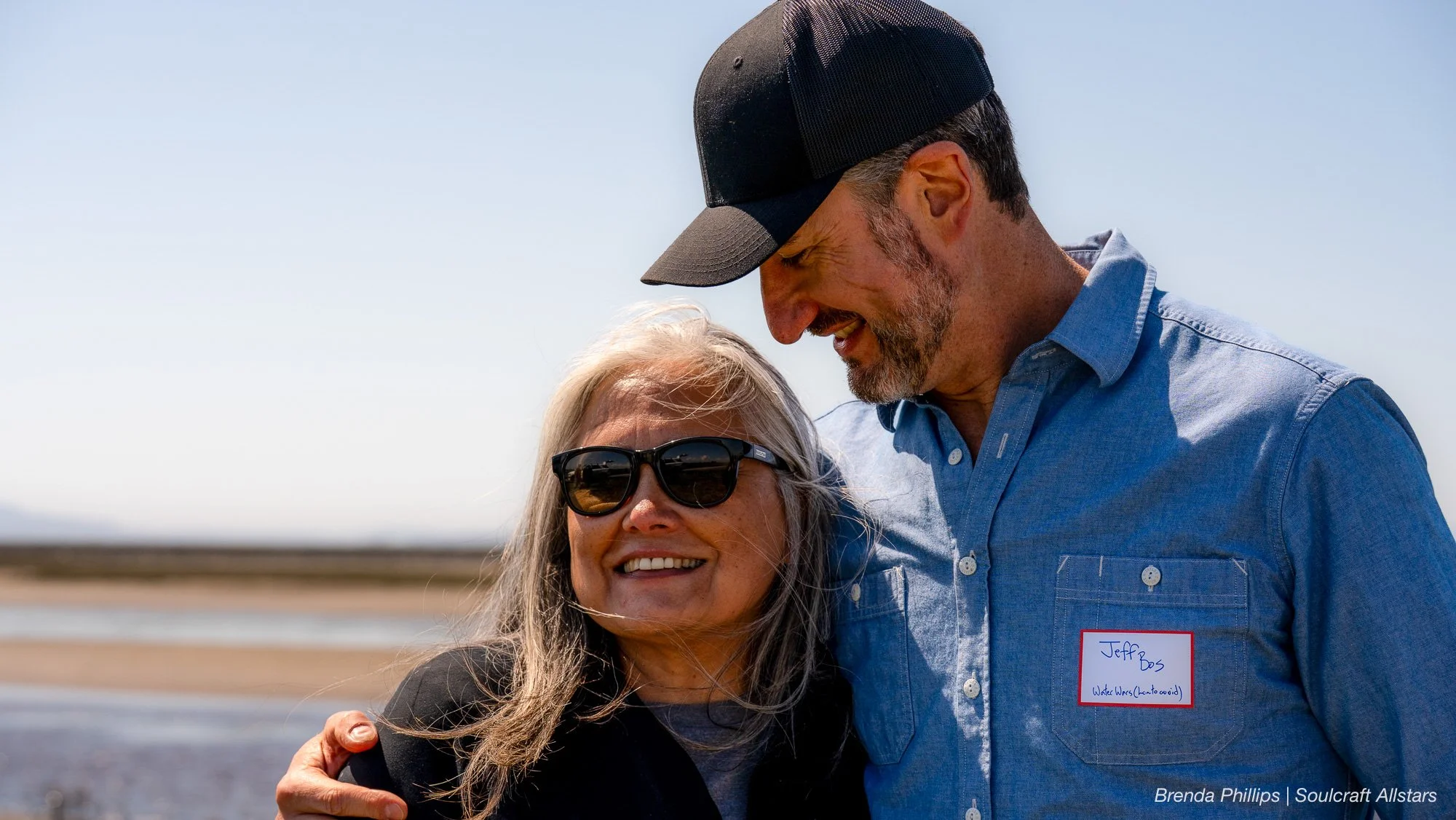
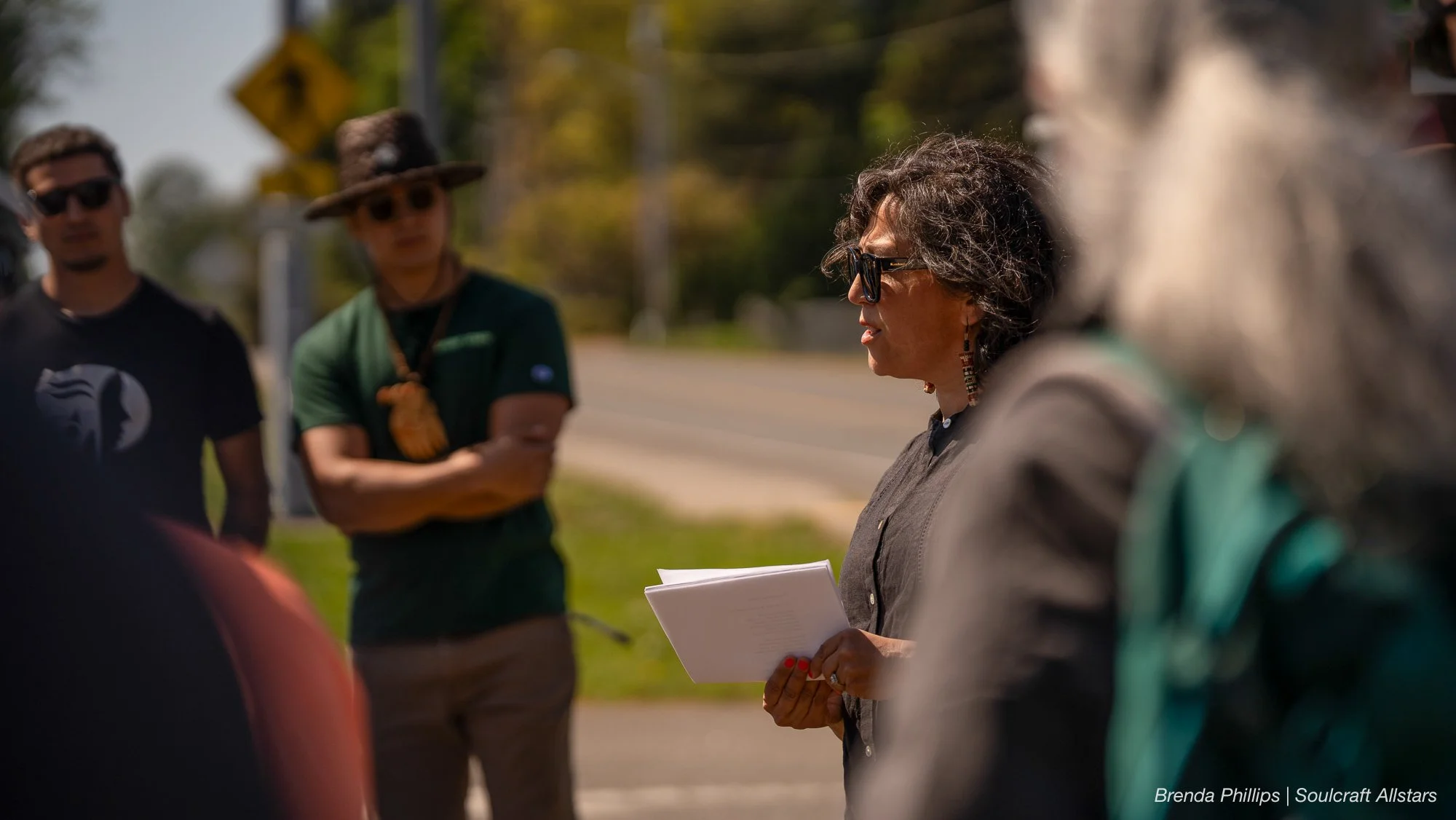
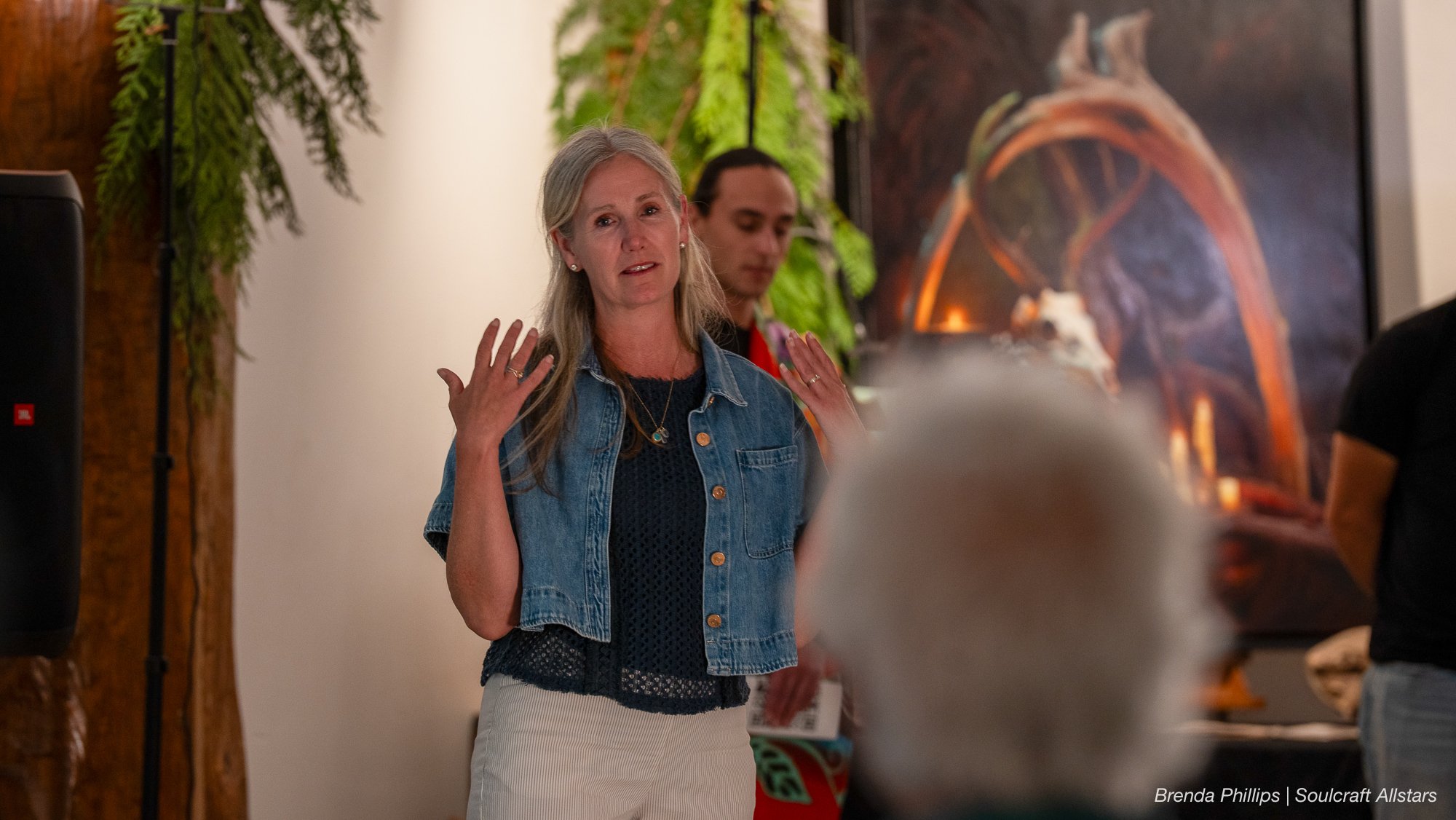
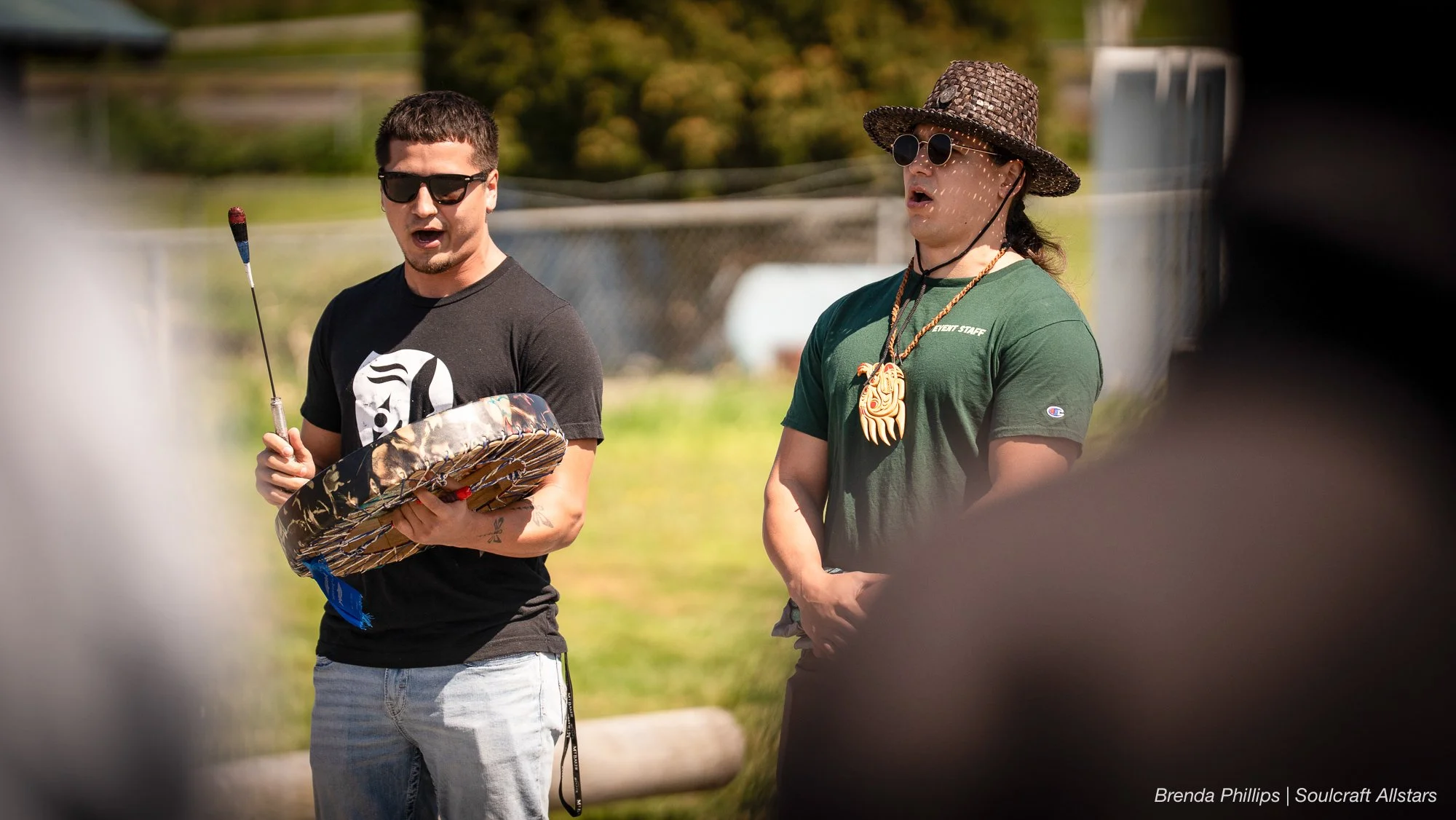
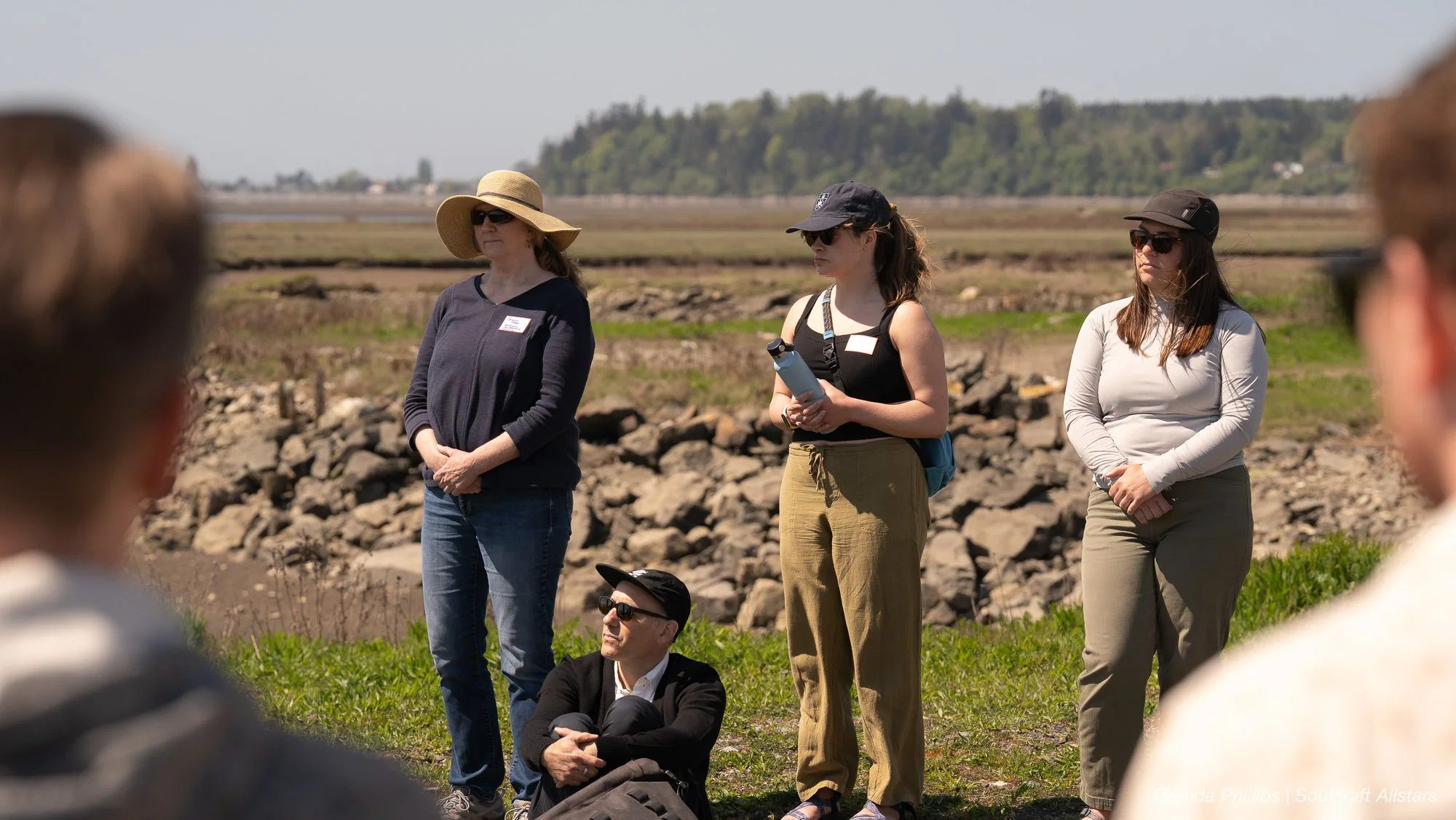
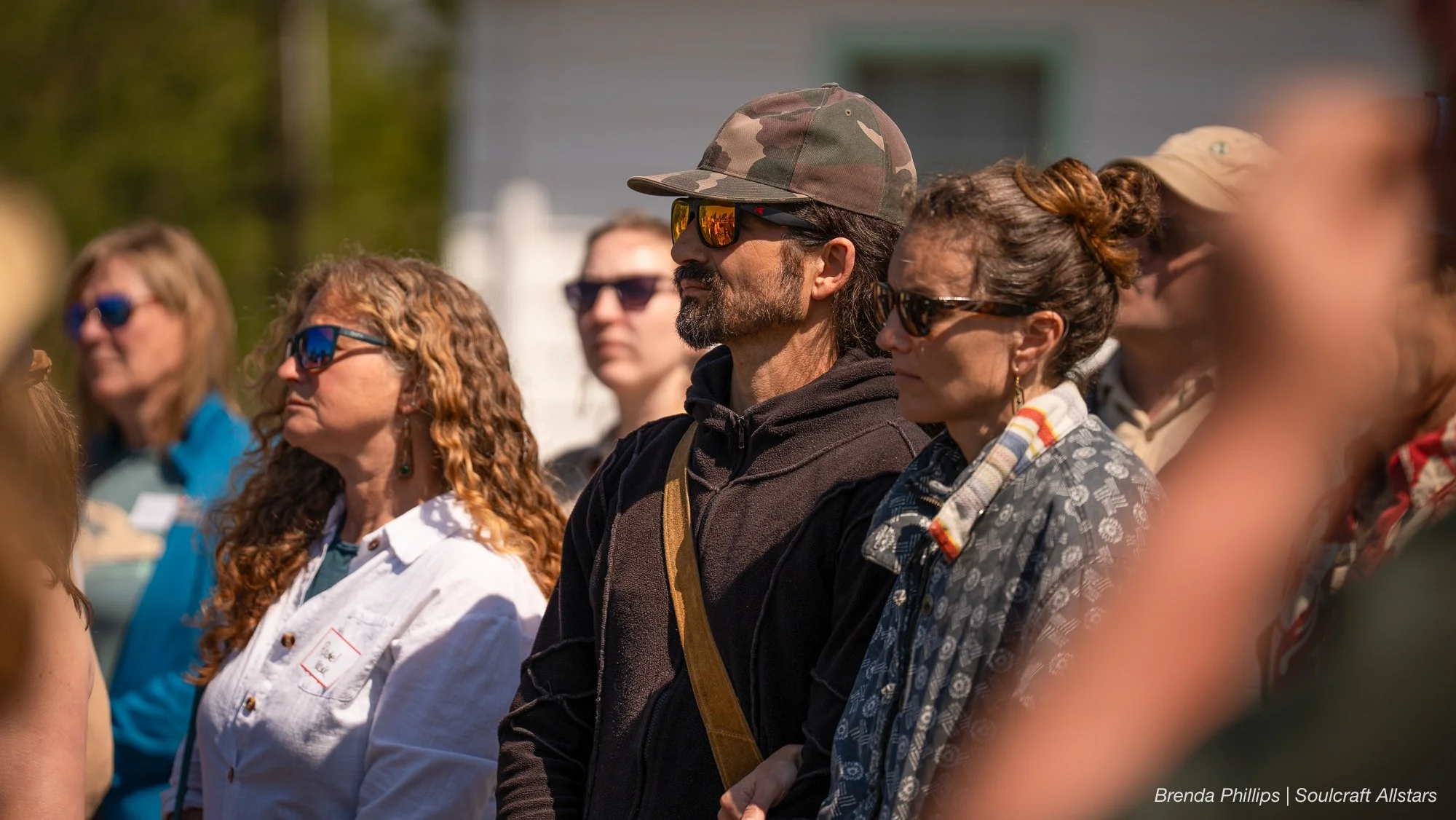
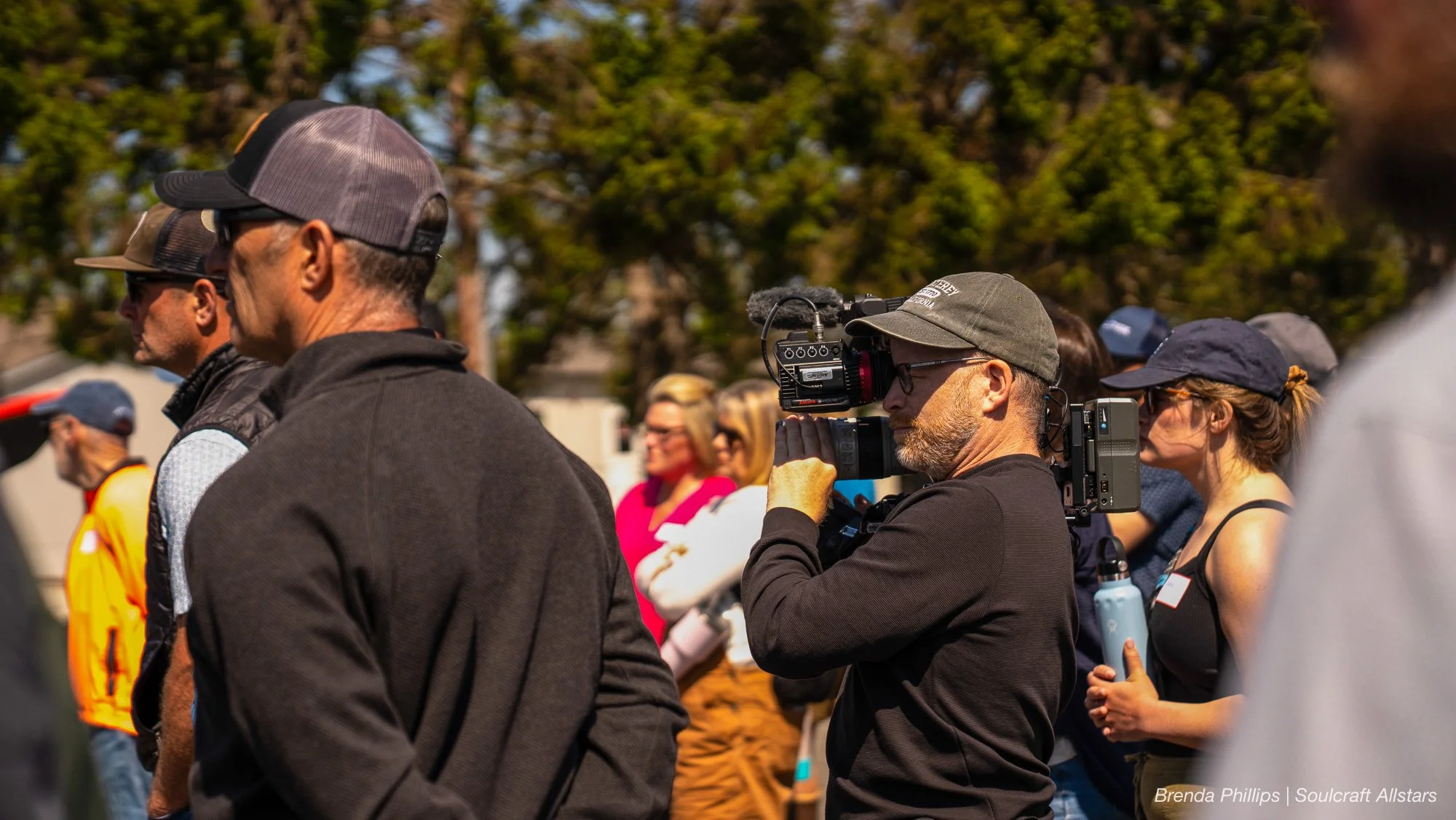
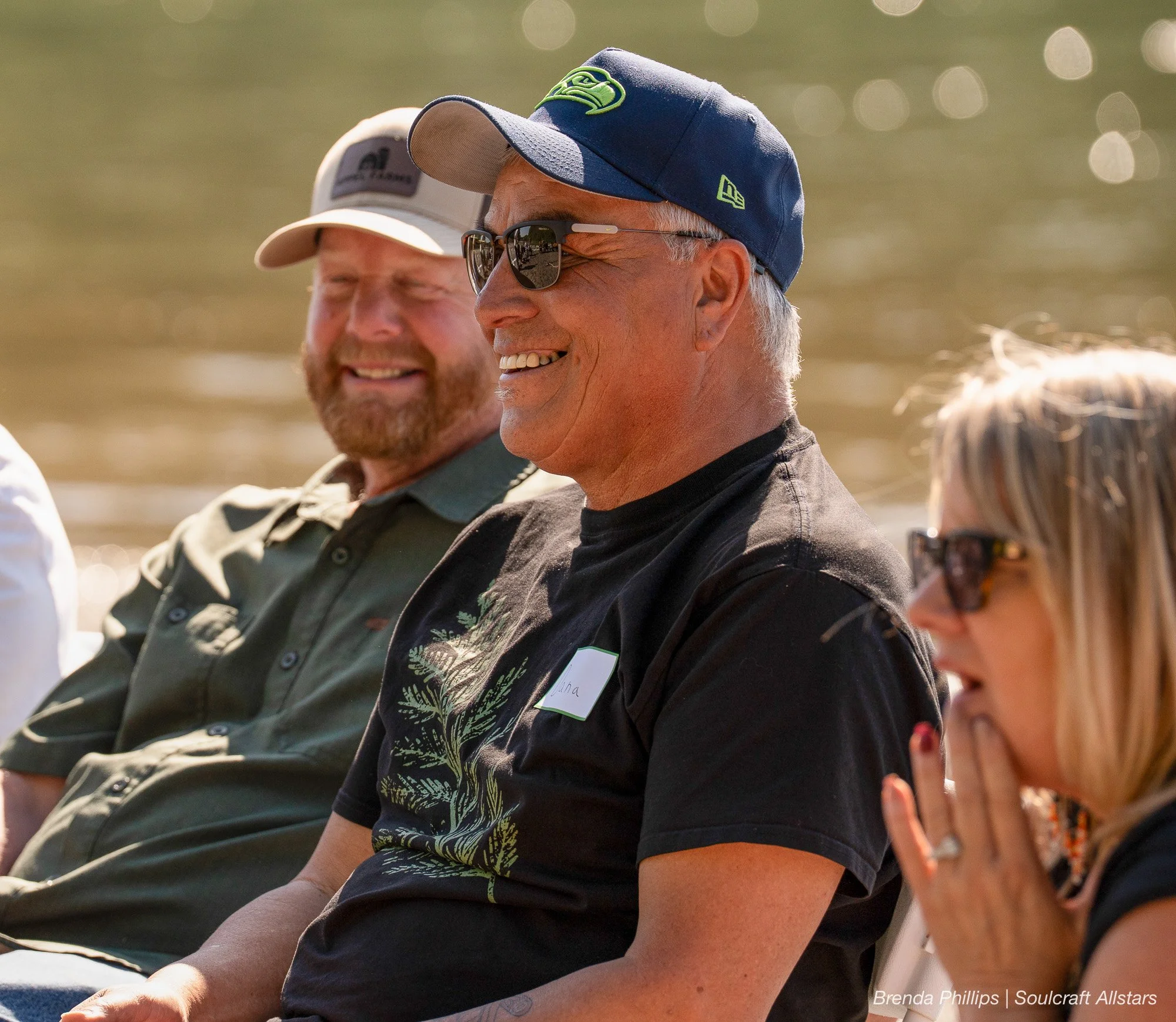
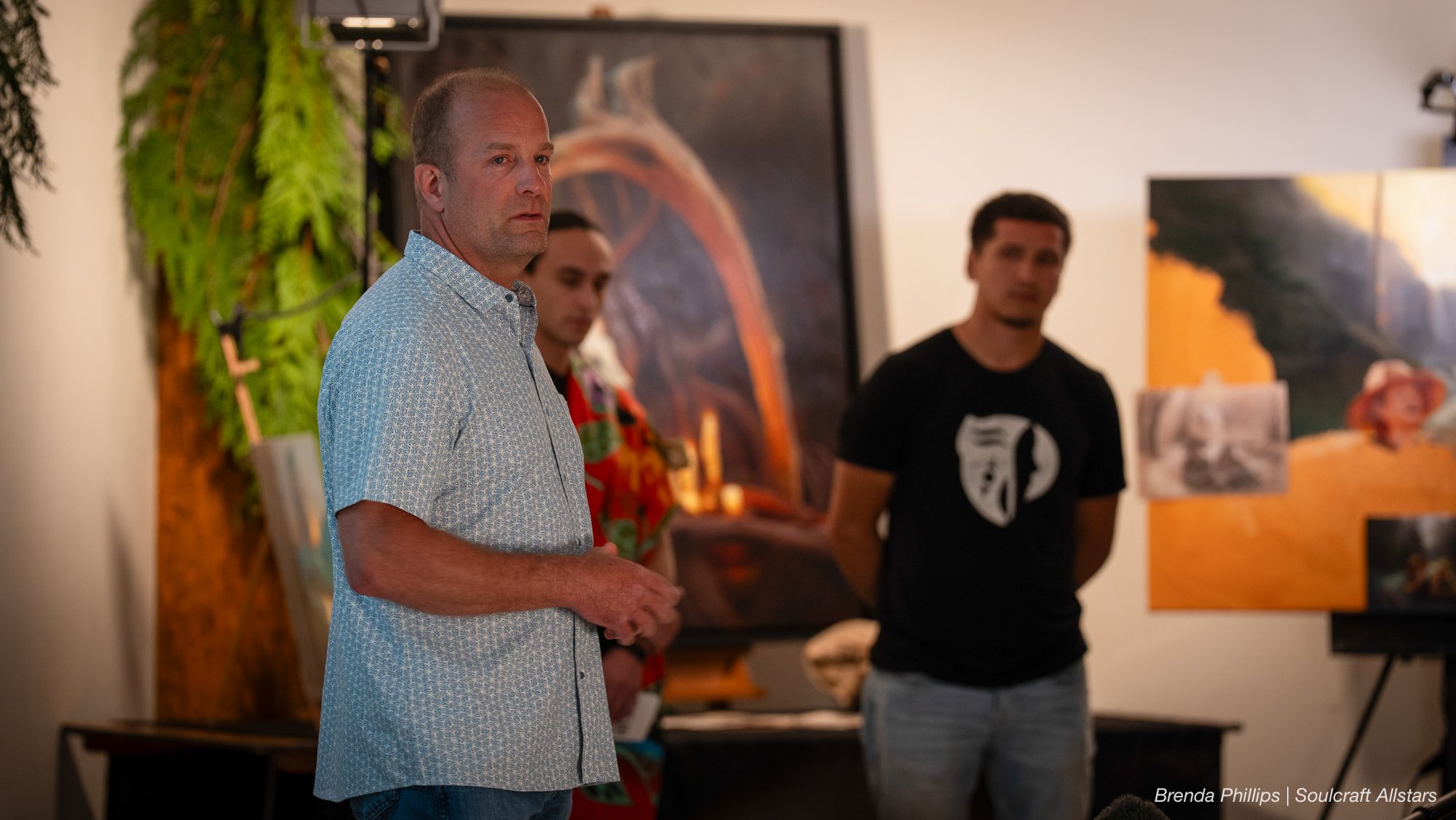
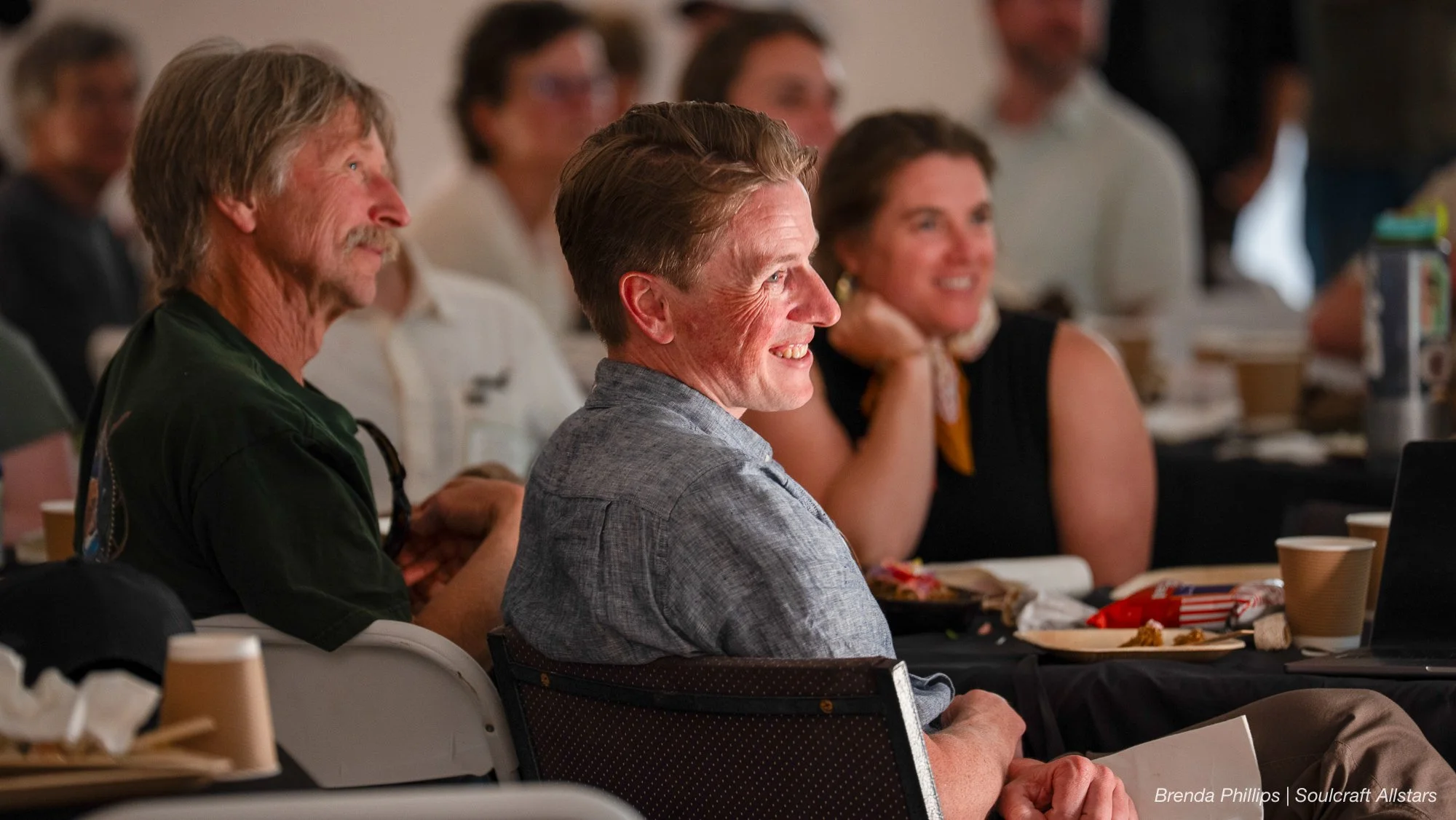
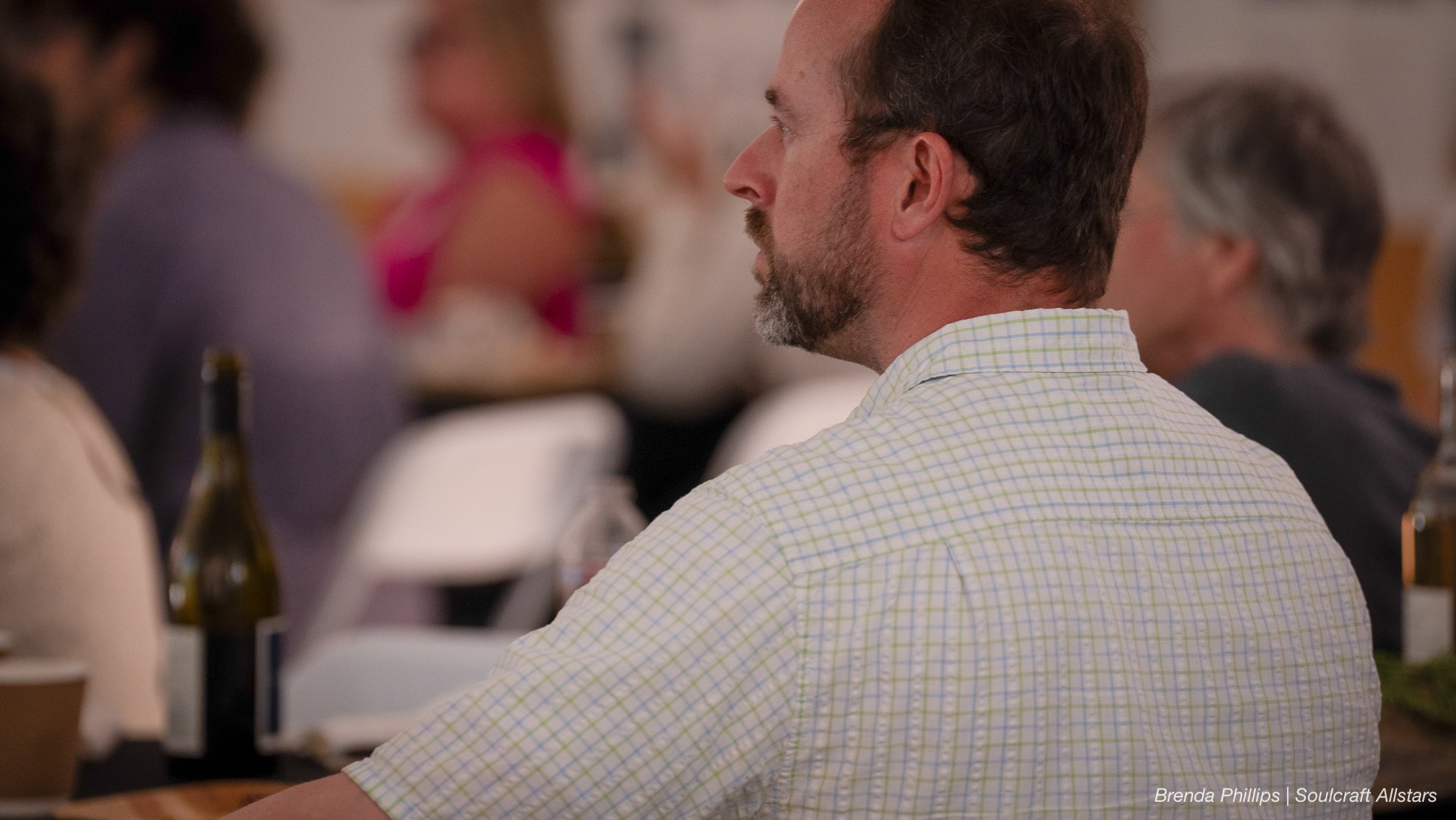
Free Borsey had co-designed the day alongside the Water Wars team and would guide much of what followed. He and his twin brother Raven opened the space with drums and song. Then Free invited the circle, all 60-plus people, to introduce themselves: name, what brought you here, how many of these gatherings you've attended.
A Lummi fisherman. A berry farmer's daughter. A city mayor. A Nooksack storyteller. A local NGO leader. A journalist. A child.
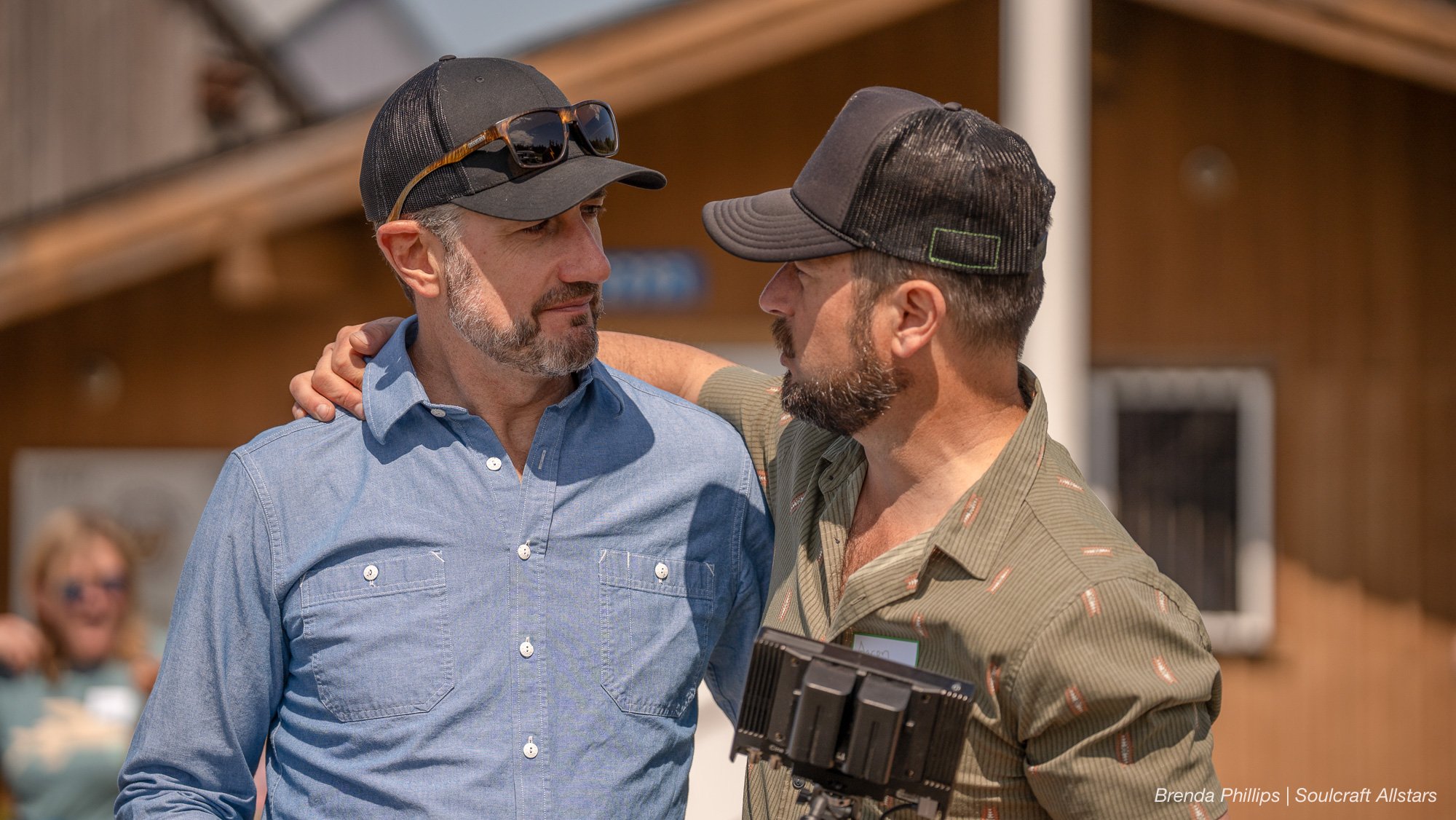
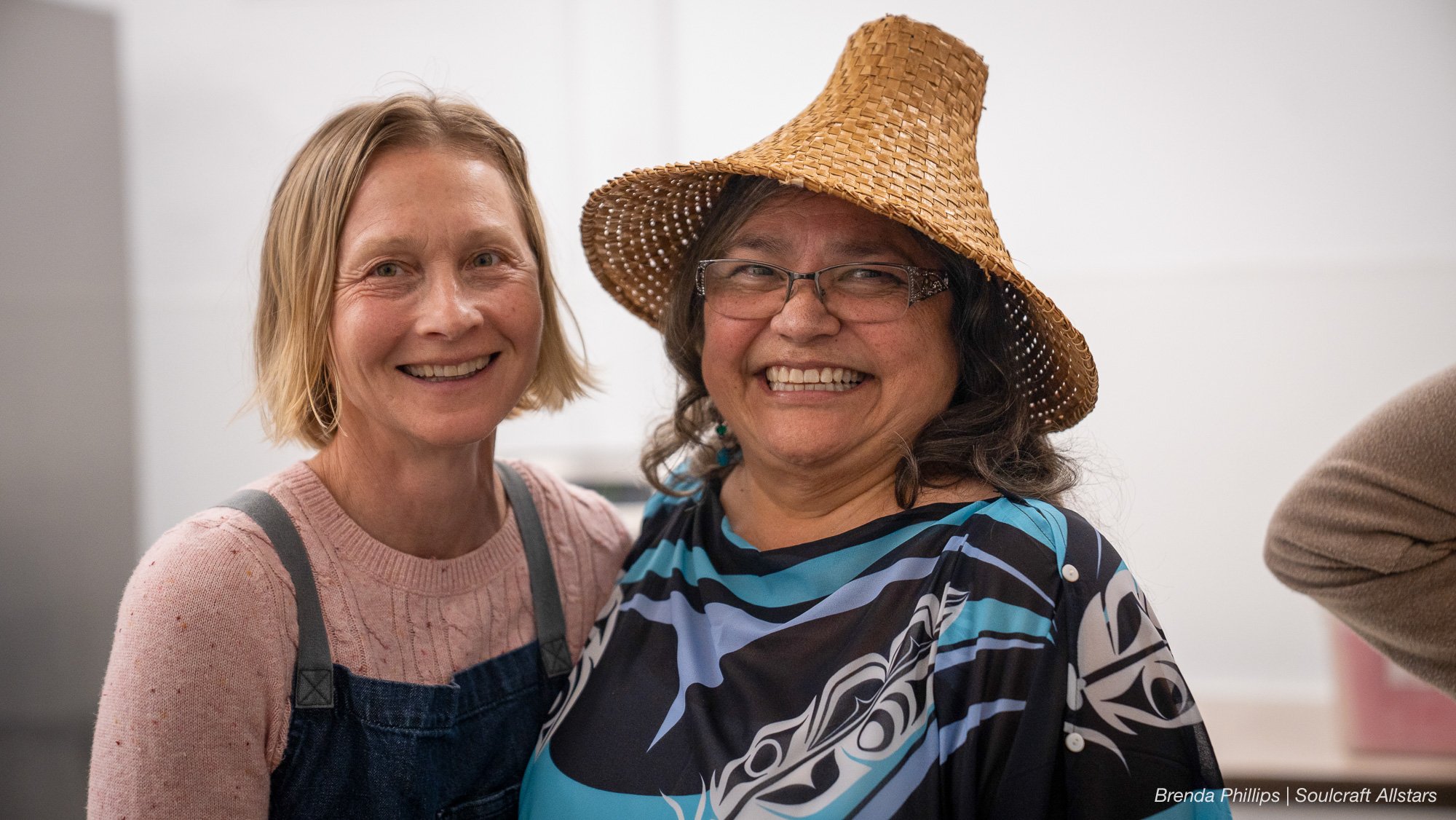
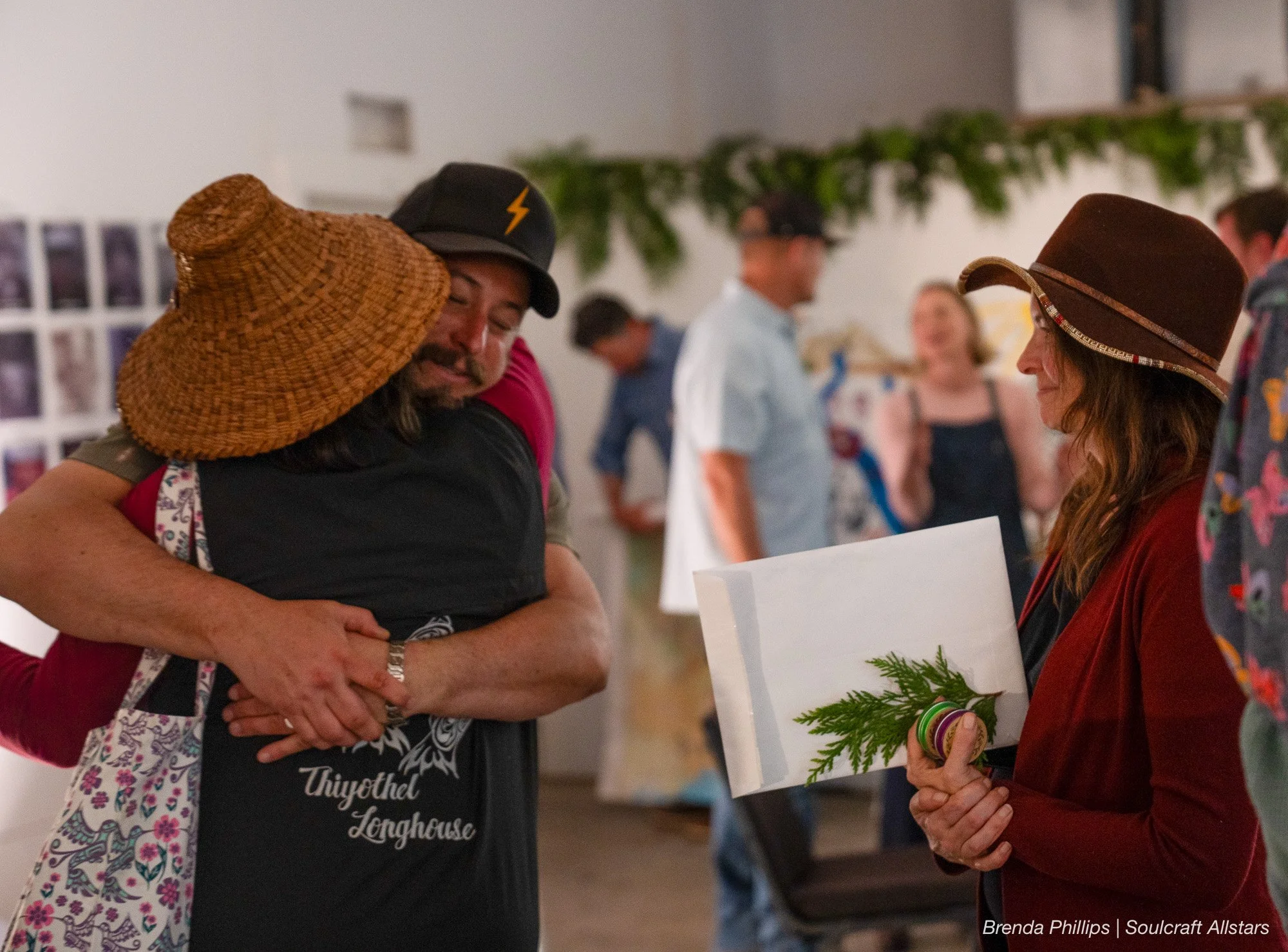
One by one, we went around. Neighbors. Friends. Moving into right relationship with each other, with the river, with the land.
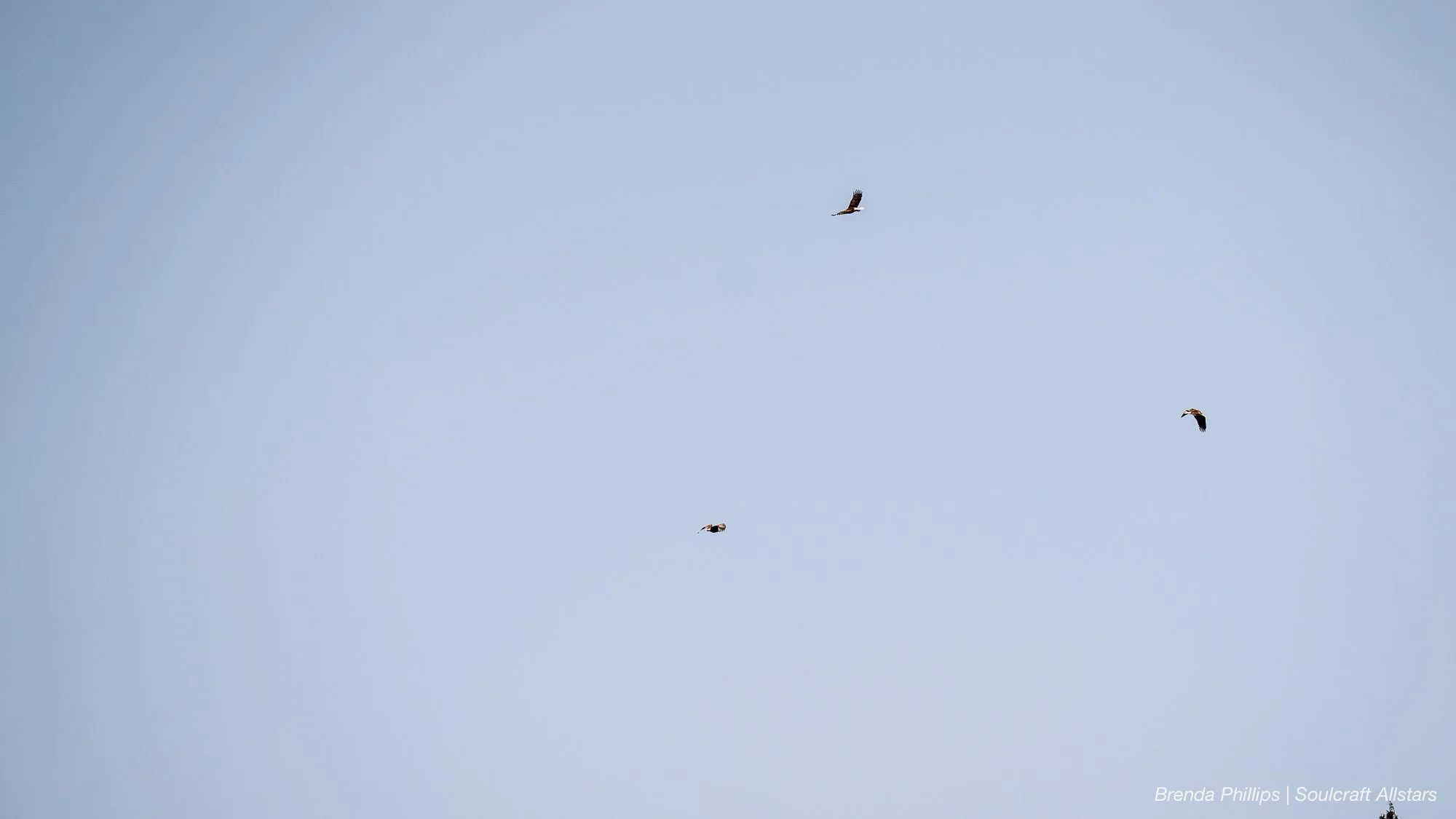
Eagles flew overhead.
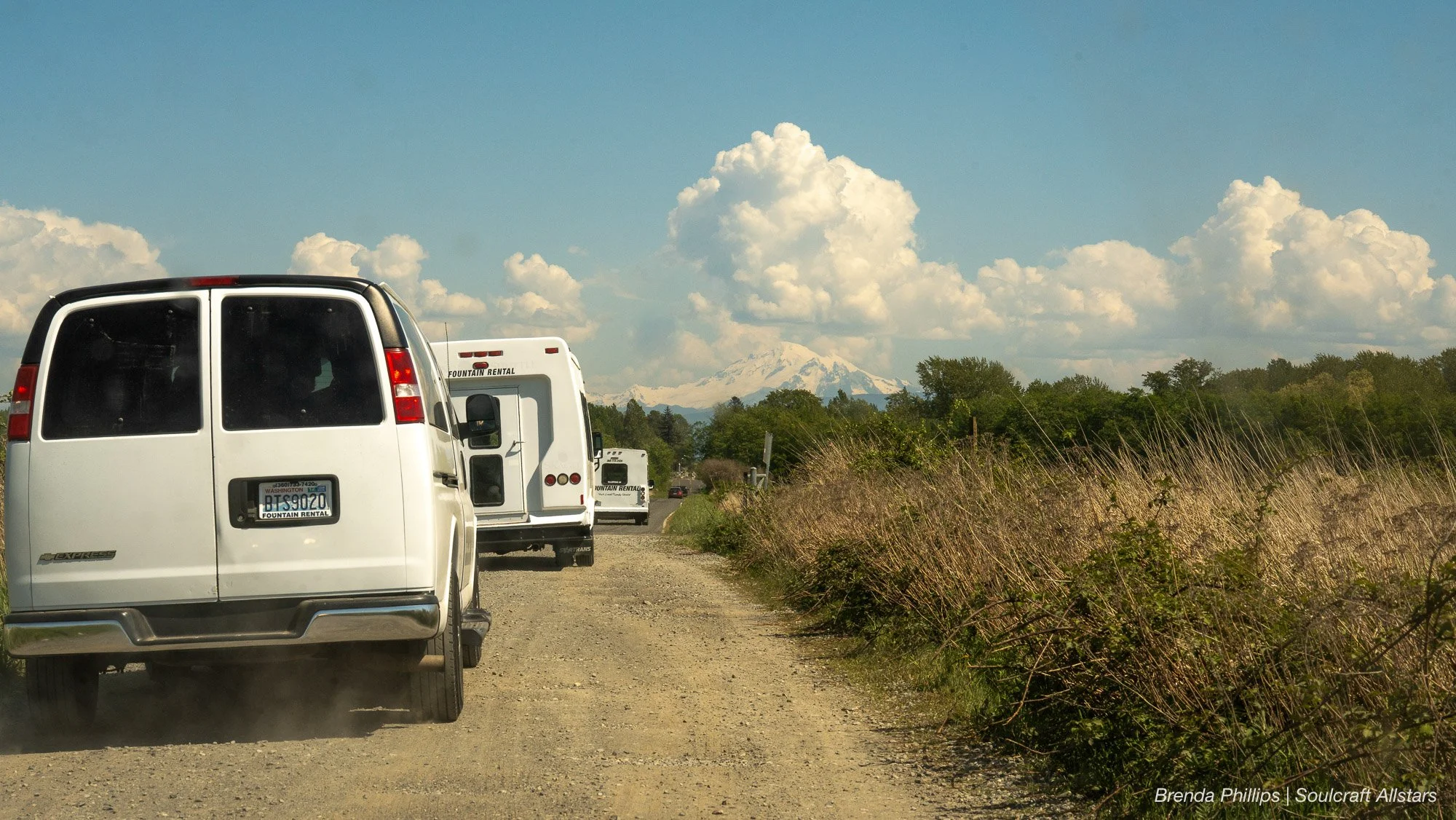
Everyone got in the vans.
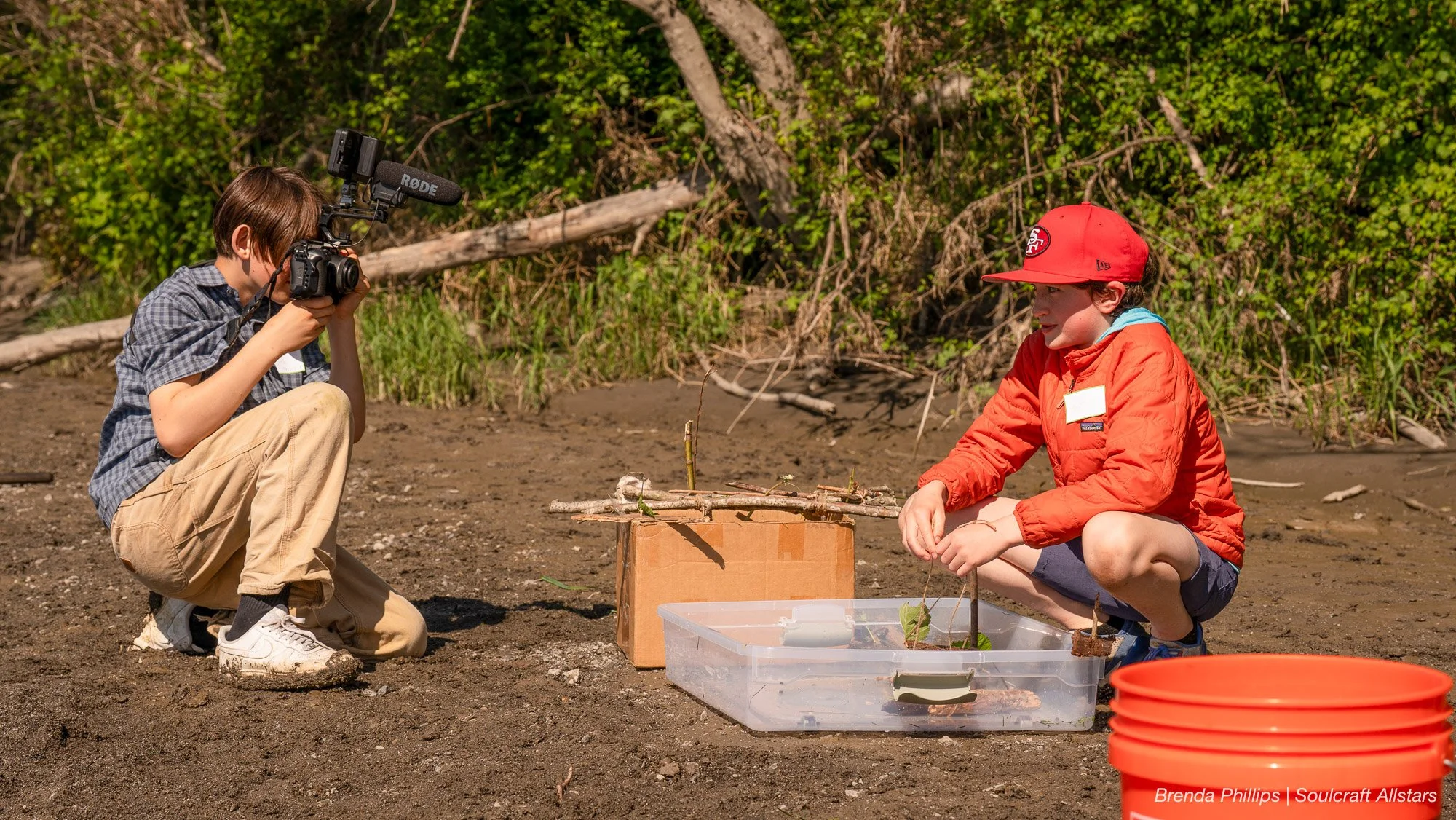
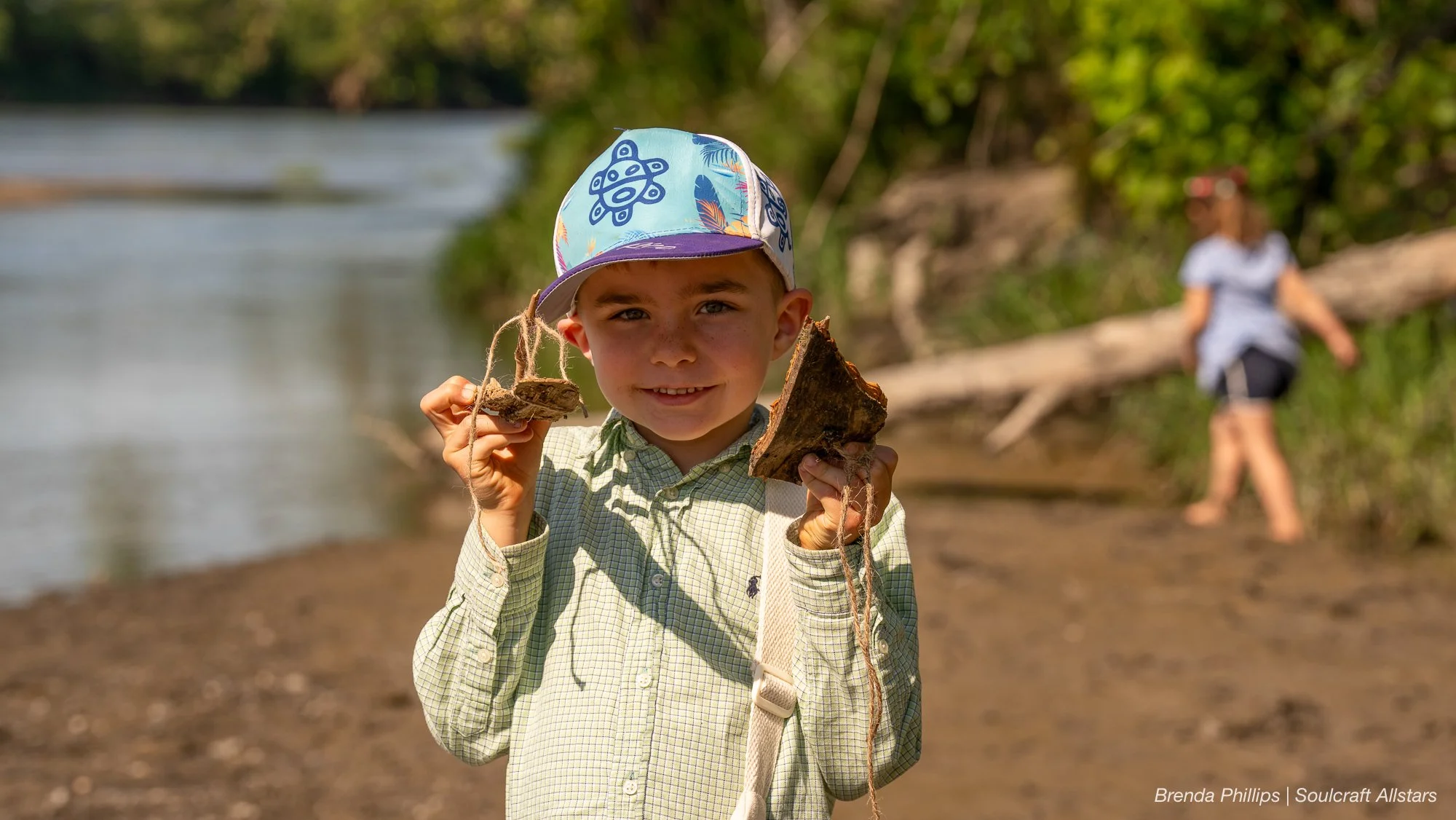
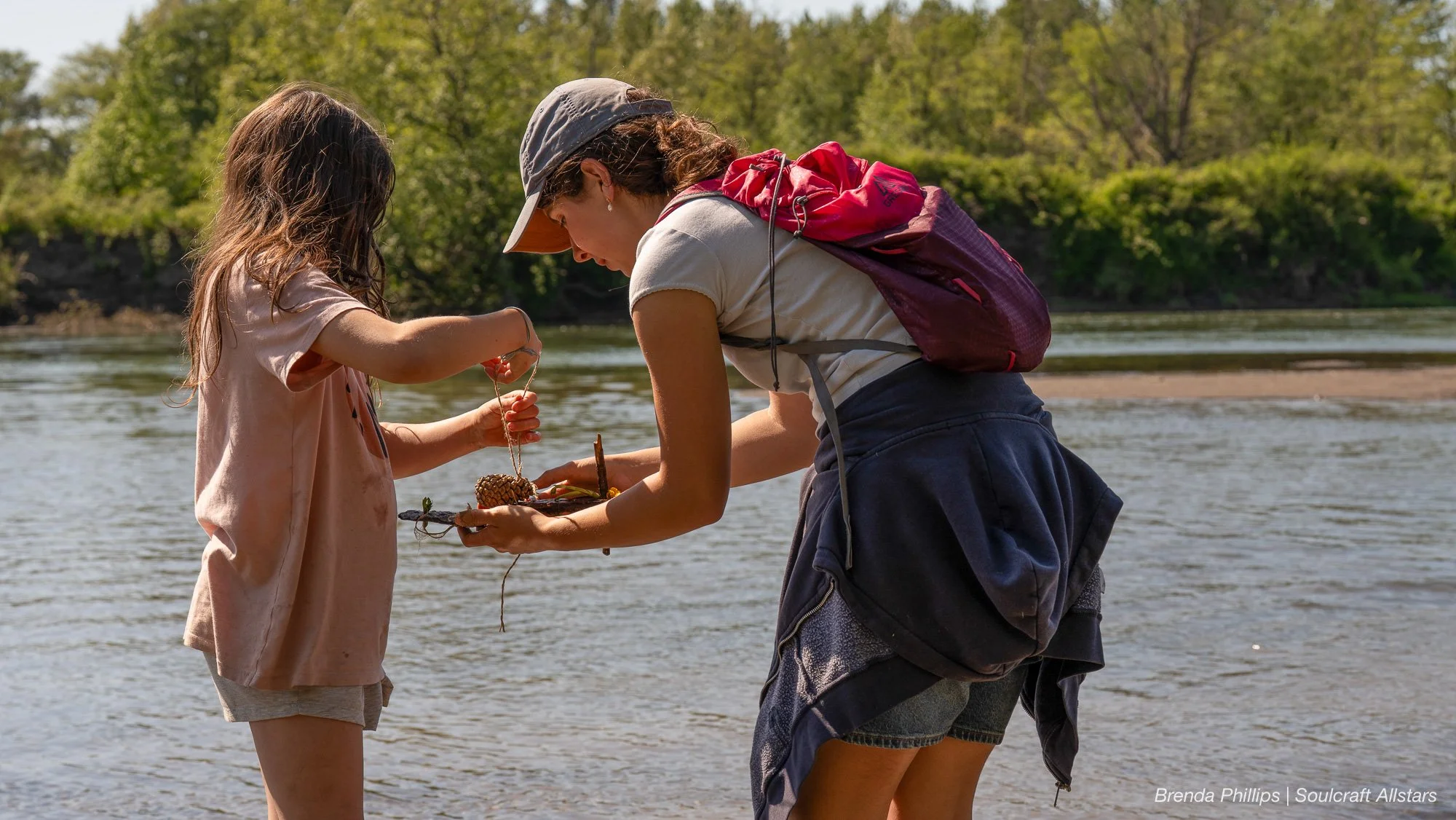
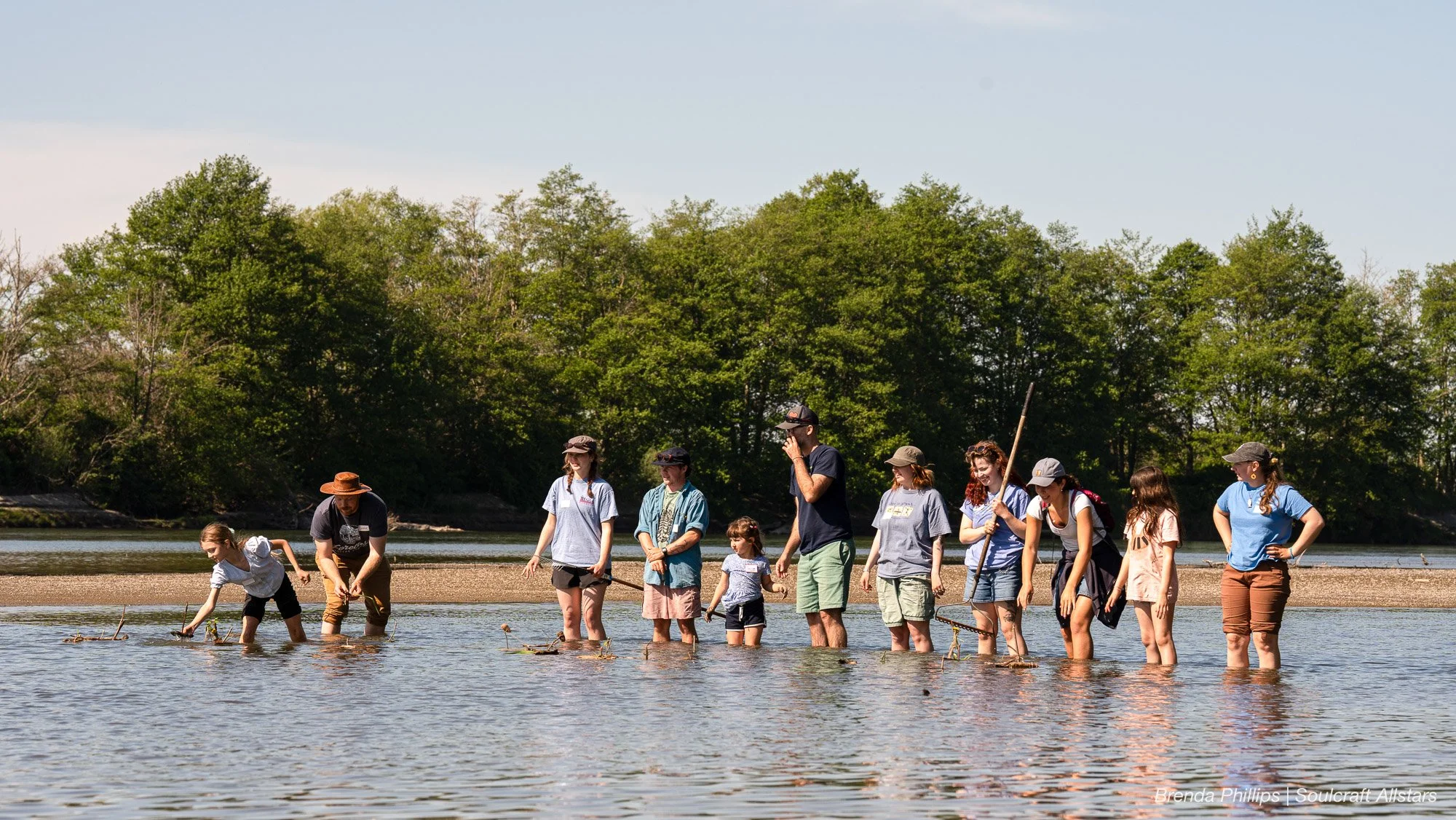
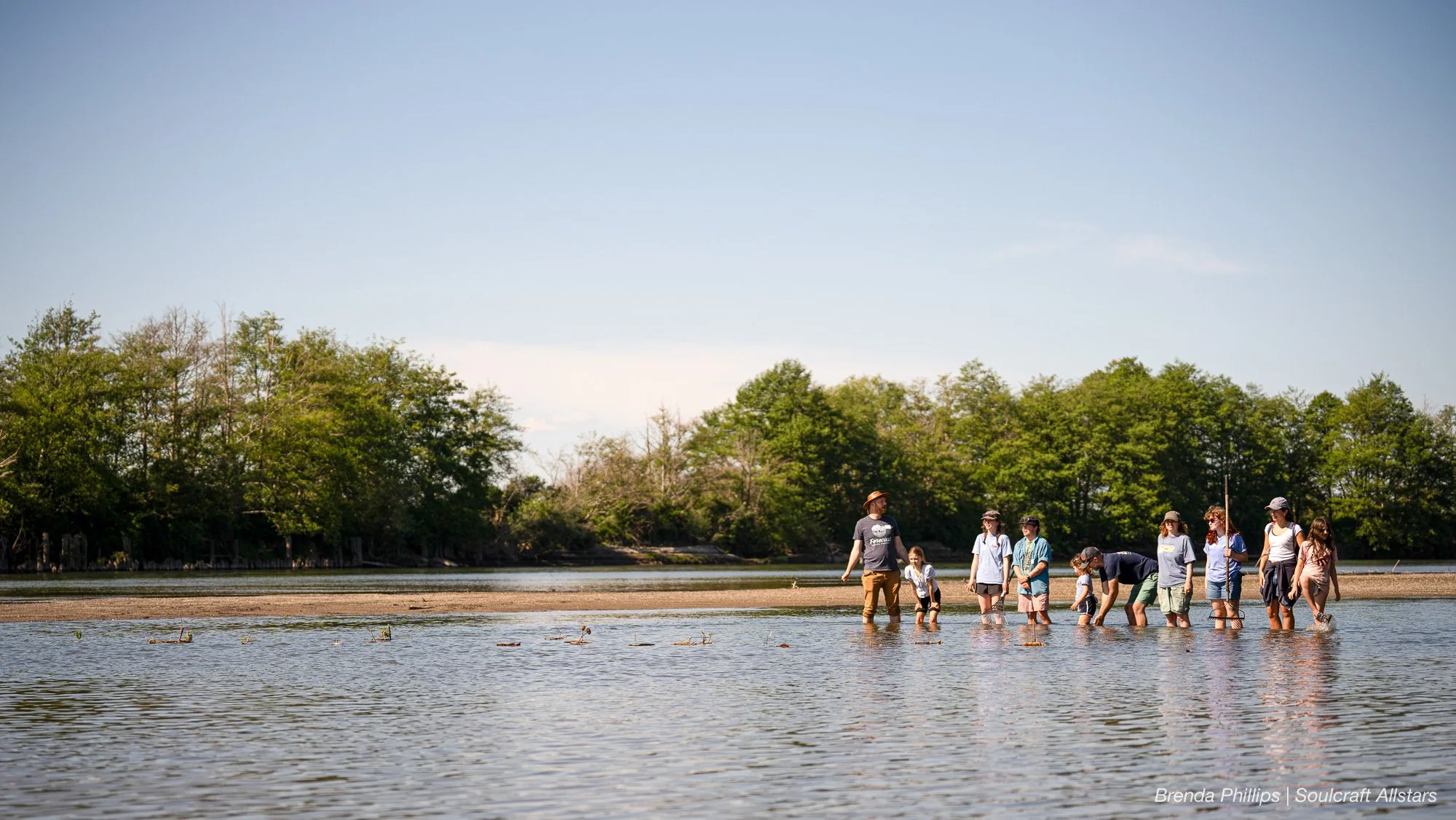
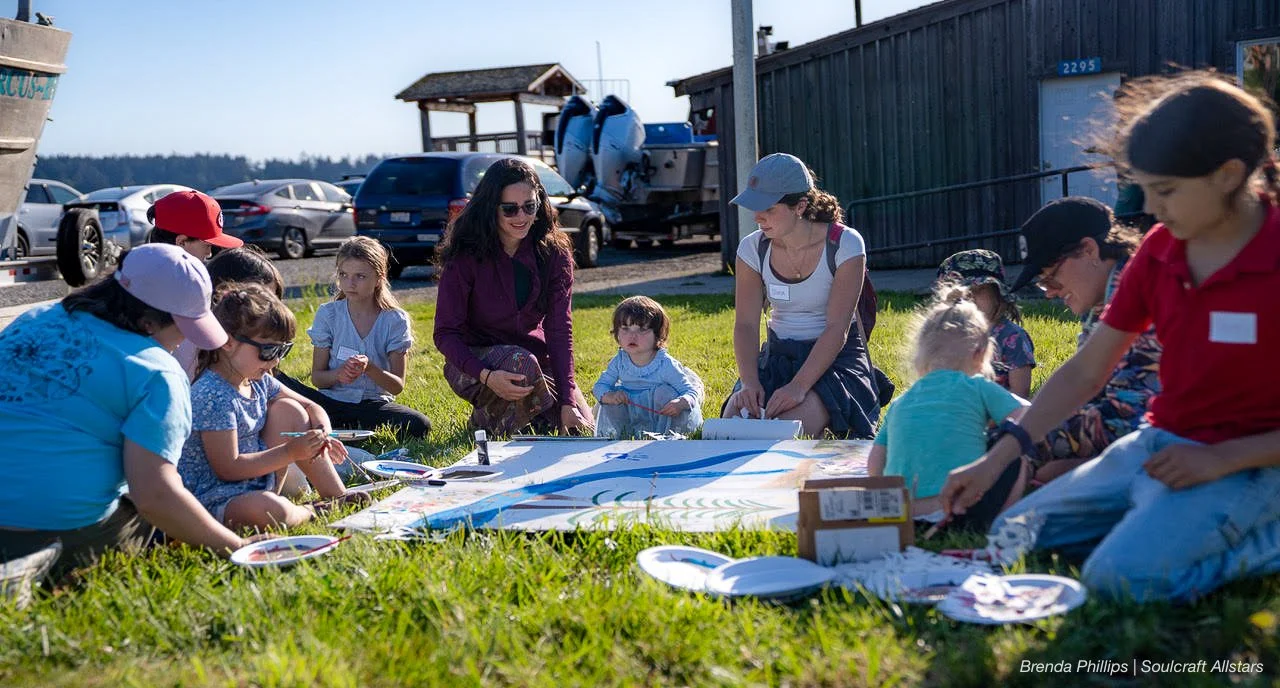
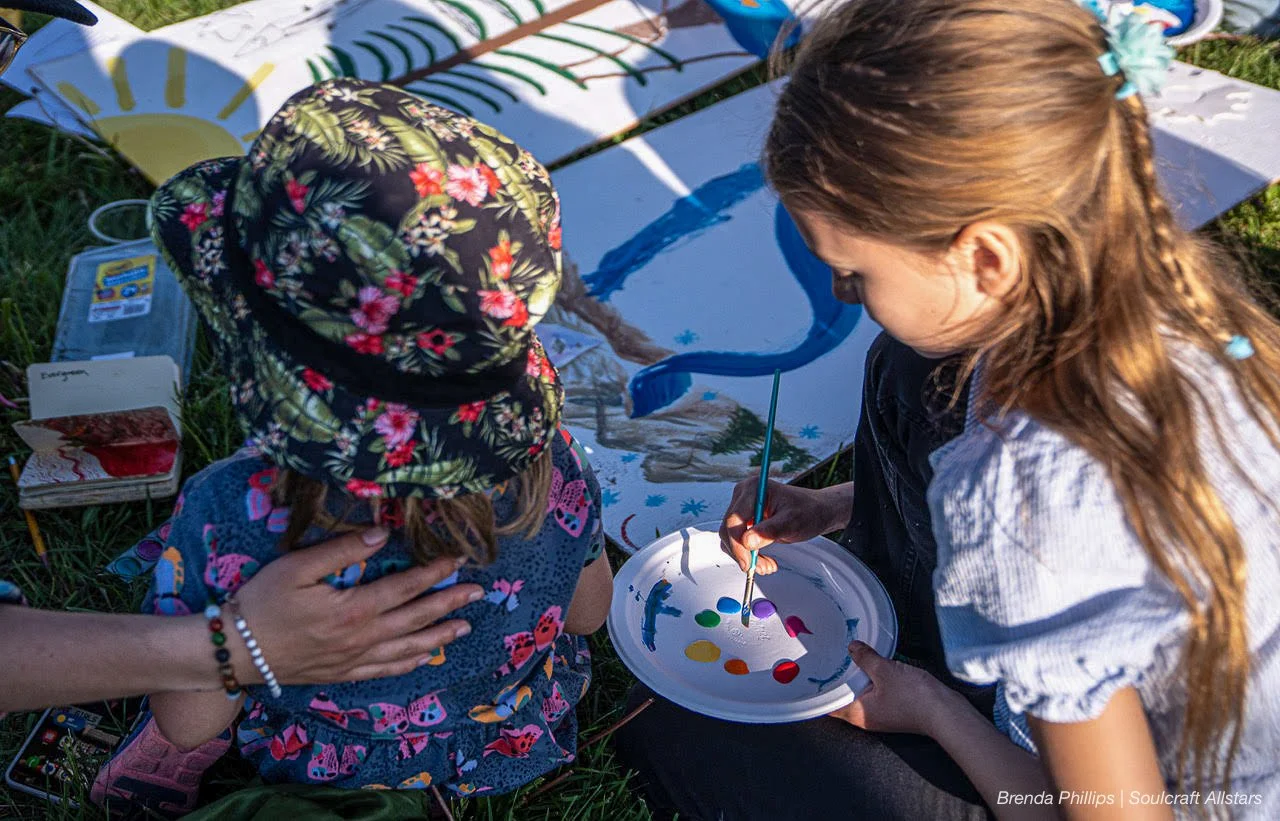
While the adults headed northwest, the children set off northeast with a group of Western Washington University students and their guides, Connor and Sharleen Harron, Angela Latoi, and Melody Woodrich, who had spent weeks developing a curriculum to run in parallel with the adult program: stories, hands-on making, and time by the river. The children were not observers of the day. They were participants in their own version of it, moving through the same questions about this place in ways suited to where they are.
The Sea Ponds
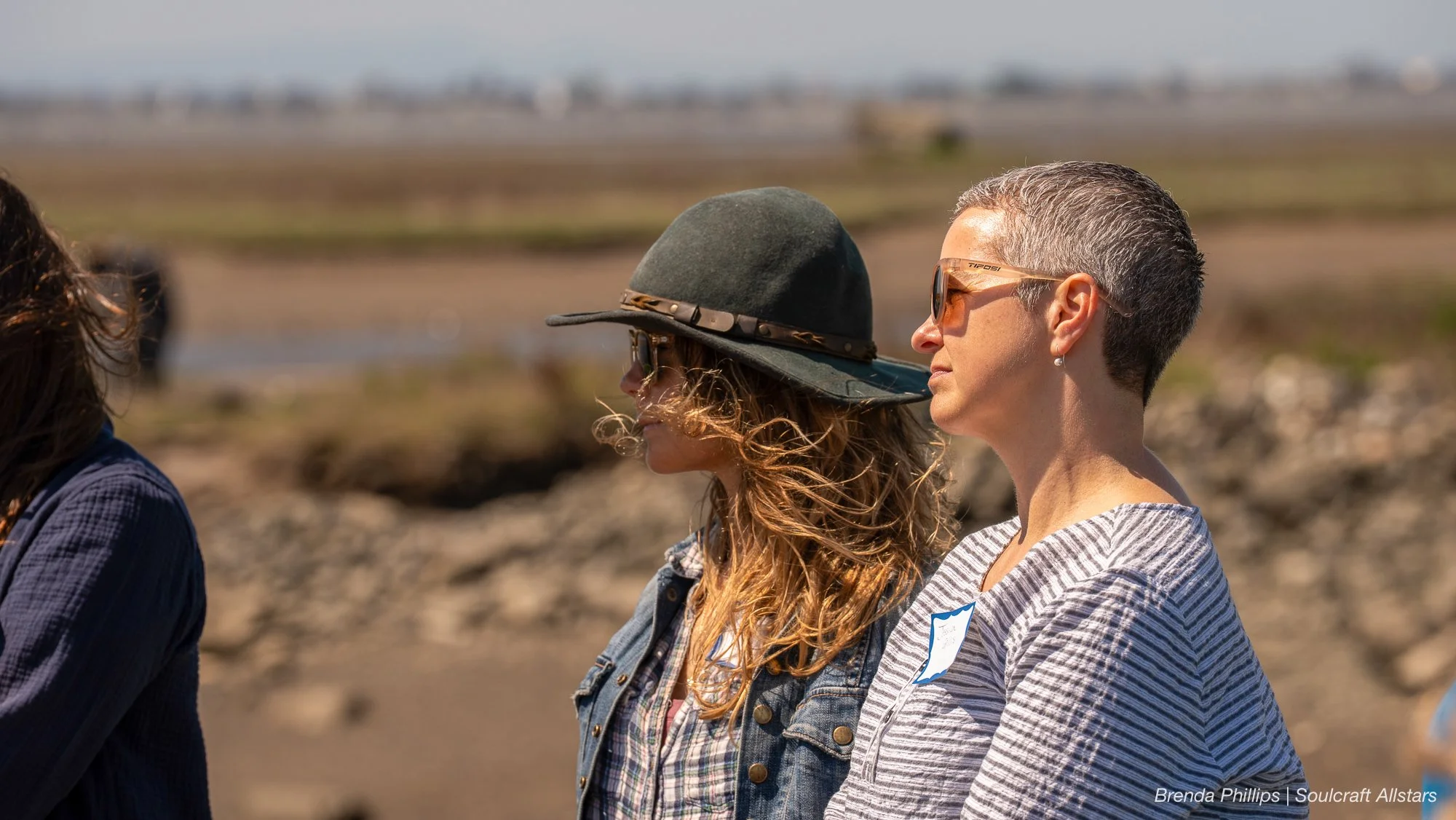
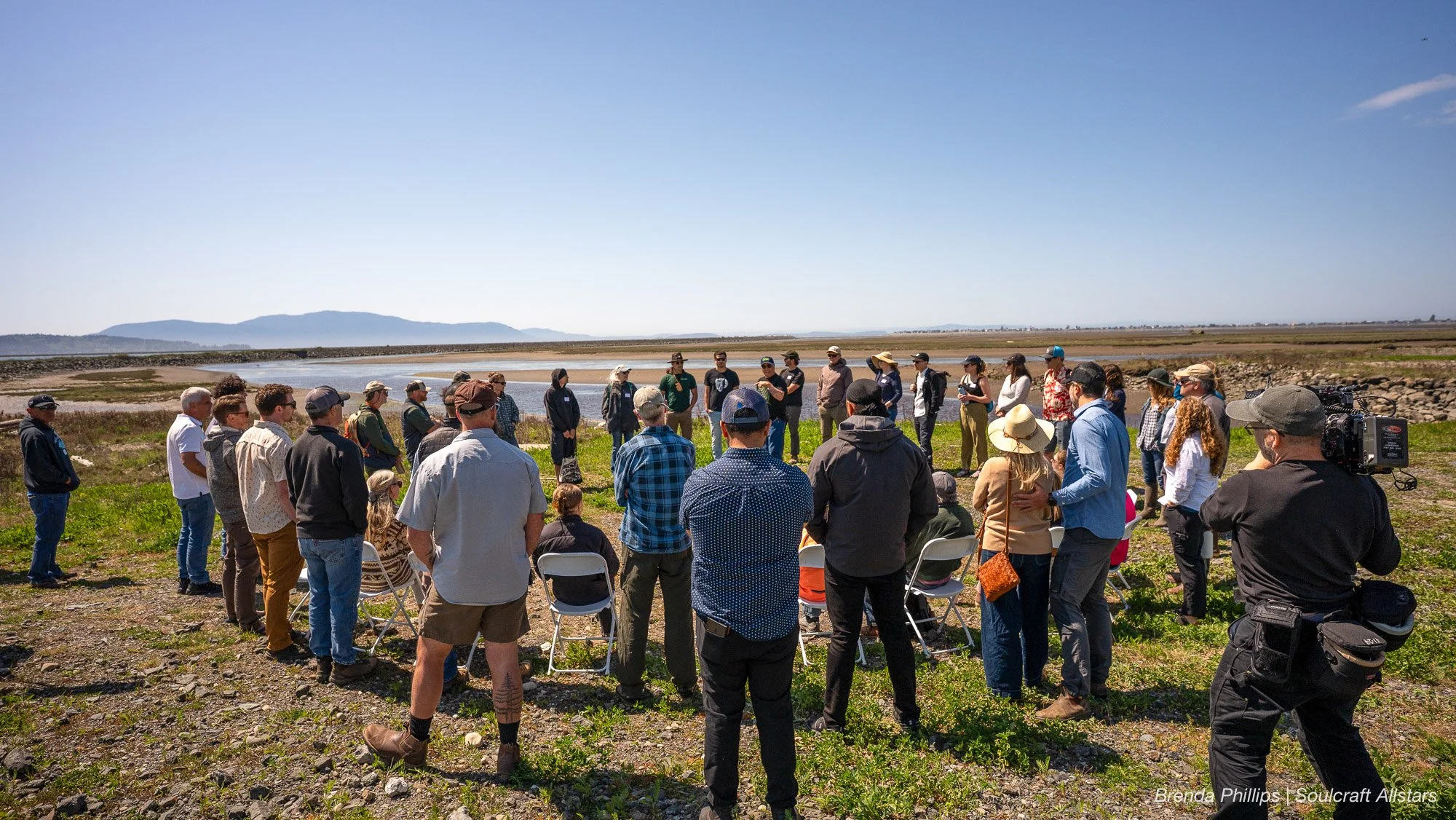
Ten minutes across the peninsula and down a gravel road, the vans pulled over at a site overlooking the Lummi sea ponds. A brisk wind was already blowing in off the water.
The sea ponds carry a story that surprised many in the group. In the late 1960s, a corporation approached the Lummi about building a magnesium oxide plant on Lummi Bay. Some in the community were intrigued; others pushed back. At the same time, Dr. Wally Heath, an instructor at Western Washington University with a background in aquaculture from the Pacific Islands, proposed something different: a sea farm, using dikes to create managed ponds in ways that echoed how ancient Hawaiian communities had worked with the sea for thousands of years. The Lummi chose that path. They built three miles of dike, largely by hand and without formal government permission, taking the route of asking for forgiveness rather than permission. The result was a 700-acre sea farm and the first oyster hatchery in the Northwest, so novel an idea it landed the Lummi tribal chairman on the Dick Cavett Show.
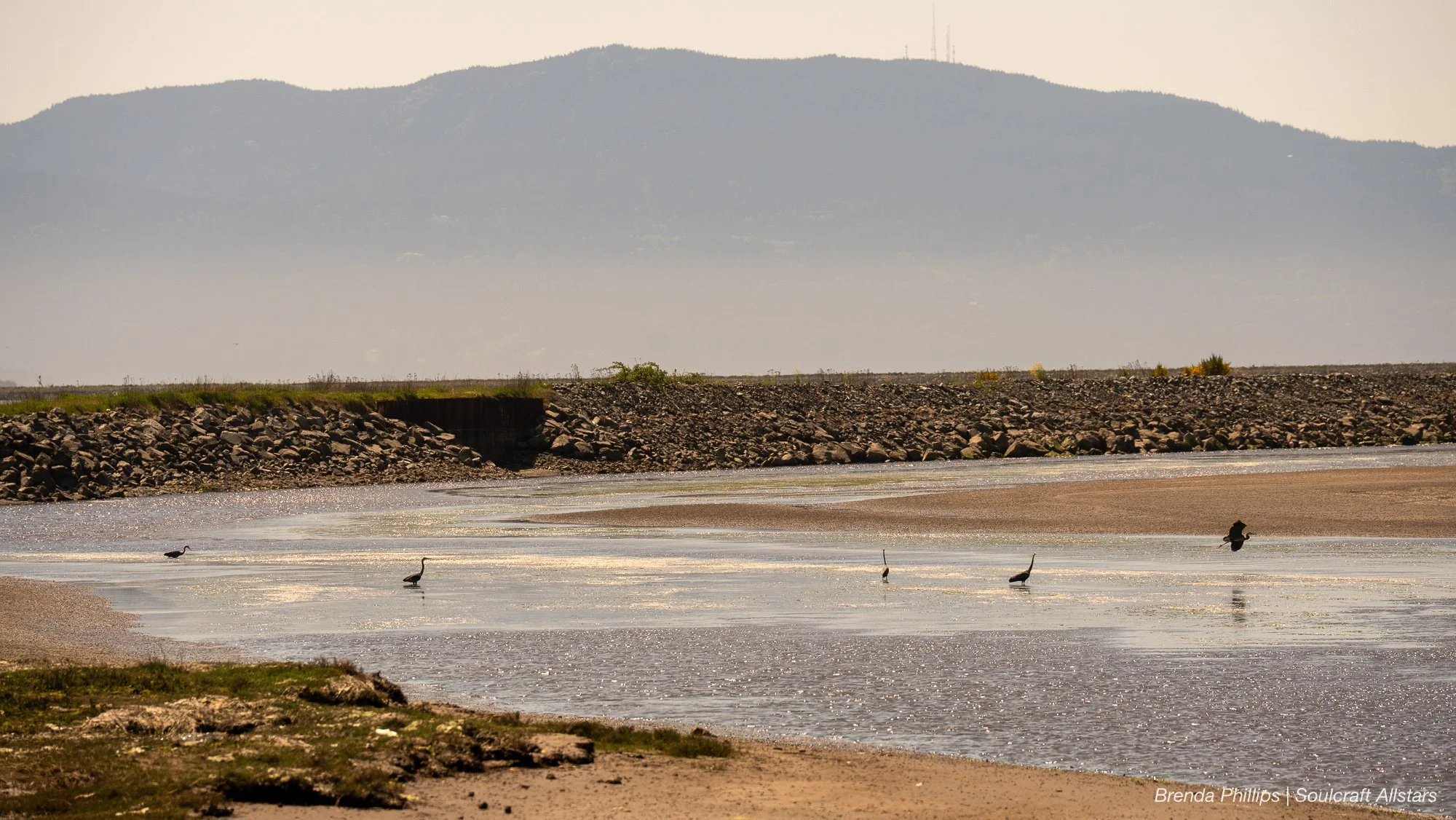
Far out on the sand flats, several hundred people could be seen bent to the earth, digging clams. A living harvest. A people still working these waters as they always have. The sea ponds remain a working, living economy. These waters are not just ancestral. They are active.
Standing there, we also learned that the Nooksack River once drained into this bay, forming the old delta, before being rerouted over a century ago—presumably to allow for the transport of old-growth logs from the upper watershed to mills in Bellingham. The landscape we were looking at is not natural. It is managed, contested, and changed.
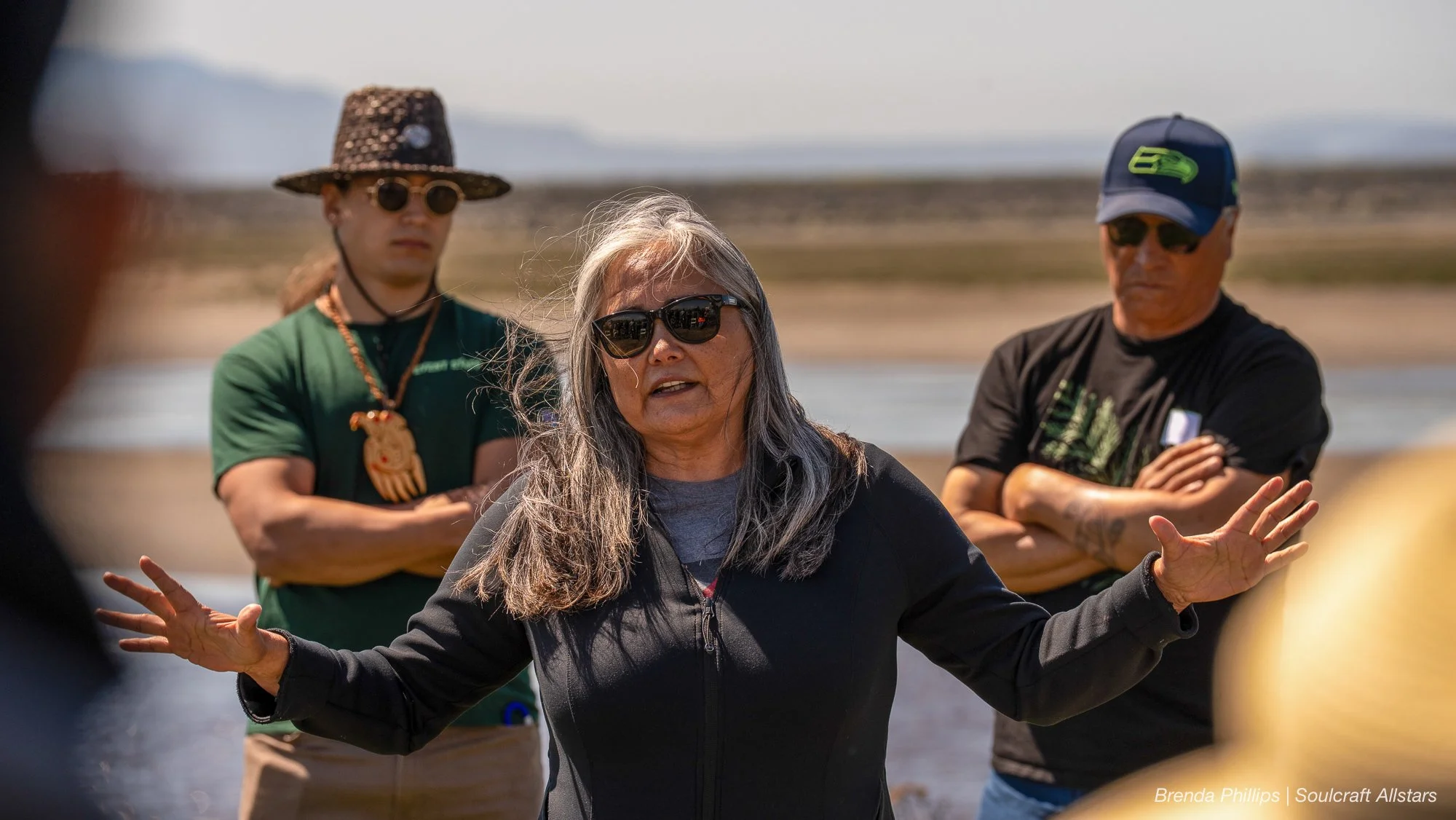
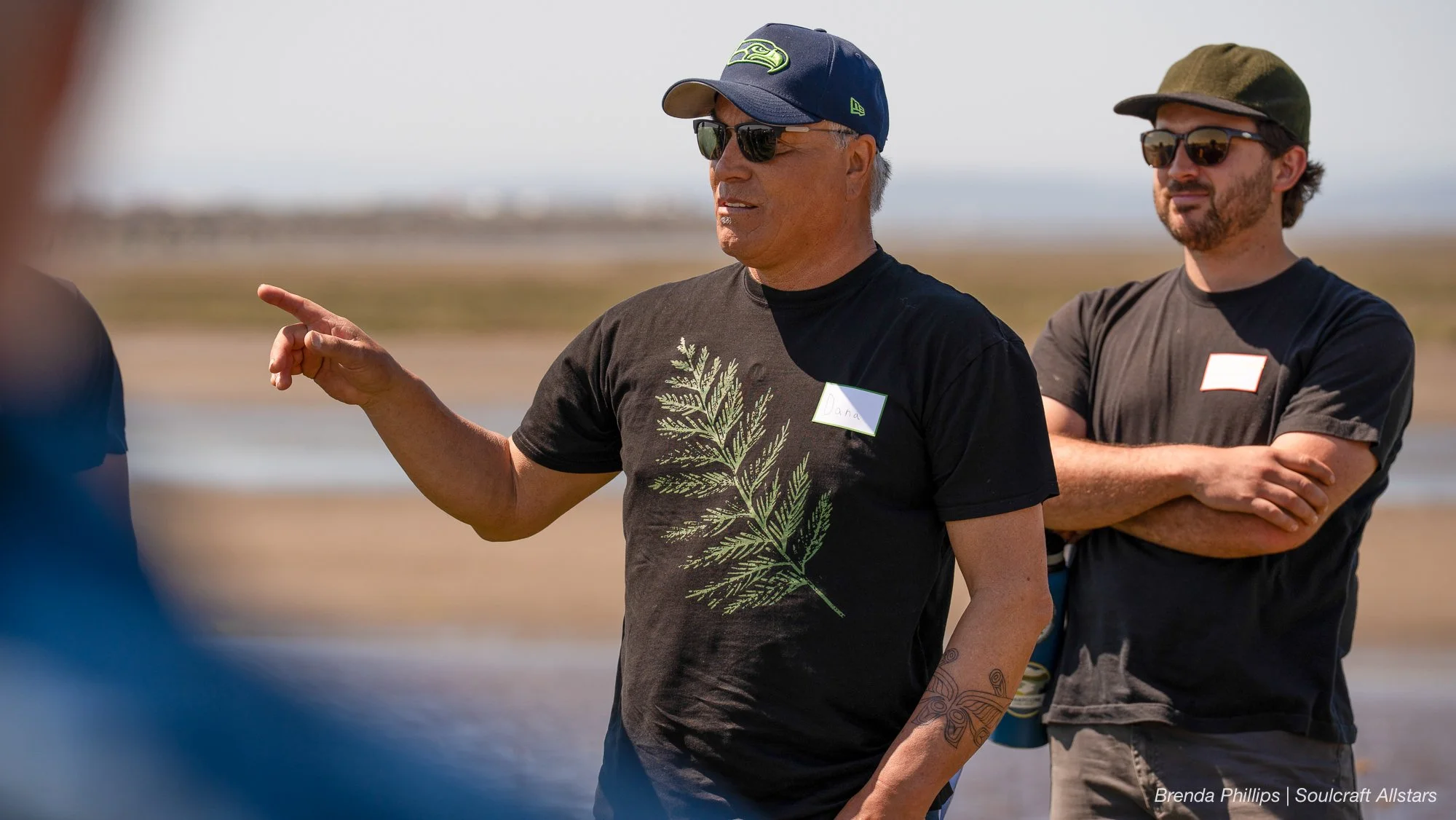
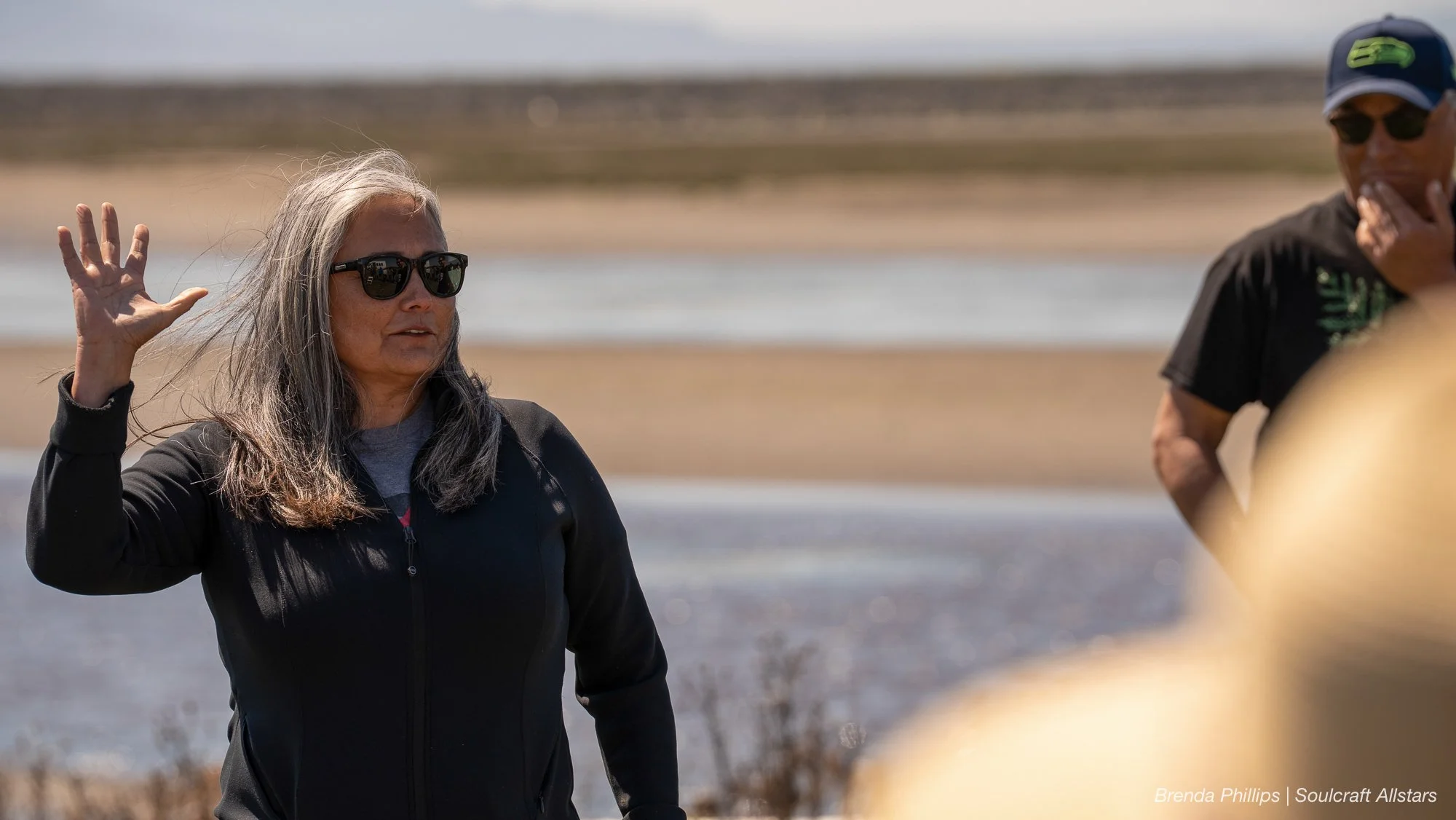
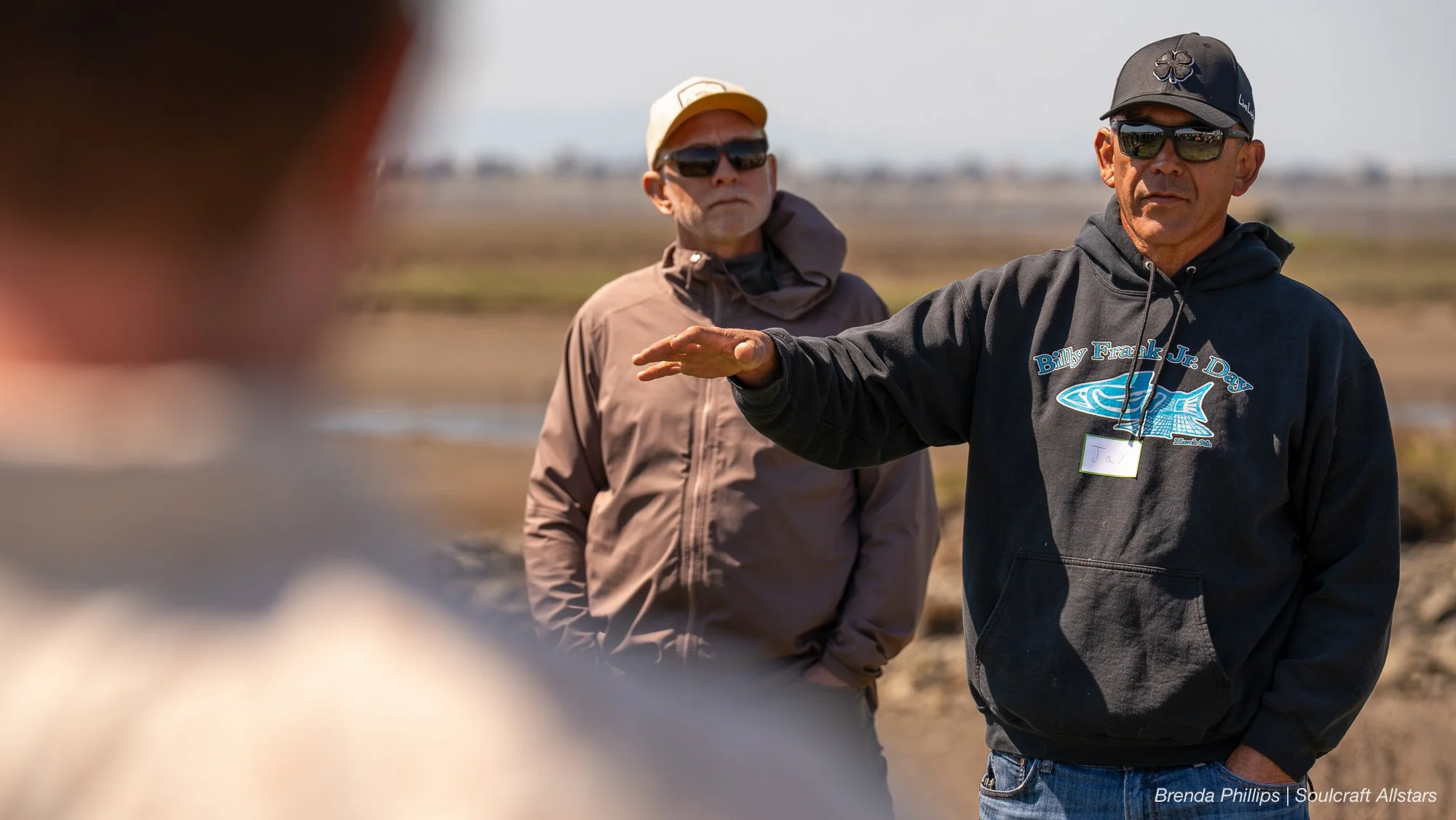
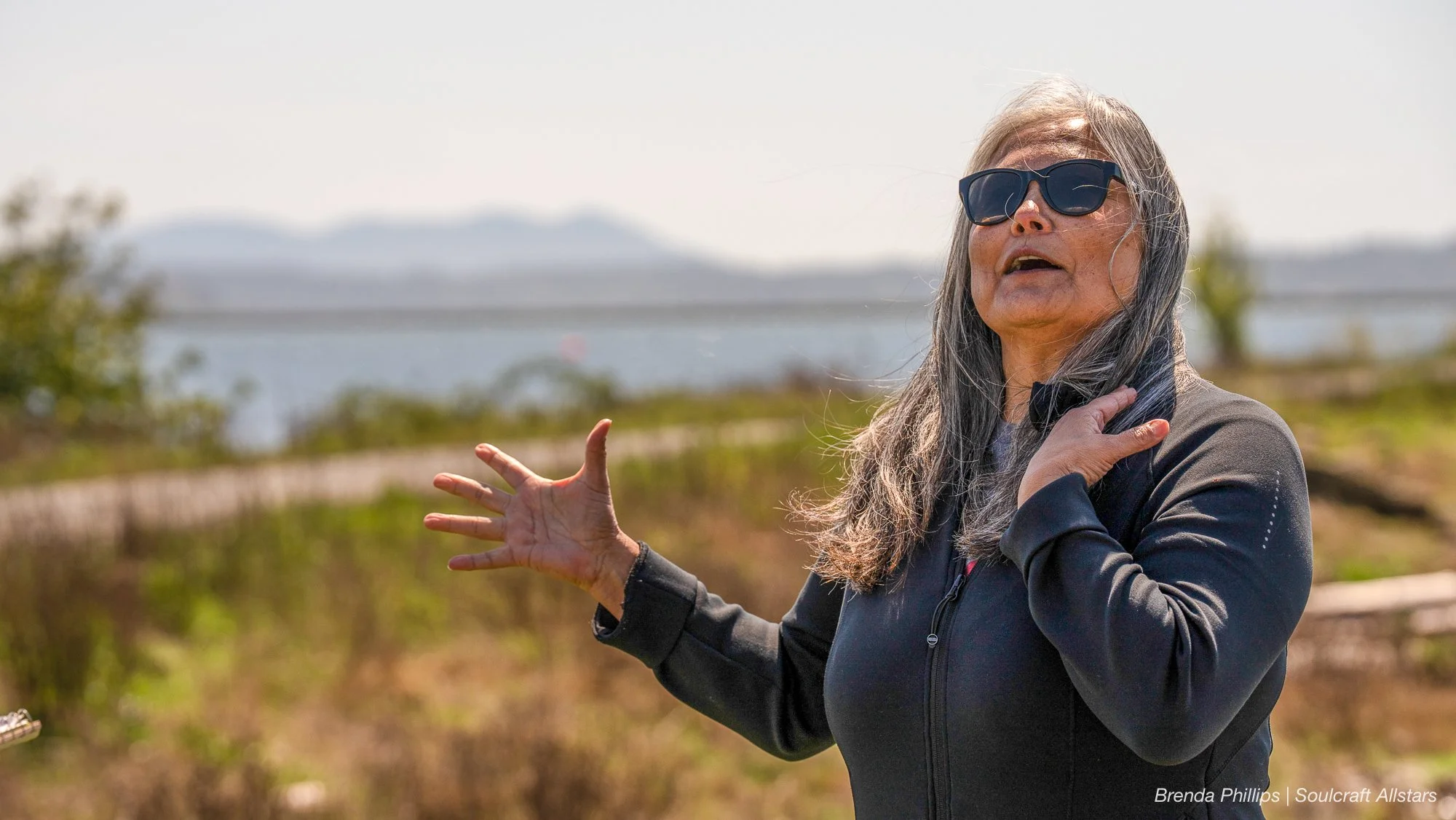
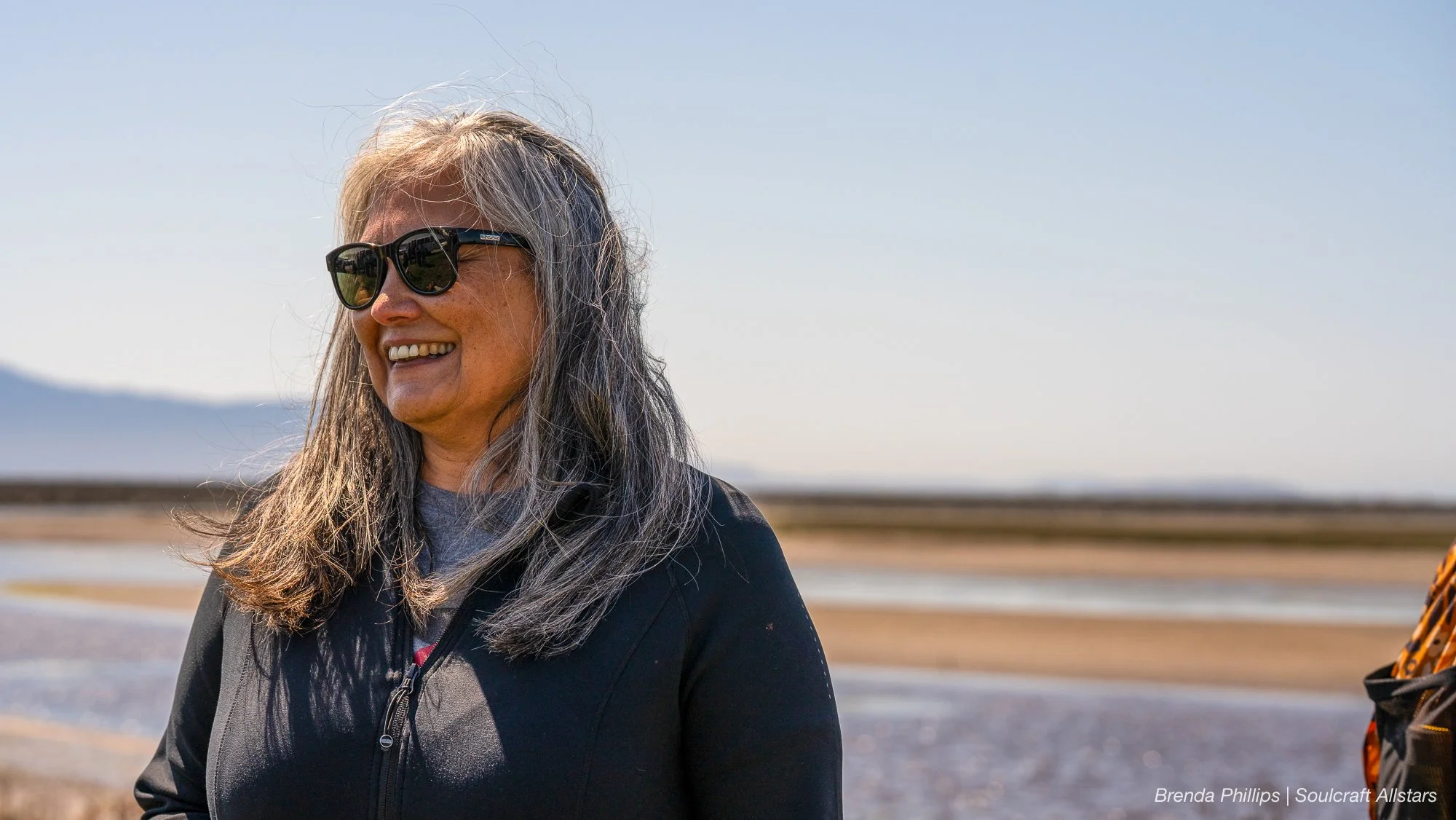
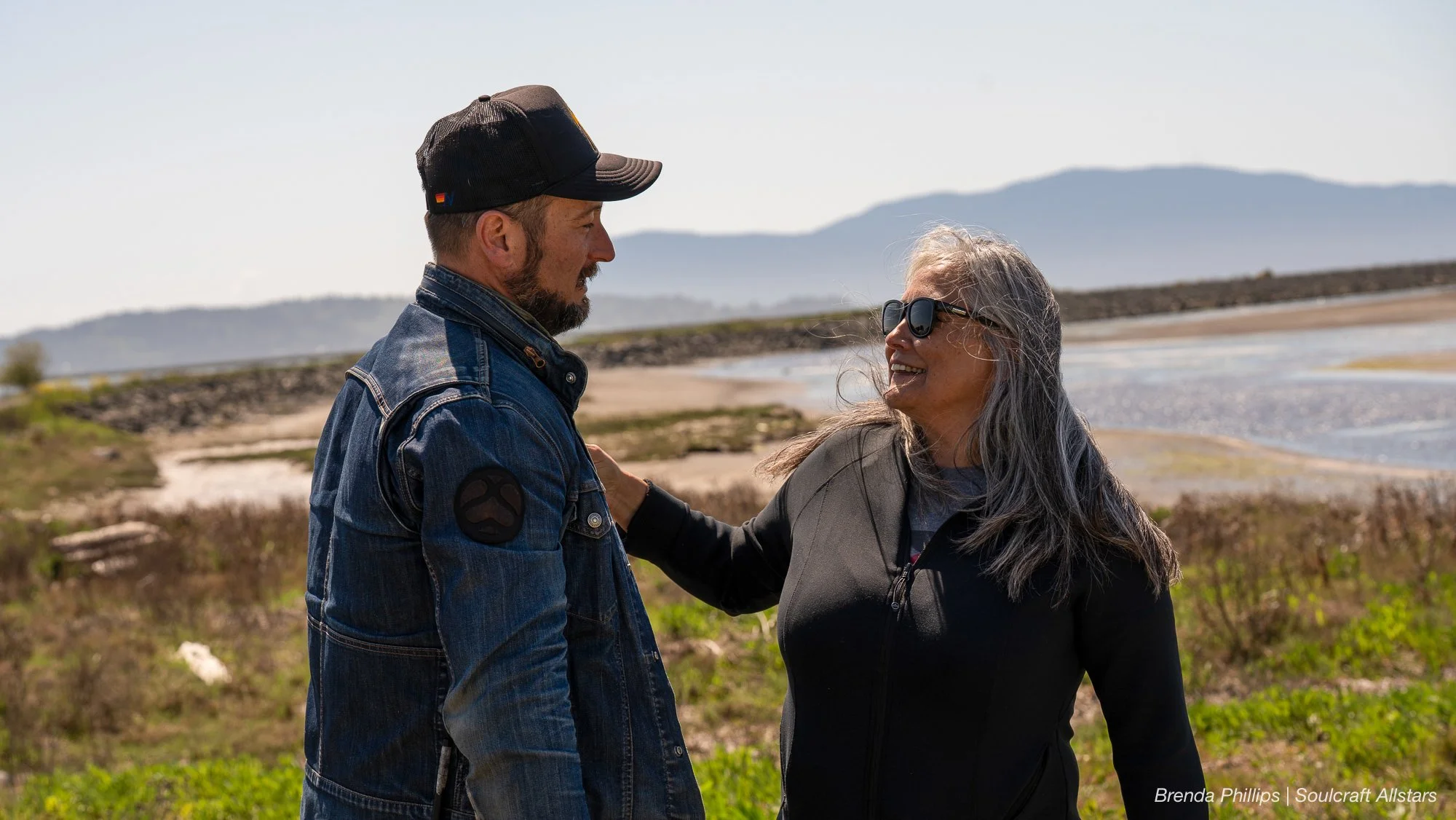
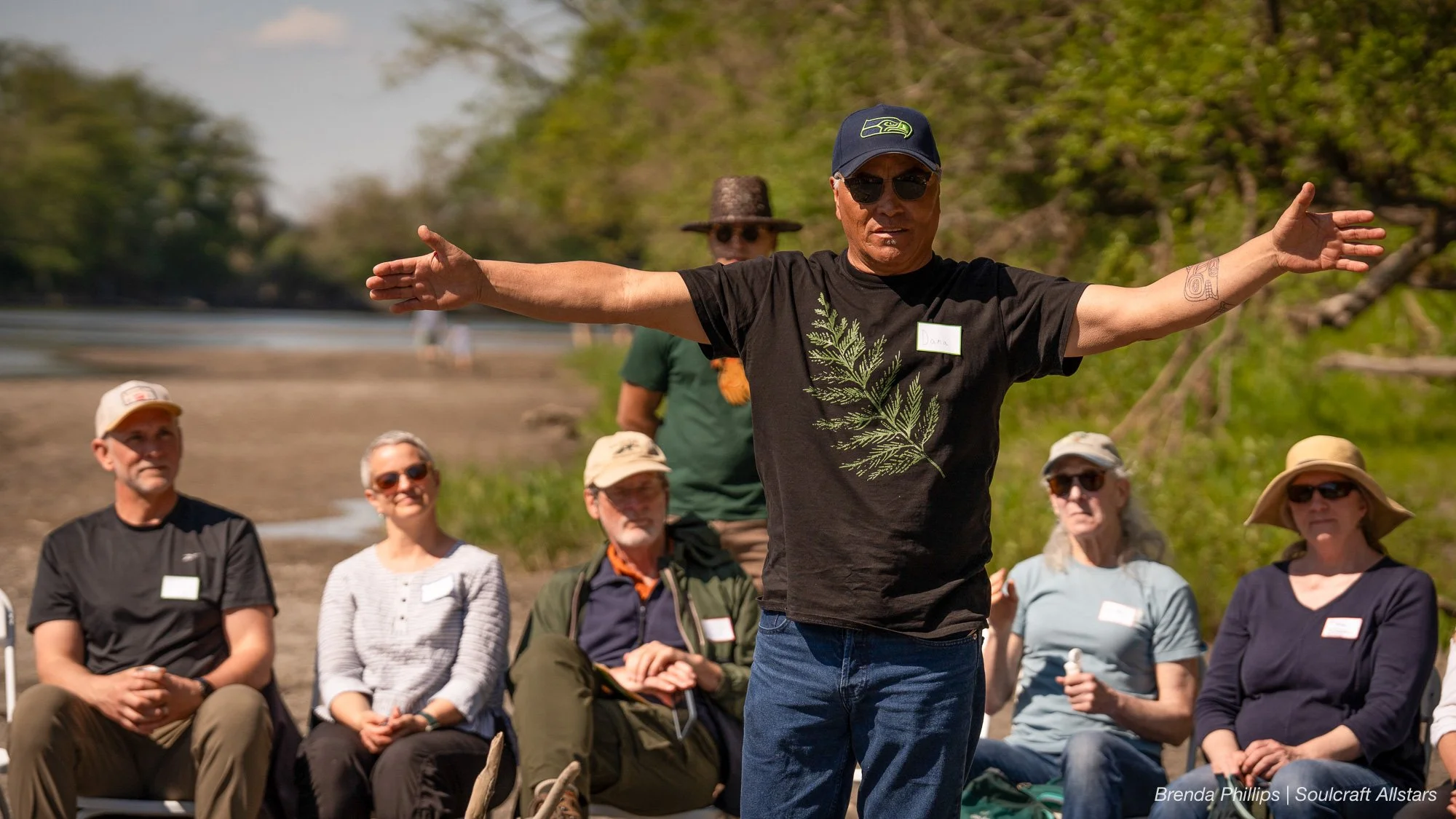
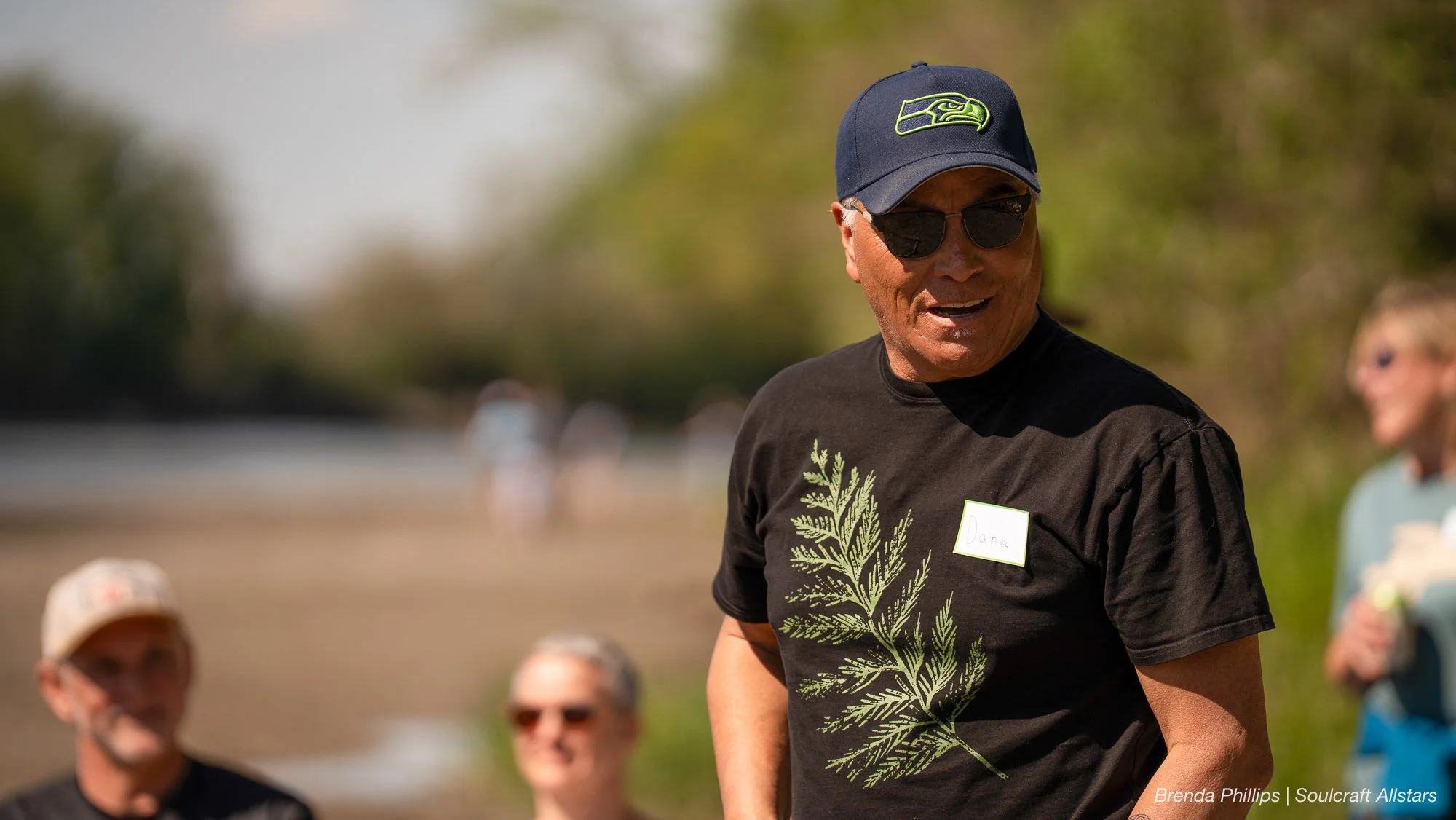
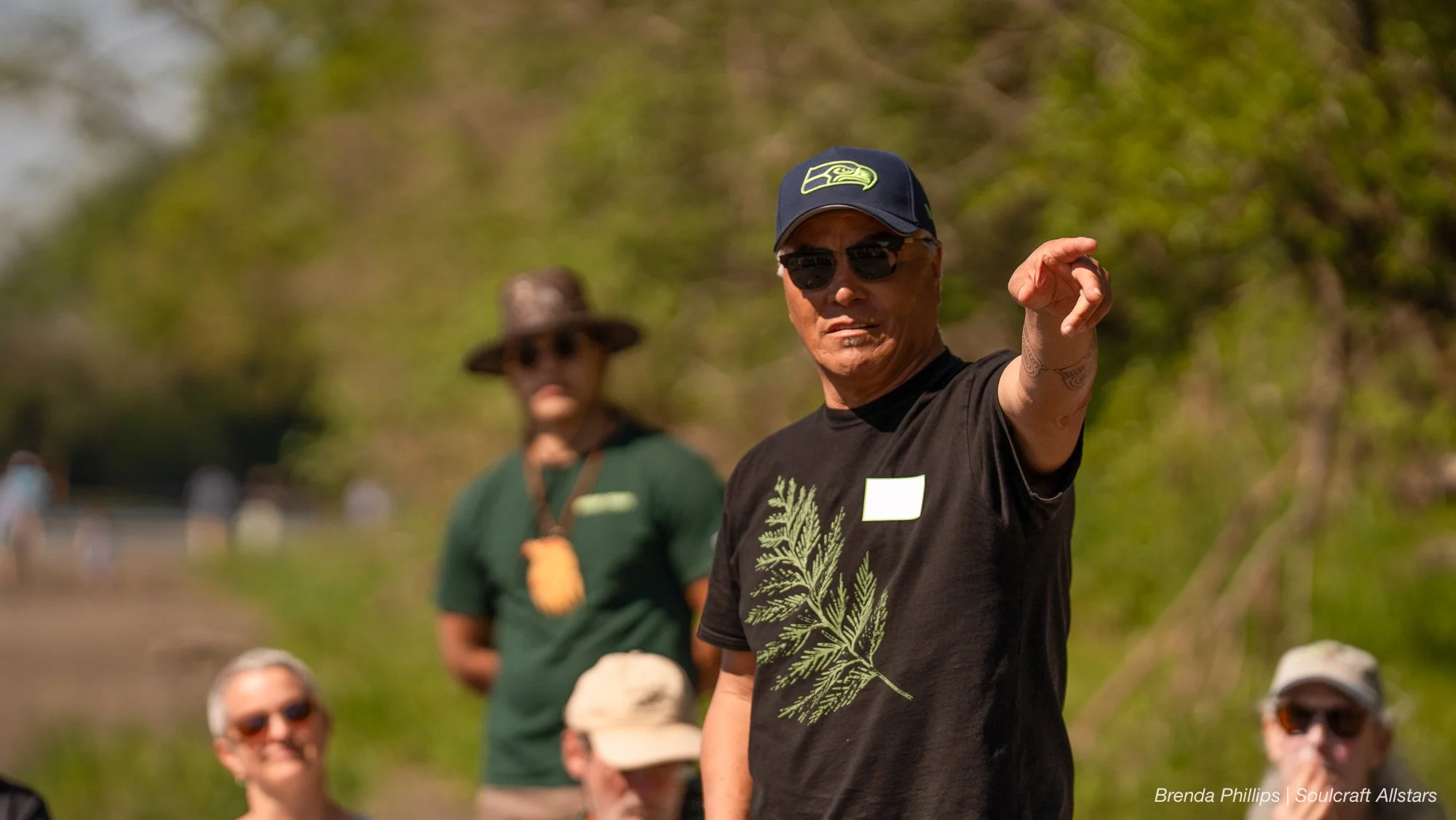
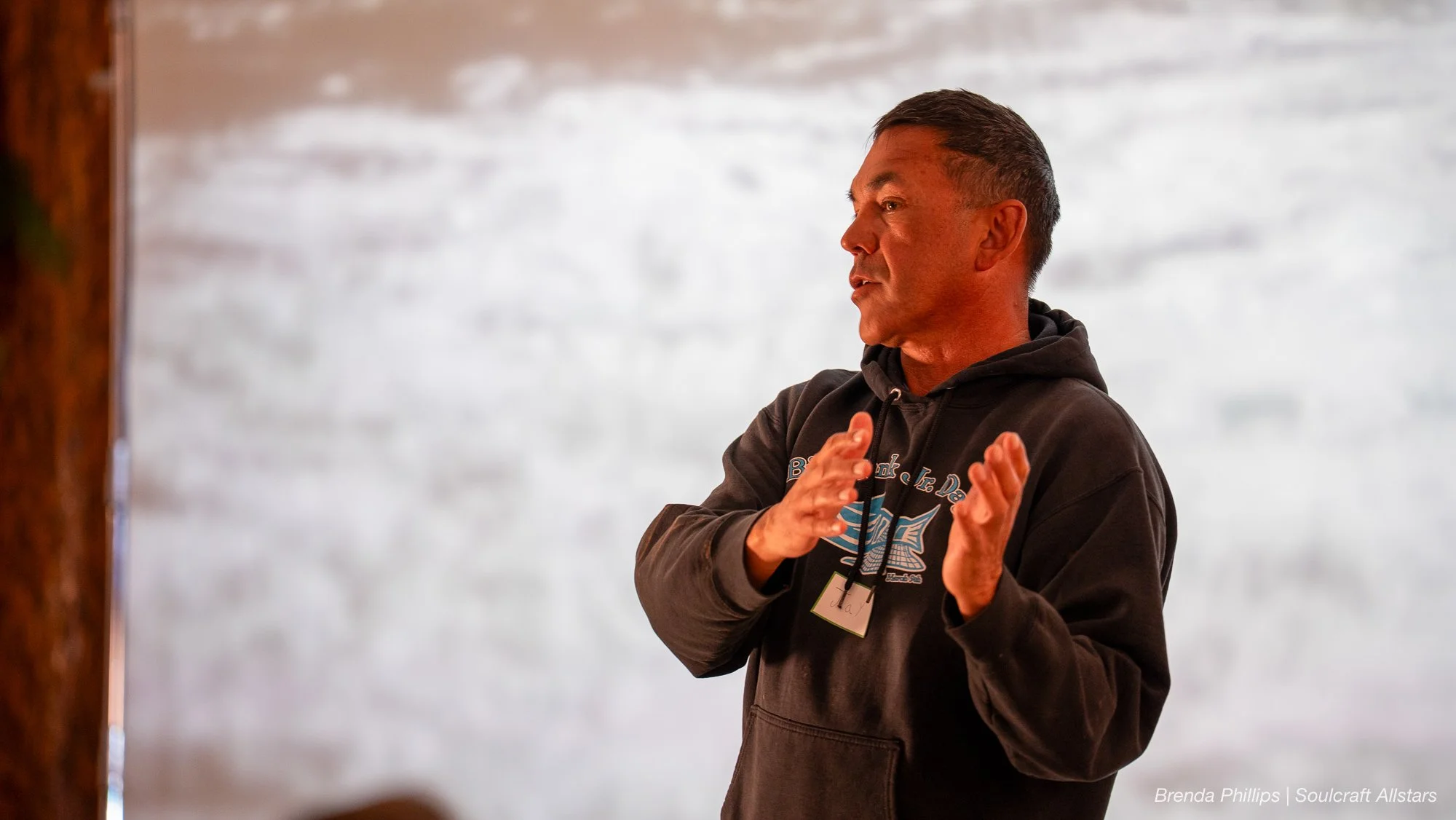
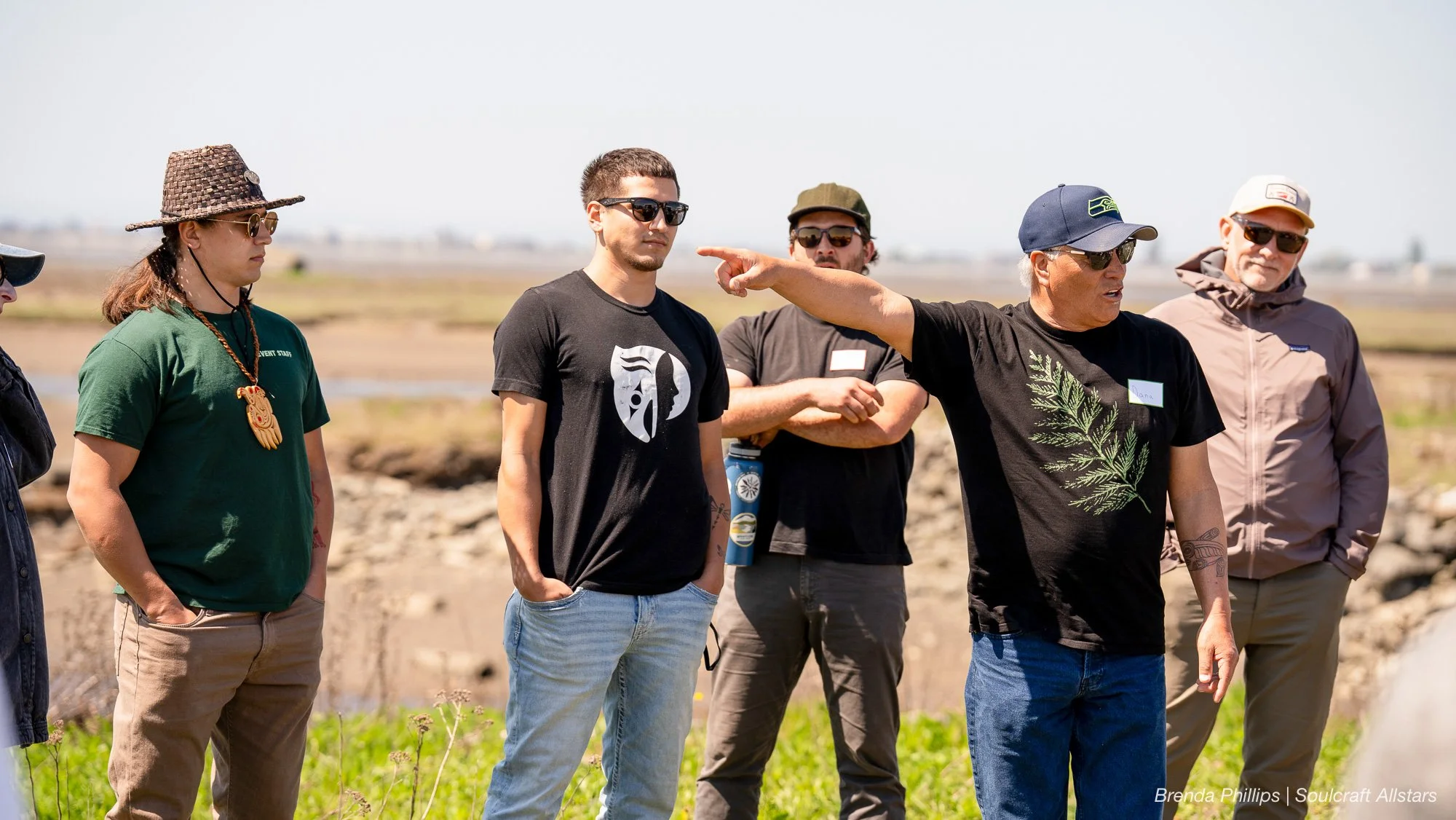
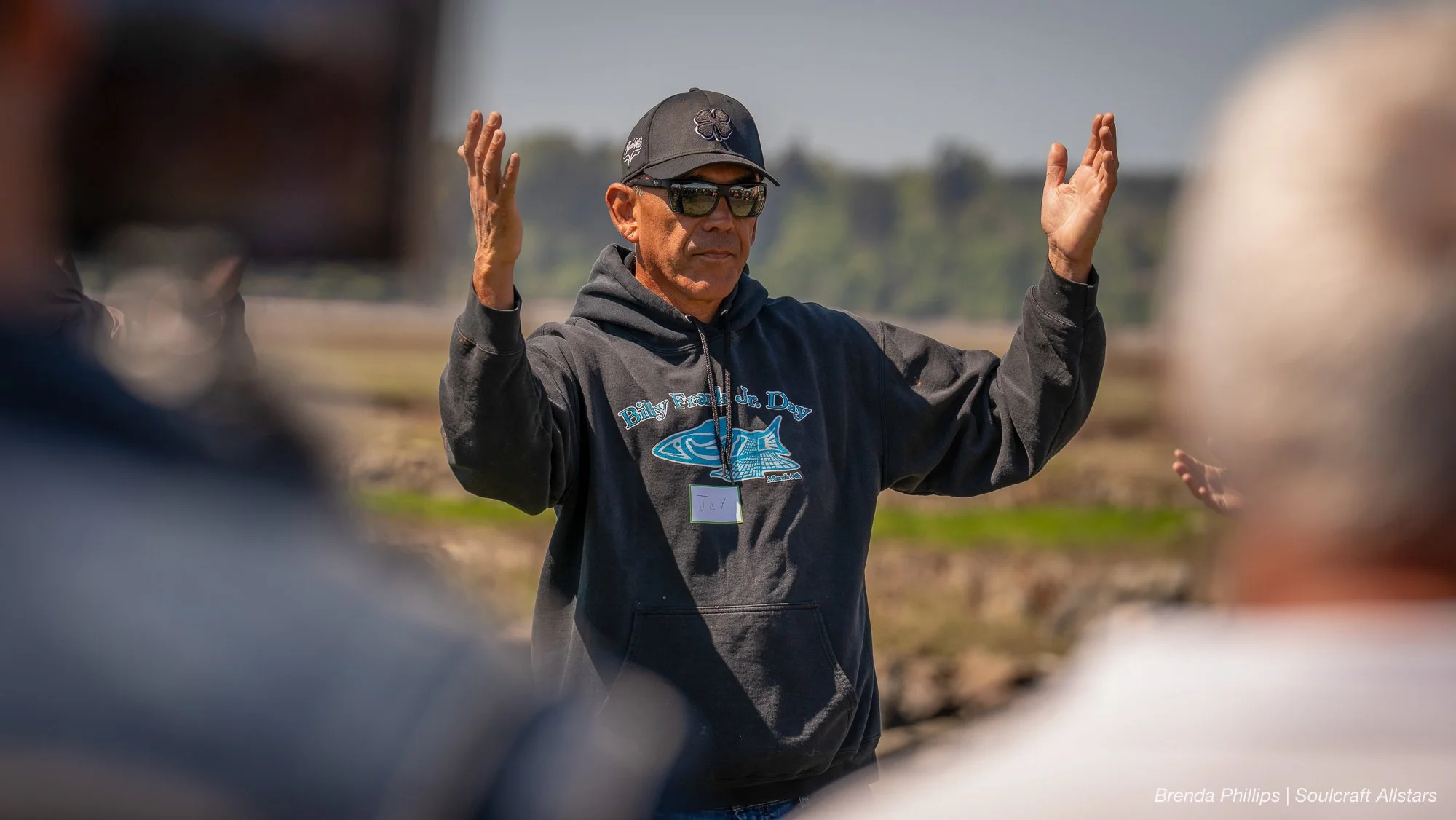
Free, Dana Wilson, Lisa Wilson, and Jay Julius took turns speaking about what this place means within a much longer story. Dana's own family helped build the dike. Lisa grew up gillnetting with her father from Point Roberts to Hood Canal, and later came to Northwest Indian College to research and document the fishing history of her people, a journey that became, in her own words, as much a soul-searching adventure as an academic one. Her voice carried the weight of someone who had spent years learning what her own people had sacrificed, and won, to protect their right to fish these waters.
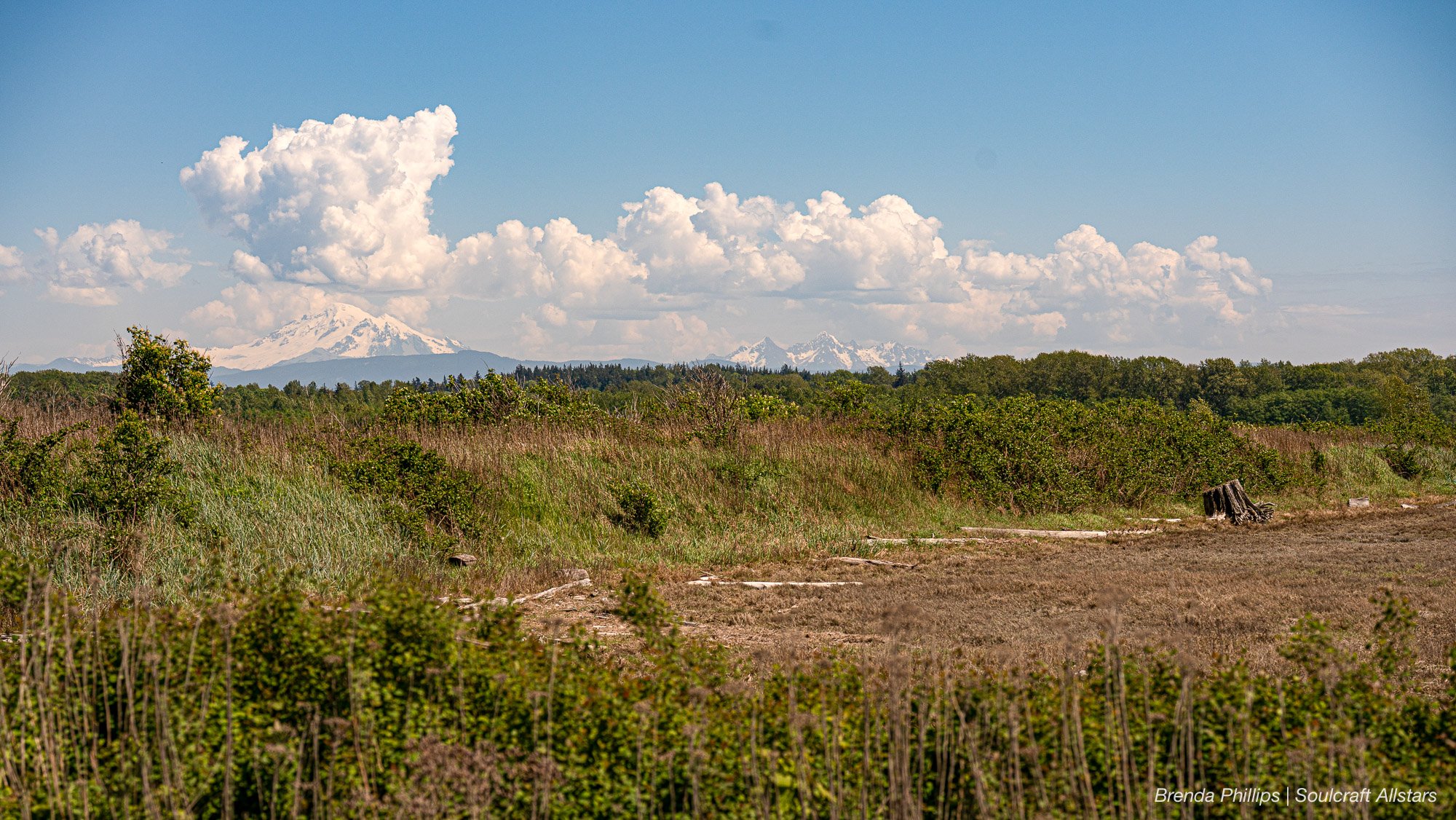
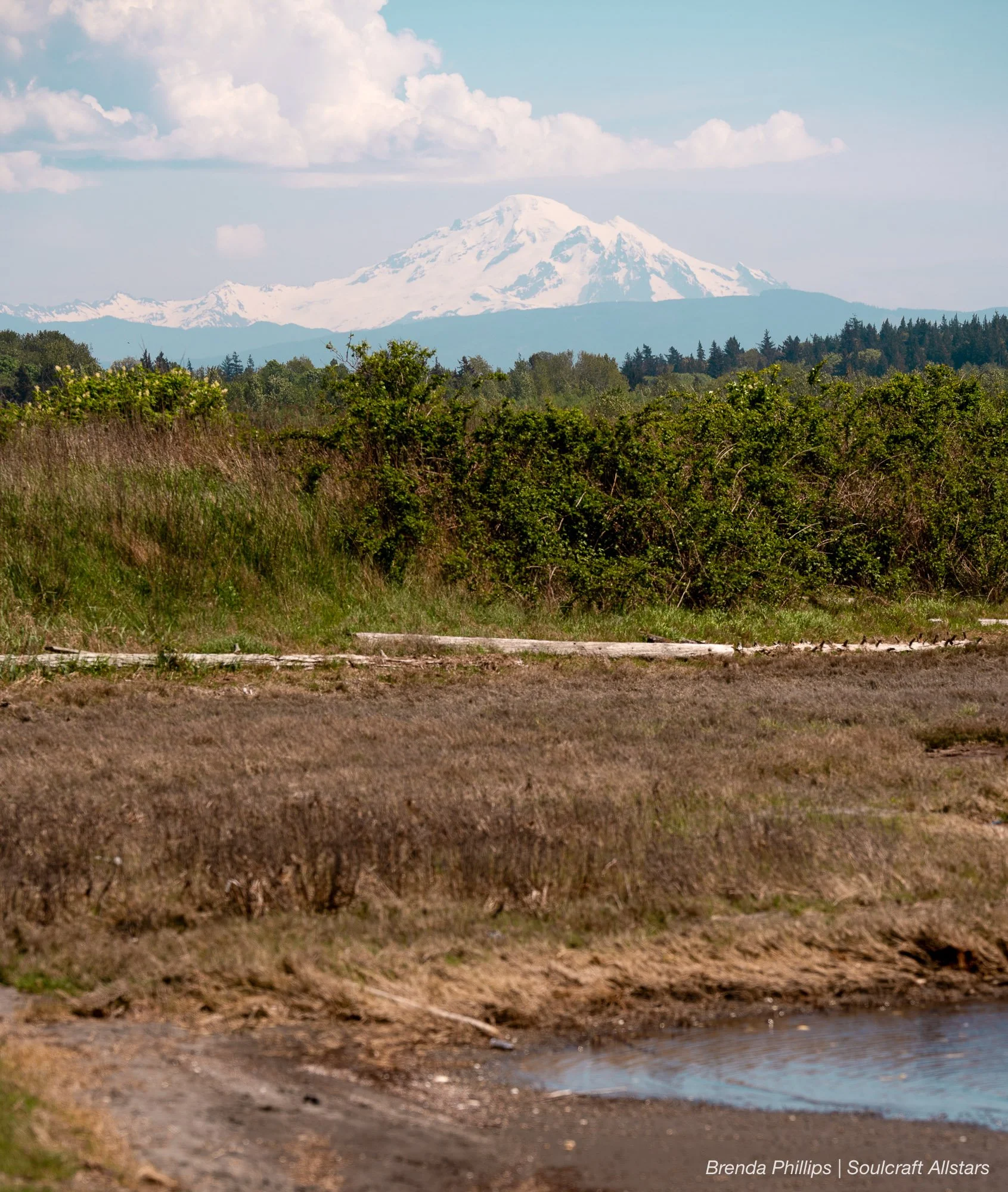
Behind the group: Mount Baker and the Twin Sisters occupied the eastern horizon, still white with the shrinking glaciers and snowfields feeding the Nooksack River. To the west, the San Juan Islands stretched across traditional Lummi territories toward the Gulf Islands beyond.
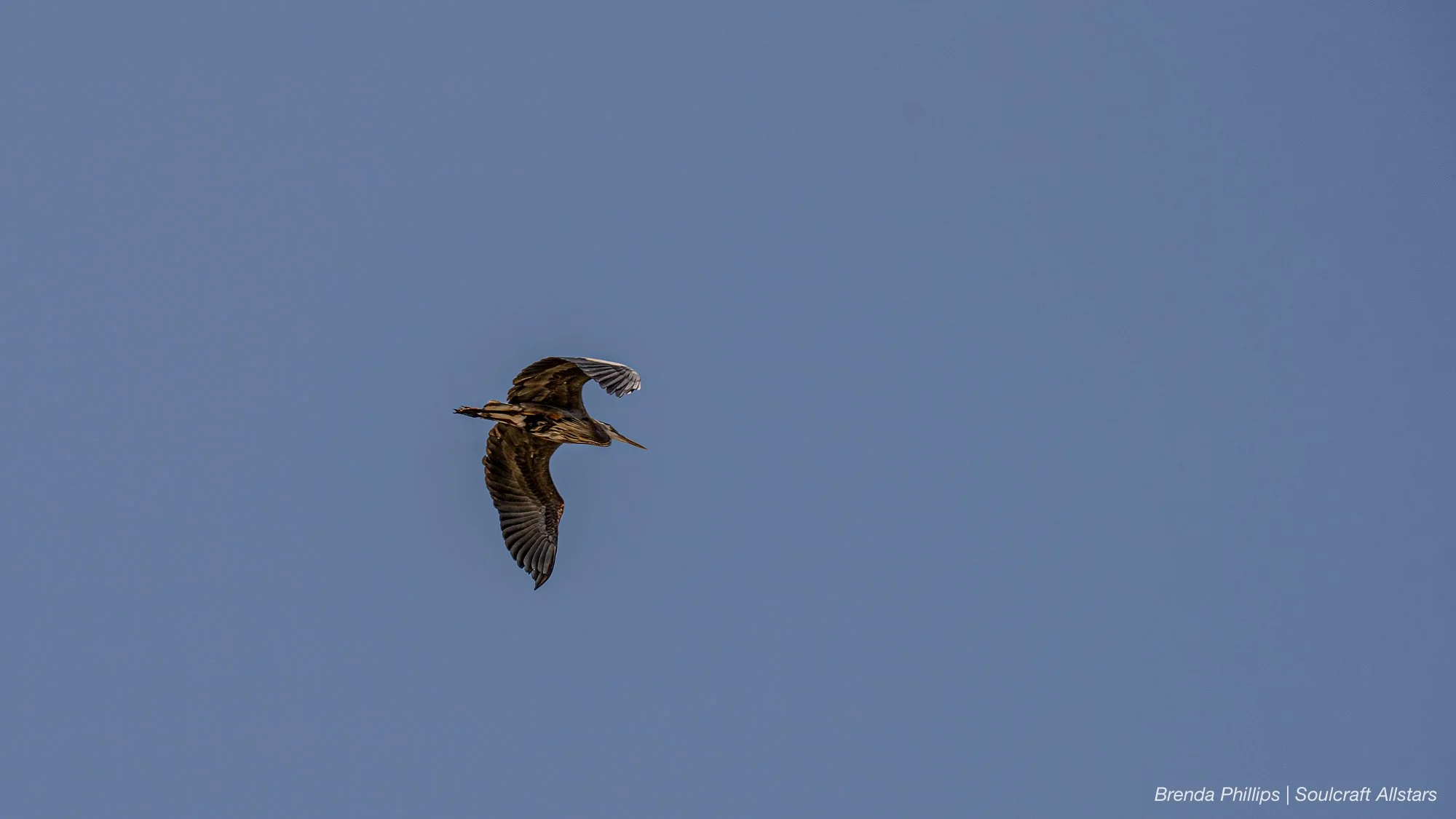
Herons fished in the shallows. Eagles circled overhead.
The group stood in the wind and listened for nearly an hour.
The Story Pole
The vans moved on toward the center of the Lummi Reservation.
Northwest Indian College sits there, established so the Lummi could train their own fisheries scientists and build the technical and legal capacity to stand as recognized stewards of this watershed within Western regulatory systems. It has grown far beyond that founding purpose.
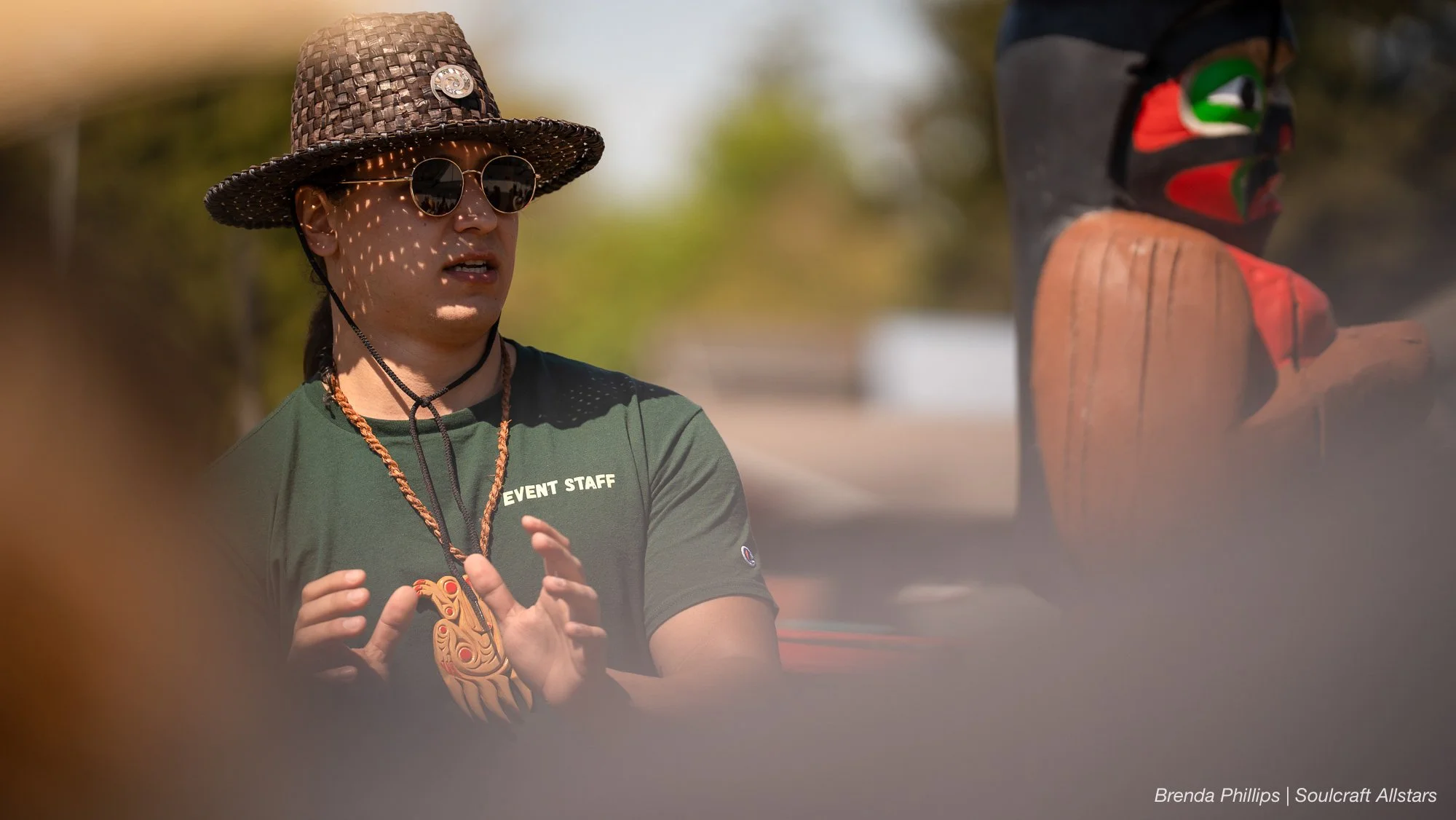
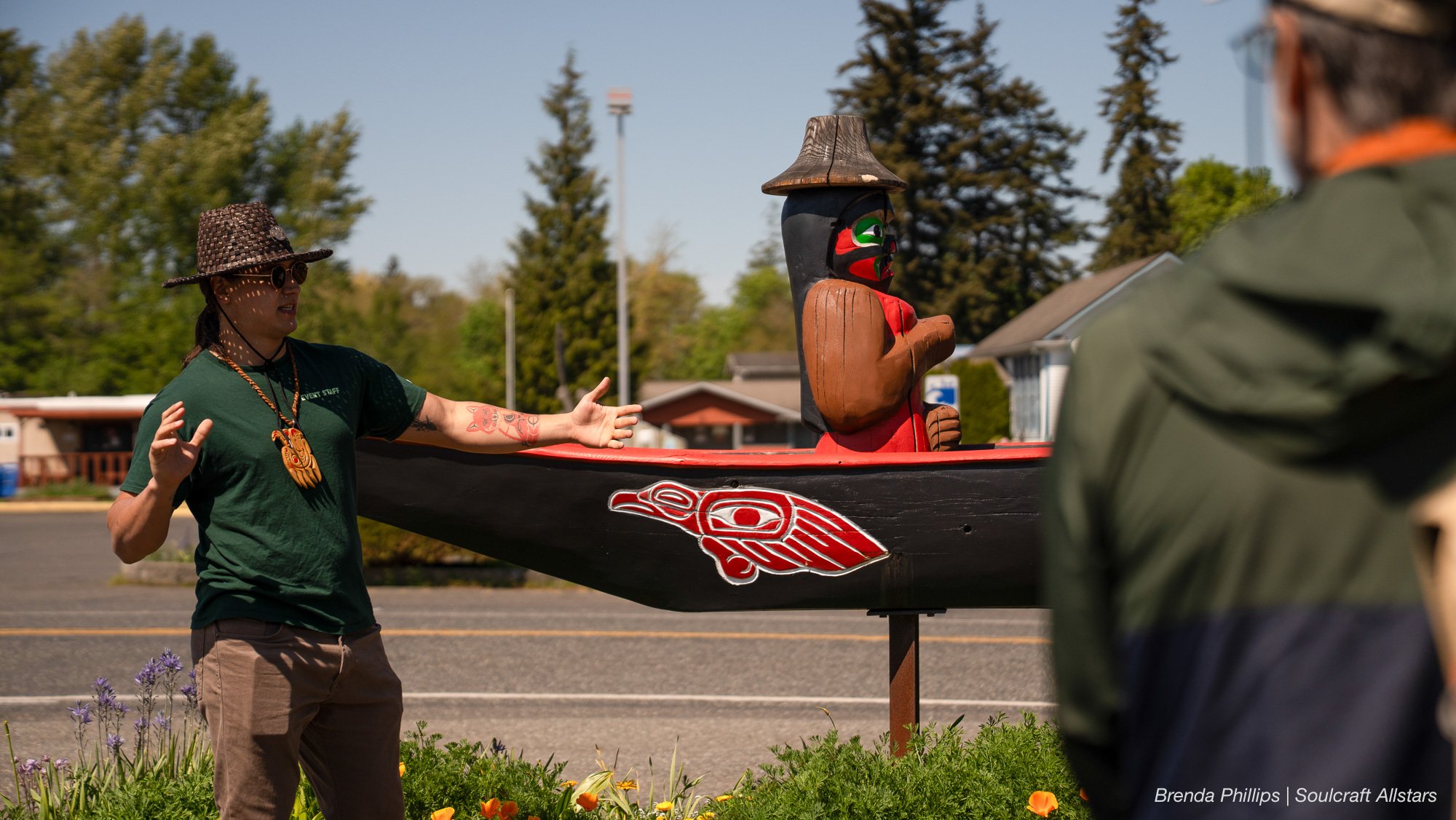
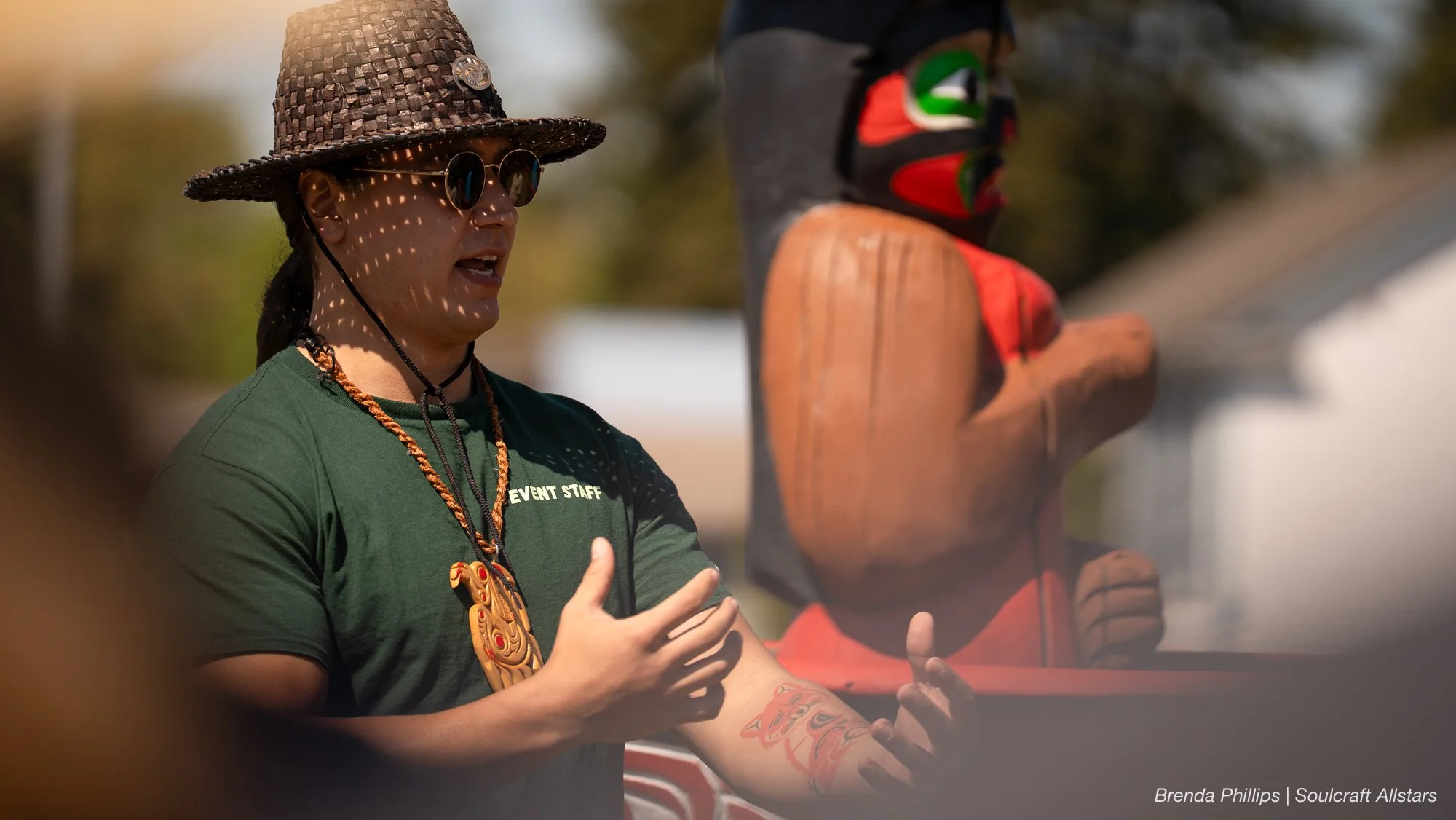
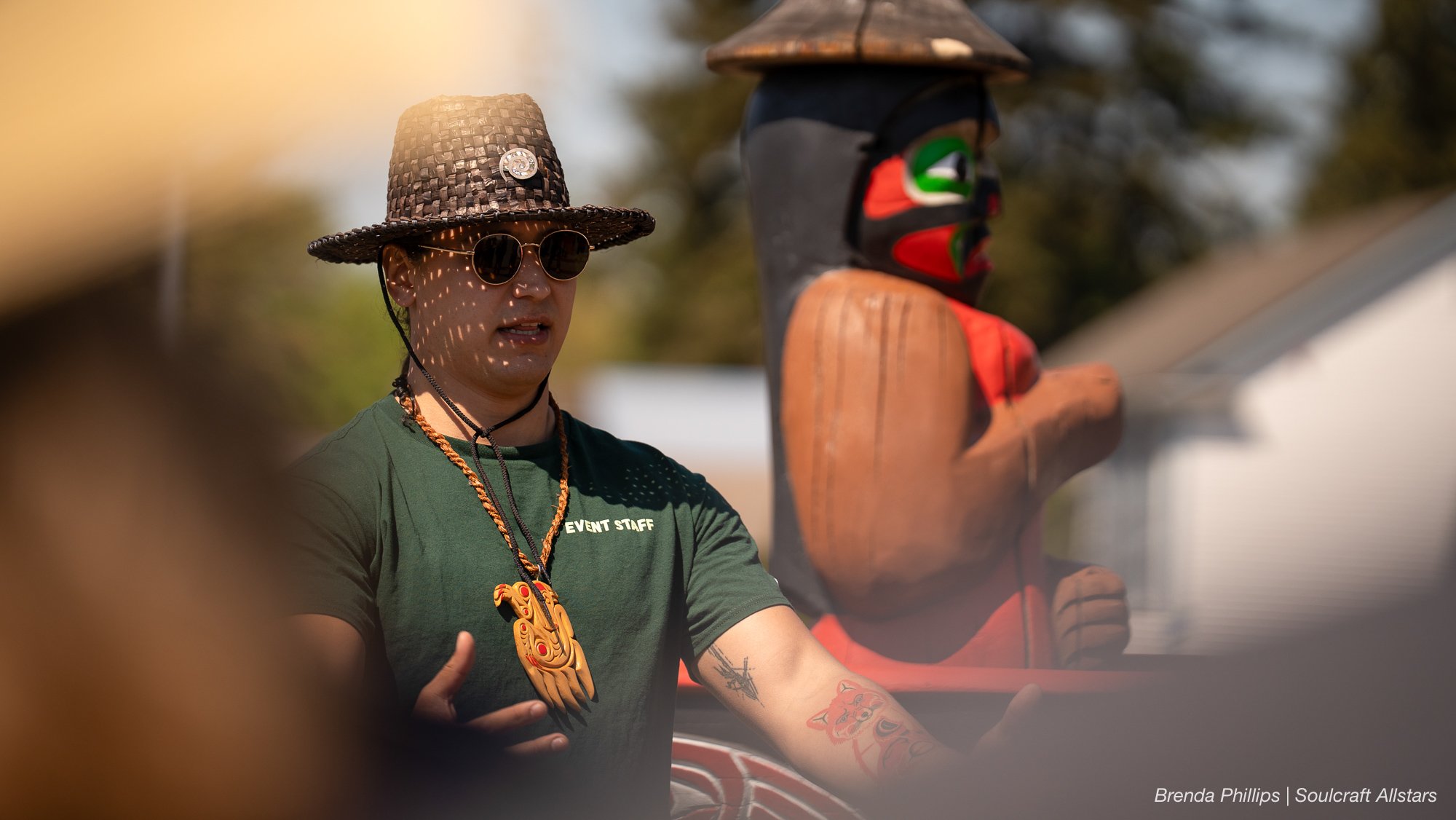
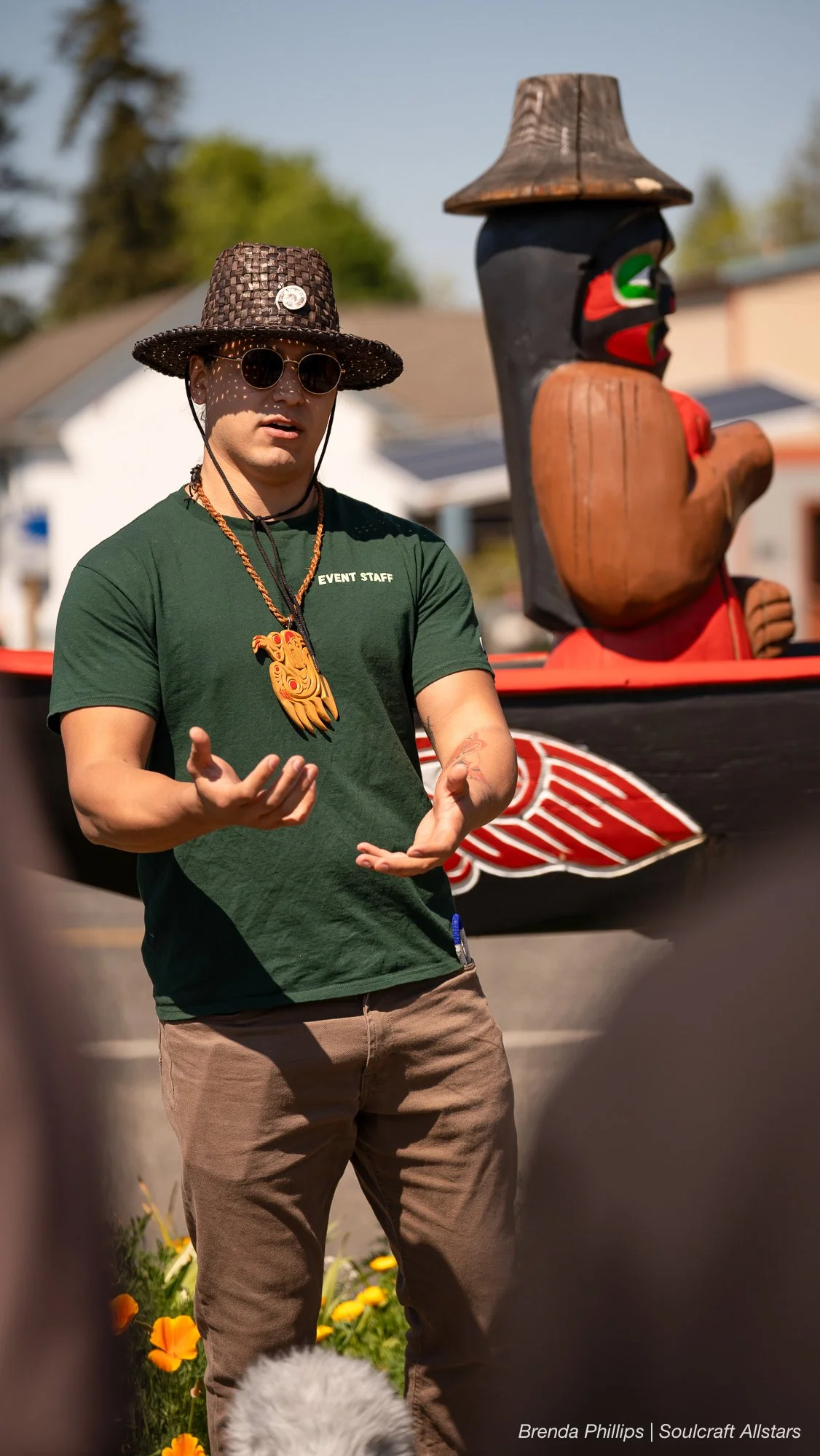
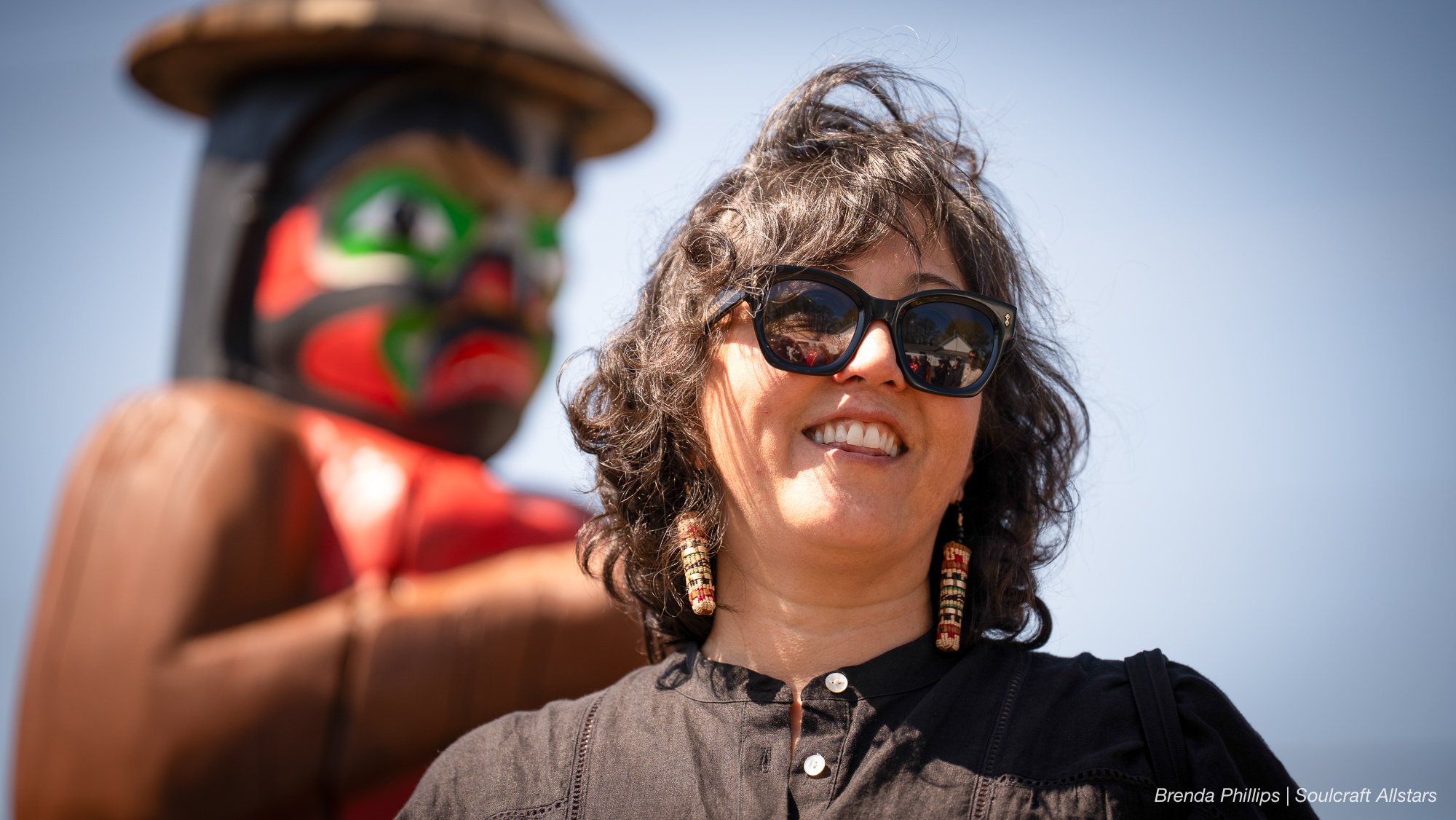
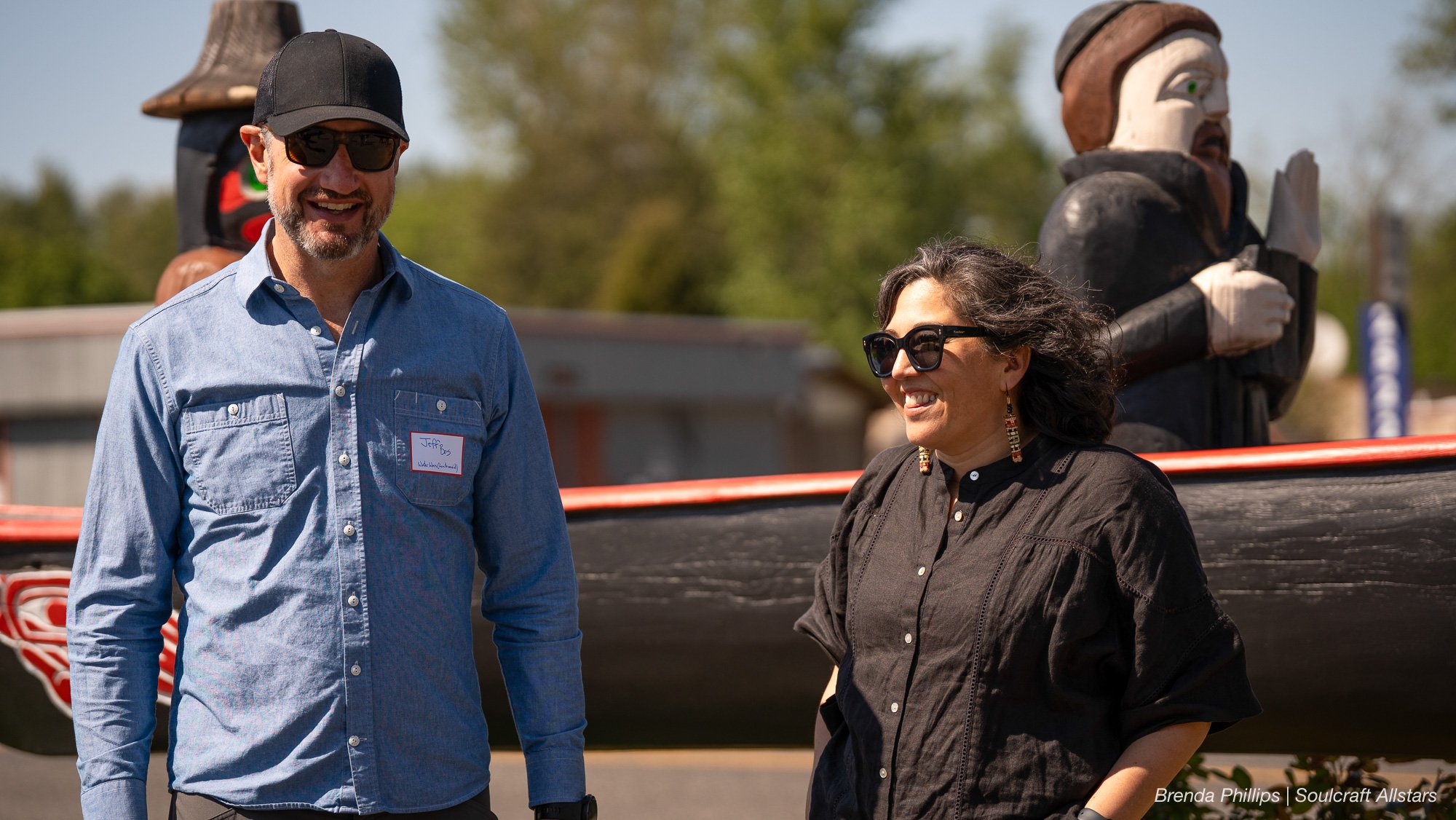
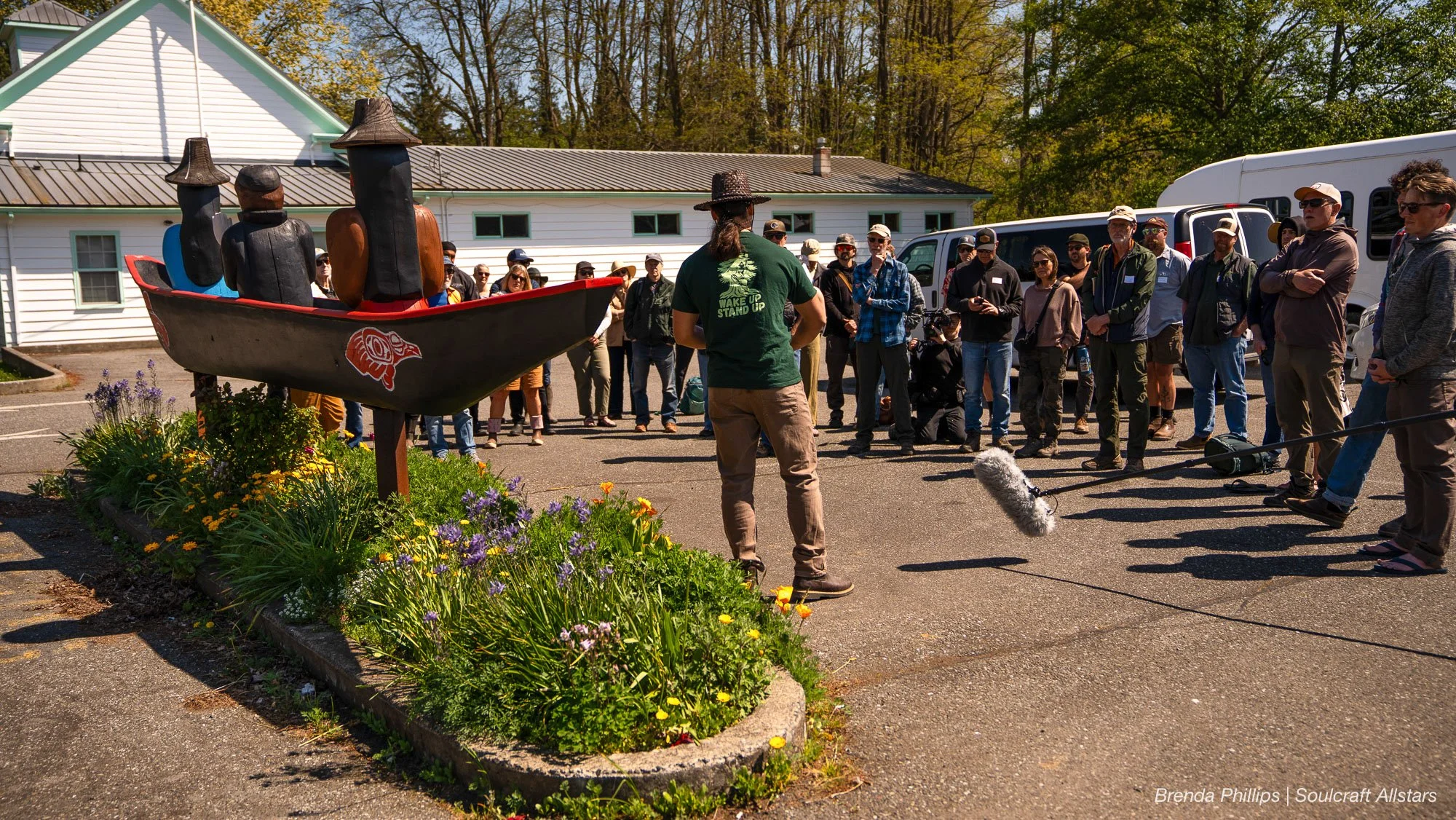
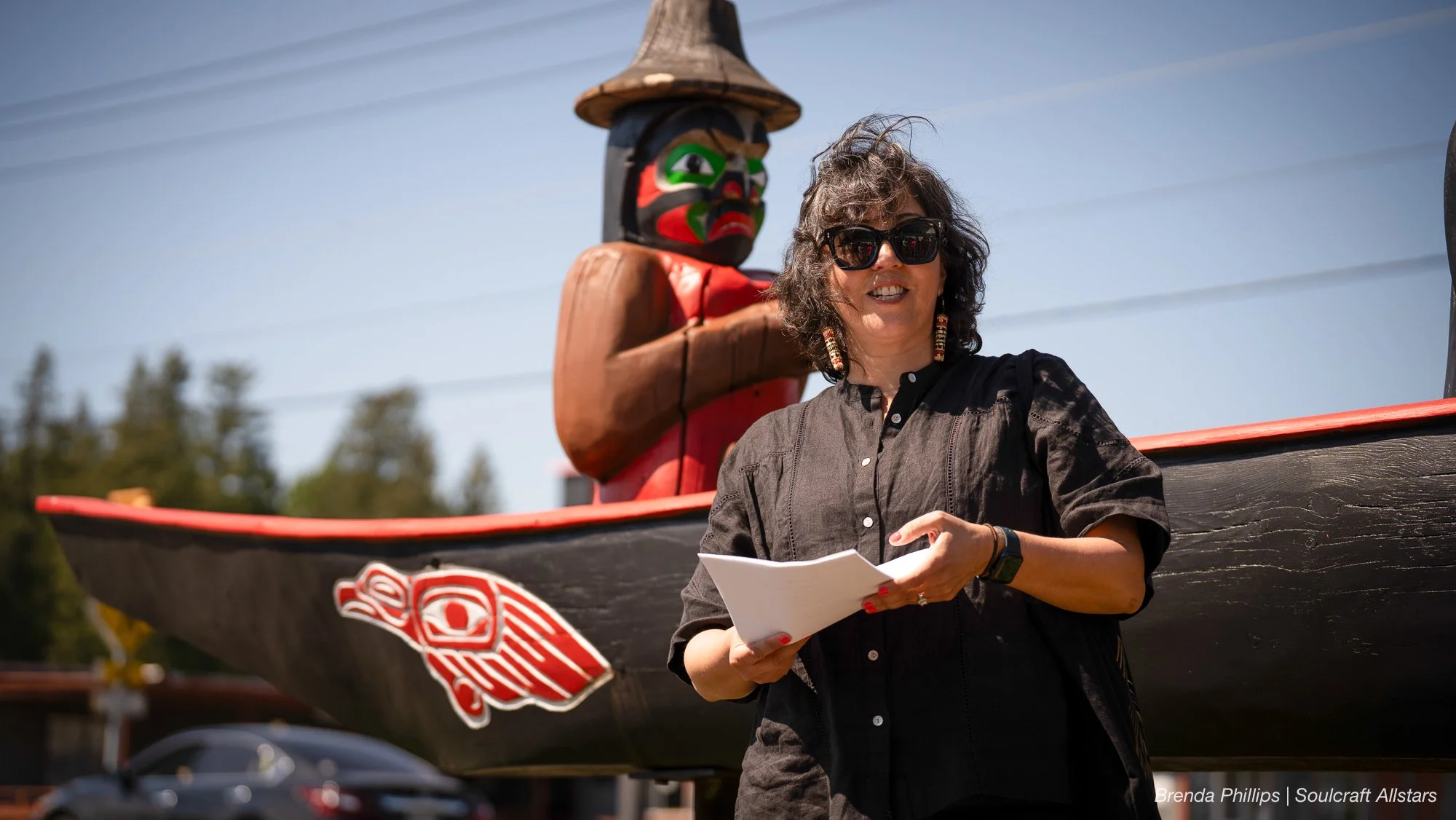
Here, warm in the sun and sheltered from the wind, the group gathered around a story pole that Raven and Free had recently restored and repainted. It stands in front of one of the oldest Catholic churches in Washington State, which the Lummi themselves built in the 1800s. The early missionaries arrived in the mid-19th century and the Lummi received them, as they have often received newcomers: on their own terms.
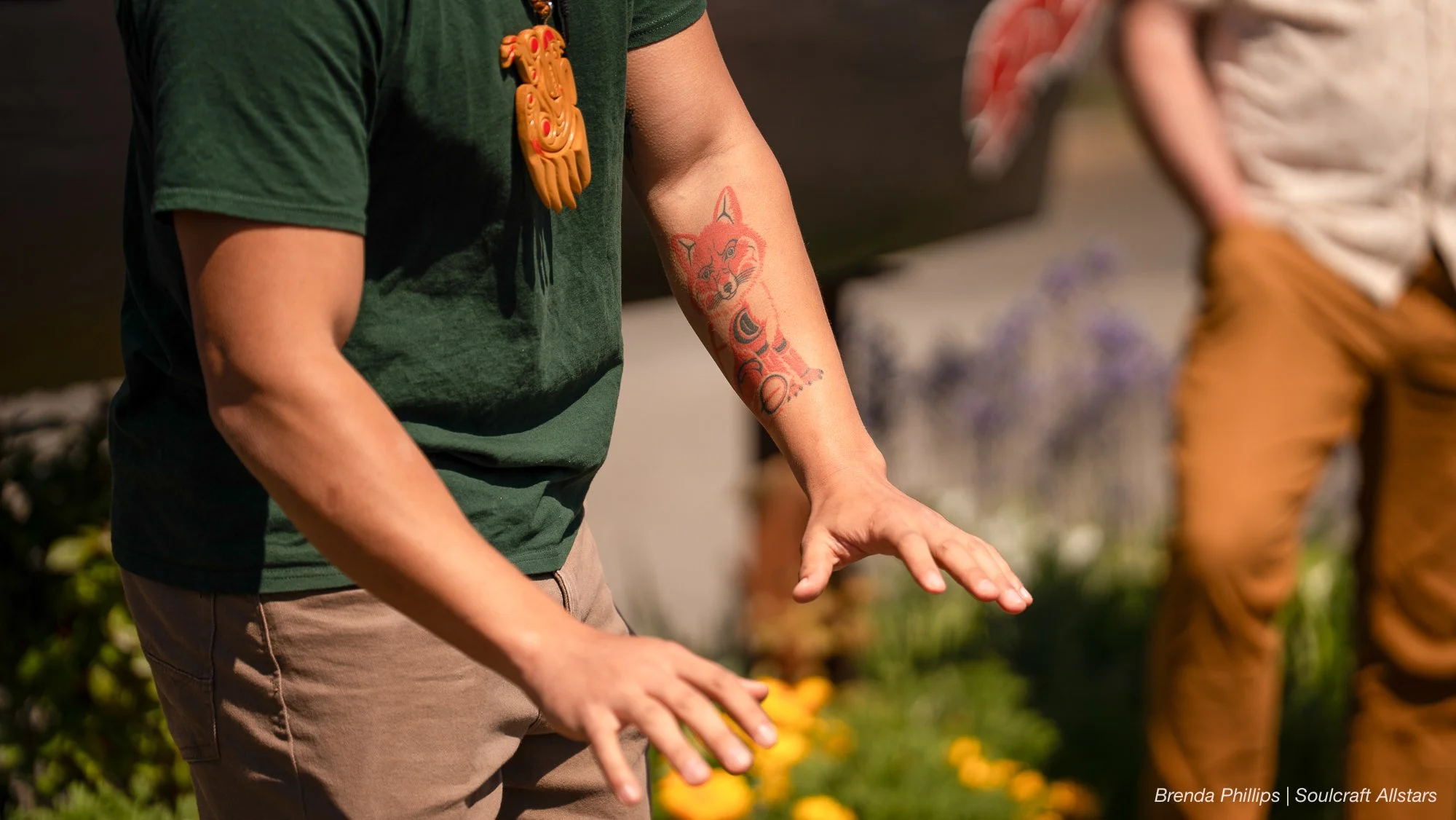
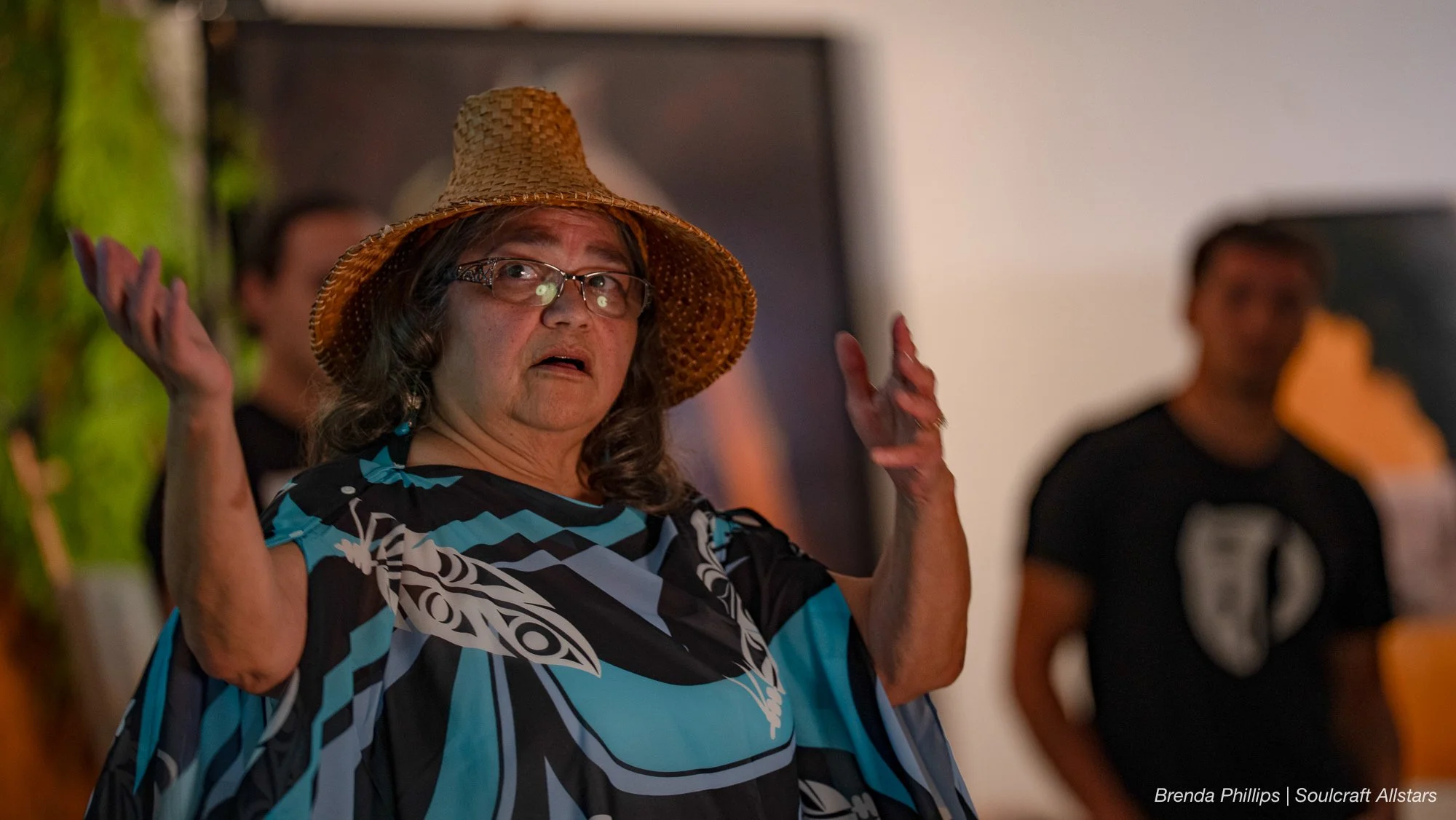
Raven told the story carved into the pole. A Lummi chief and his wife. A Catholic priest seated between them in a canoe. A journey south to find this priest, to bring him home, to adopt him into the community. It was a story of a people choosing relationship over suspicion. Of a culture so grounded in itself that it could make room for something foreign without losing anything.
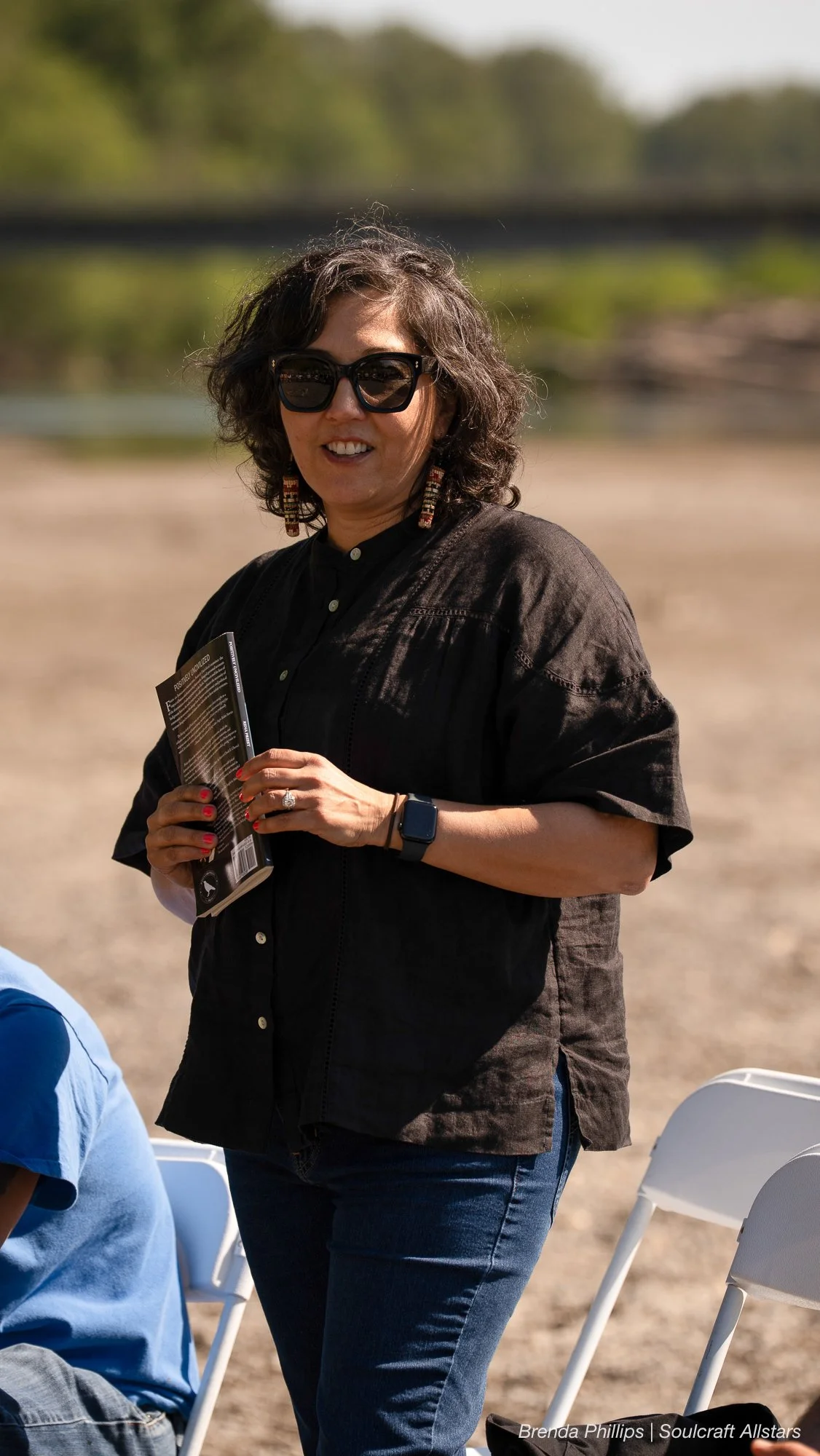
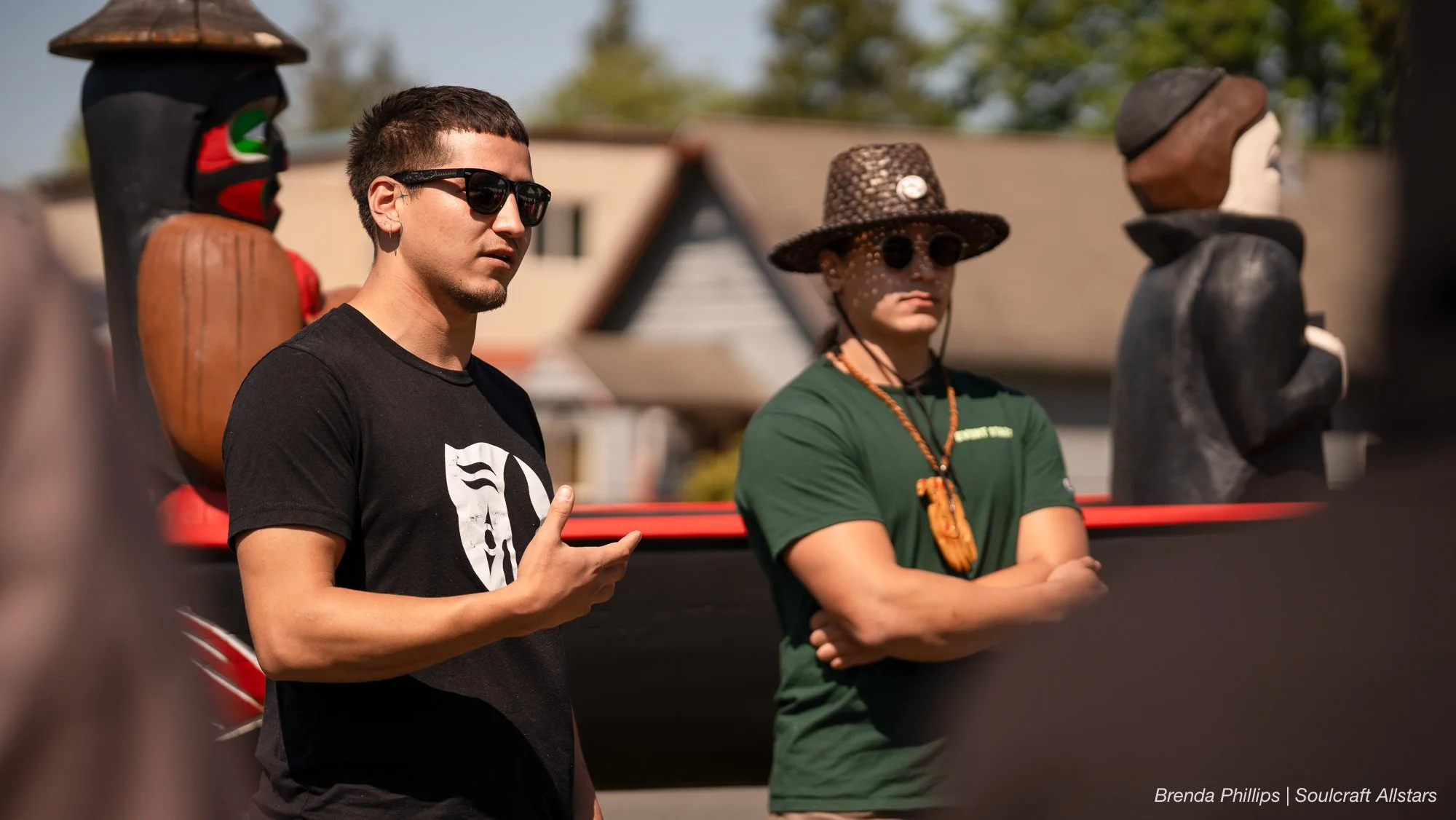
Free stepped in to continue where Raven left off, and then Rena Priest, former Washington State Poet Laureate and the first Indigenous person to hold that role, read two poems.
The group was quiet in a different way after she finished.
The Gravel Bar
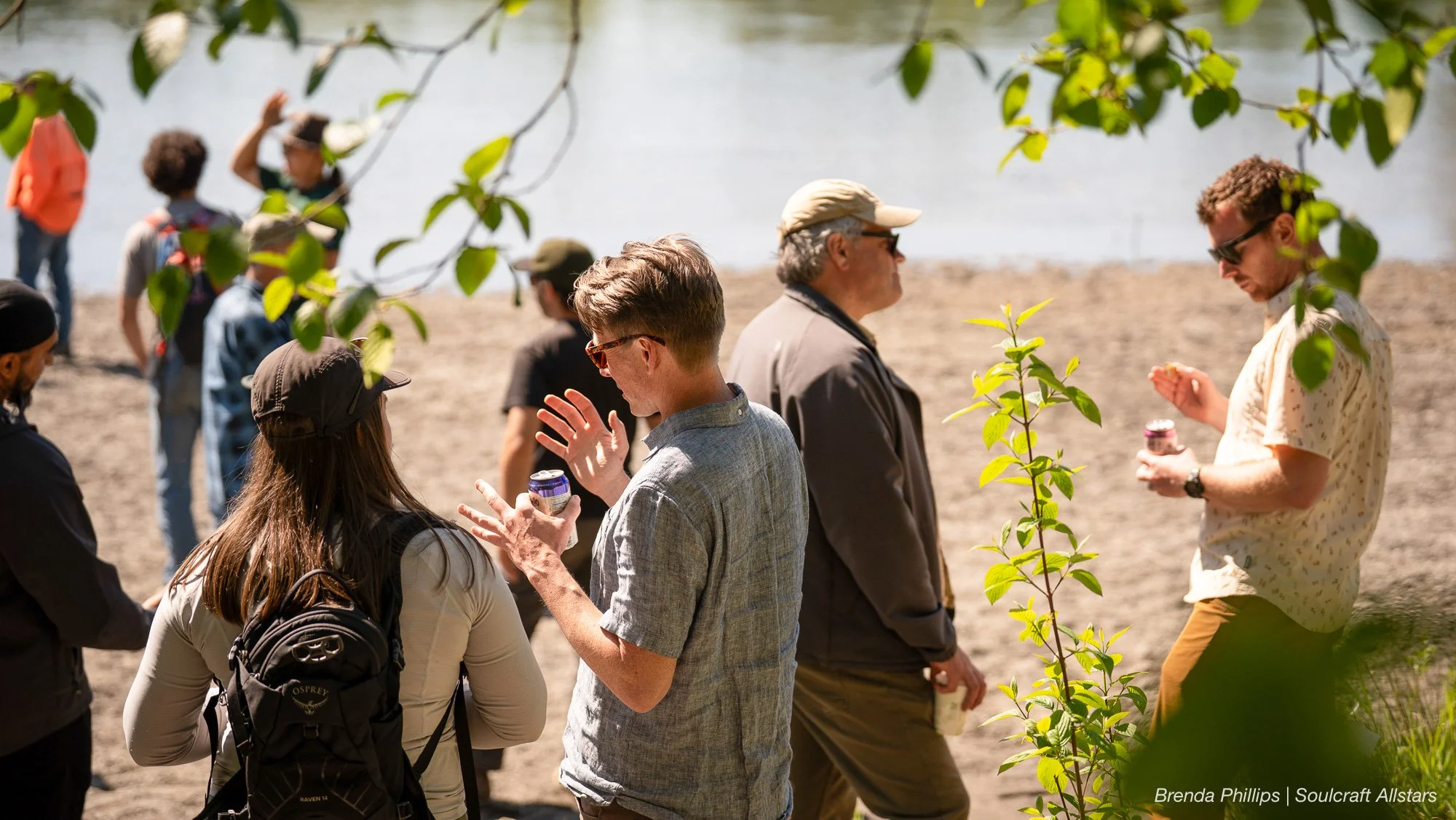
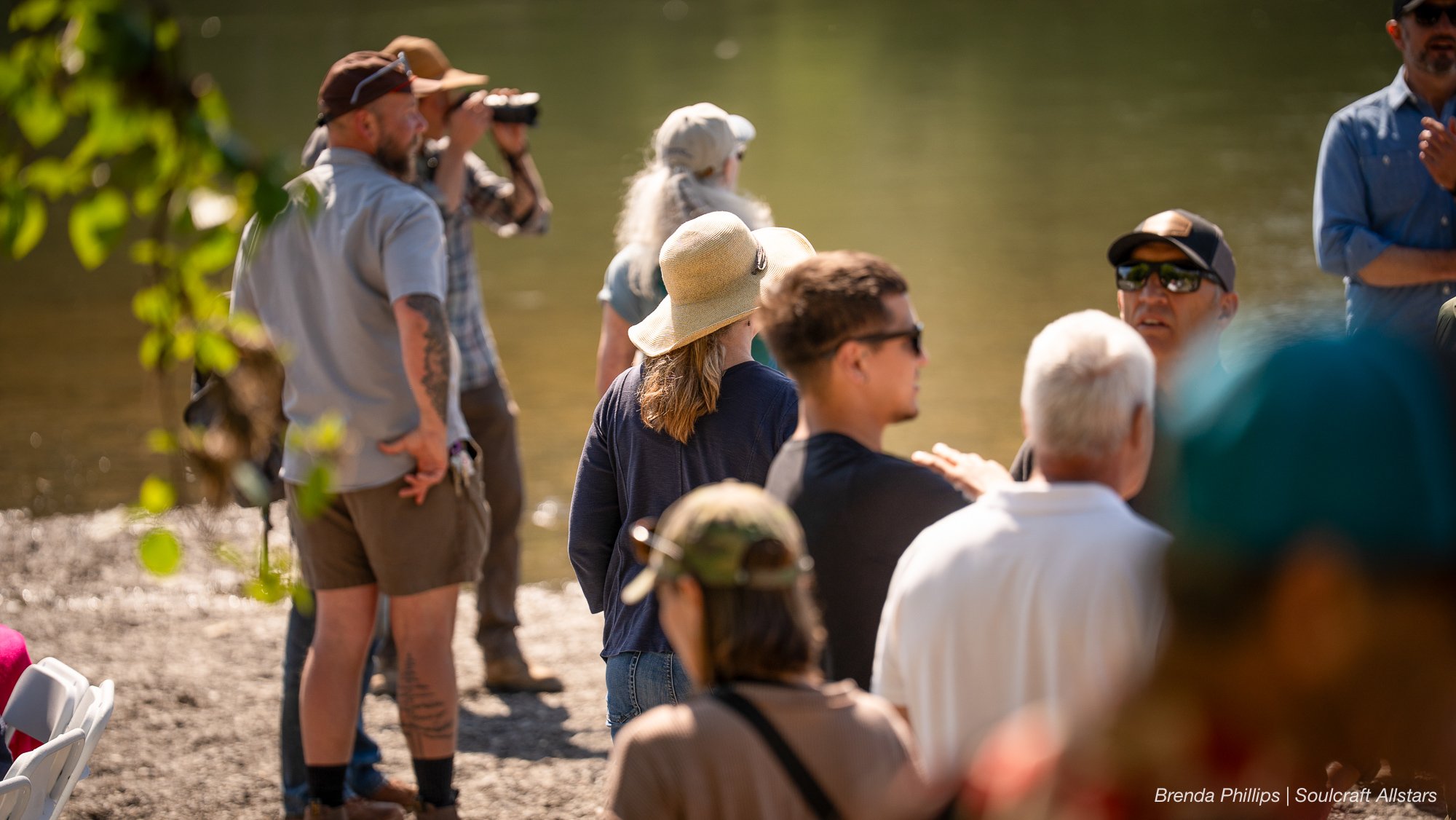
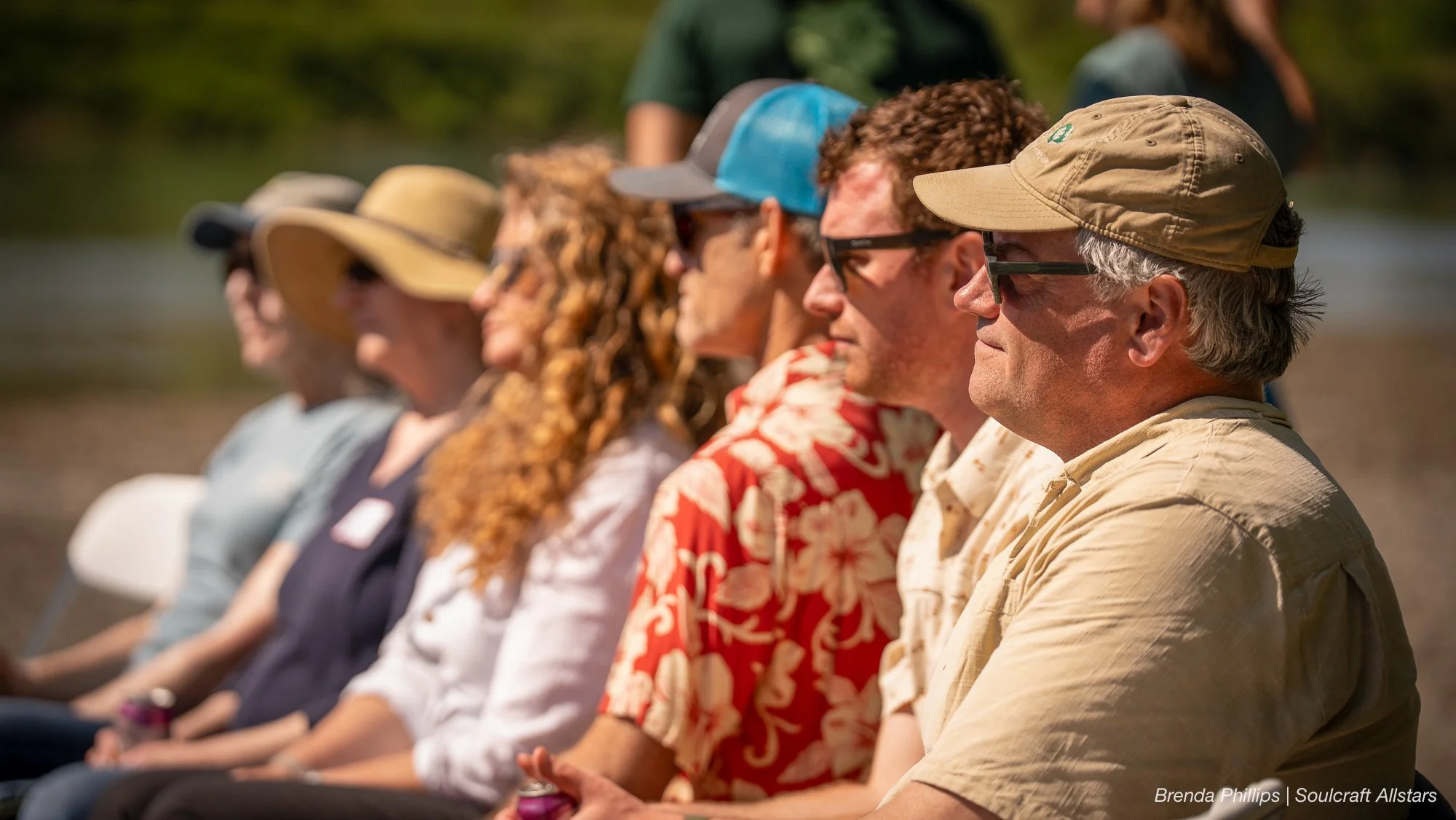
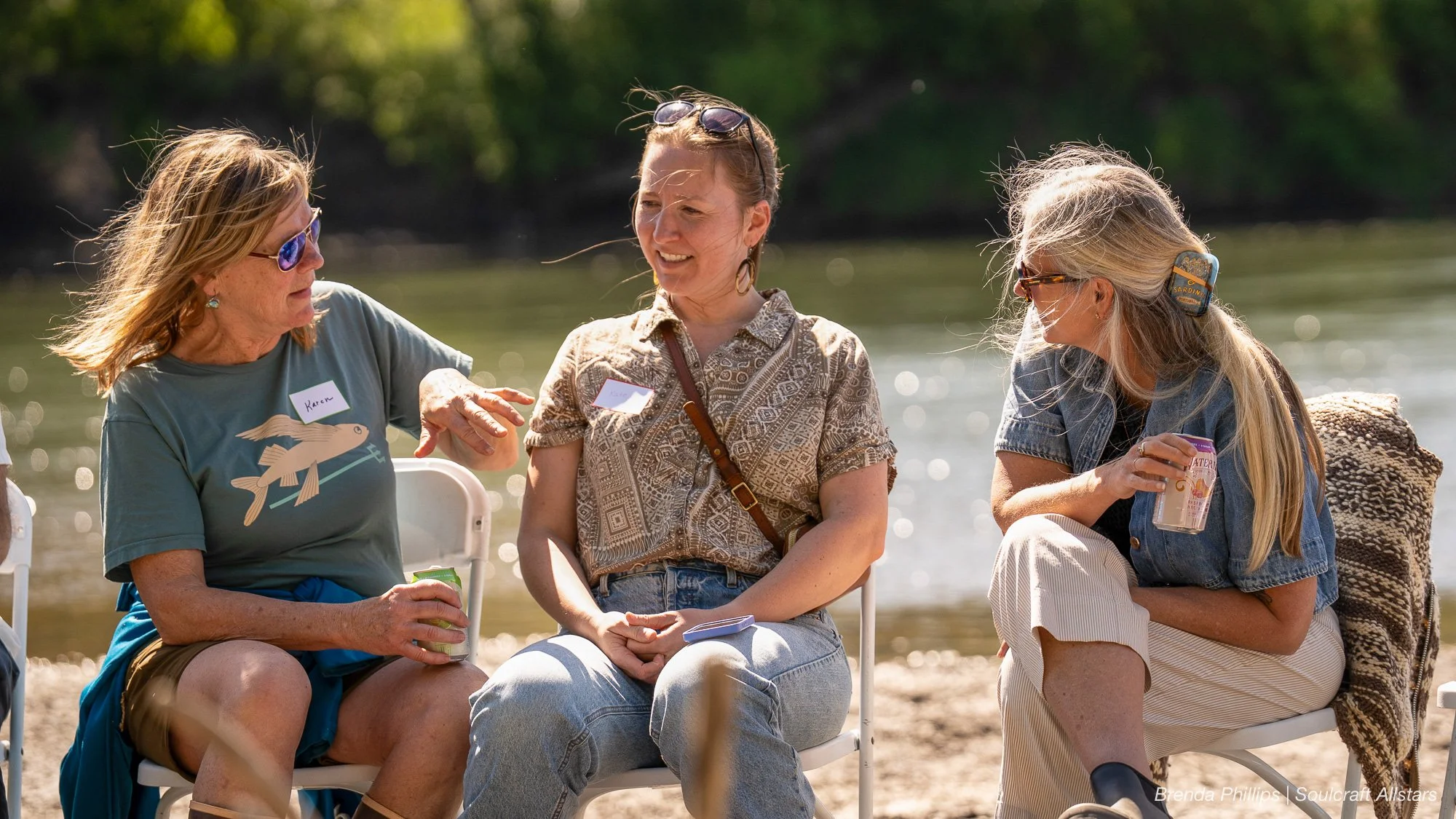
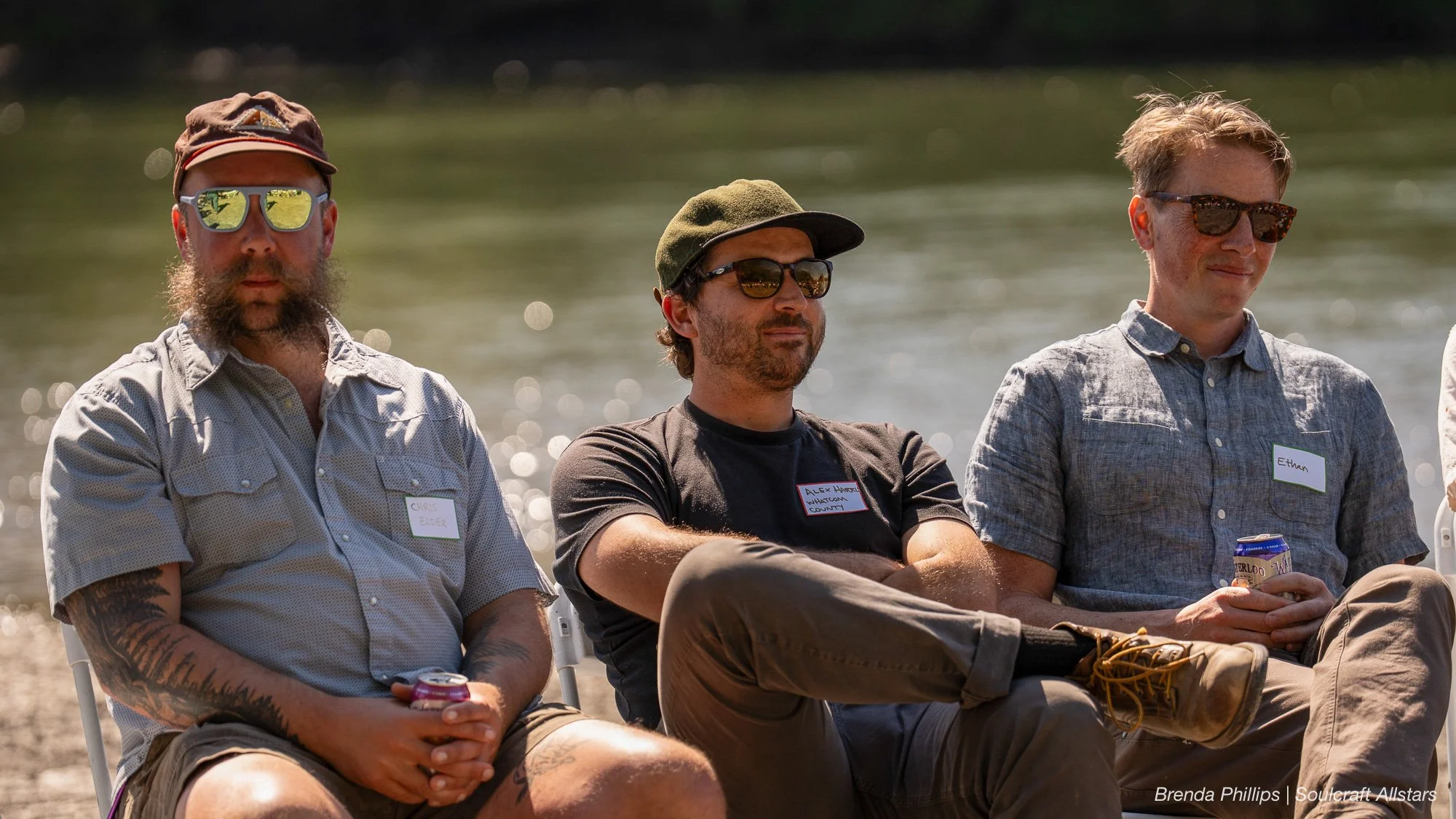
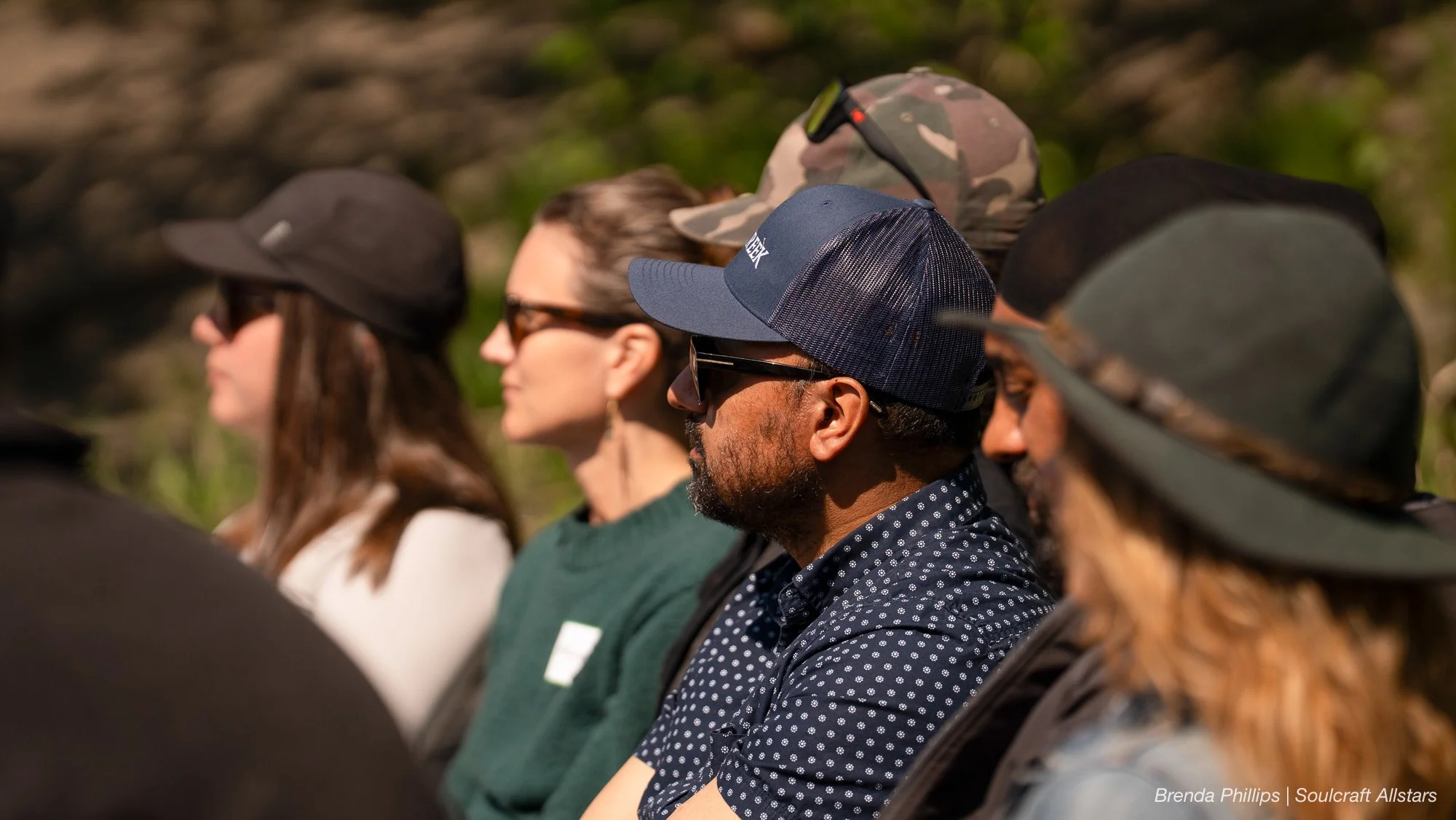
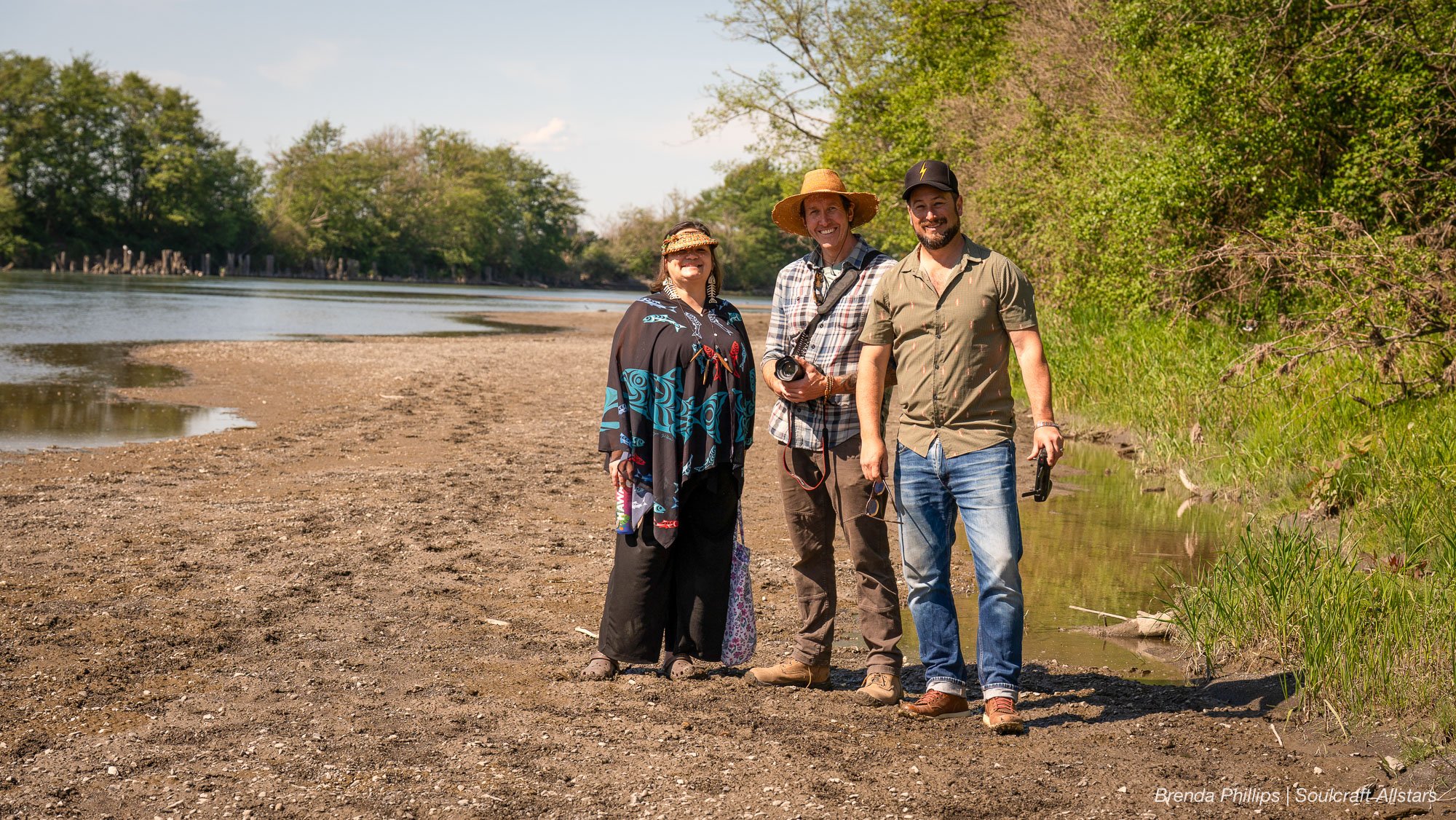
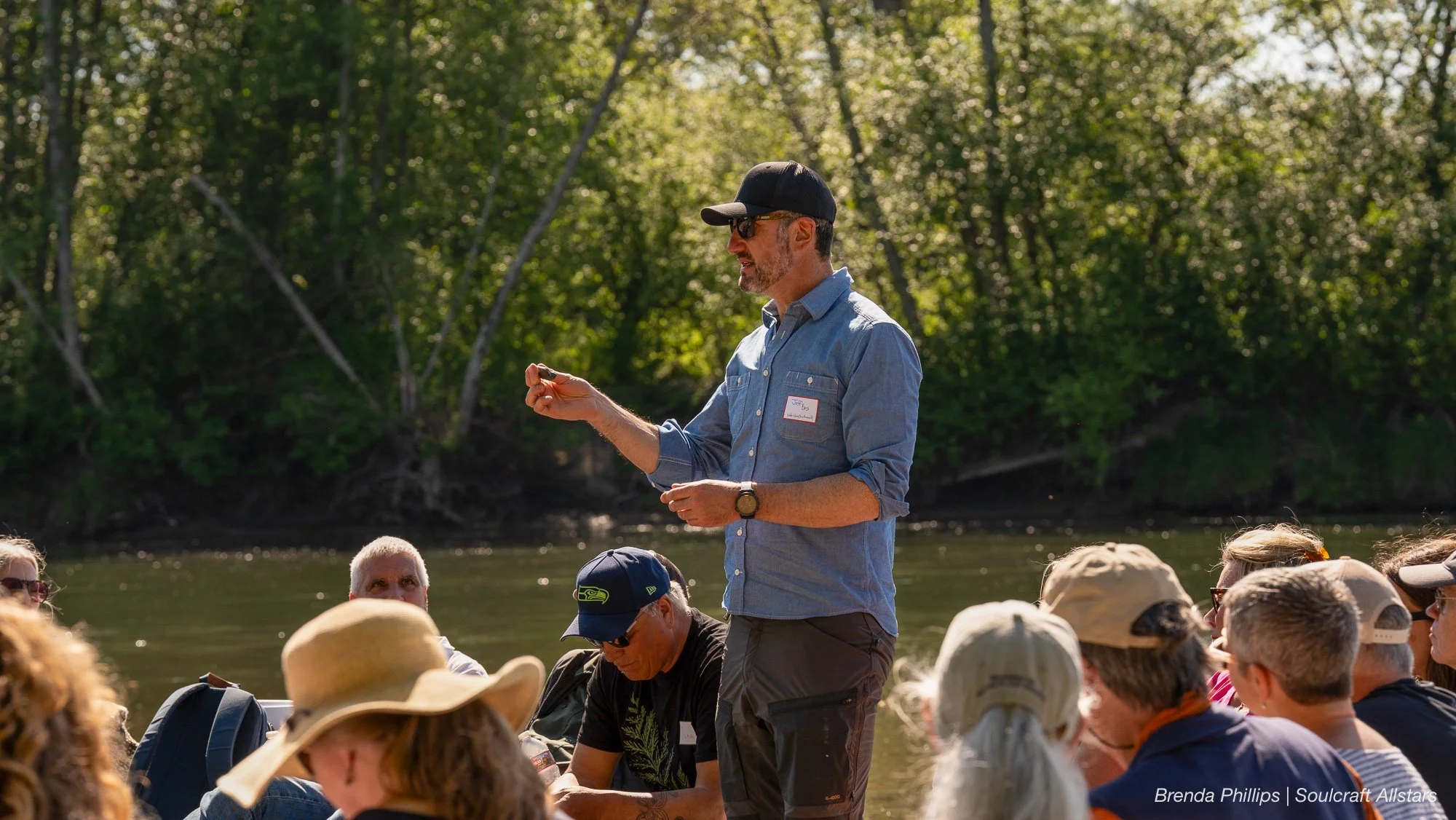
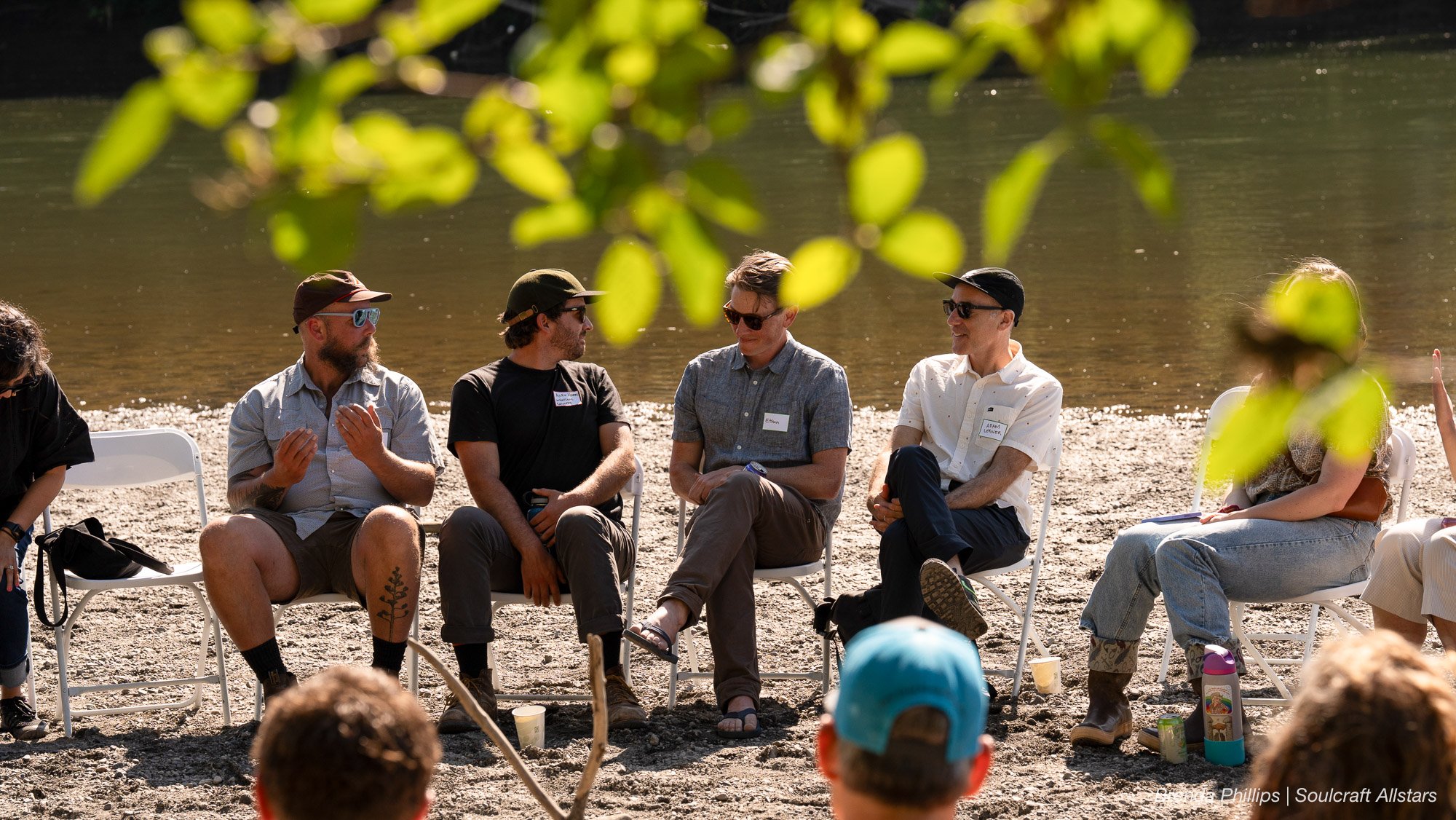
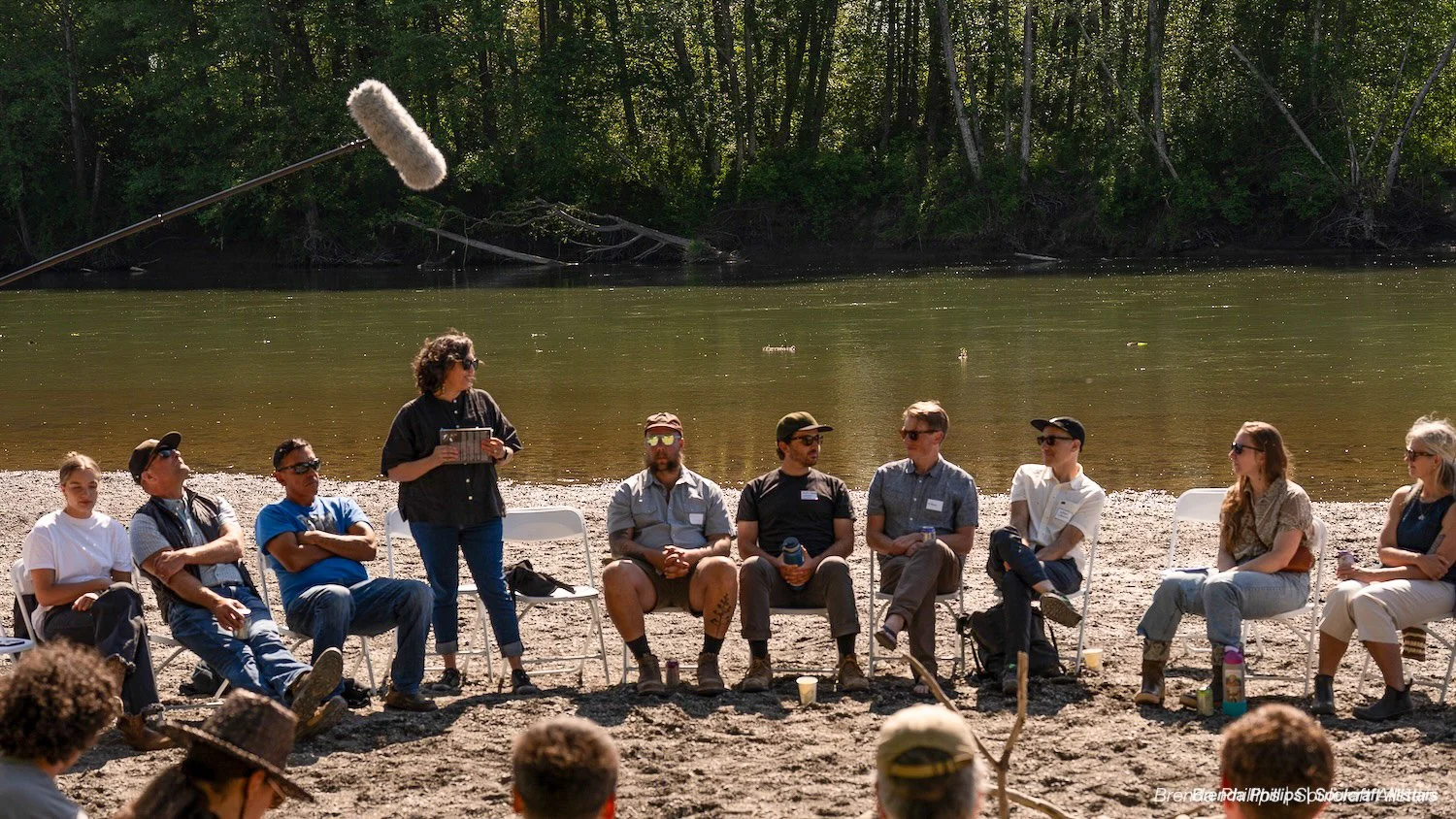
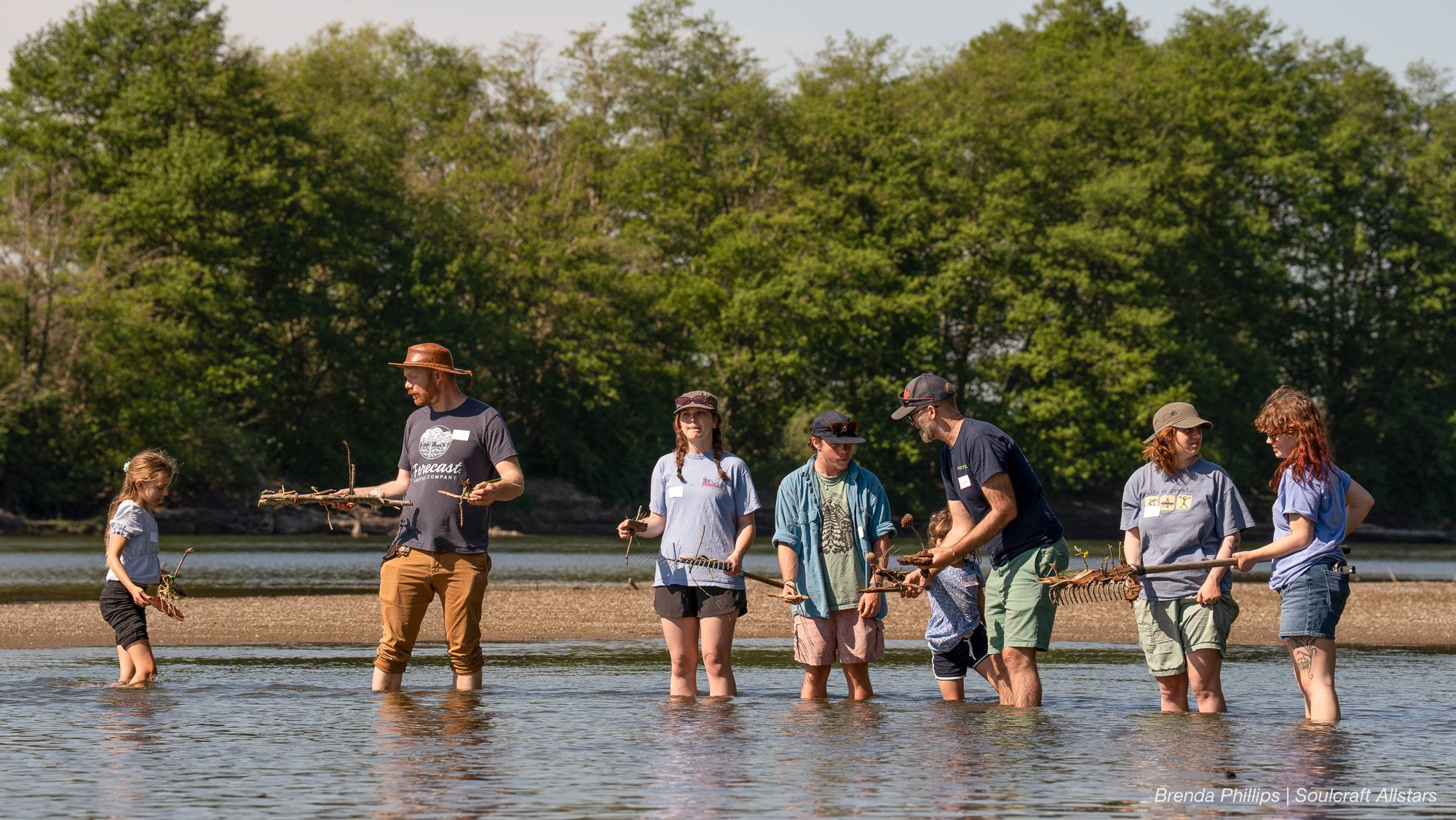
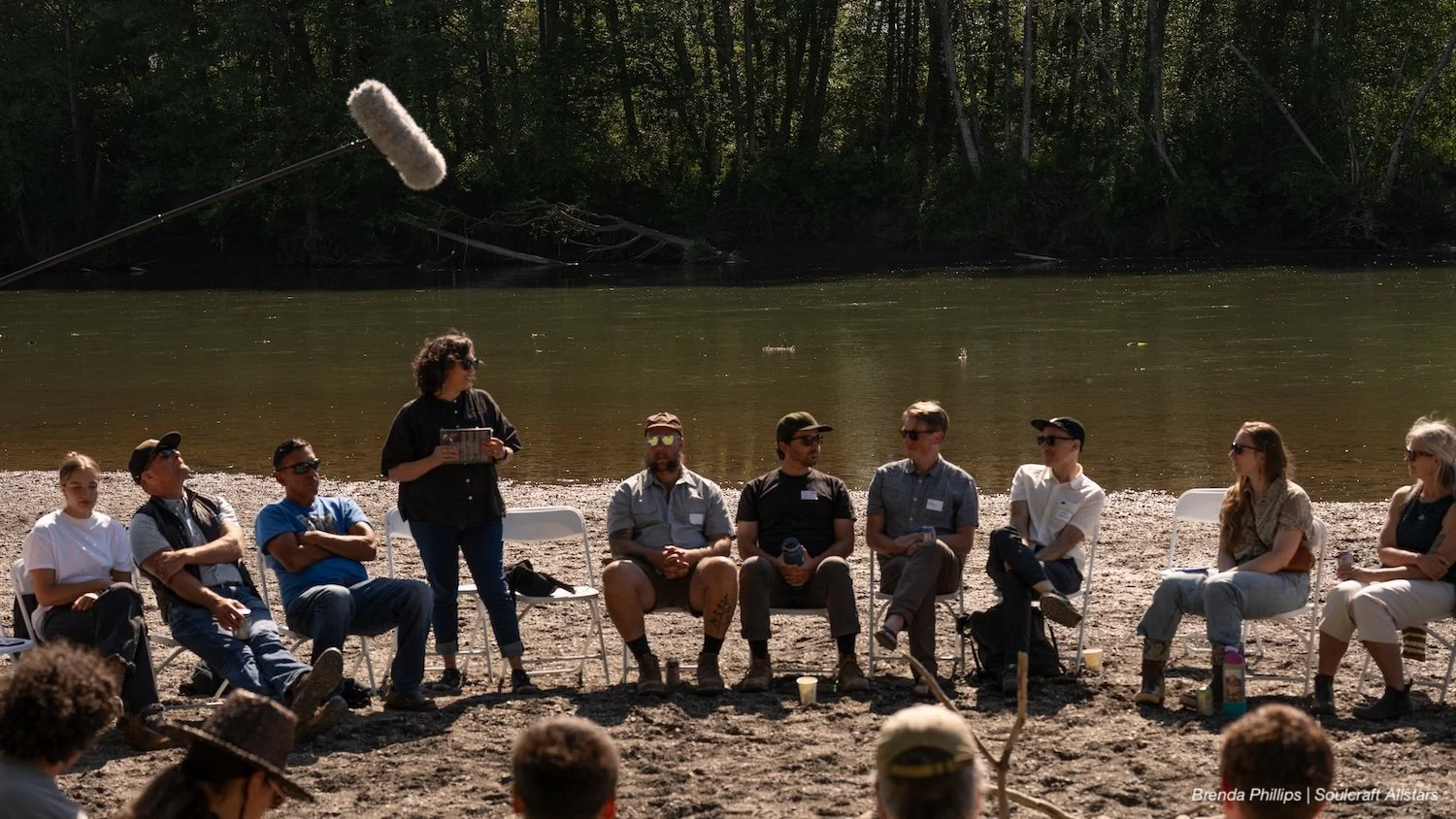
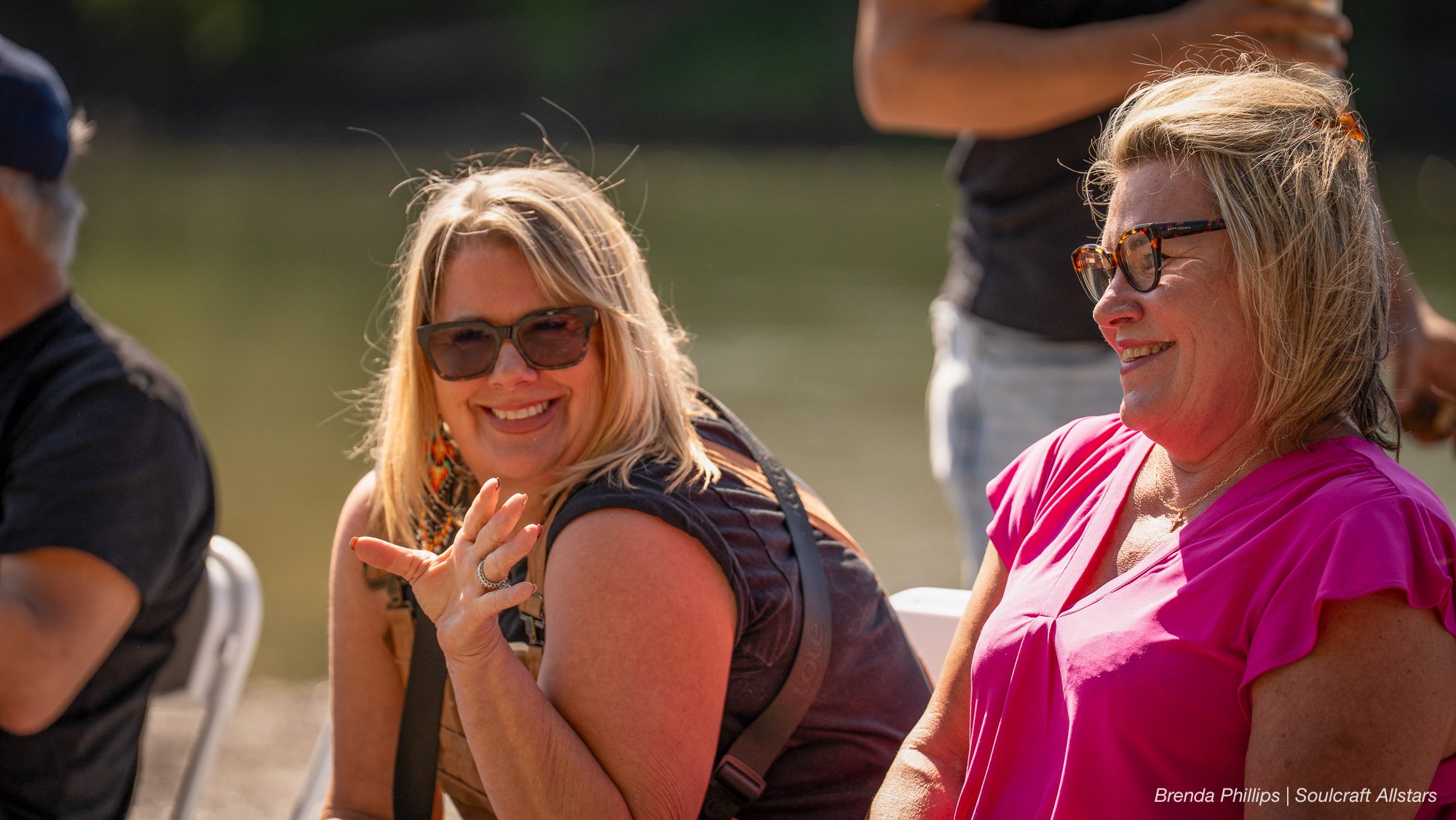
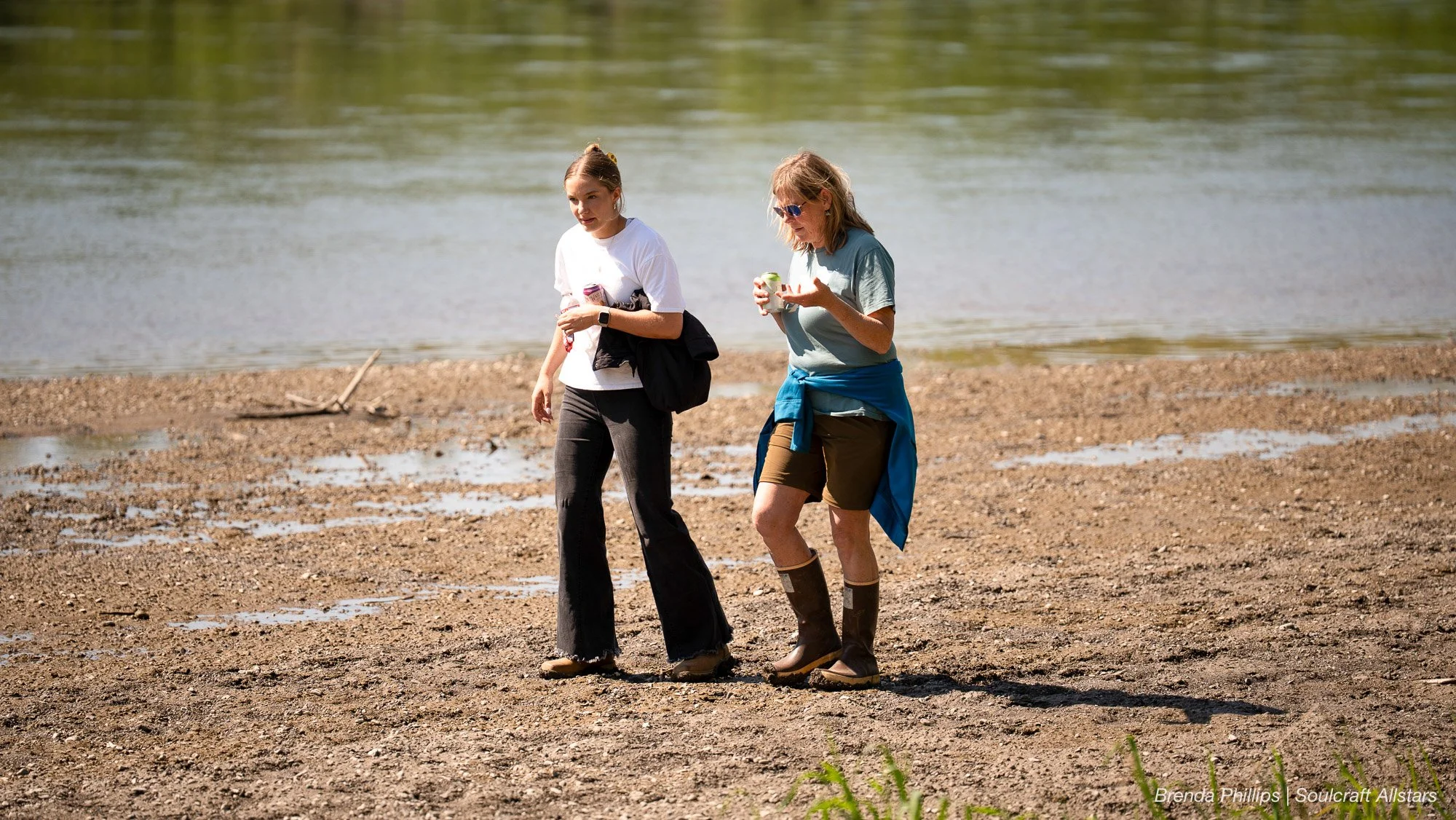
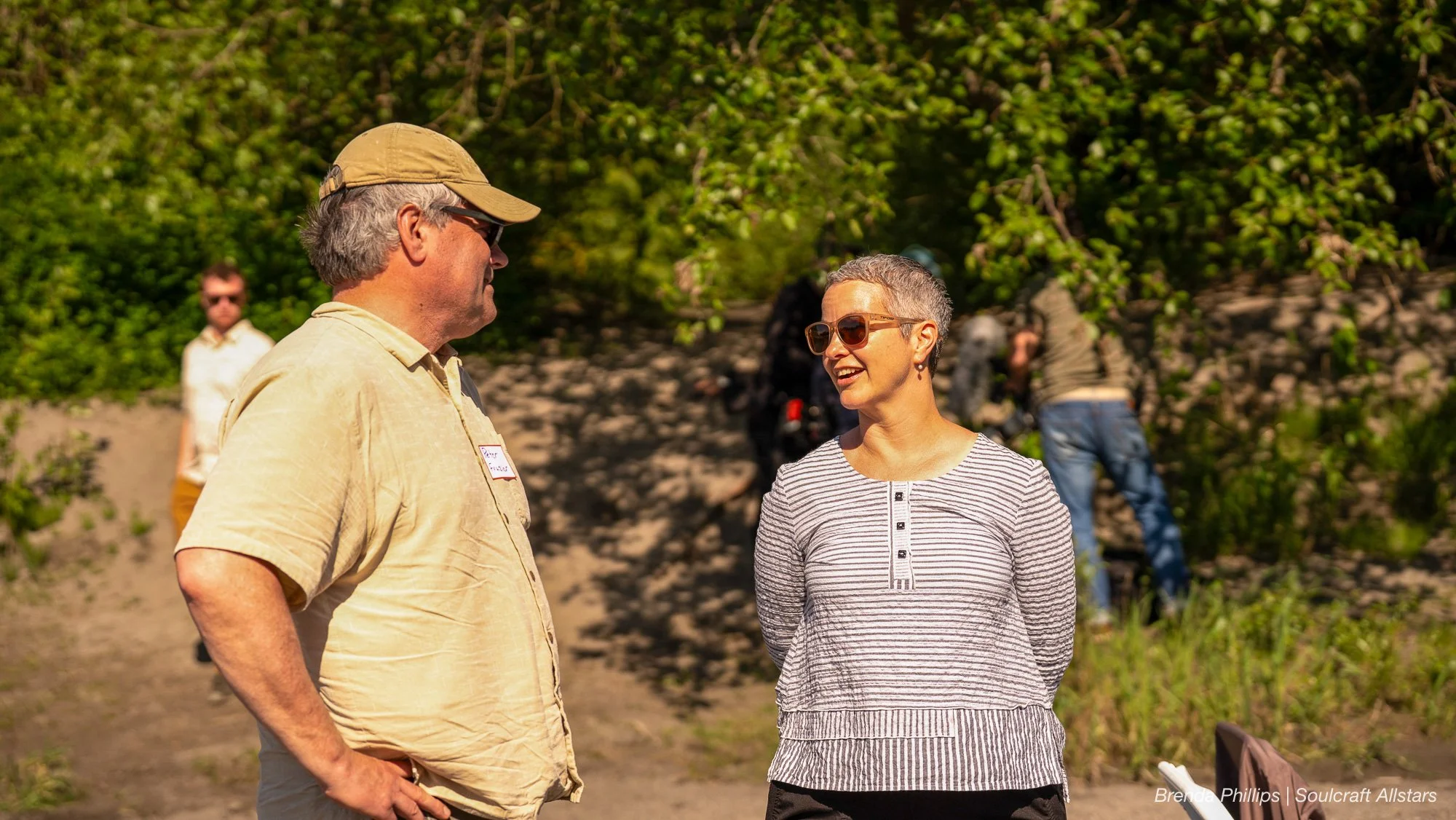
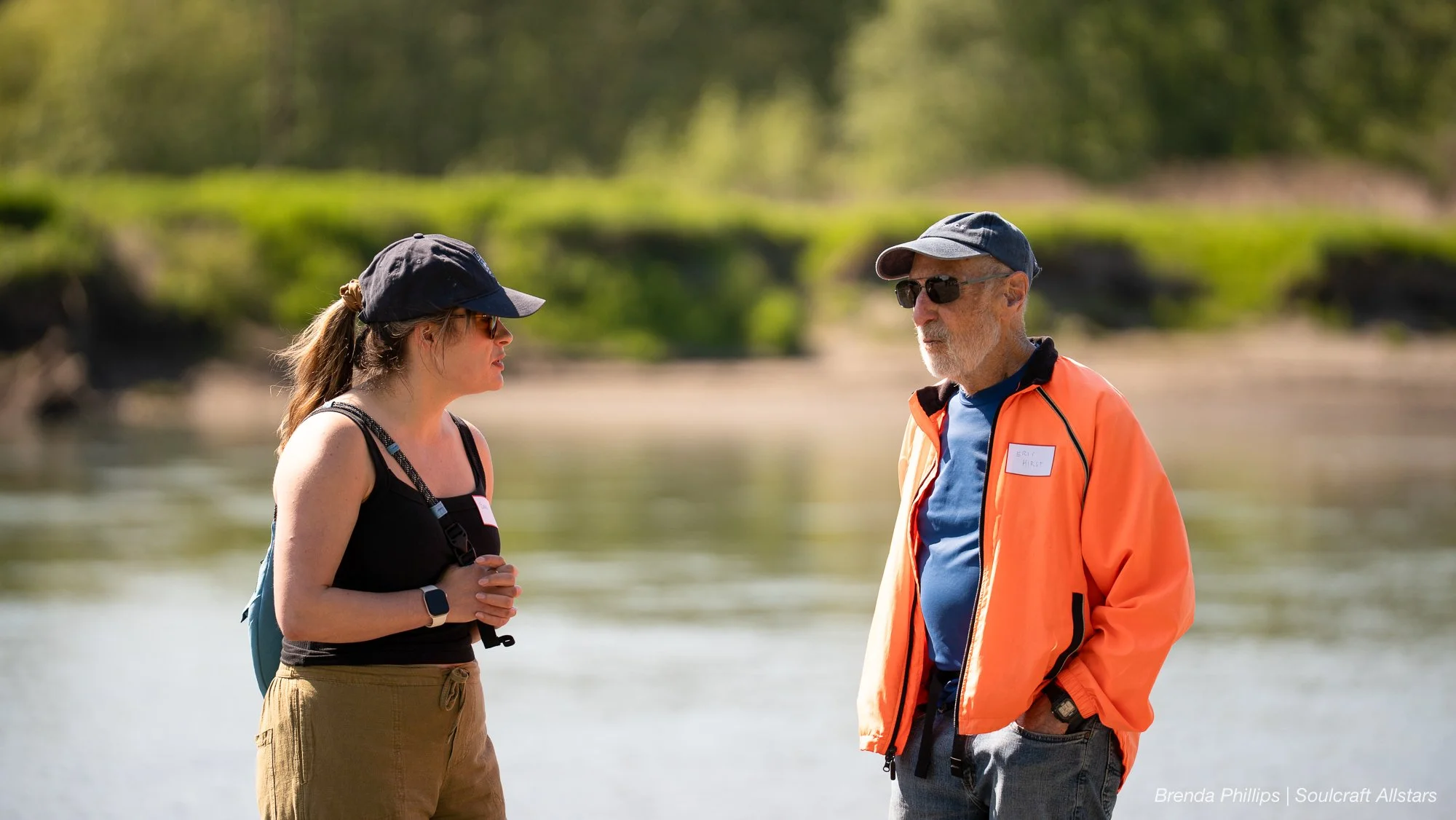
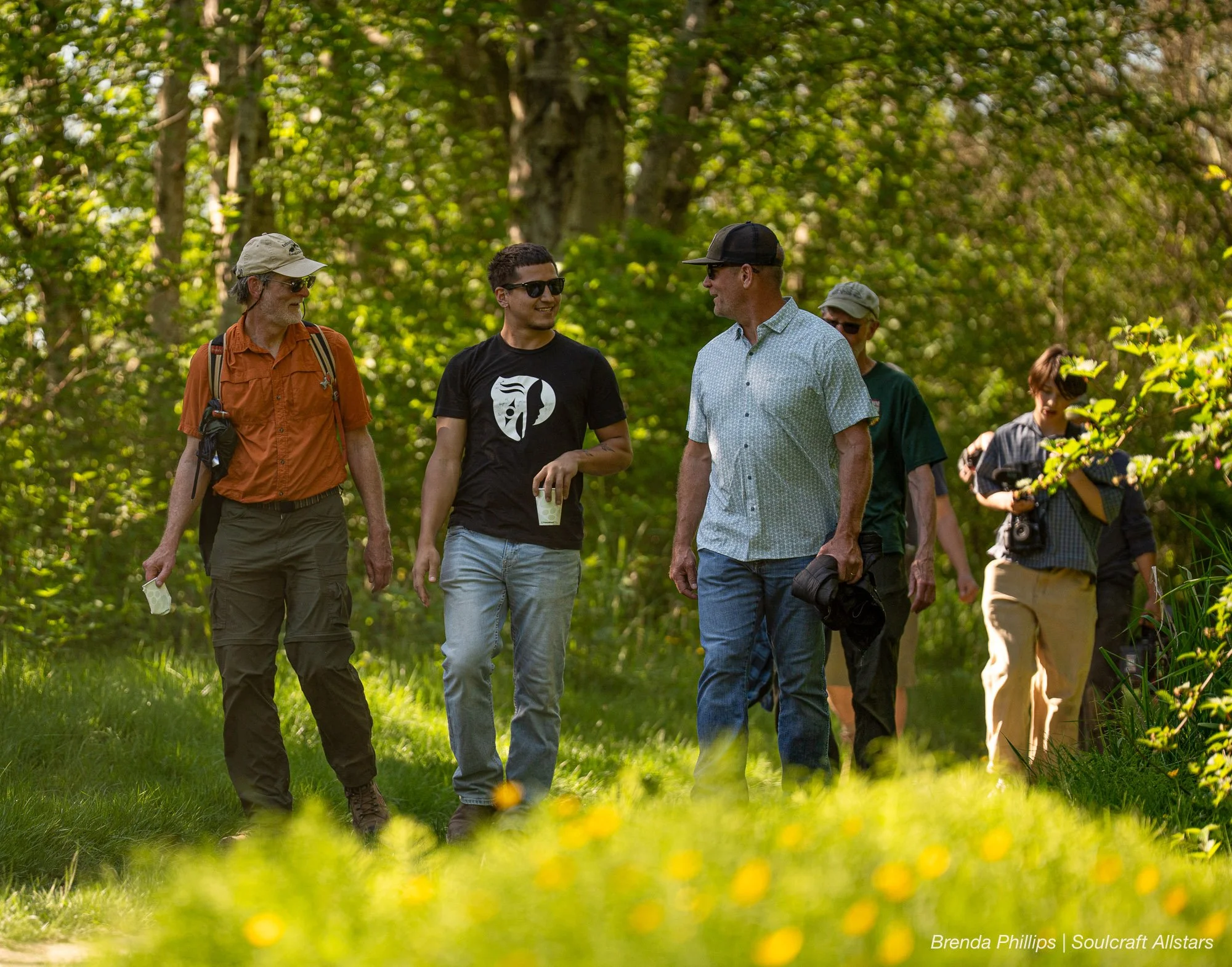
Warmer still near the old Lummi fishing village of Marietta, where Marine Drive crosses the Nooksack River just before it branches out into the delta. The group stepped out onto the east bank, where a public trail runs upstream. A tent held tea prepared that morning and baked goods from Aaron's mother-in-law, Oma—a fixture at every one of these gatherings. People took a breath. Then walked a quarter mile up the trail to a wide gravel bar where a circle of chairs waited close to the water.
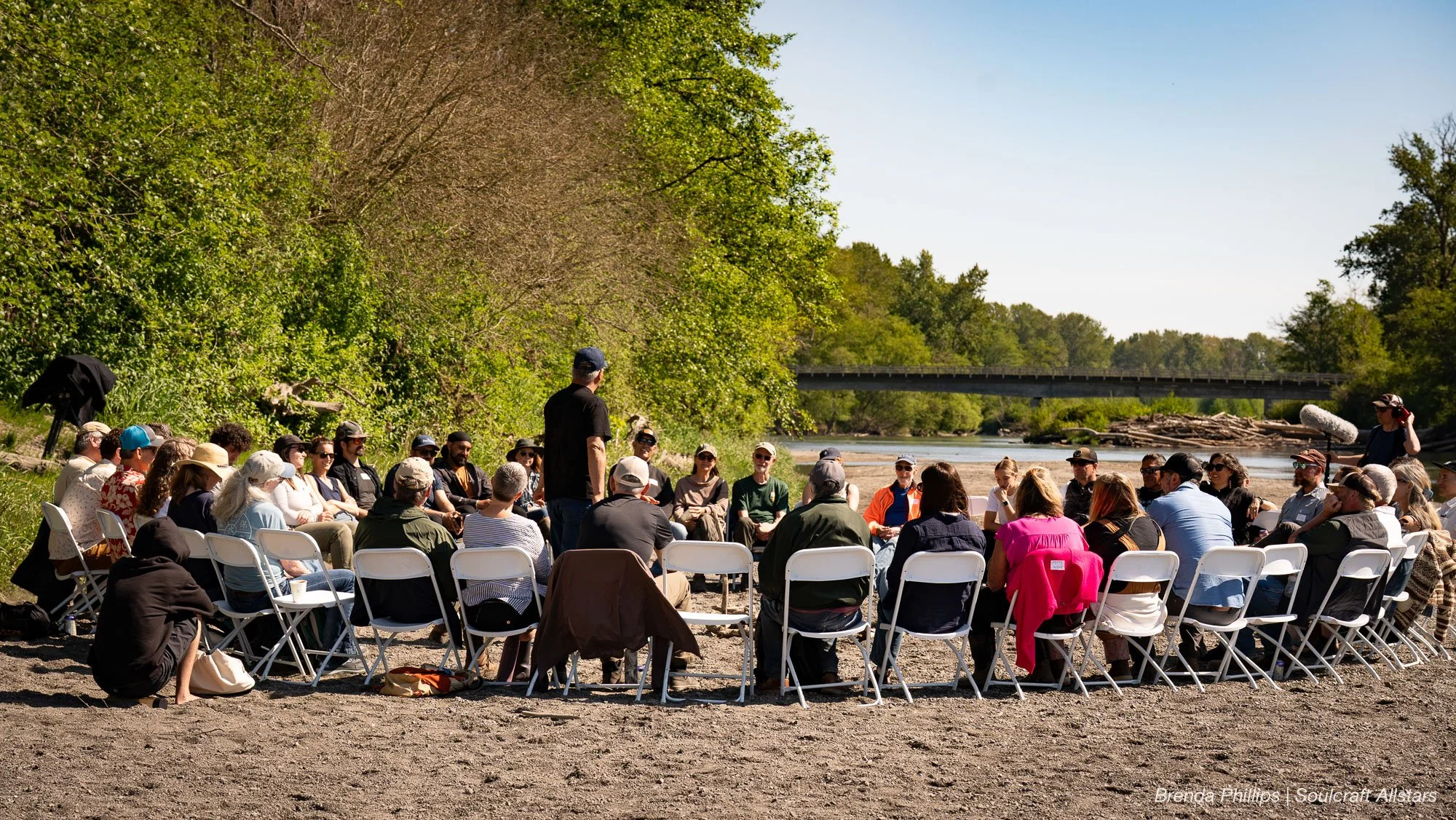
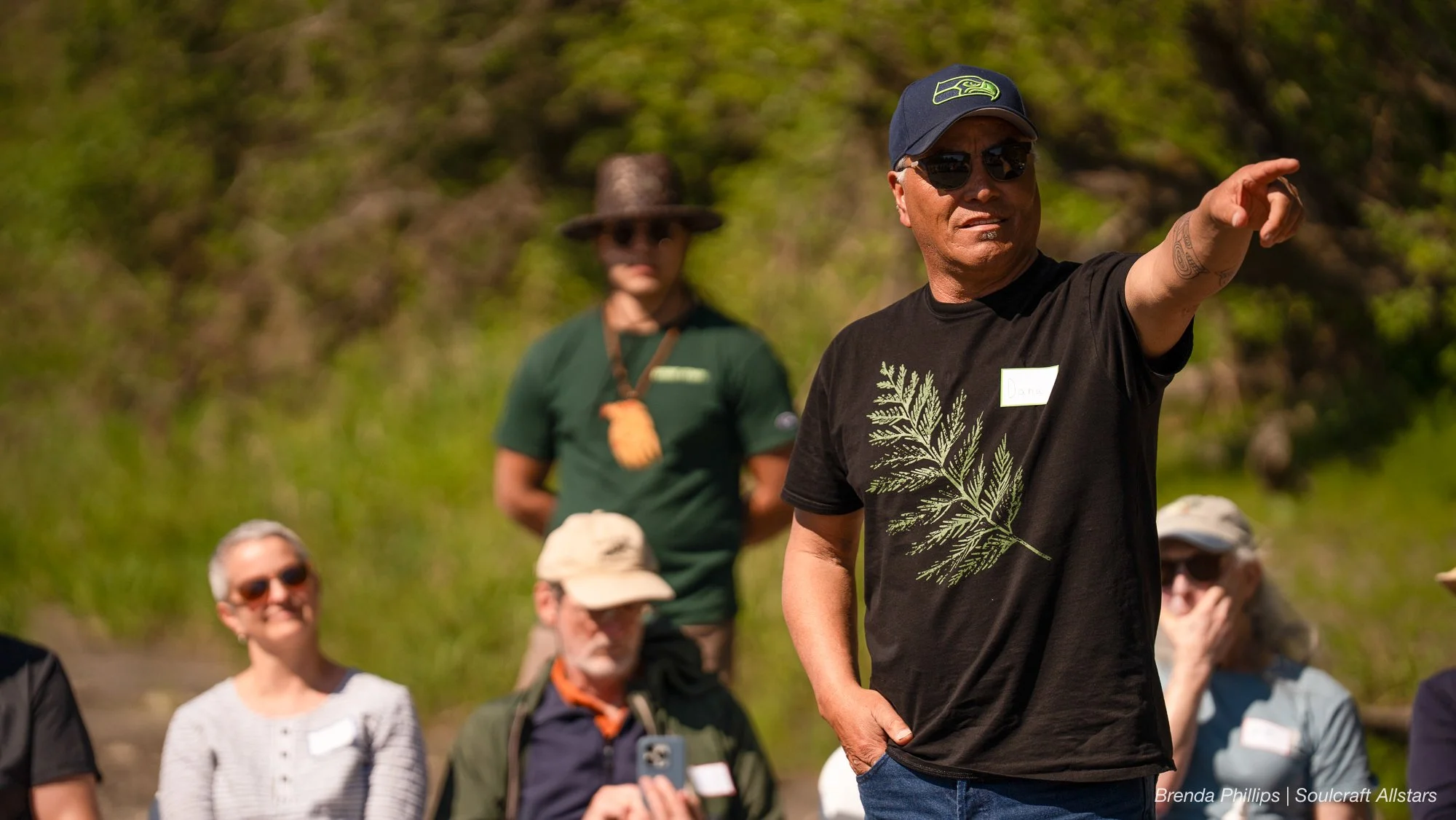
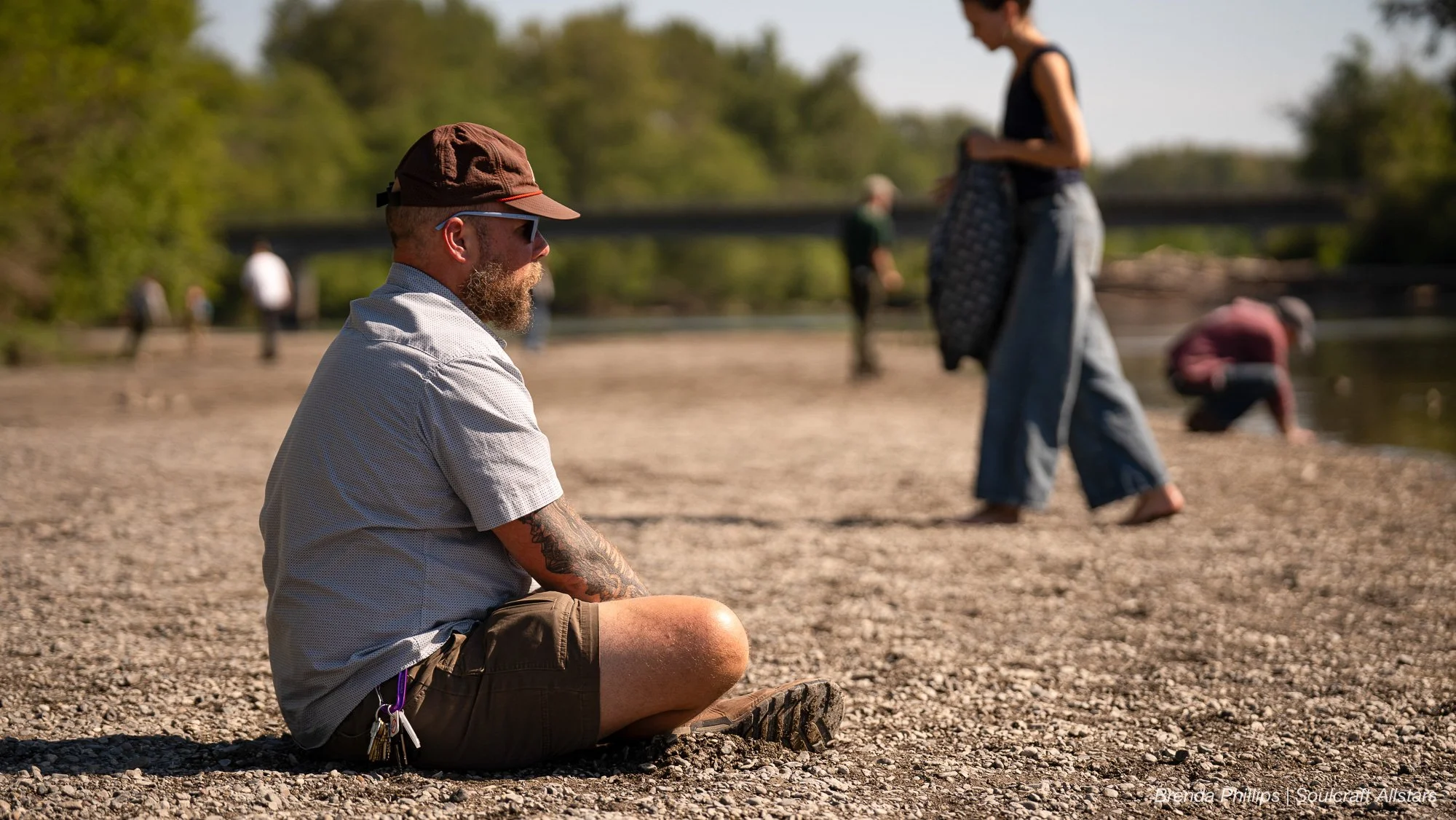
The river was low. The bar was wide.
Dana told stories of growing up just downstream from where everyone was sitting. Fishing. Living off the river. And then, when the air needed room to breathe, he told the story of his family’s chickens.
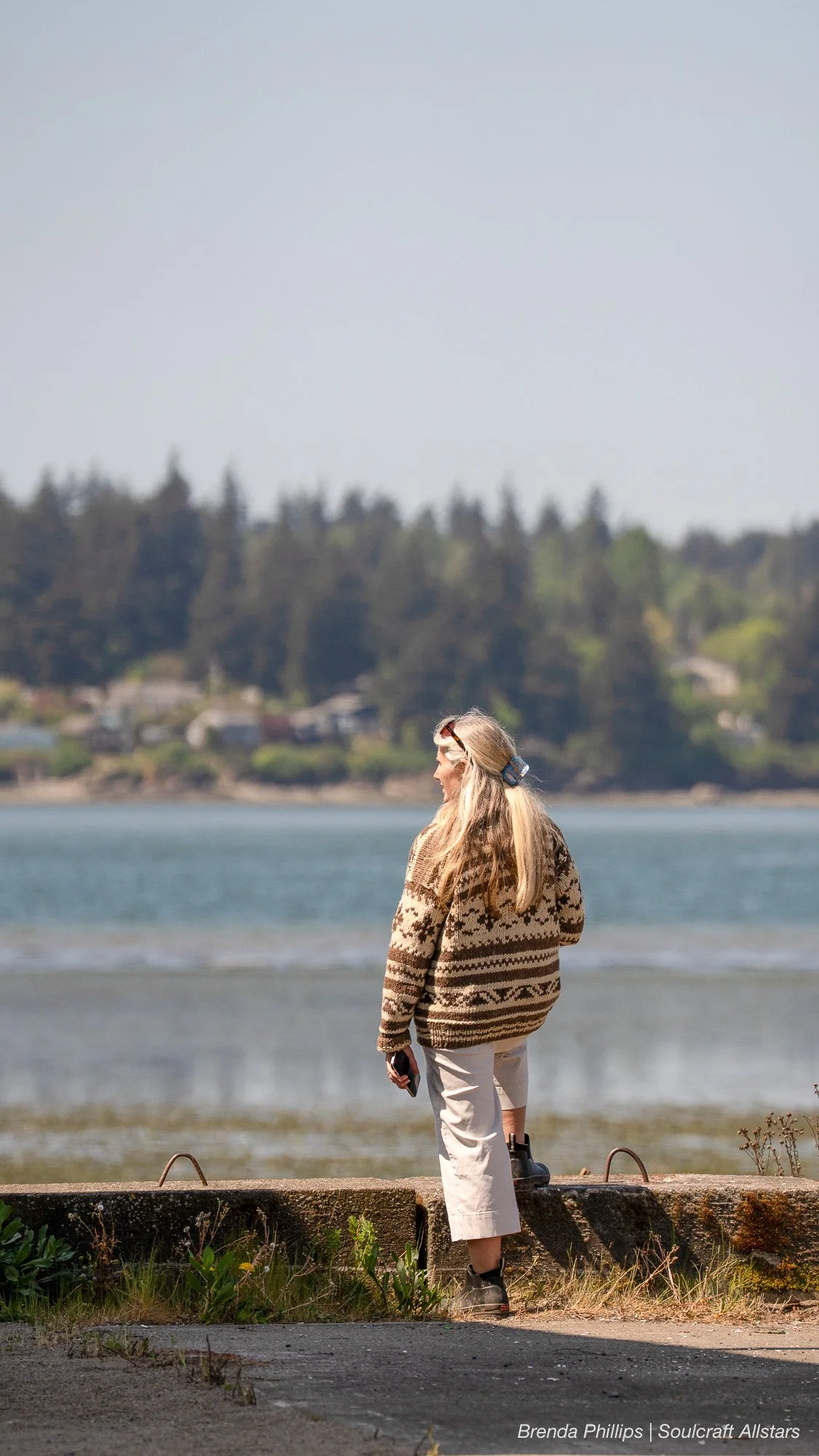
They'd gotten into something fermented. Presumed dead, they were plucked in preparation for the pot. Then one woke up. A dilemma: a chicken without feathers would not survive a Northwest winter. So Dana's mother and several aunties sat down and knit them wool sweaters. The chickens wore them until their feathers grew back. Word spread. People started driving out on weekends specifically to see the sweatered chickens.
The whole gravel bar laughed.
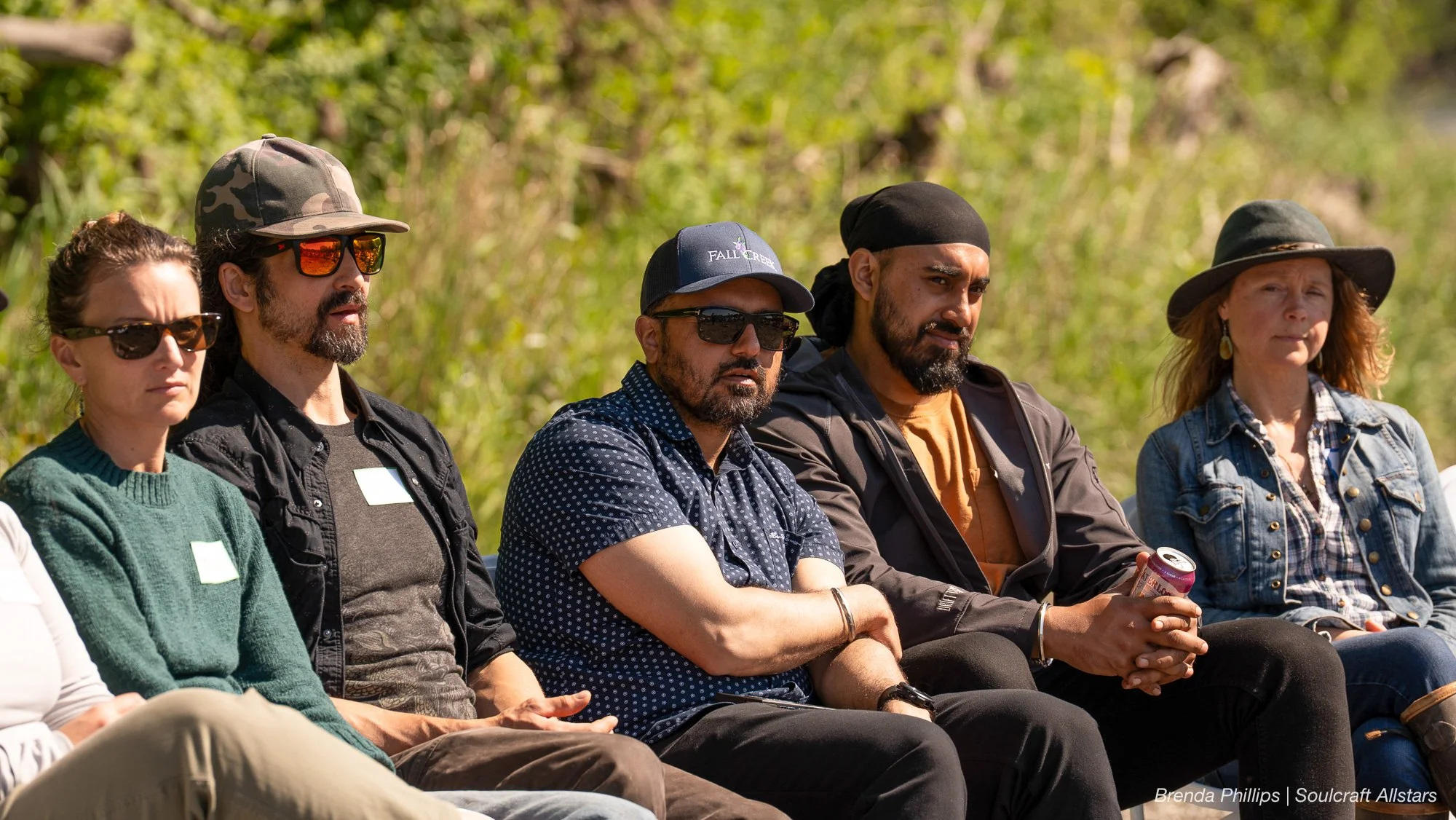
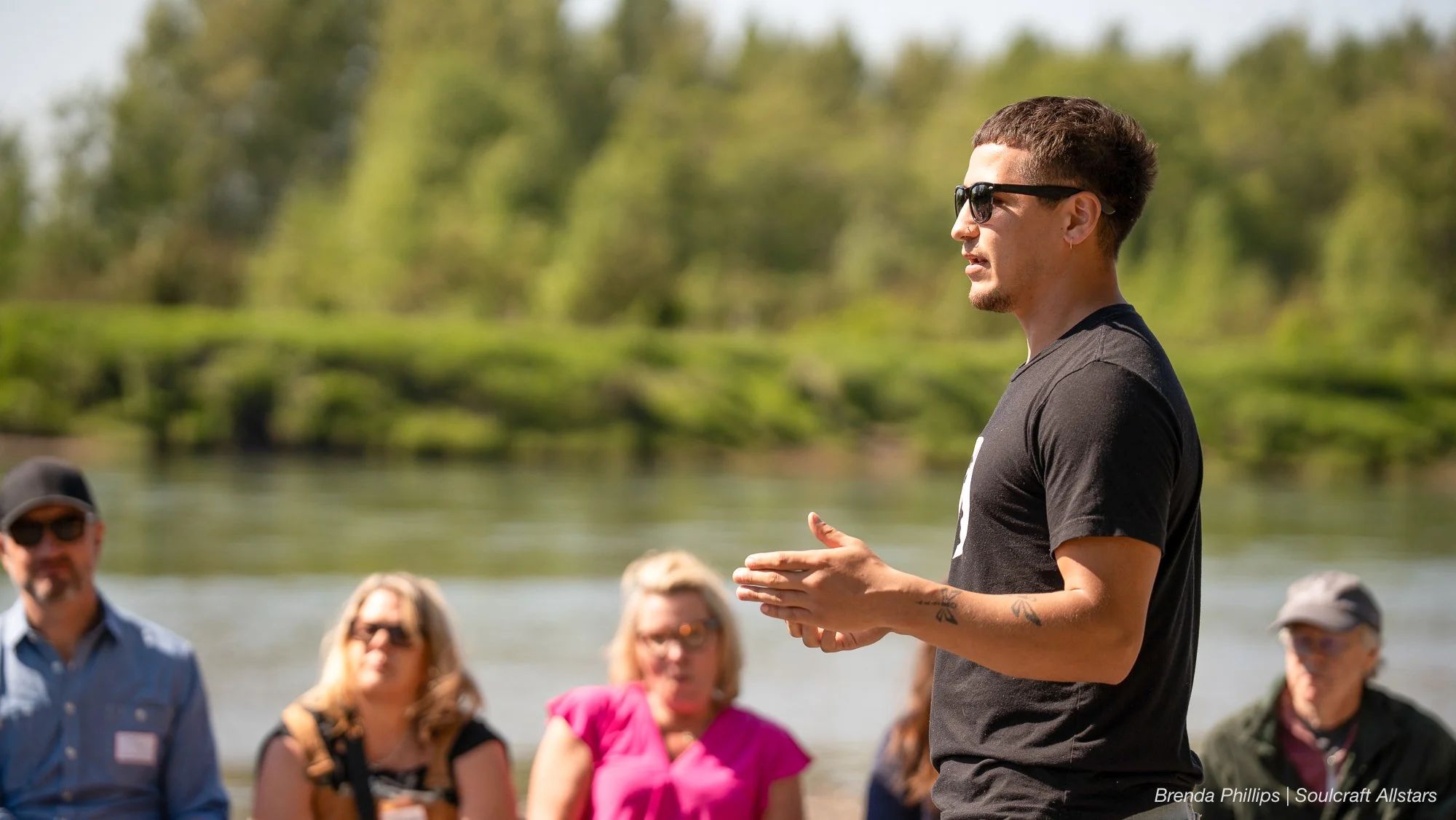
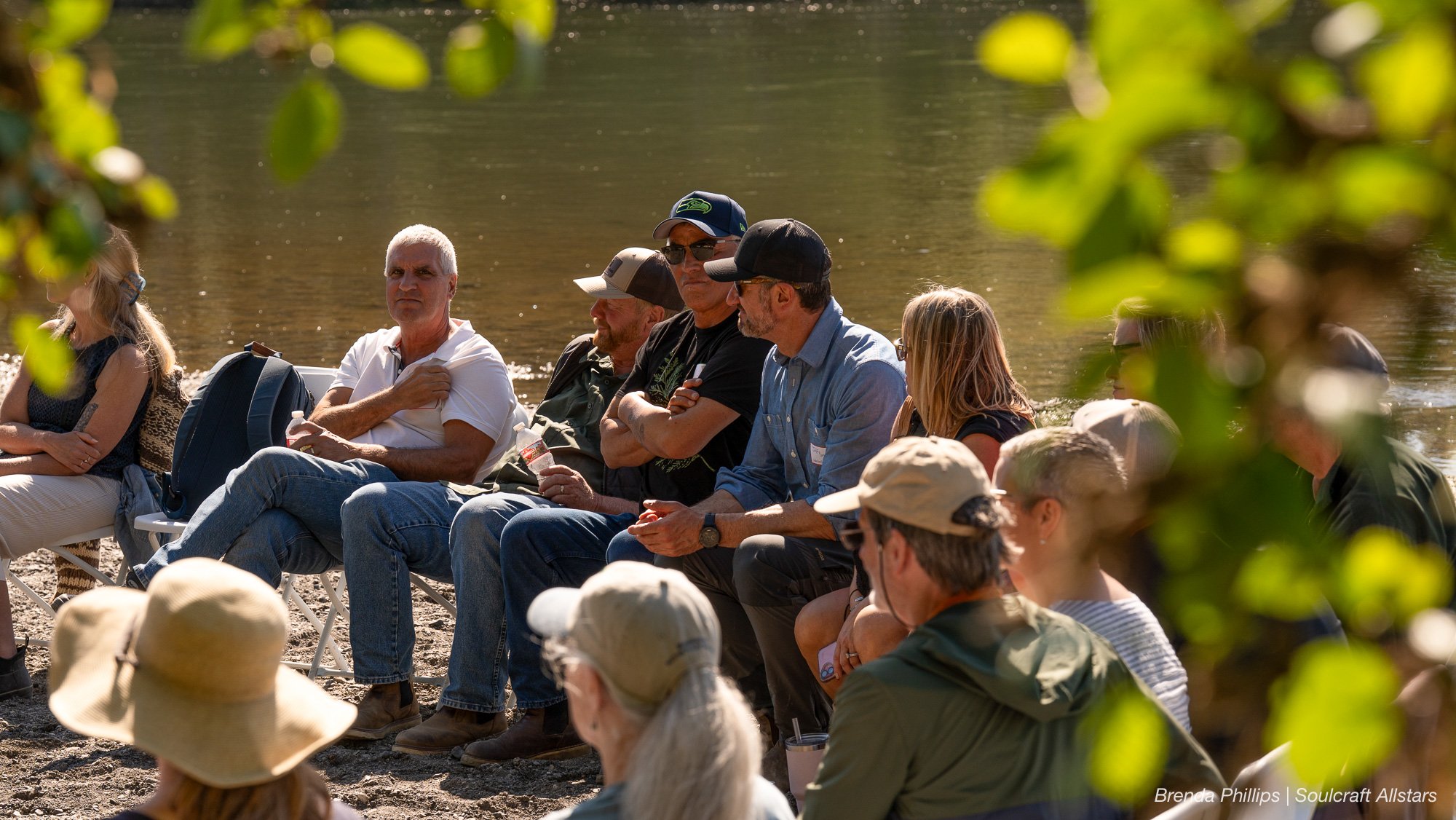
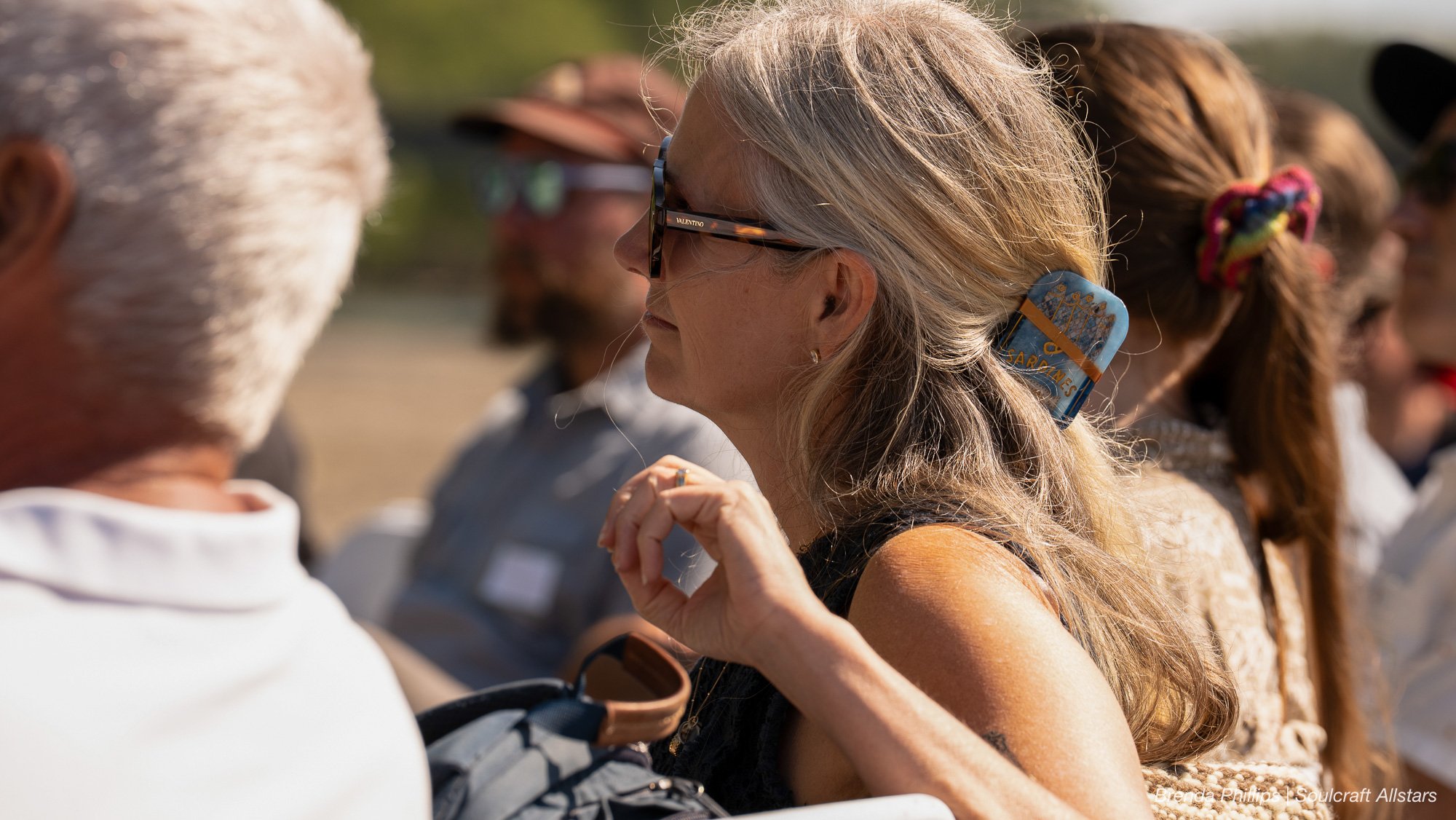
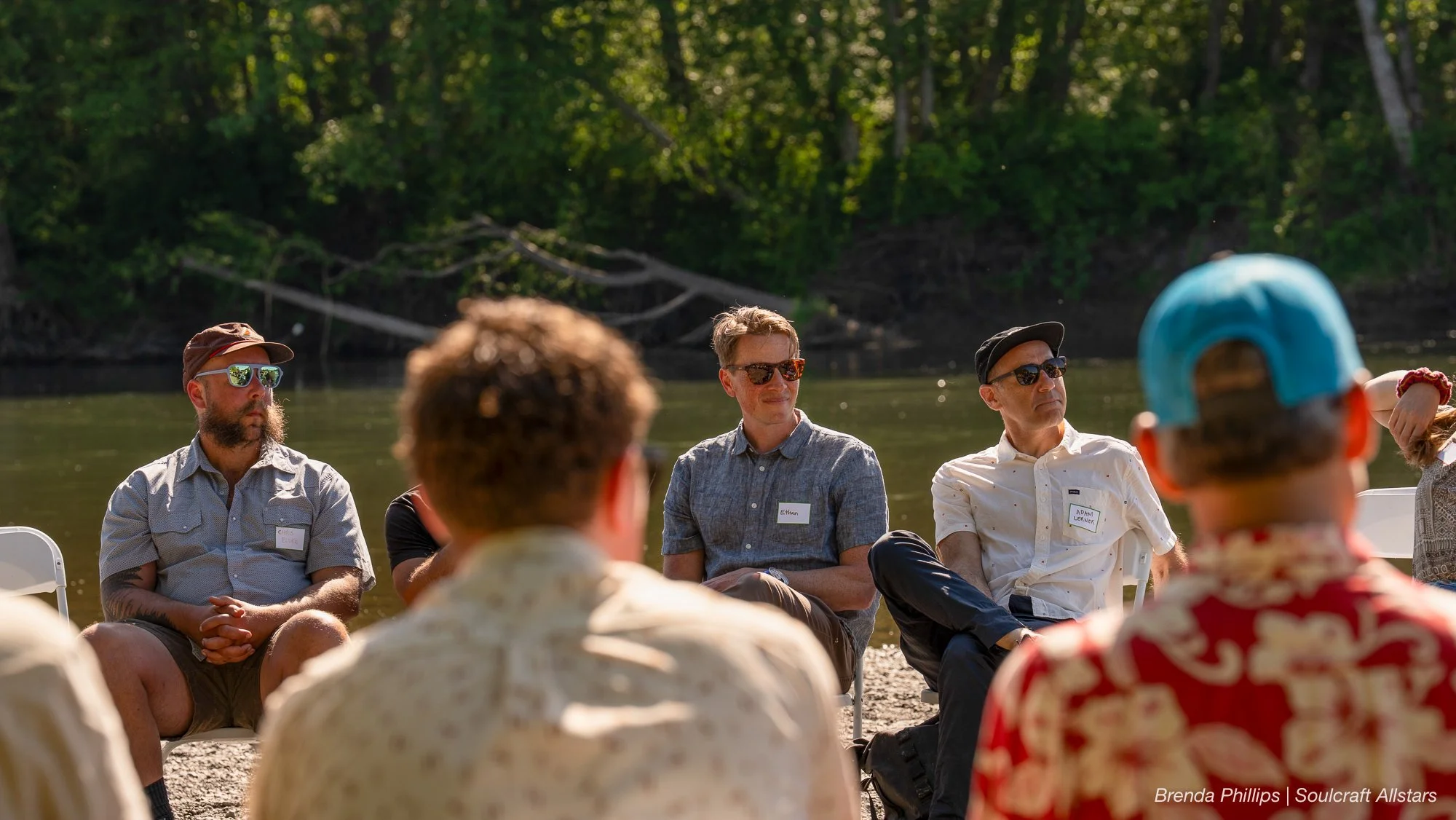
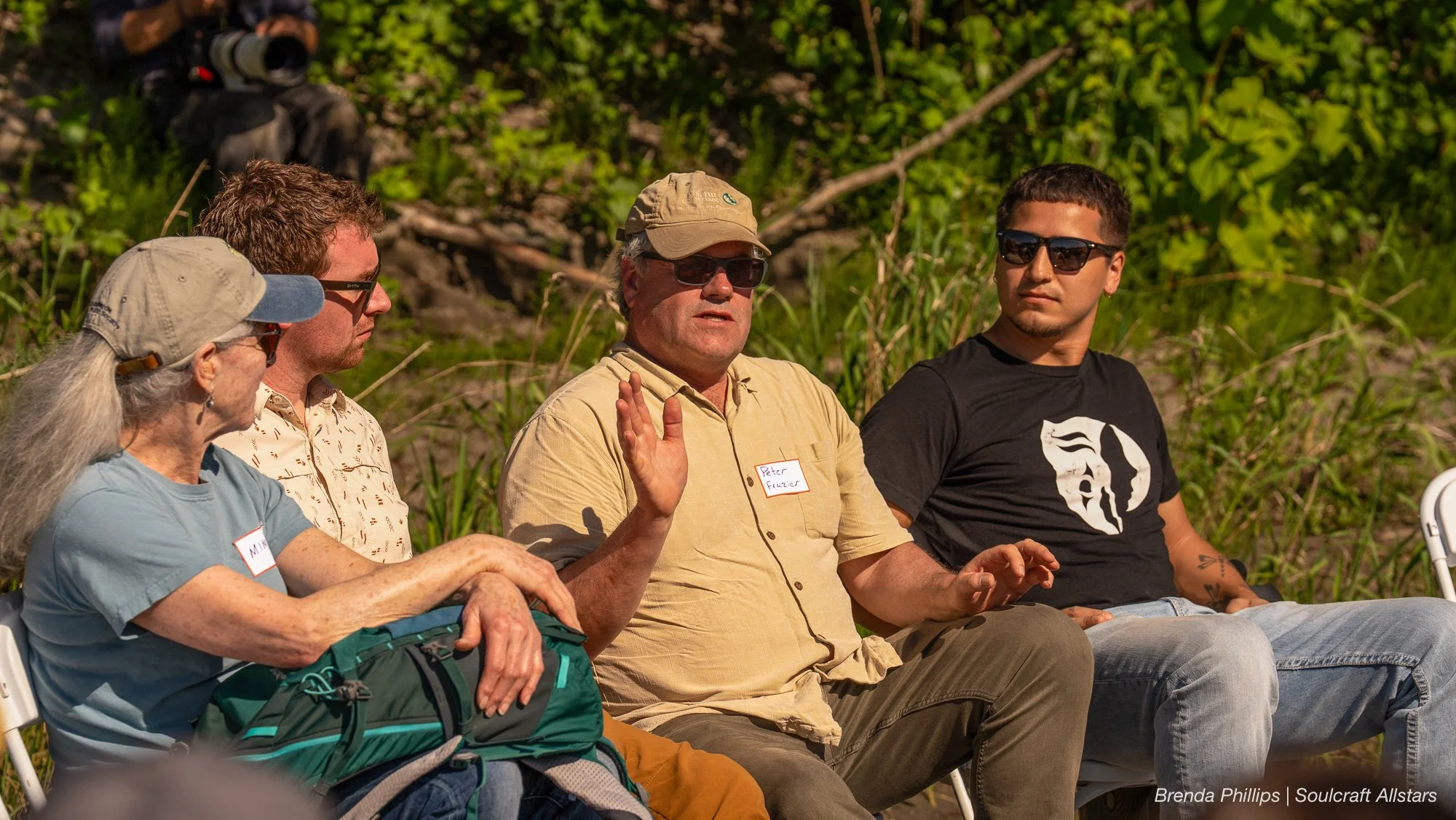
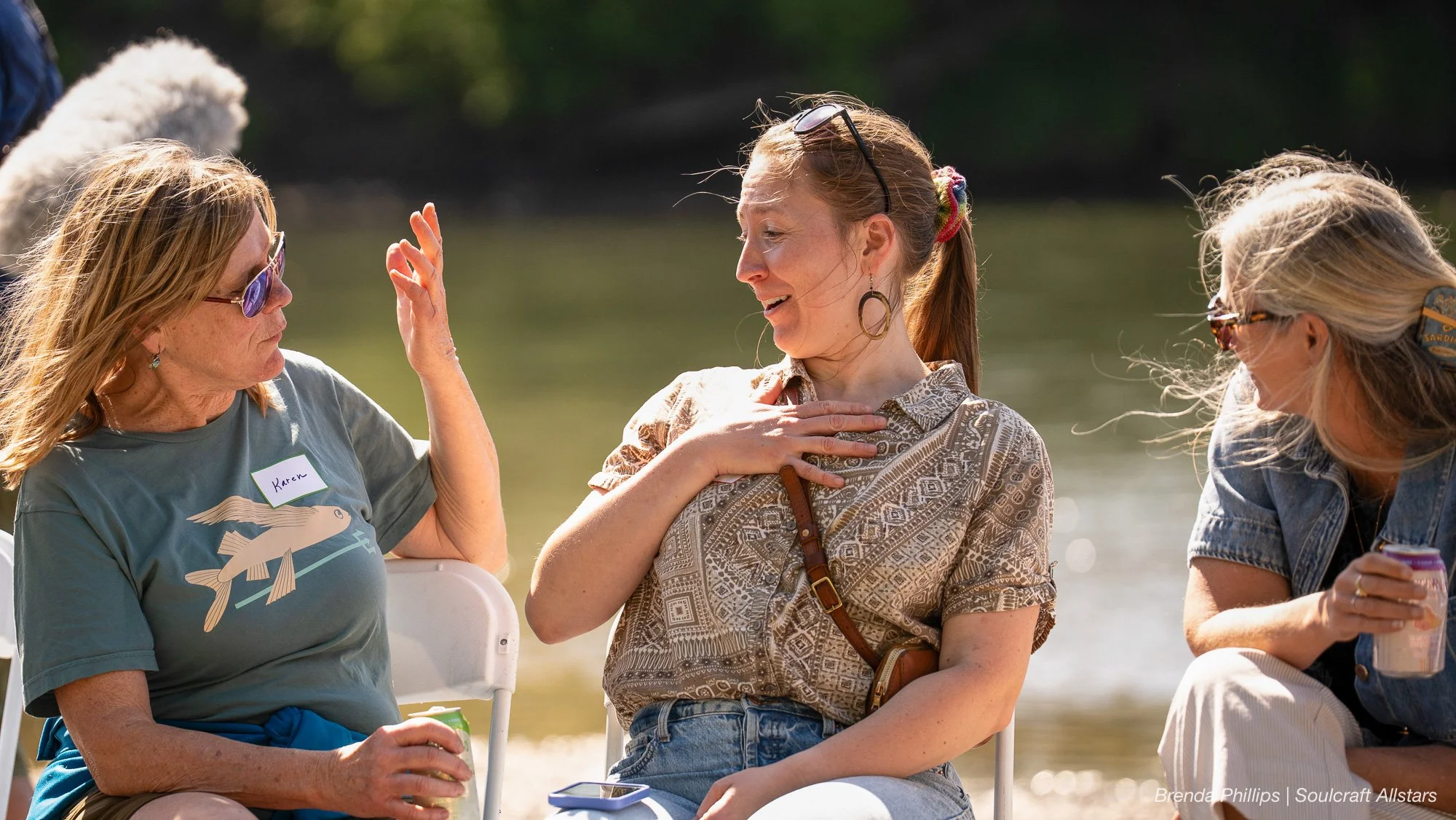
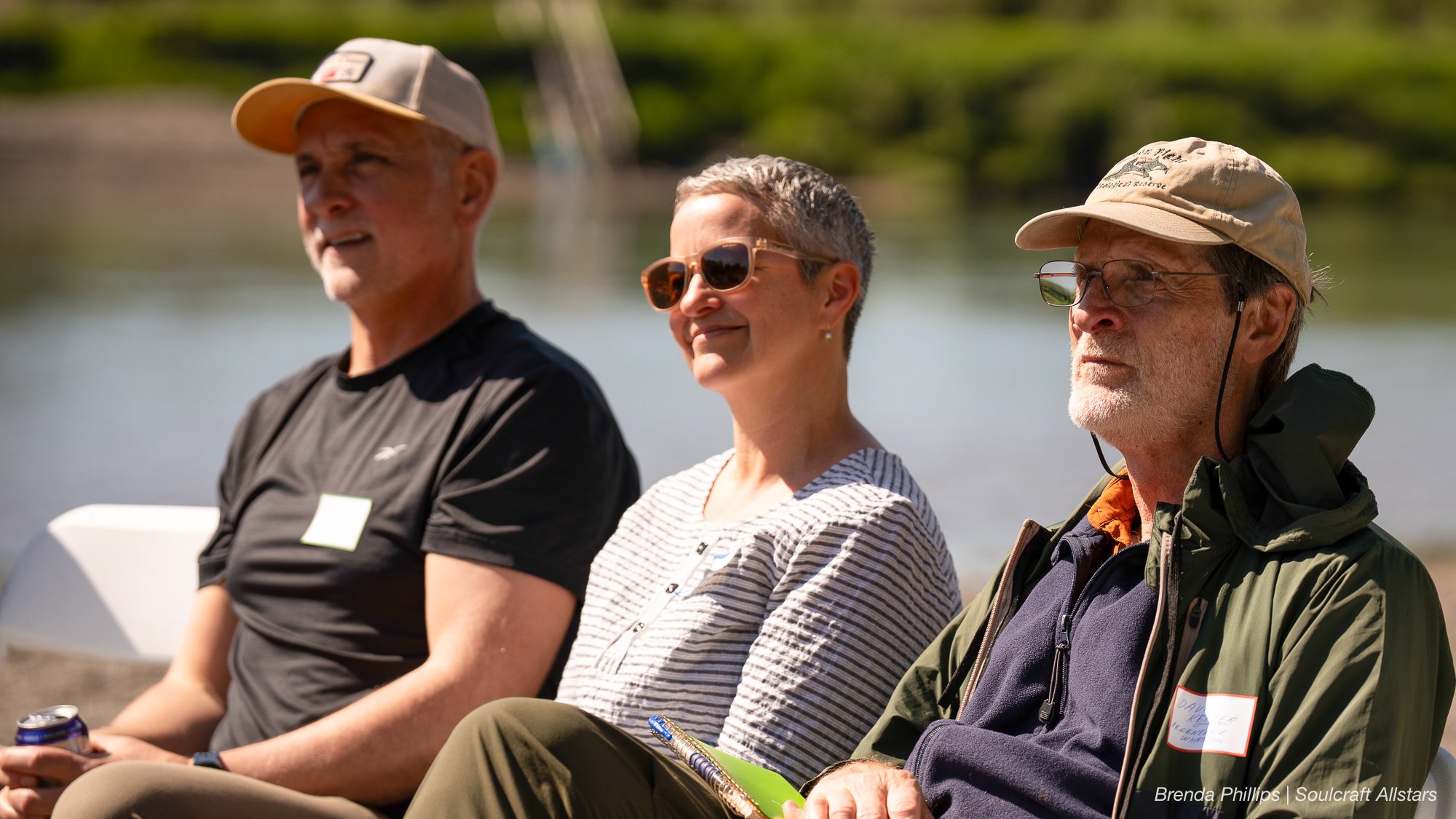
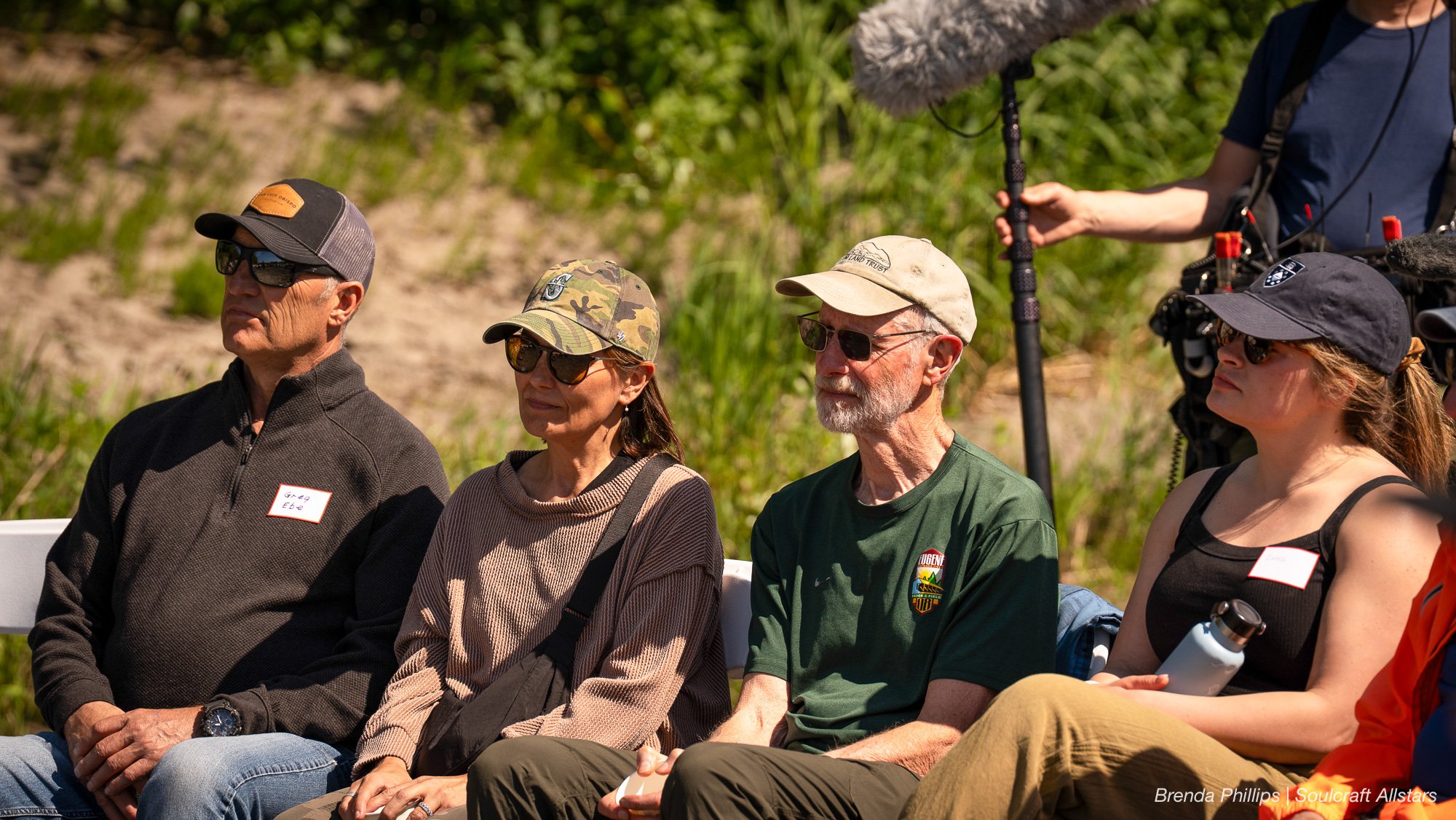
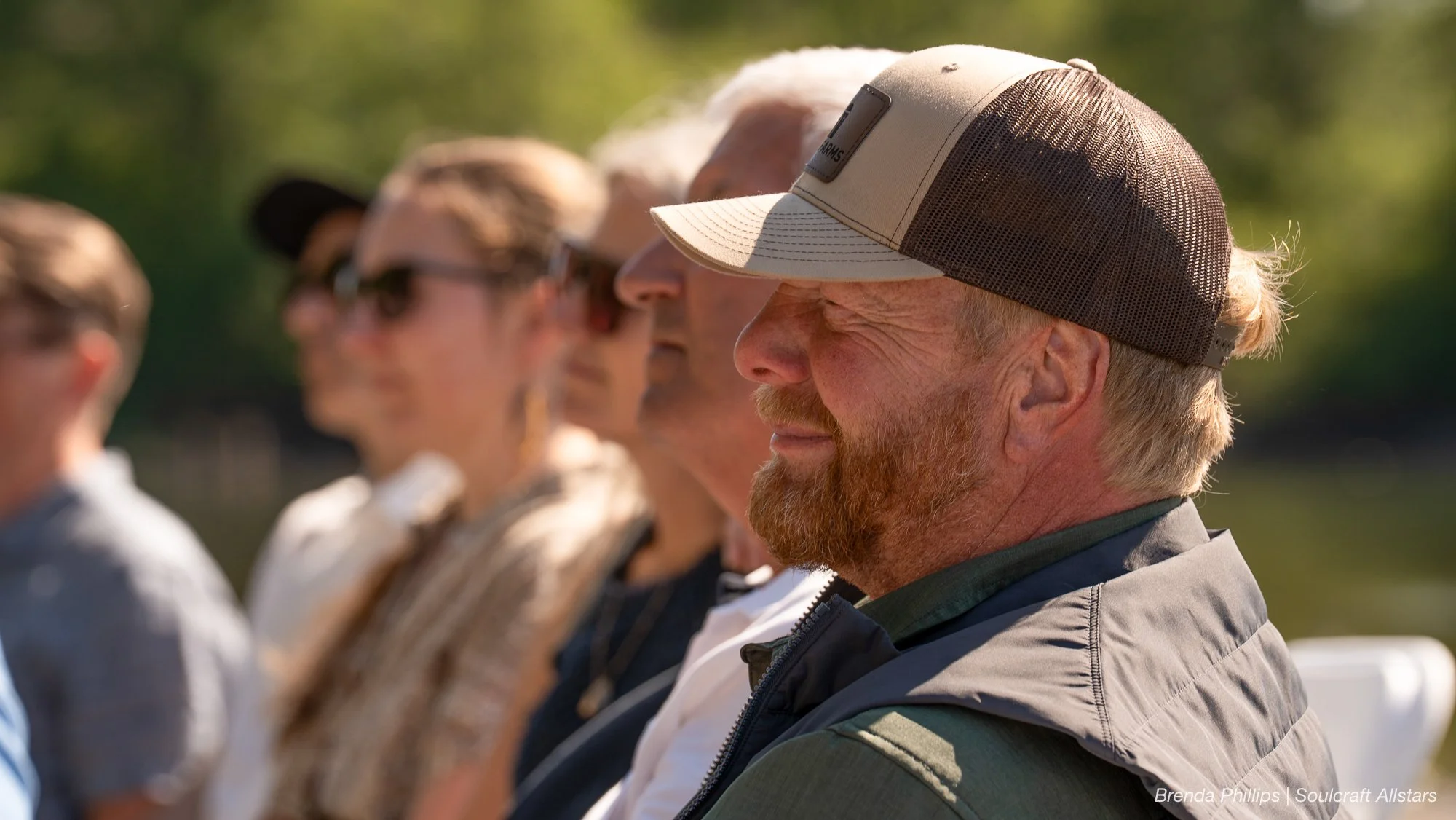
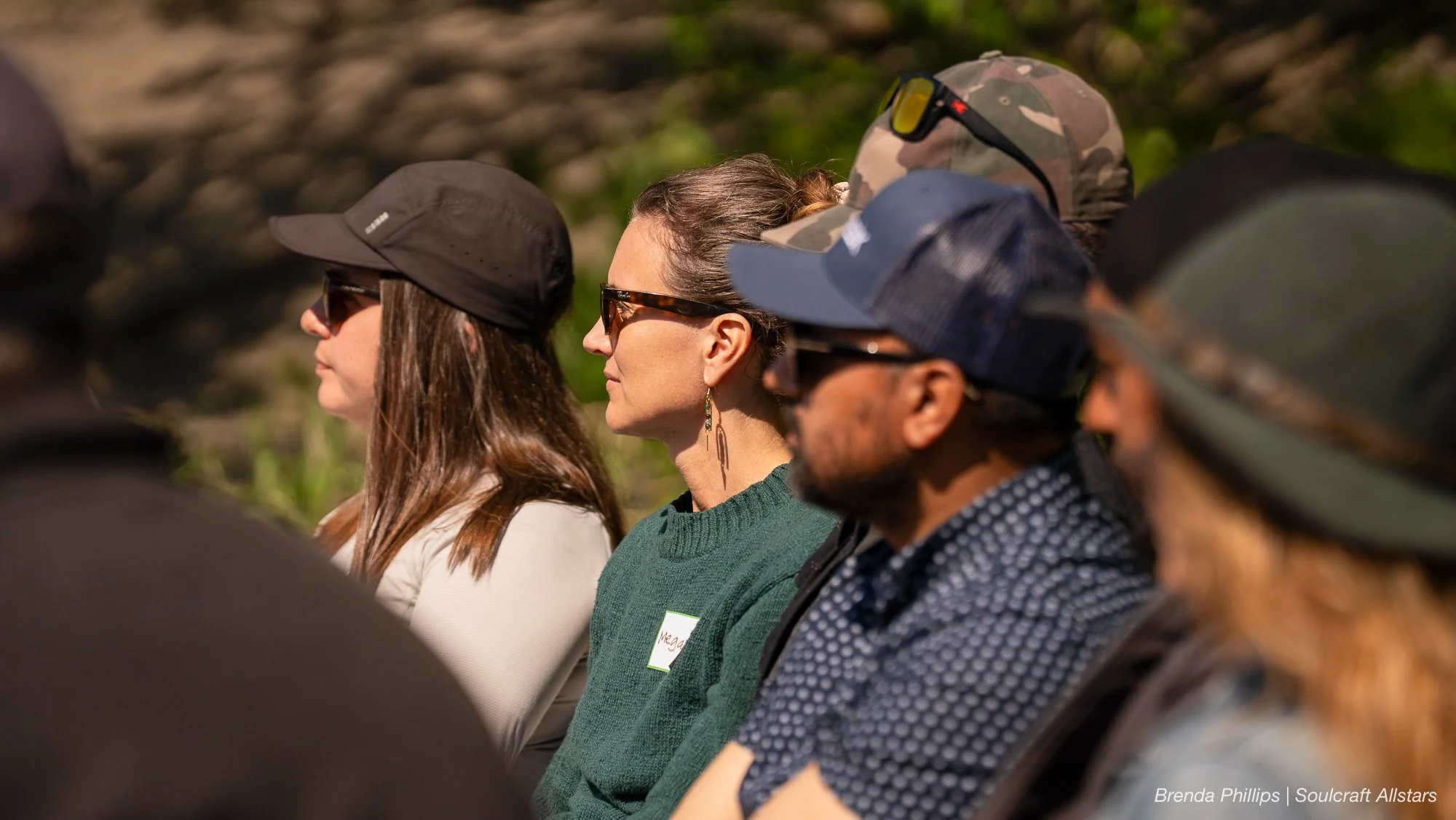
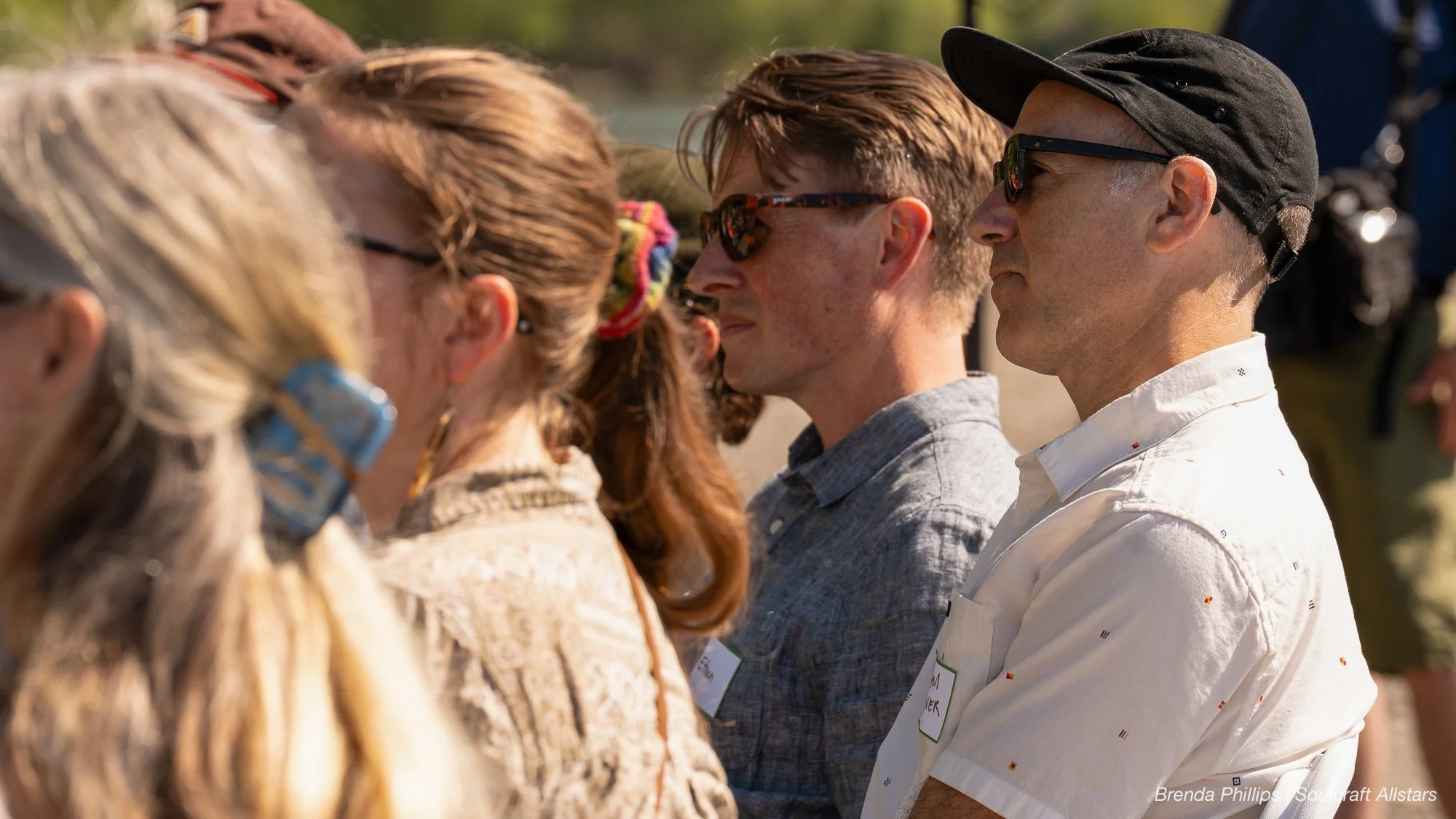
Then Rena read again. This time, a poem she had written for a joint session of the Washington State Legislature in 2023. For many in the circle, hearing it aloud beside this river, from the voice of the person who wrote it, was the moment the day became something that we’ll carry for a long time.
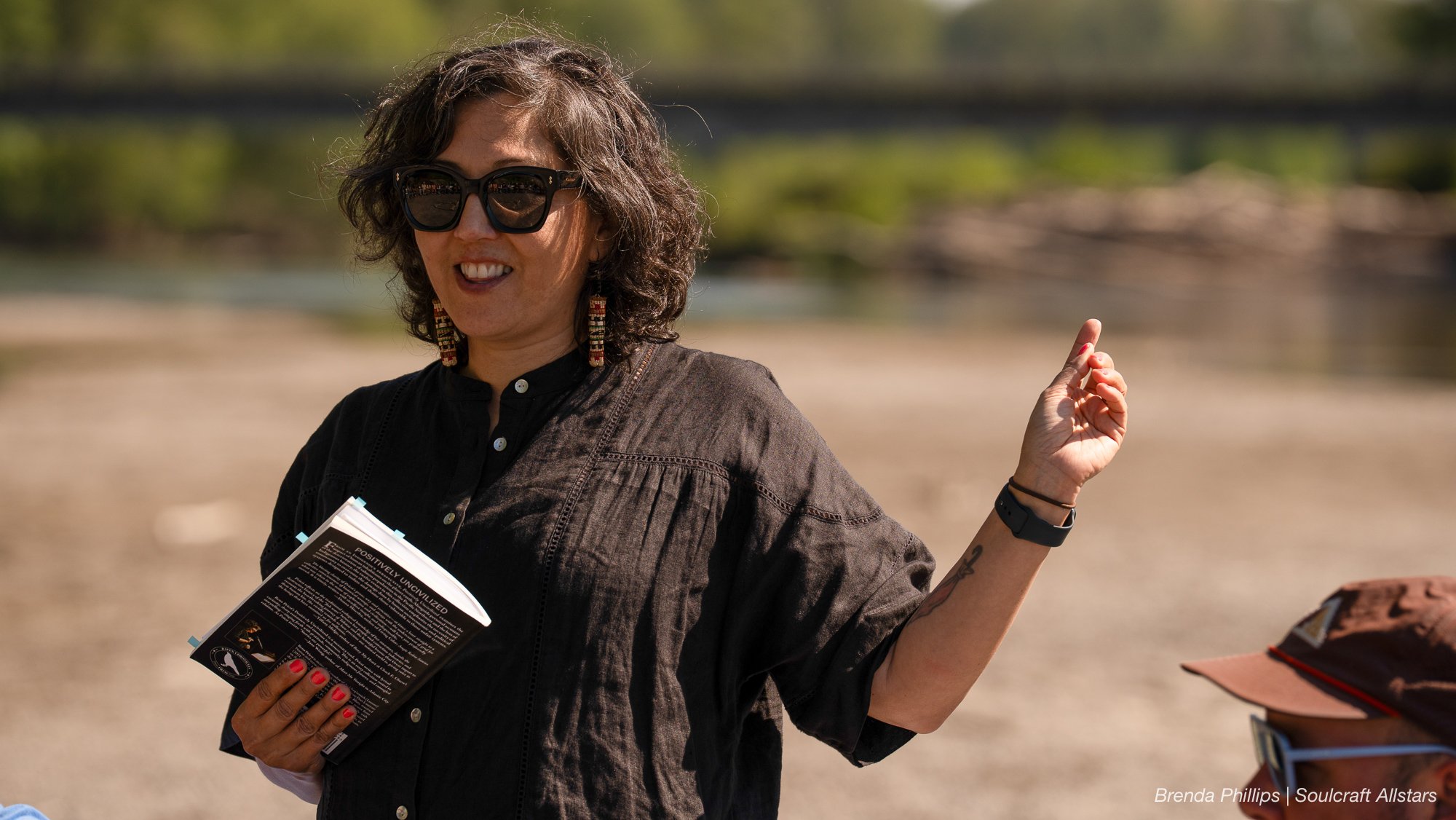
Yet we live on lands where equality bloomed once before,
when Indigenous nations lived by beliefs
and followed ancient laws that said an orca whale
and a cedar tree are sovereign, sentient beings
with inviolable rights, just like you and me.
Those beliefs are not childlike or primitive.
They are the blueprint for a just and fair society,
which for Native nations is not a vision but a memory.
That sublime belief in the wisdom and goodness
of the giving earth, is not so elusive, is not
a birthright exclusive to tribes. Yes, it's mine,
but it's yours too, if you want it. If you want it,
you must tell new stories—true stories
on which to build new beliefs—true beliefs,
in the interconnection and value of all living things.
The supremacy of man is only fiction.
This is the secret every river knows, for water rises
and falls, and in a circle, eternally flows
from the cloud to the mountain
through the valley to the sea. Thus, is a circle,
a balanced, perfect, and natural state of being.
And who are we to interrupt it?
- Excerpt from These Abundant and Generous Homelands”
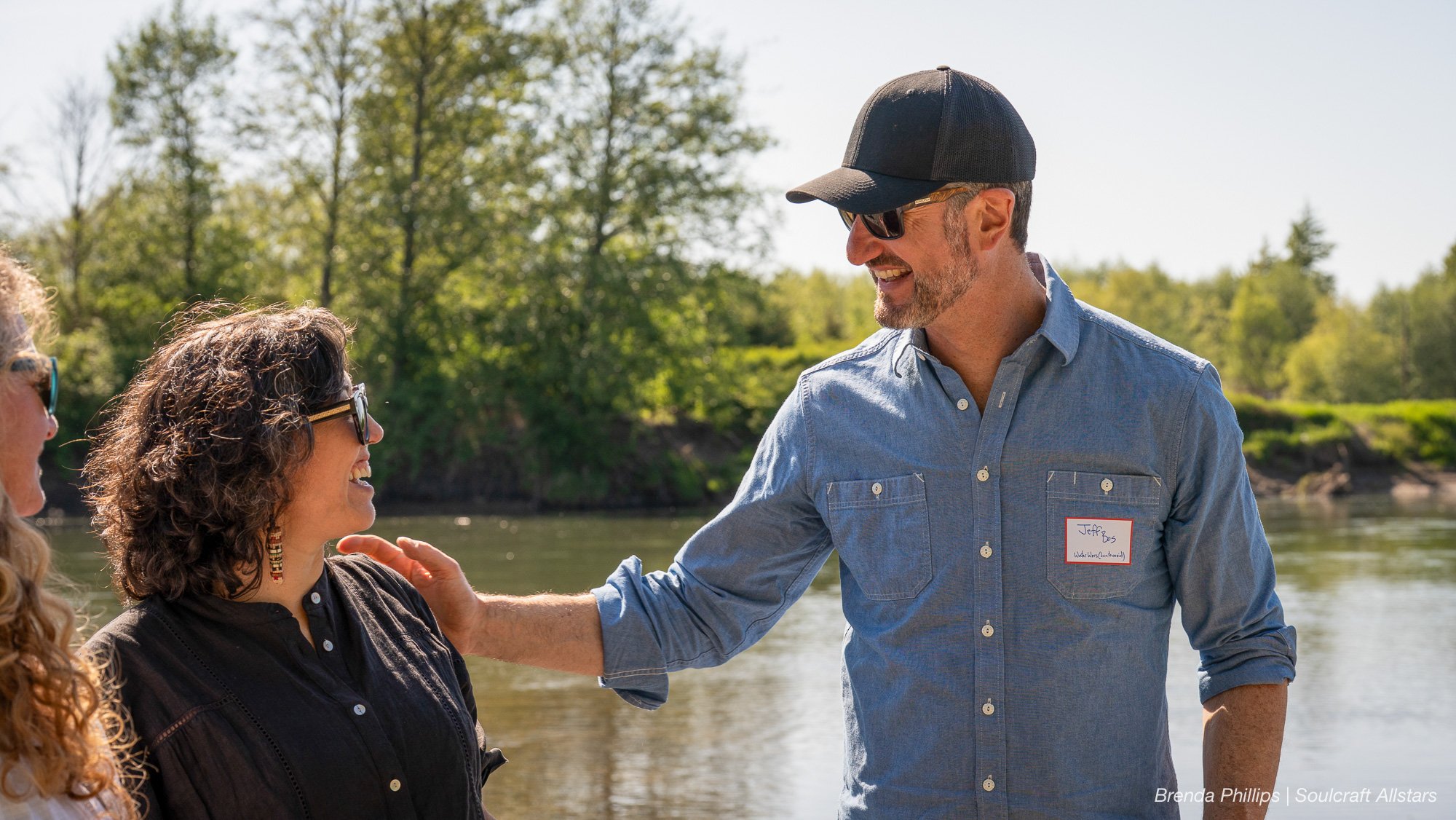
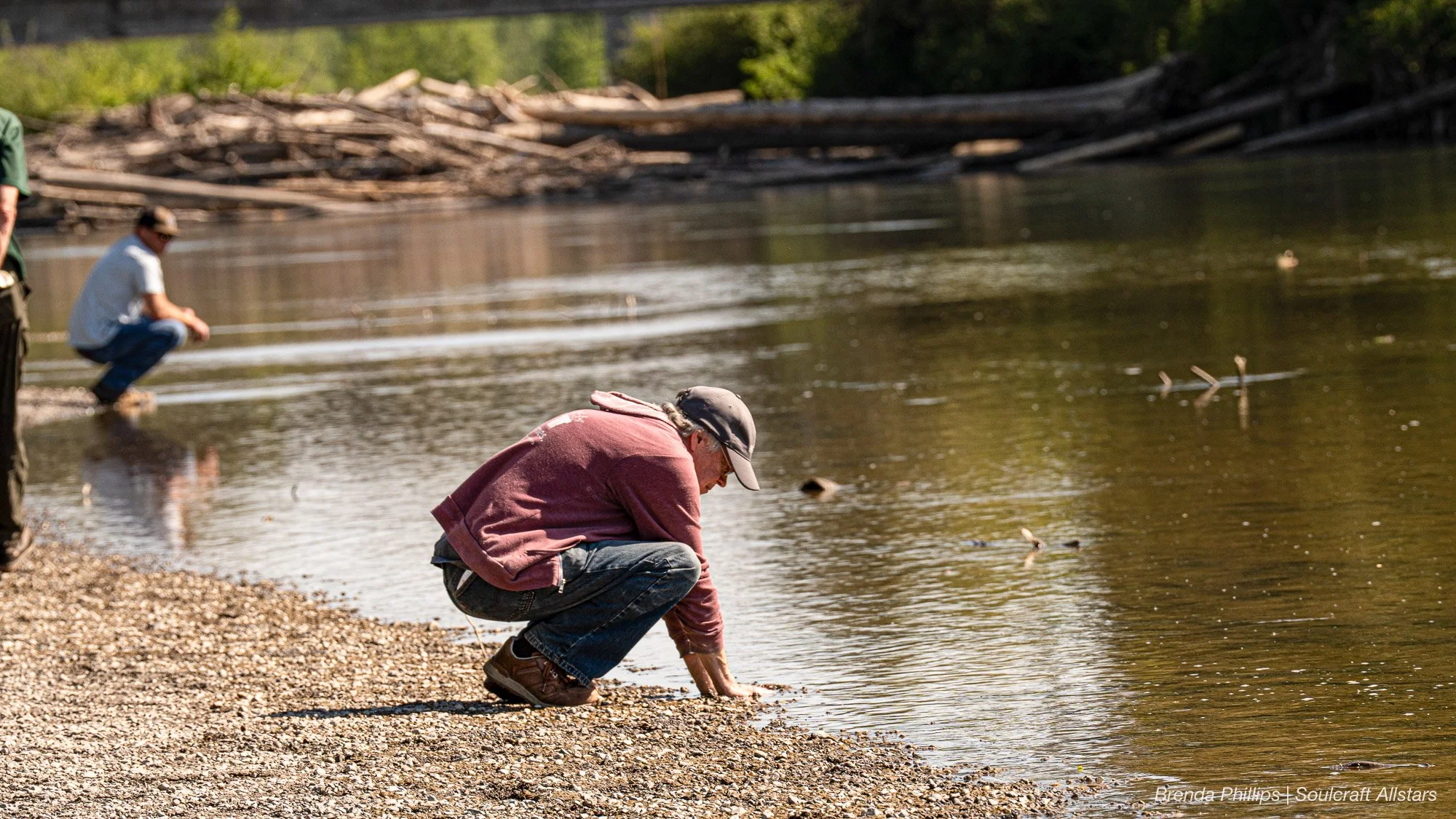
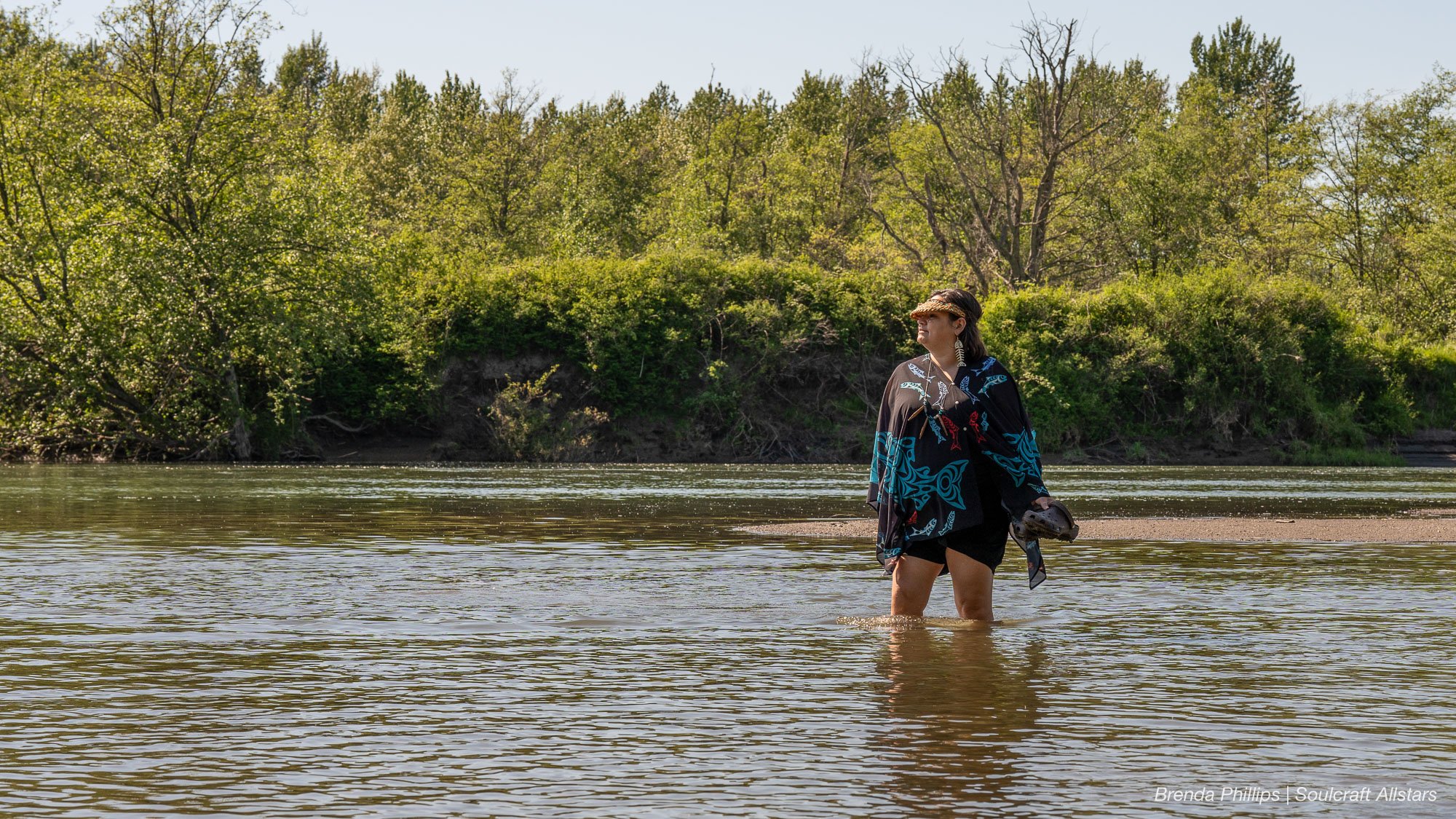
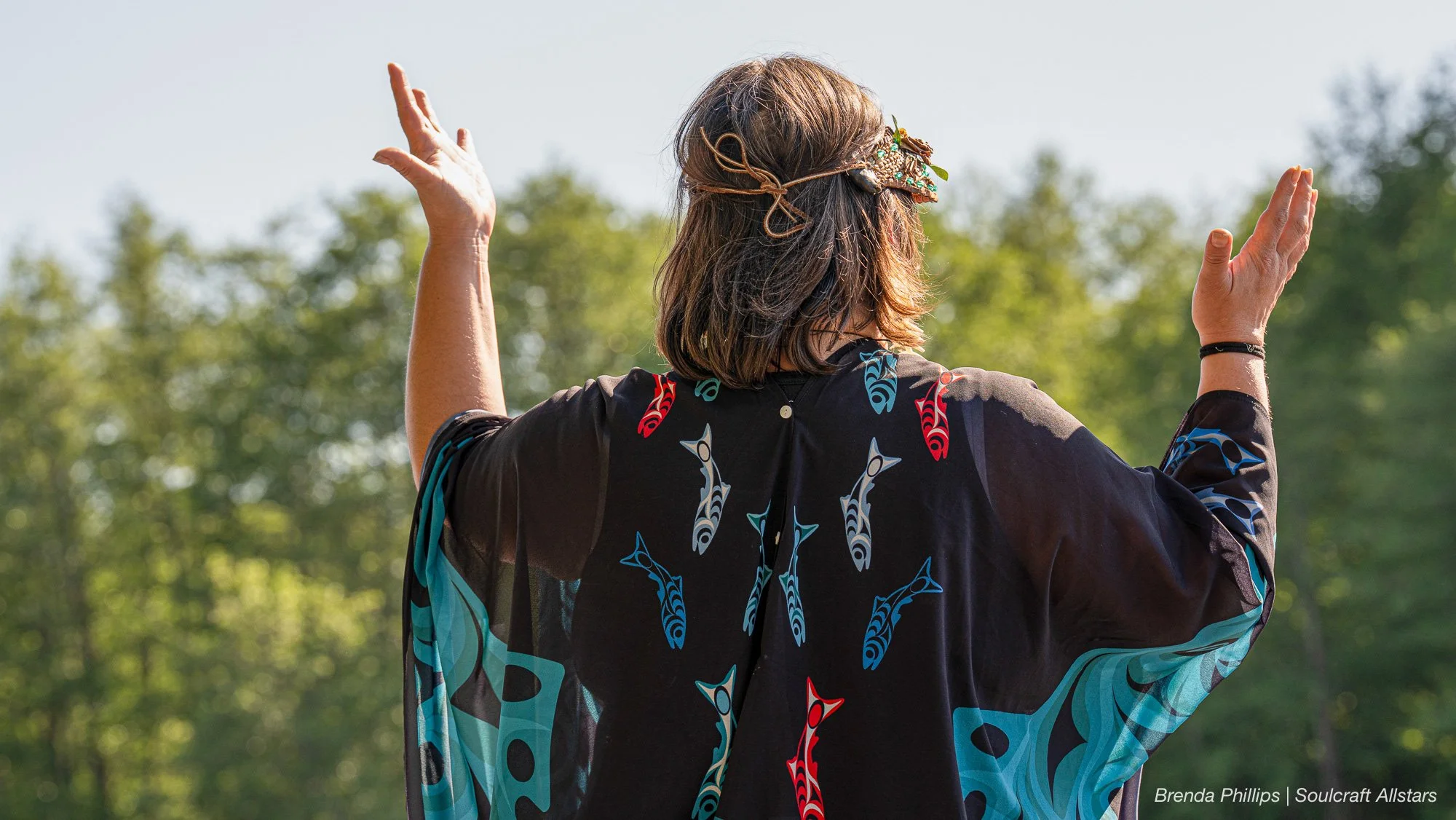
After allowing a minute for Rena’s words to soak in, Jeff invited the group to wander the river’s edge, echoing a question Jay Julius had raised: in this time of water rights adjudication, of quite literally laying claim to the river, would the river choose to claim us? Fifteen minutes. Alone. With the river.
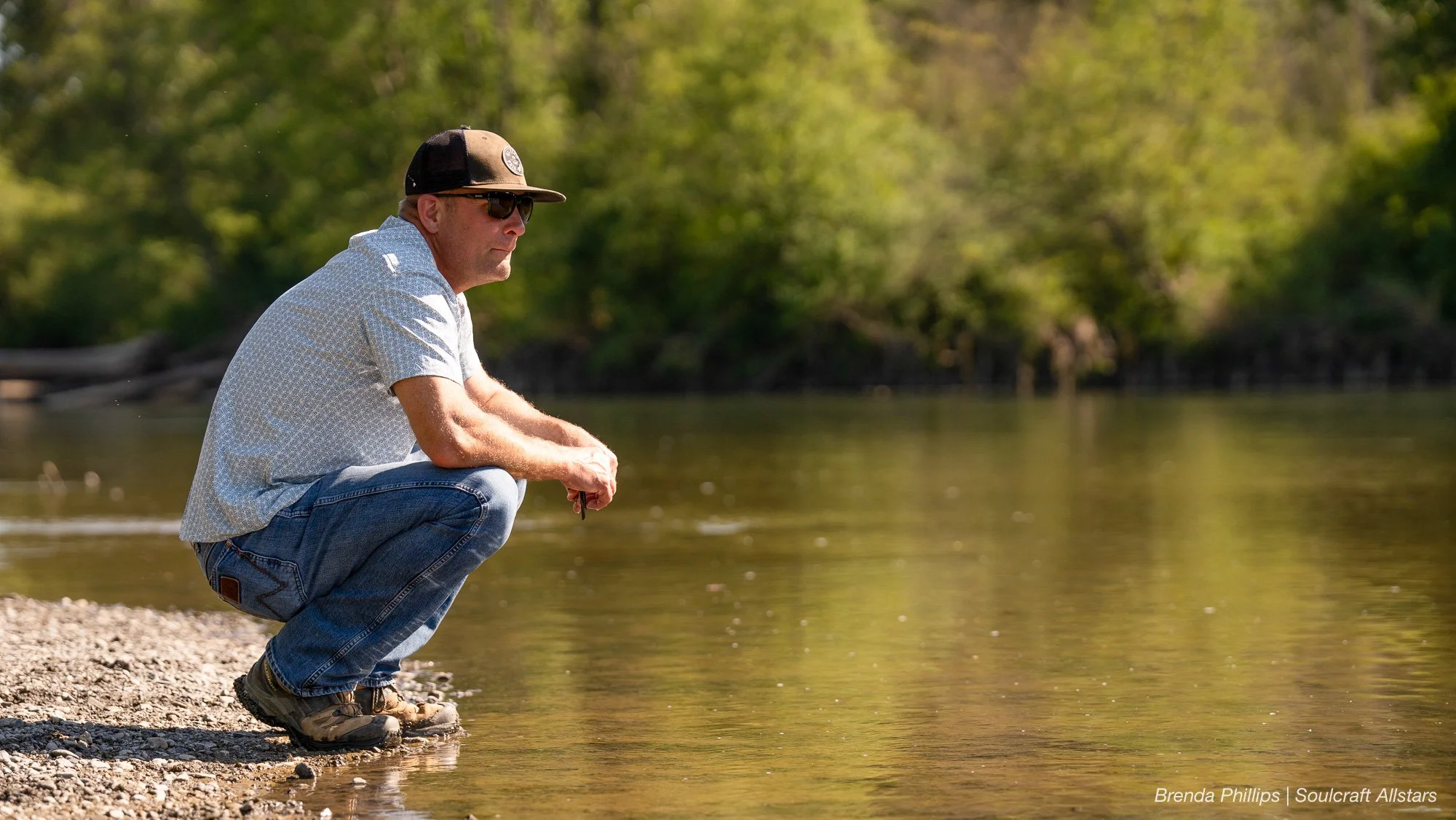
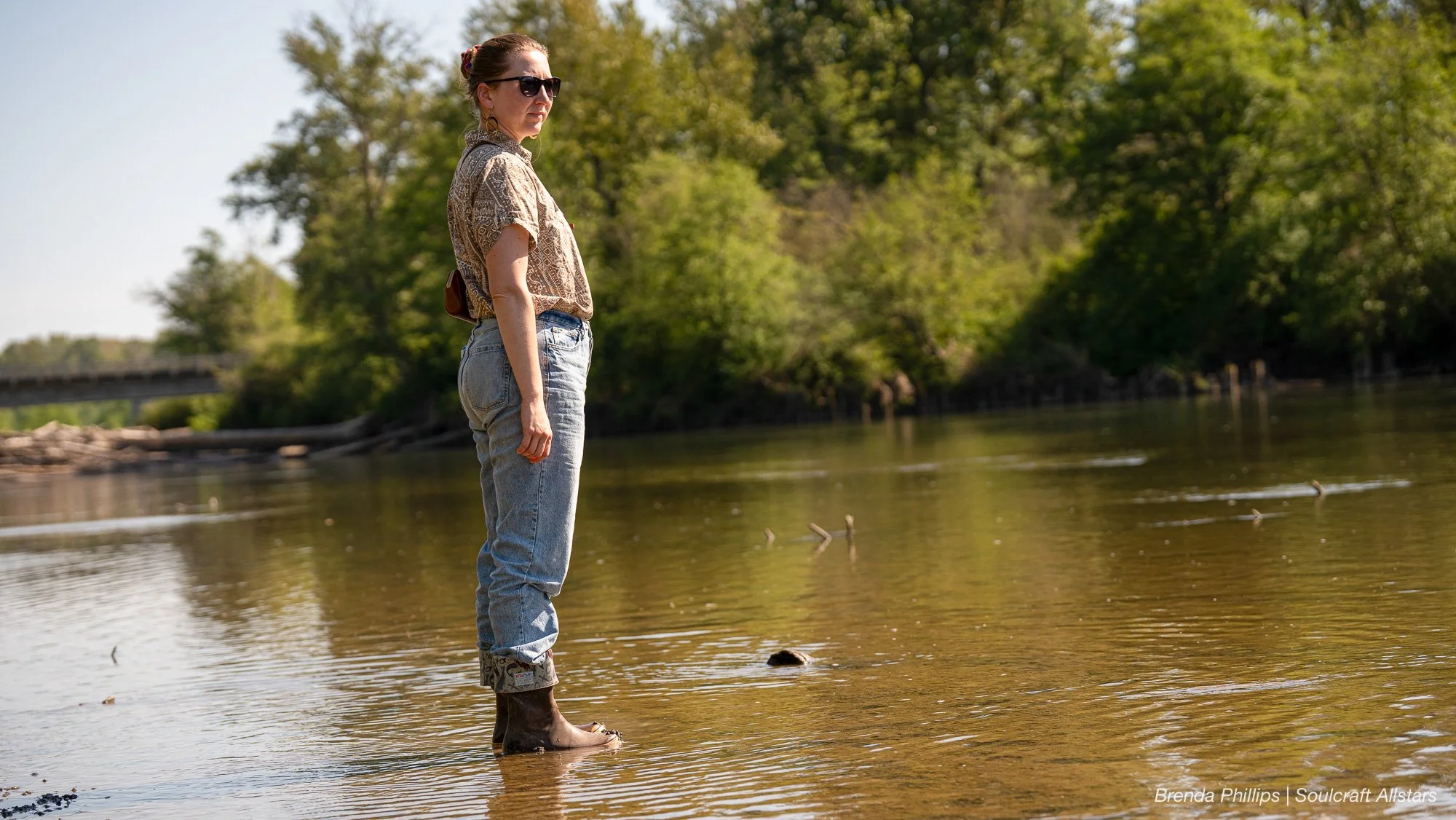
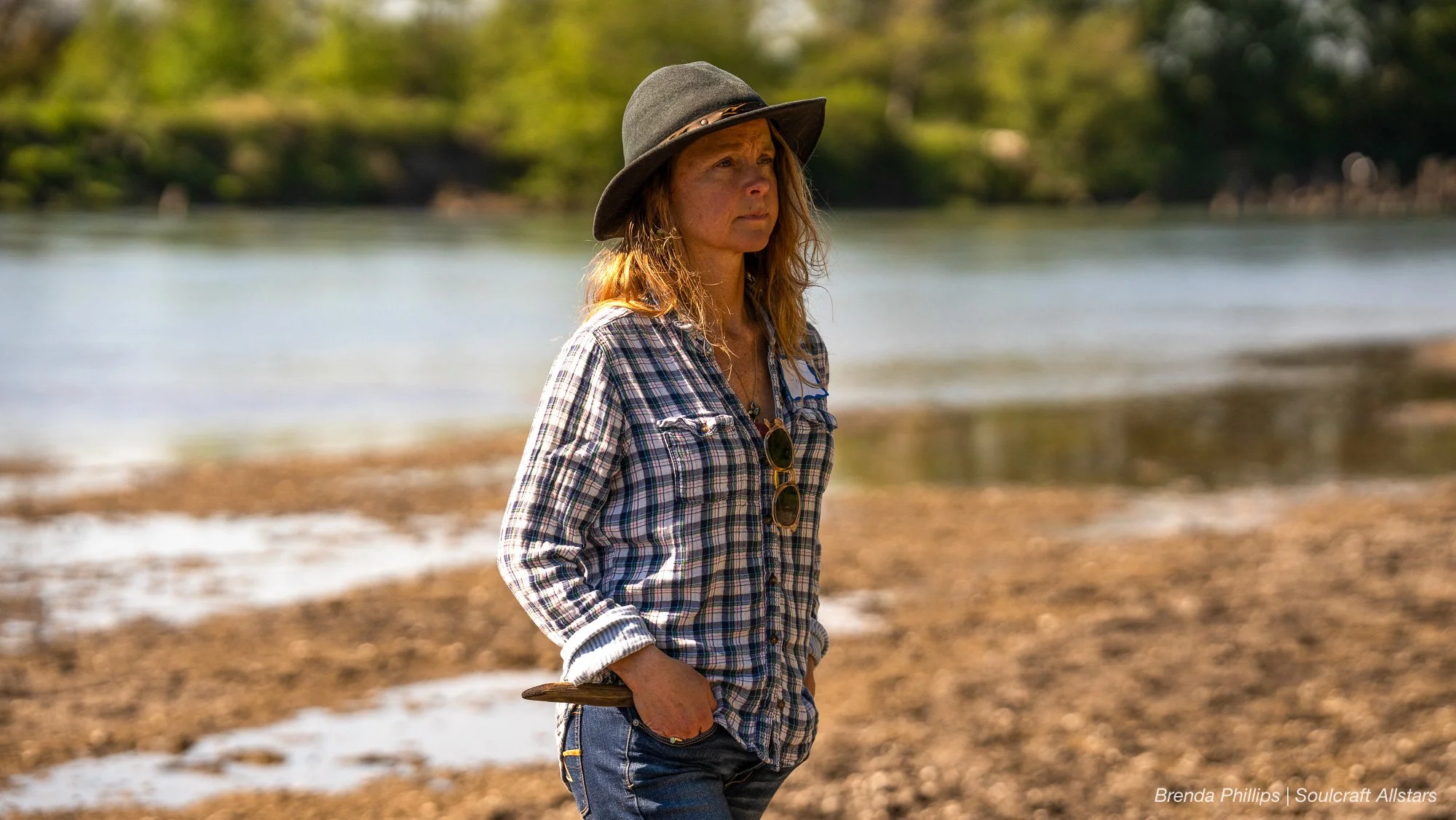
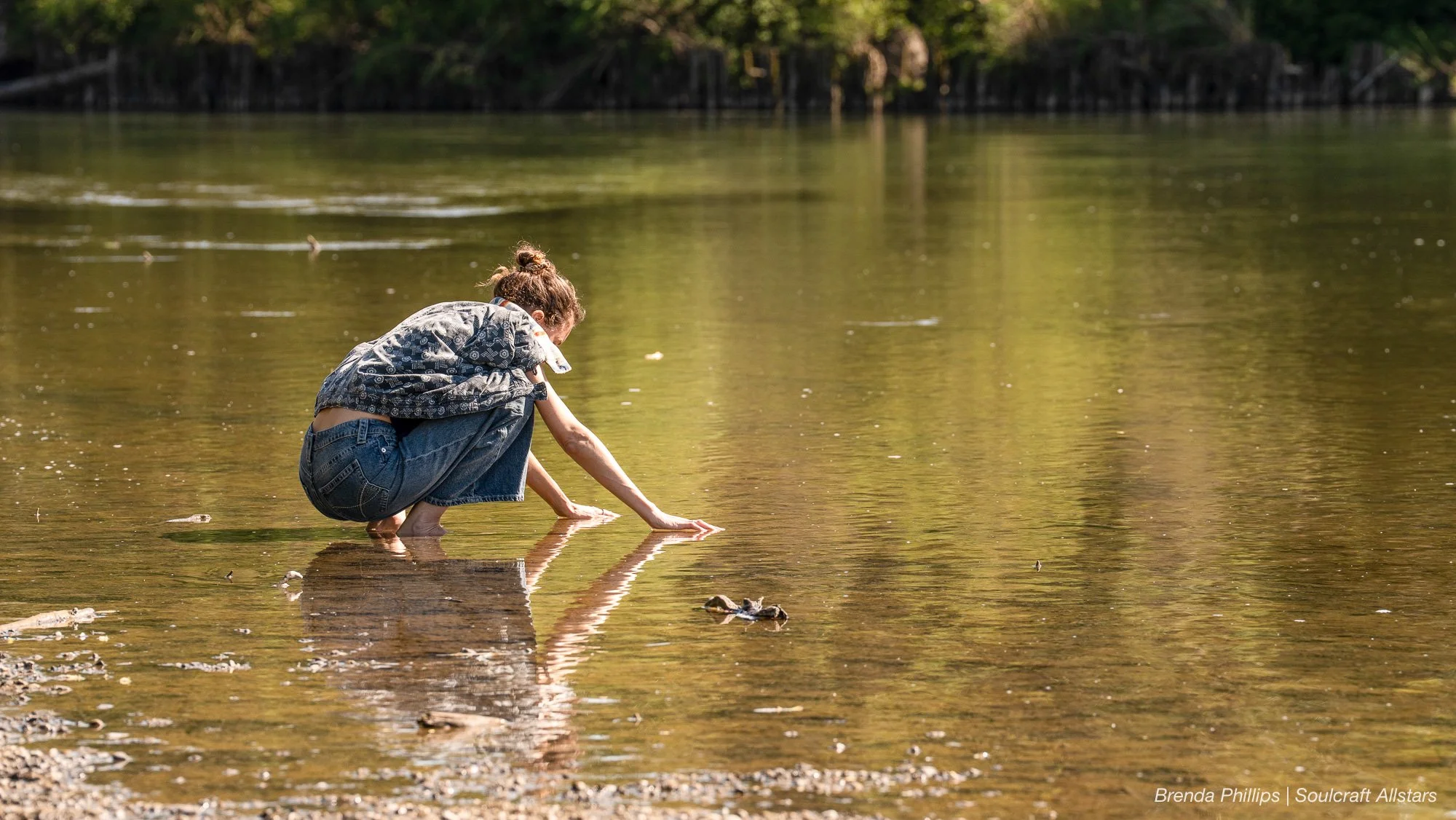
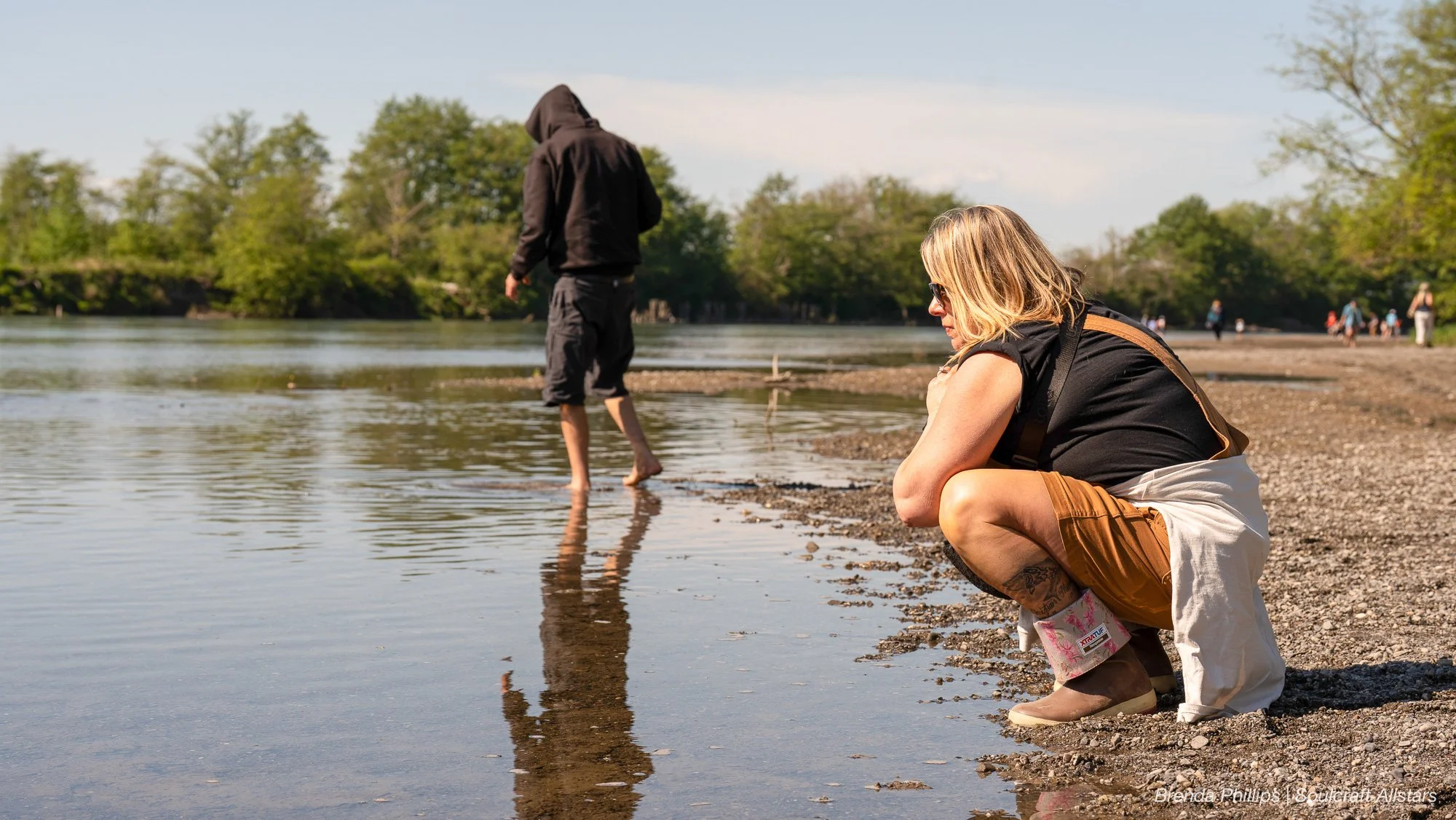
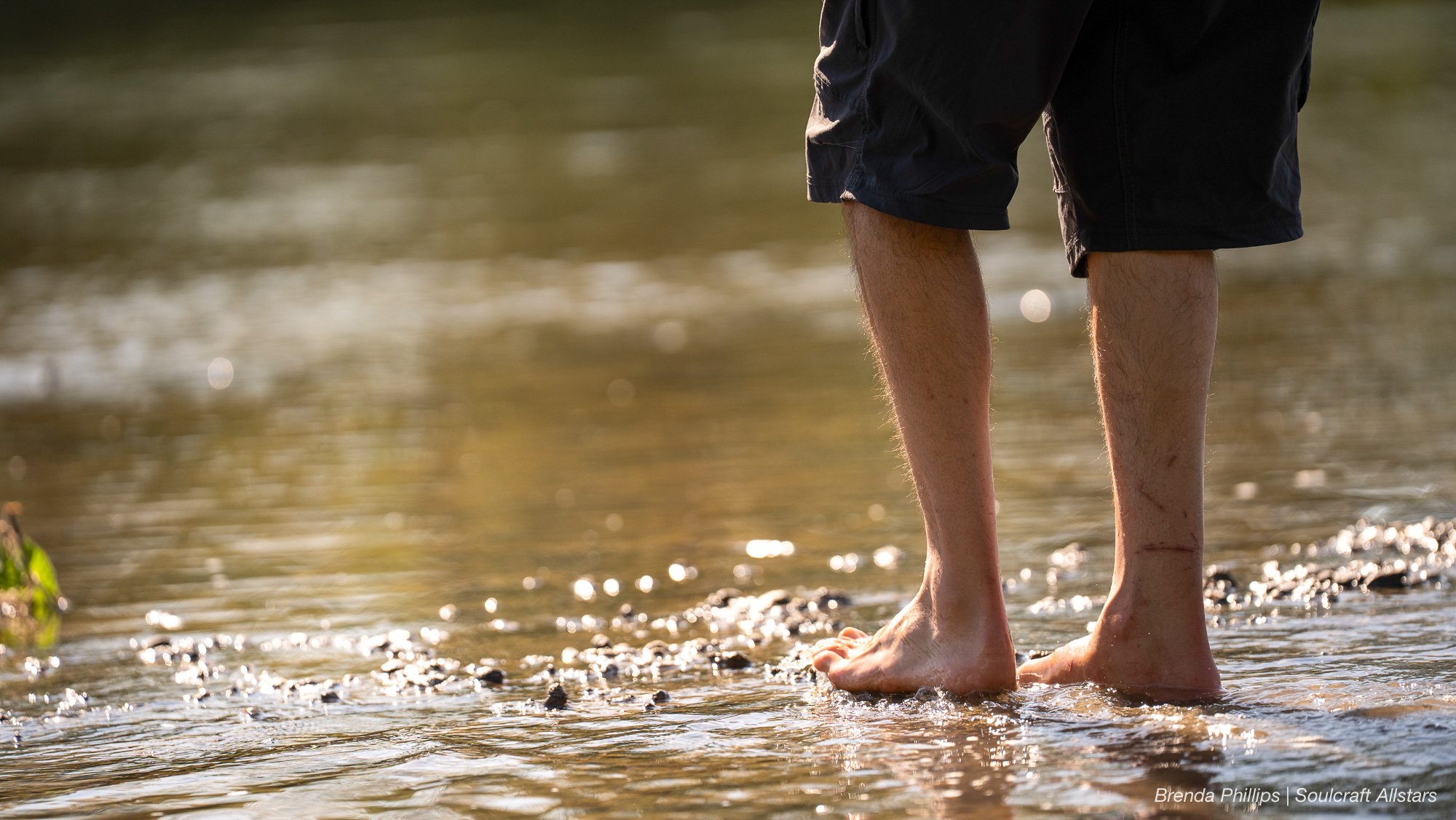
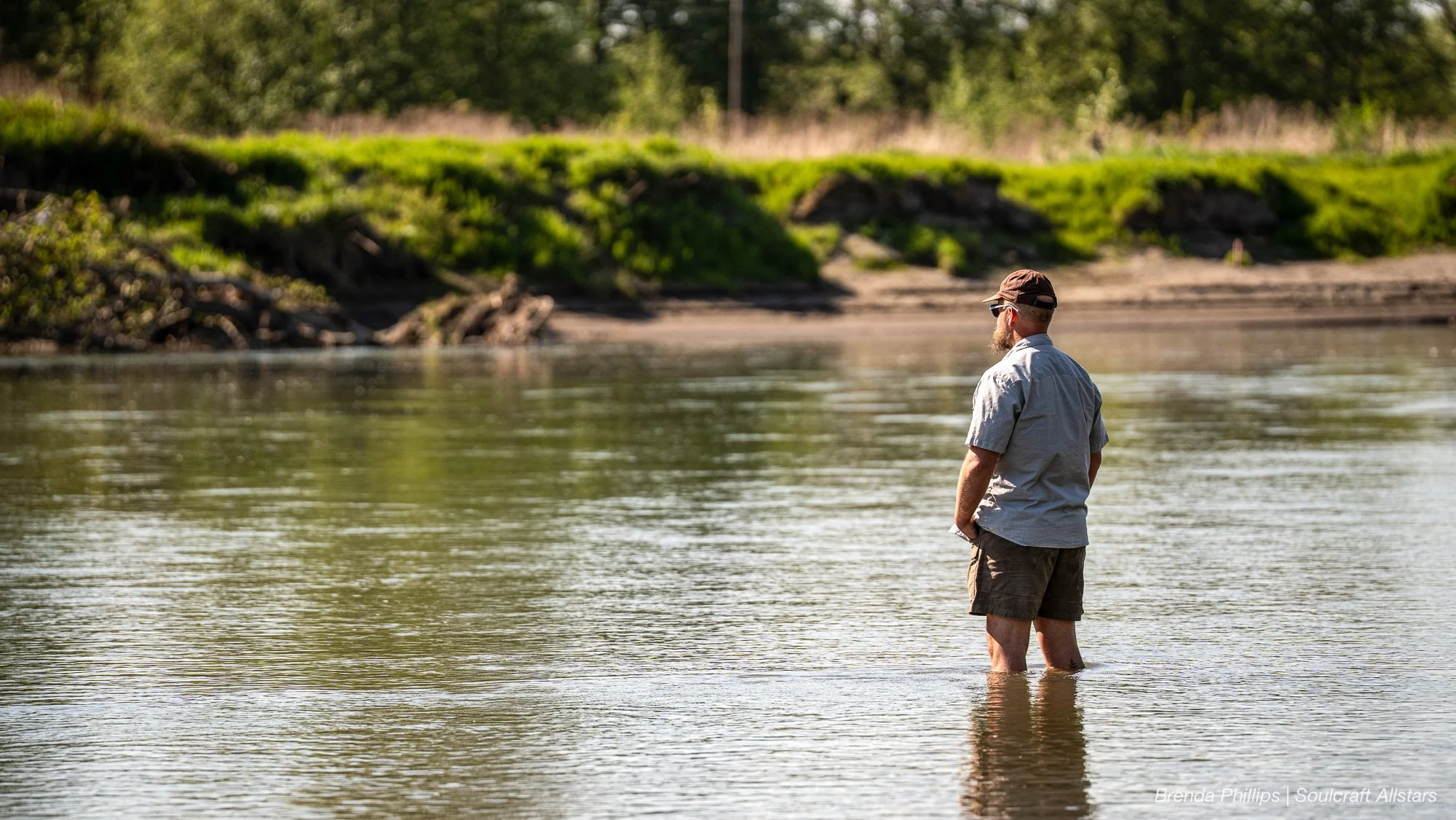
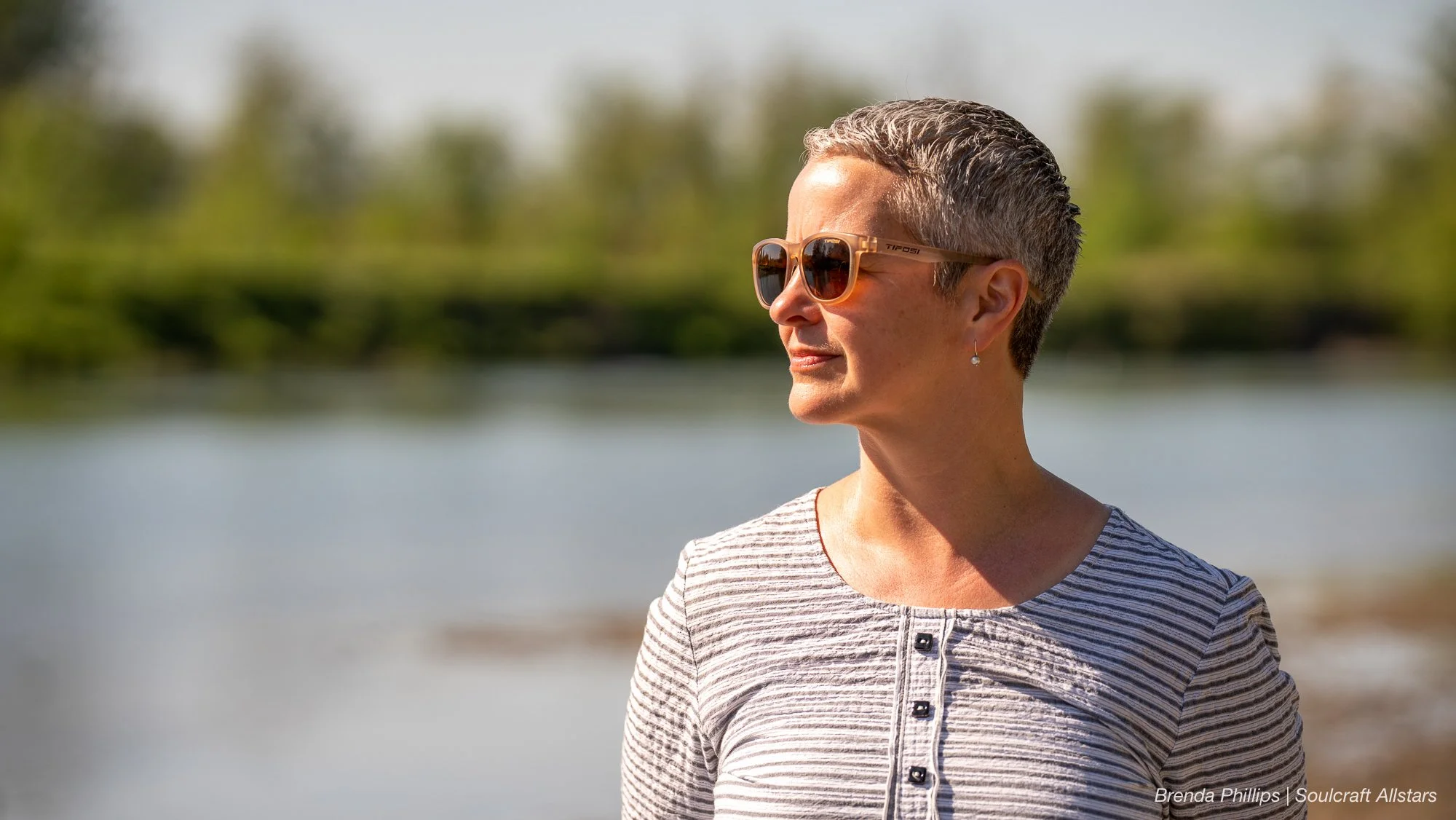
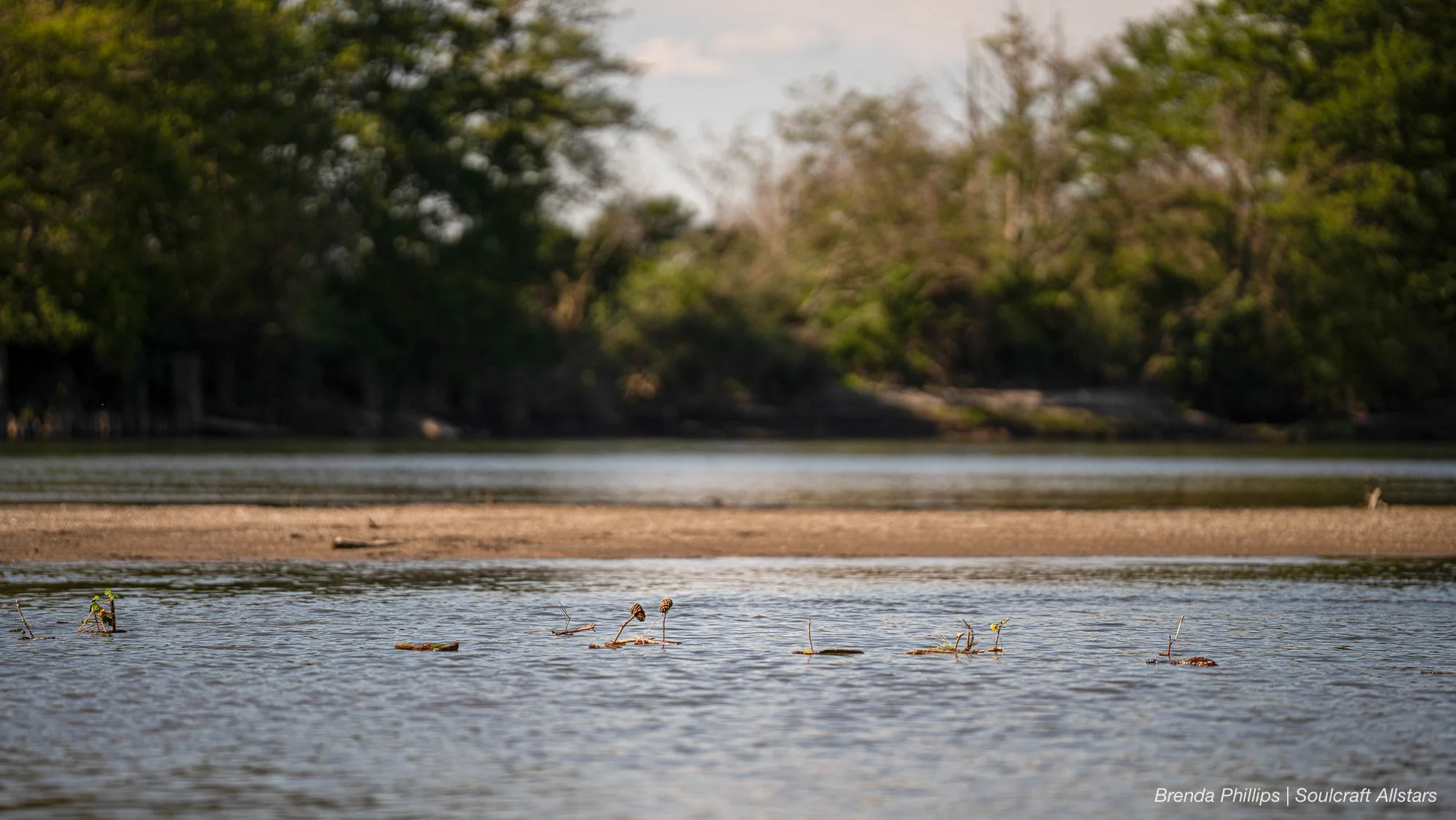
Just upstream from the gravel bar, hidden from view, the children had spent the morning hearing stories from Nooksack storytellers about the generations who had fished and lived here before them, about what it means to belong to a place. Then they built small boats from natural materials, filled them with wishes and prayers, and set them off into the current. As Rena's words were still settling into the air, and as the adults wandered the bar in quiet, small flotillas of those boats came drifting past.
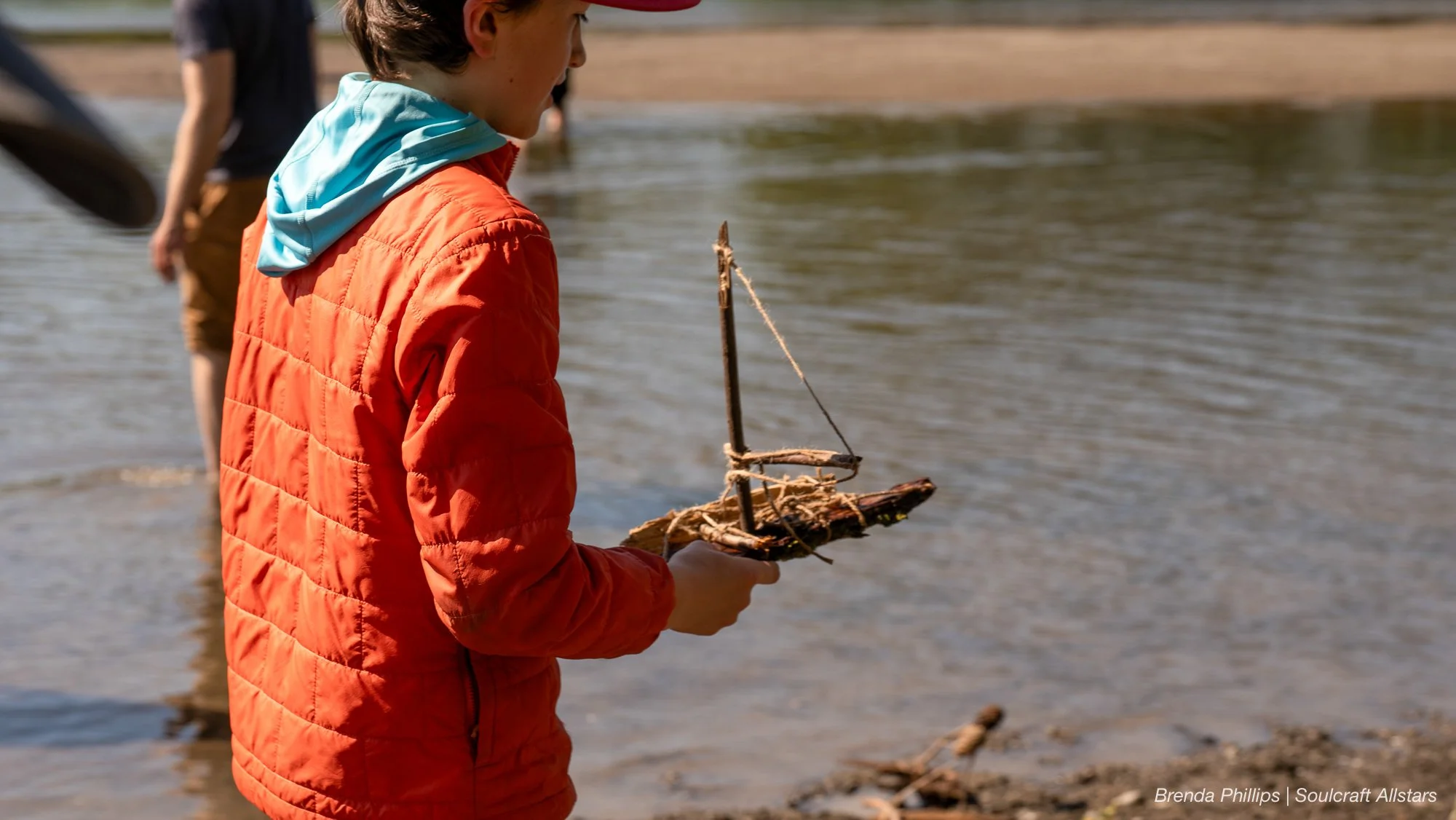
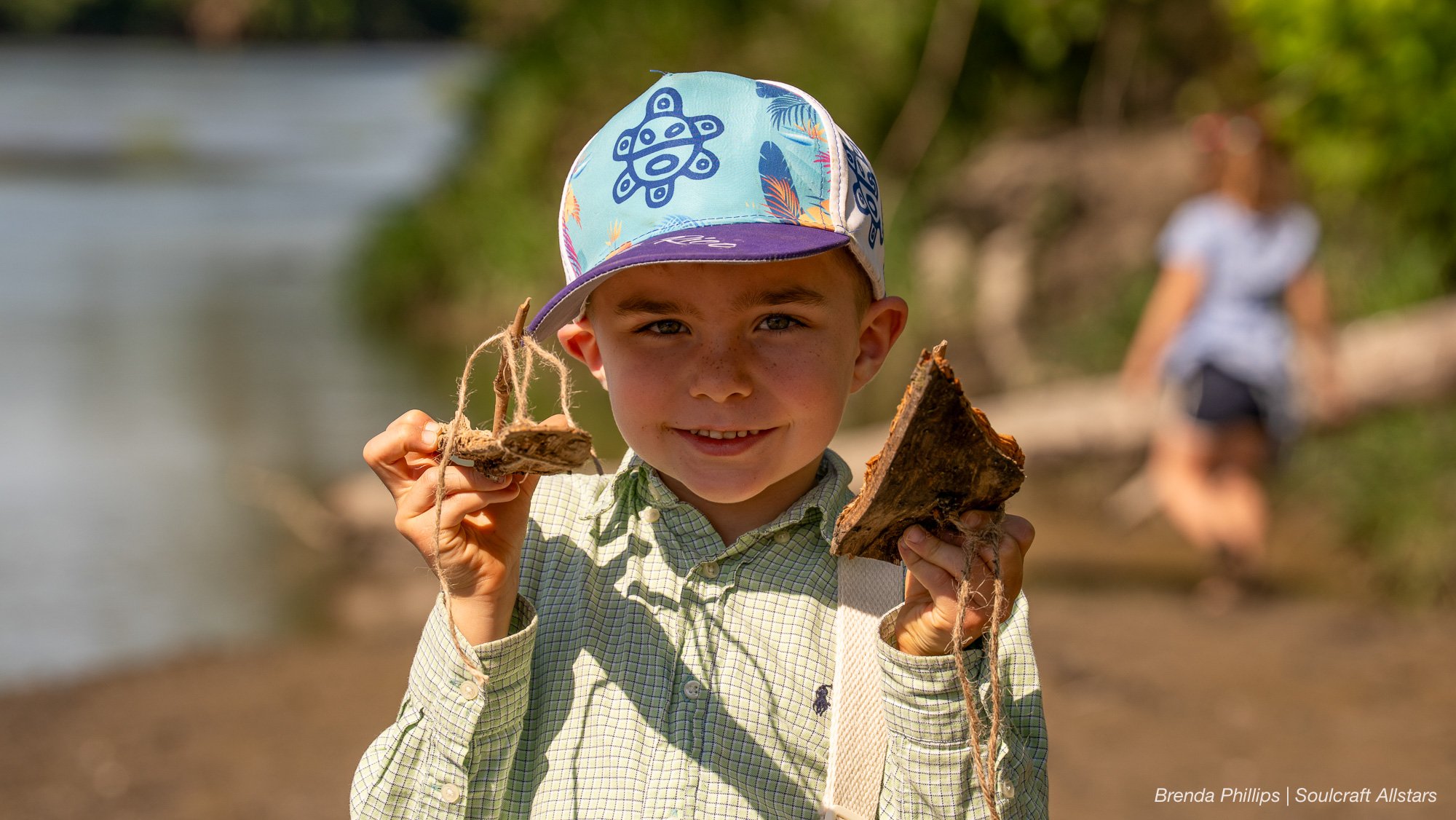
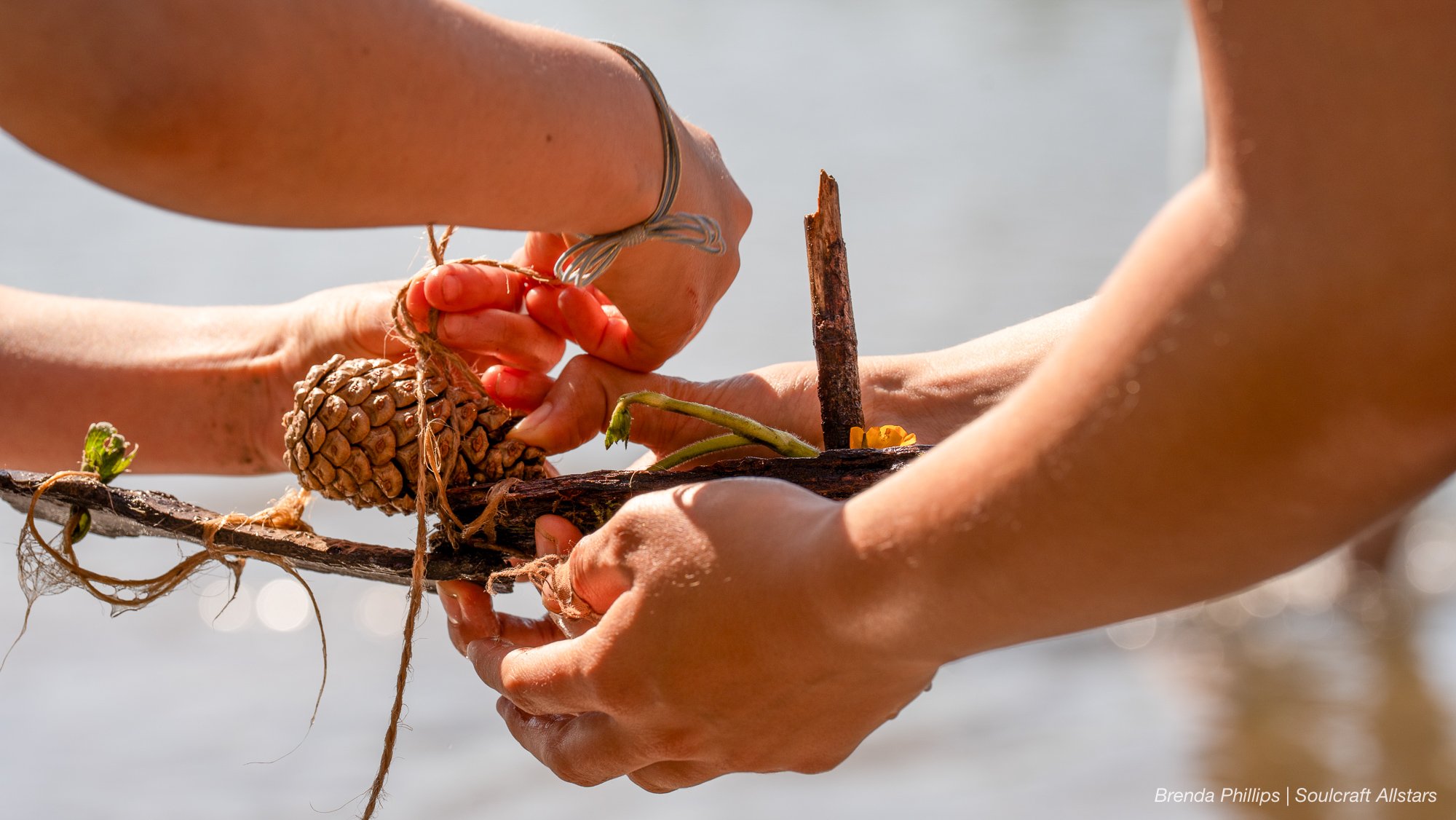
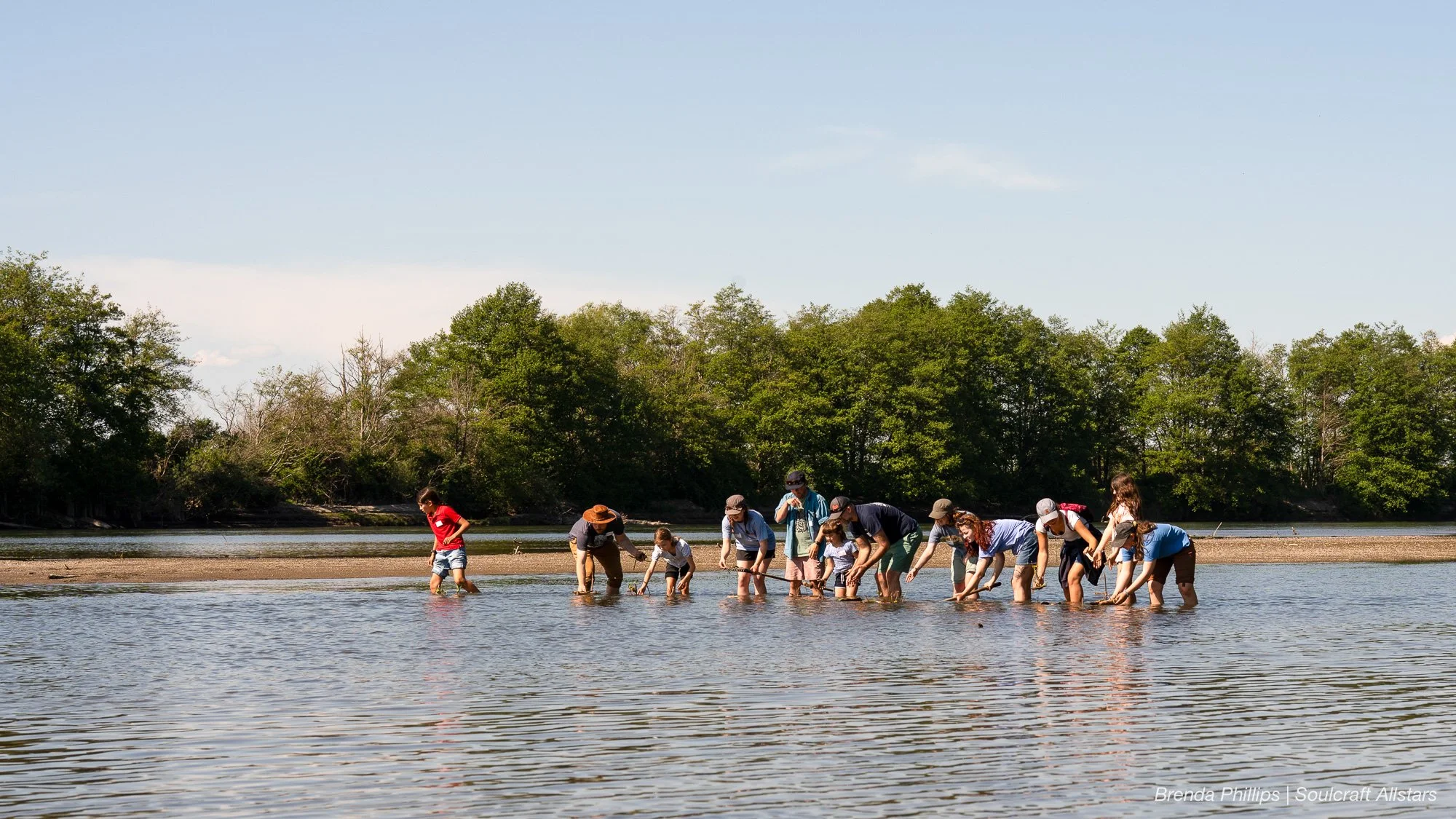
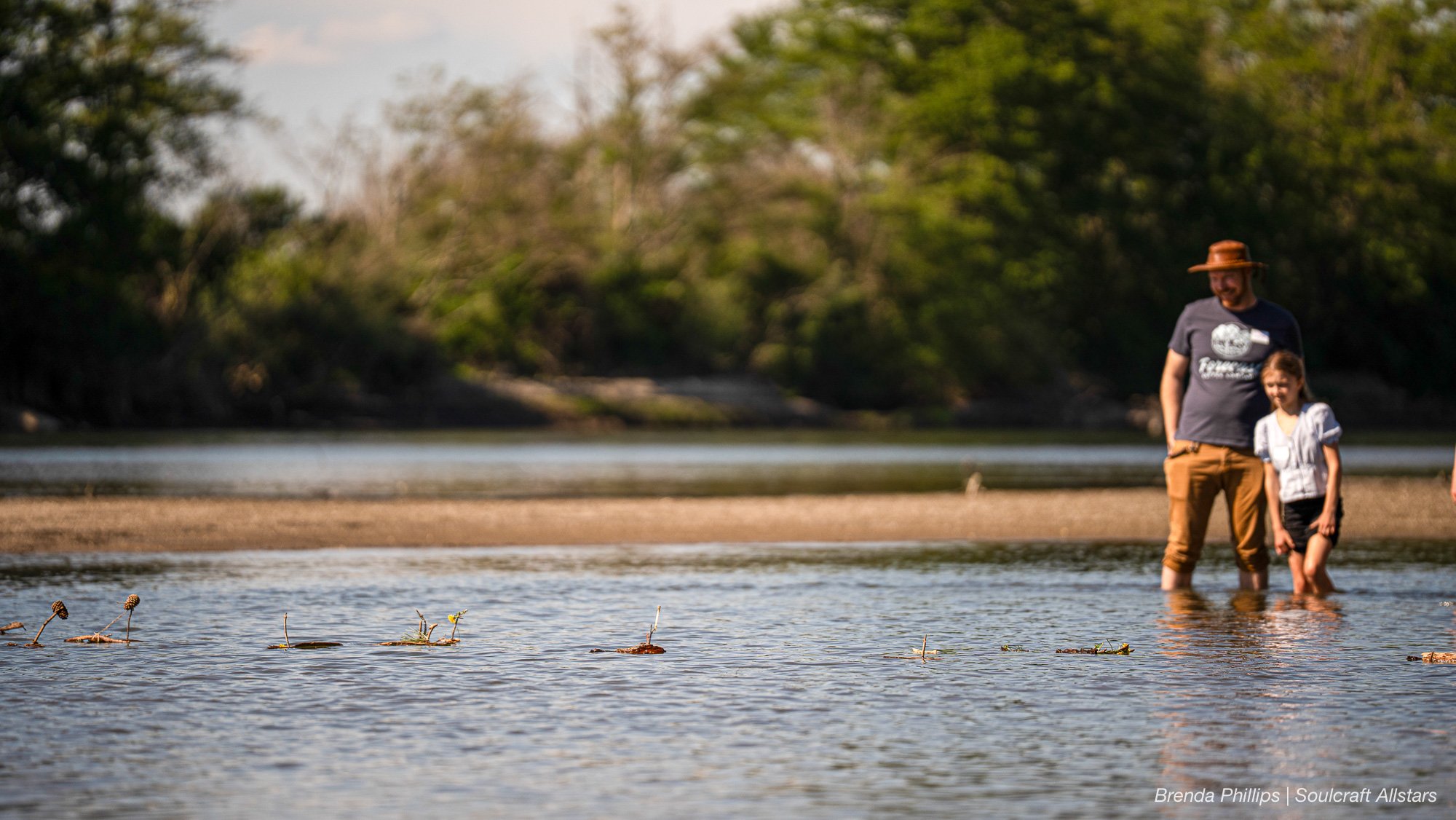
Children’s dream boats
filled with inspiration
from stories of
past and future generations —
prayers floating on currents
Float past wandering adults
quietly wondering
along the rivers edge
if she (the river)
would claim them.
- Excerpt from Song of a River Delta, Jeff Bos
When people returned from their wandering, they gathered and shared what had come up. Then walked back to the vans together, conversations continuing quietly on the trail.
The Feast
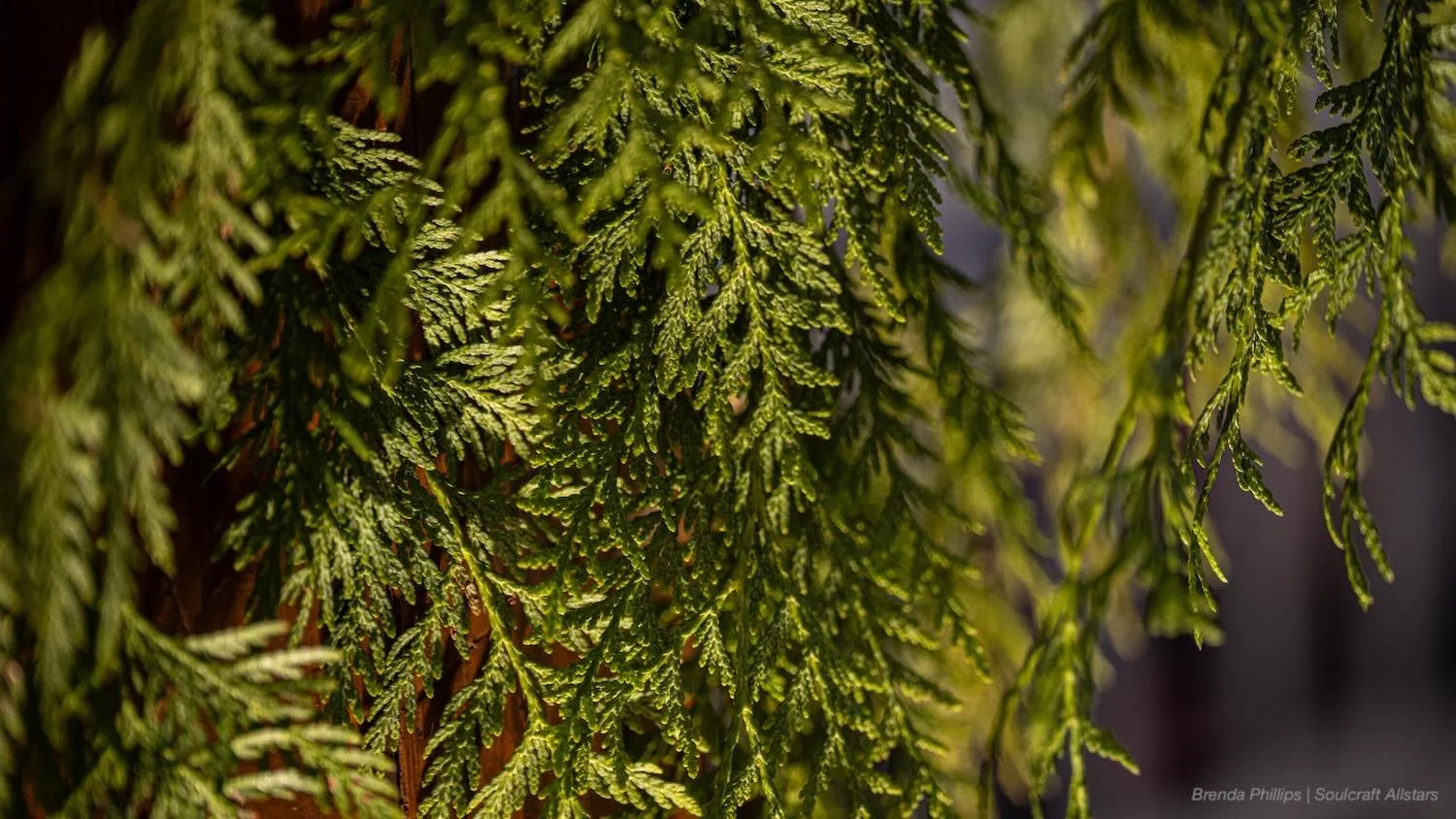
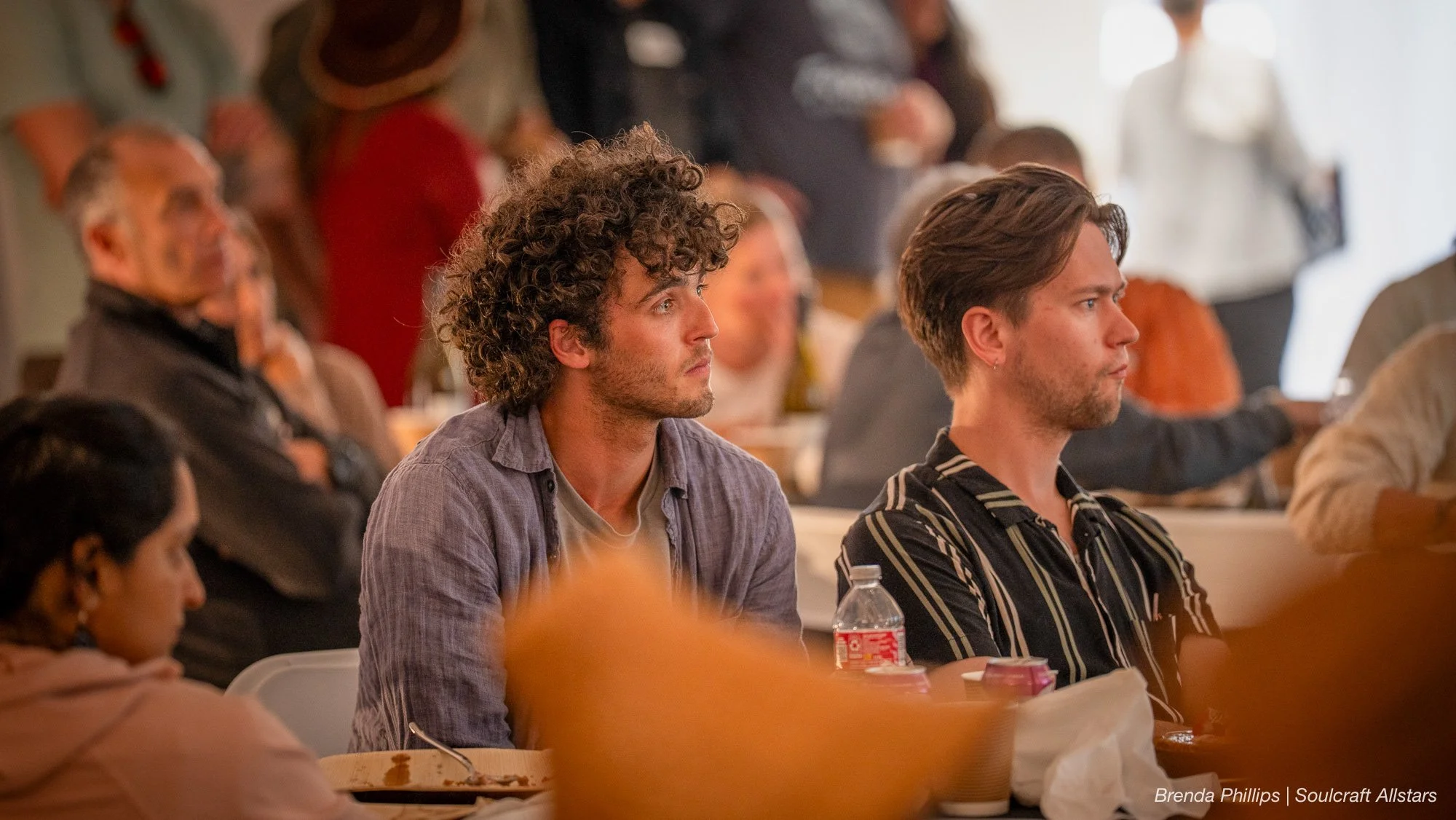
Back at Stommish Hall, long tables were arranged in a sunburst. Cedar boughs Dana had brought the night before filled the space with their scent. A wooden salmon sculpture and a story pole greeted guests at the entrance. Driftwood and river rocks on every table. A projector looped footage of the entire Nooksack drainage, source to sea, so the river had a presence in the room.
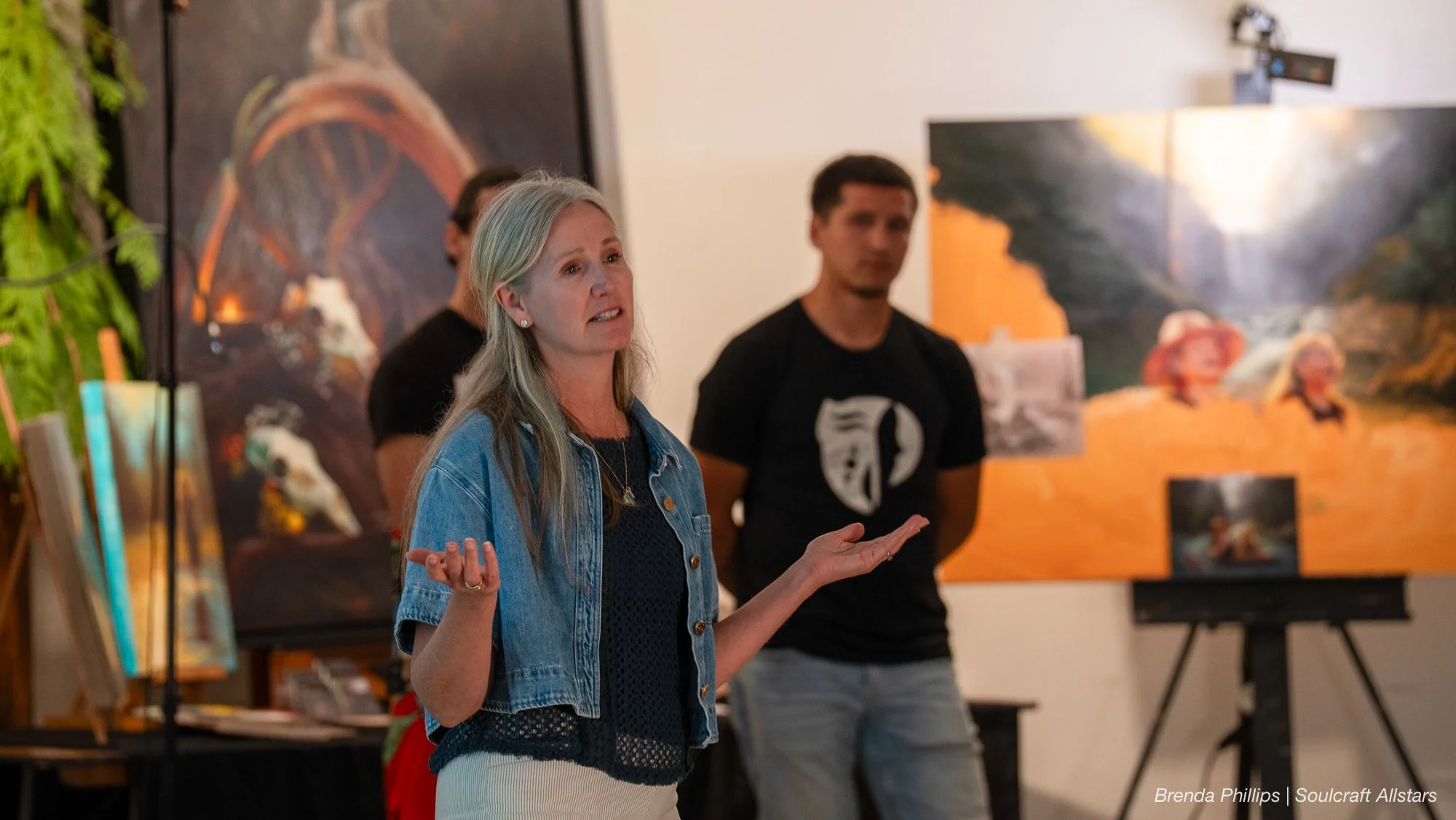
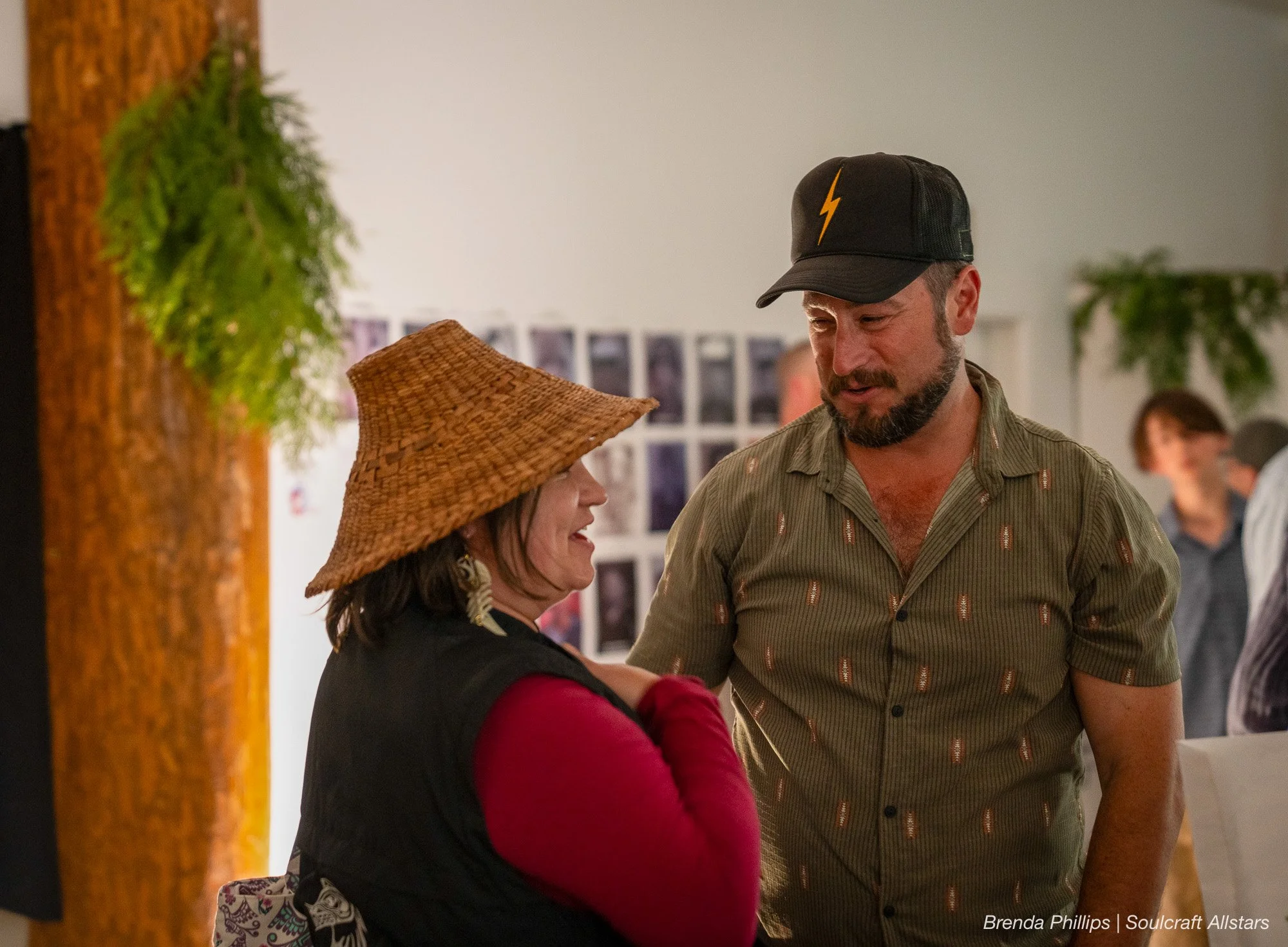
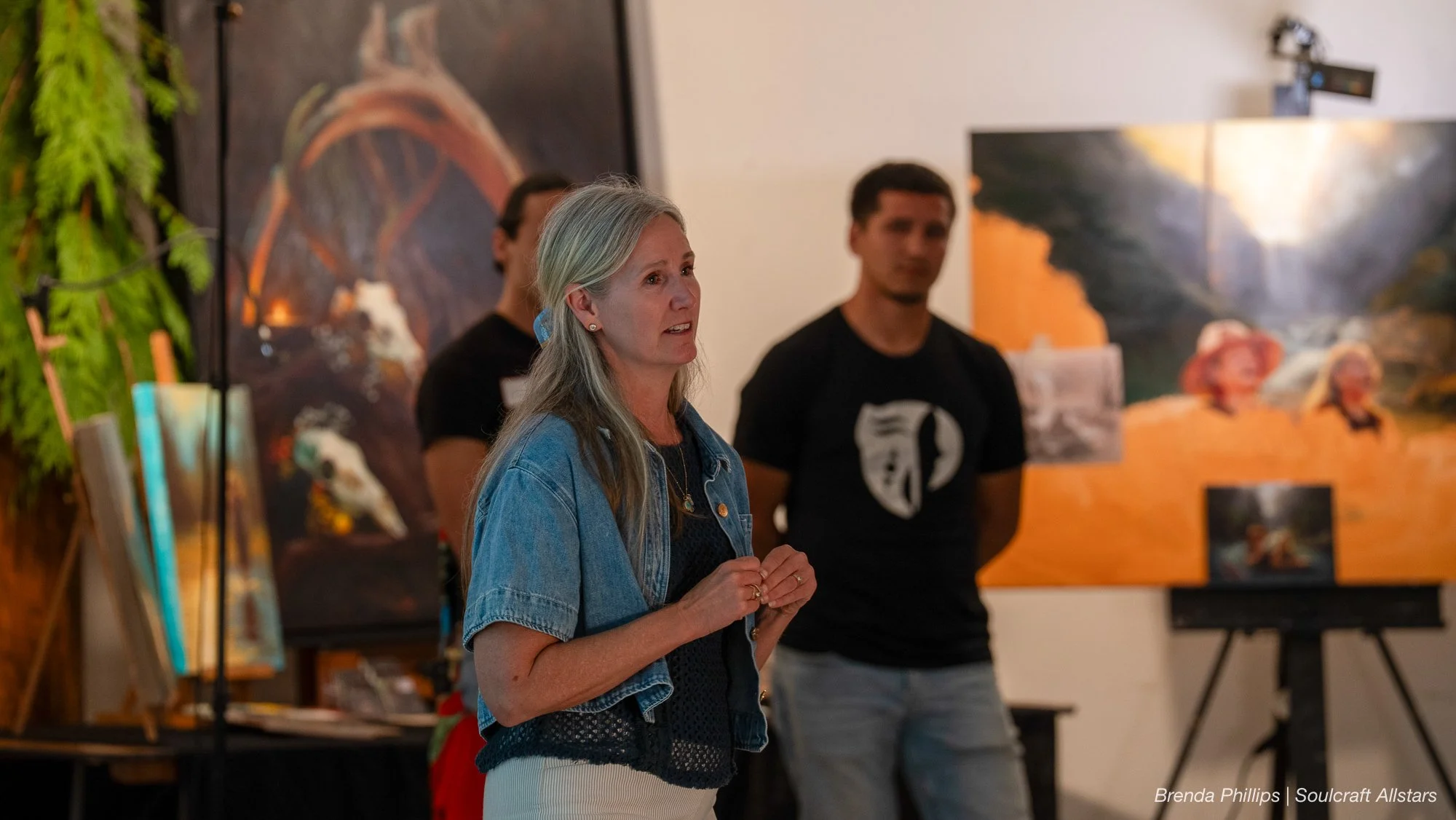
In one corner, local artist and Water Wars team member Christopher Remmers had arranged portraits of Free Borsey and Angela Latoi, and a new work in progress of Angela and her mother Tammy Cooper-Woodrich seated under Nooksack Falls, singing. People drifted toward his work before they sat down. Some stood there a long time.
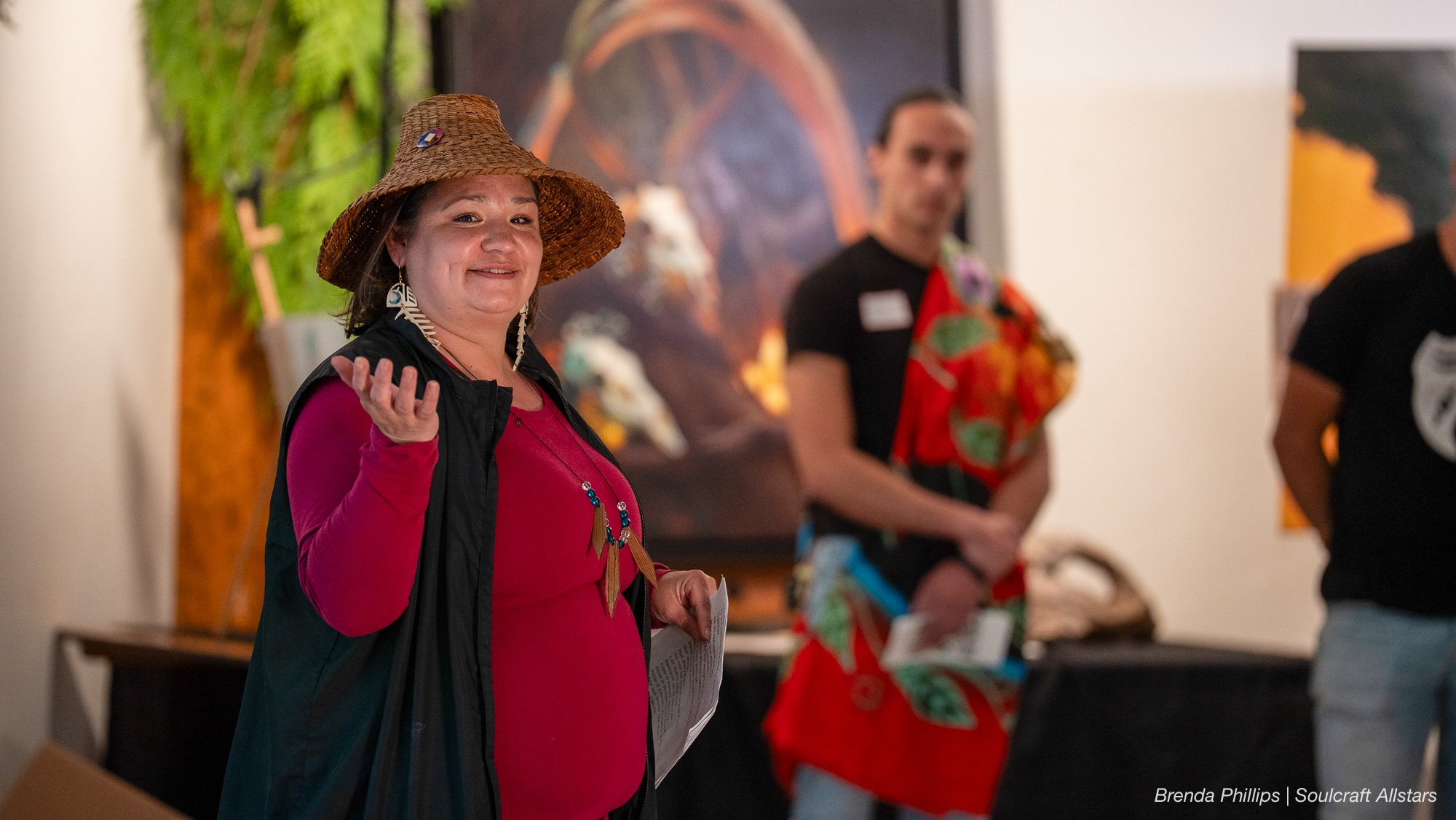
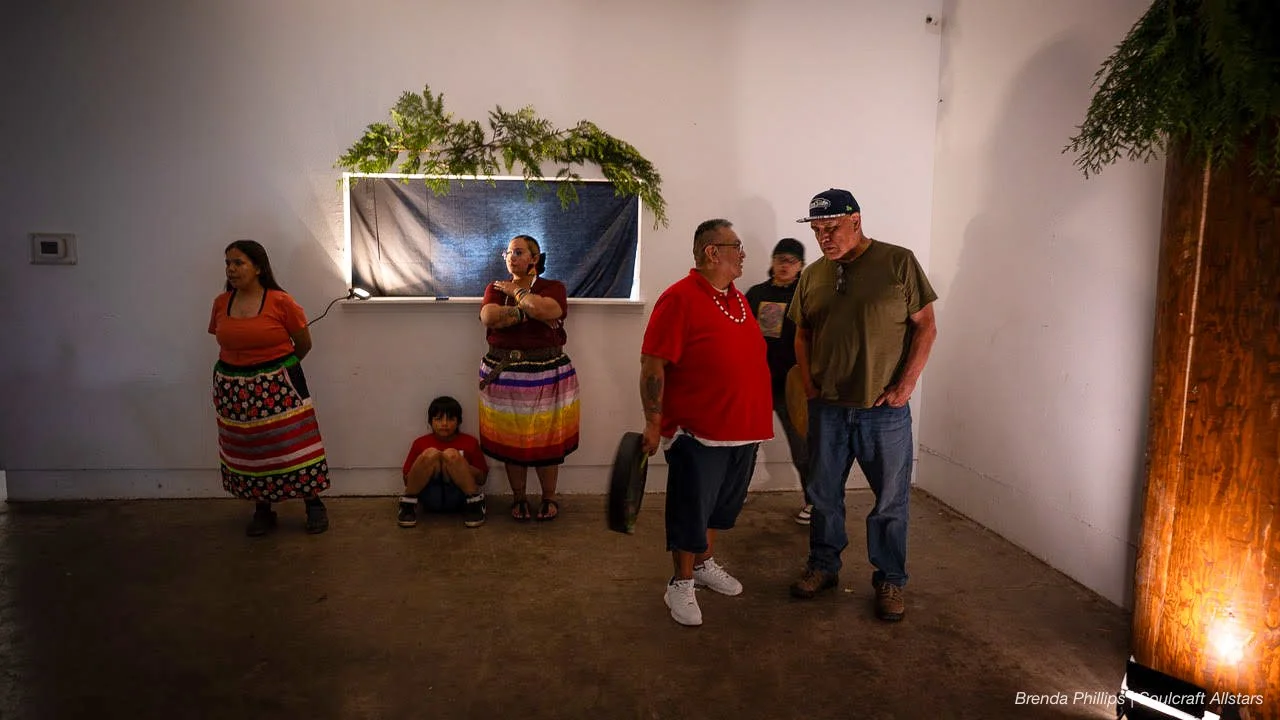
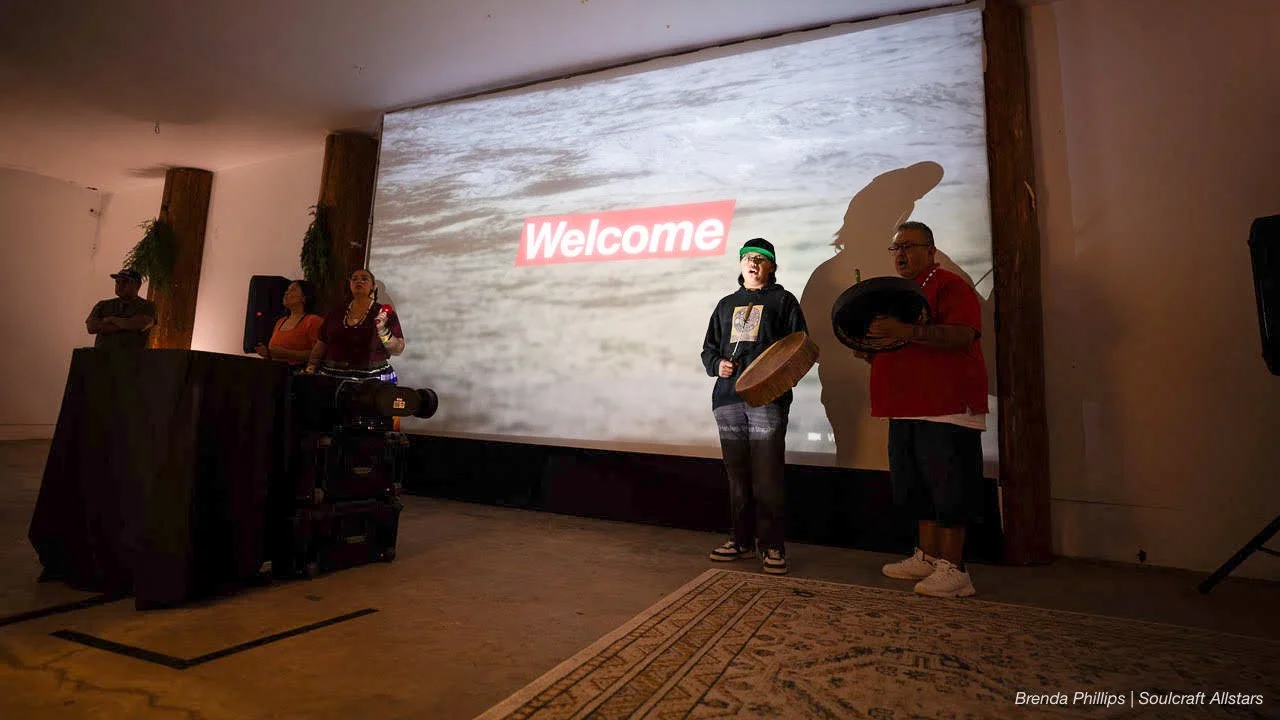
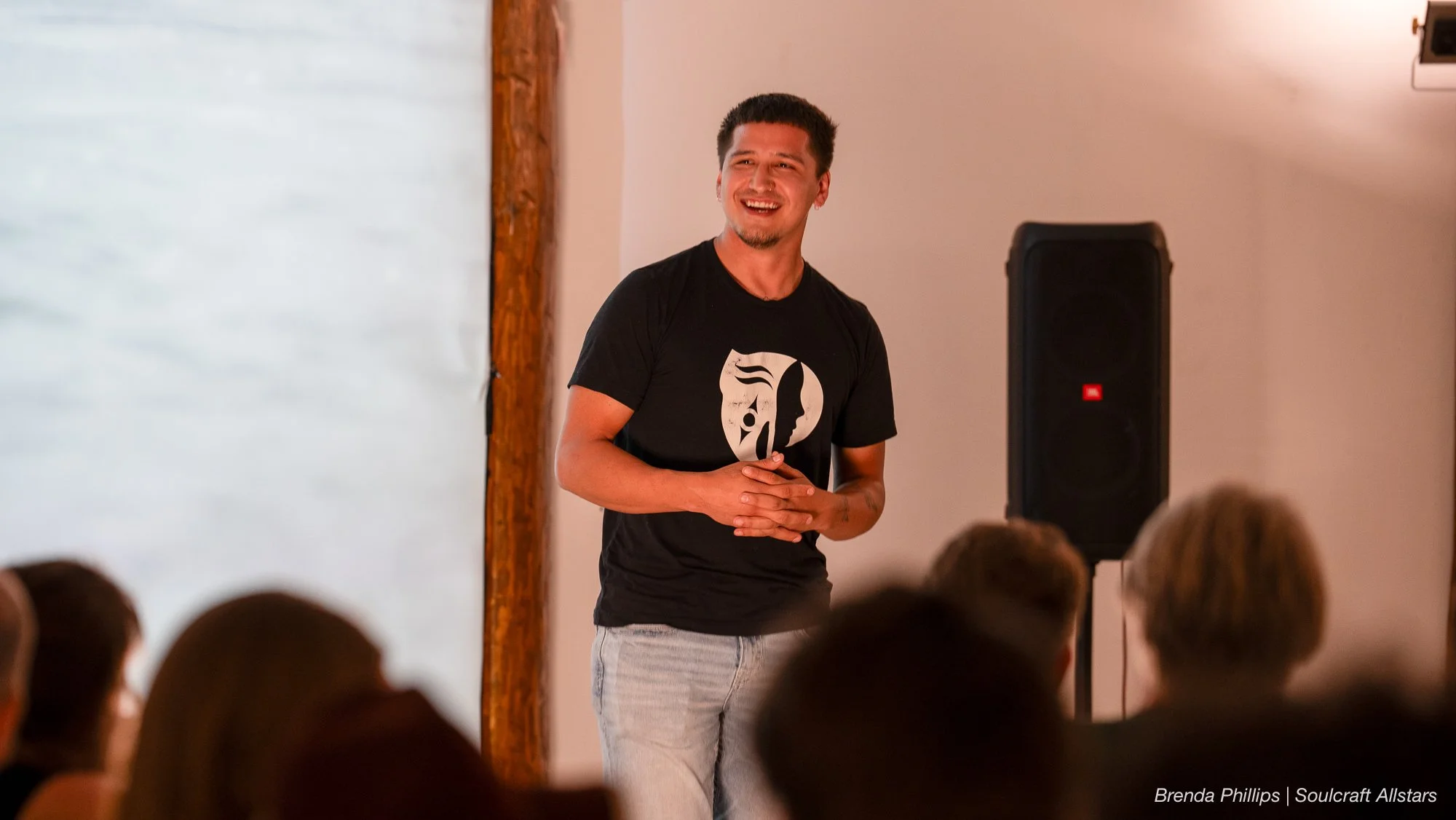
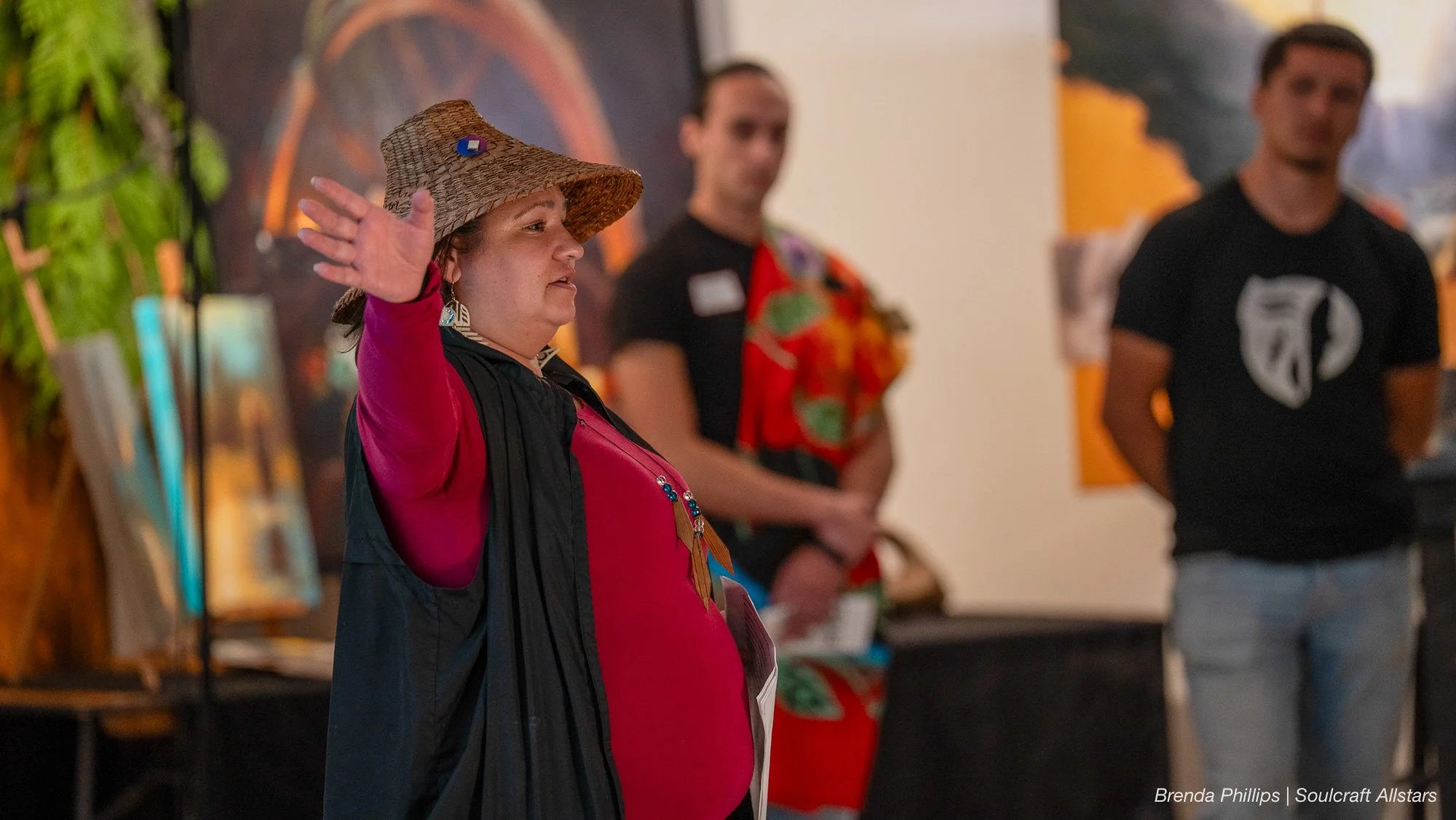
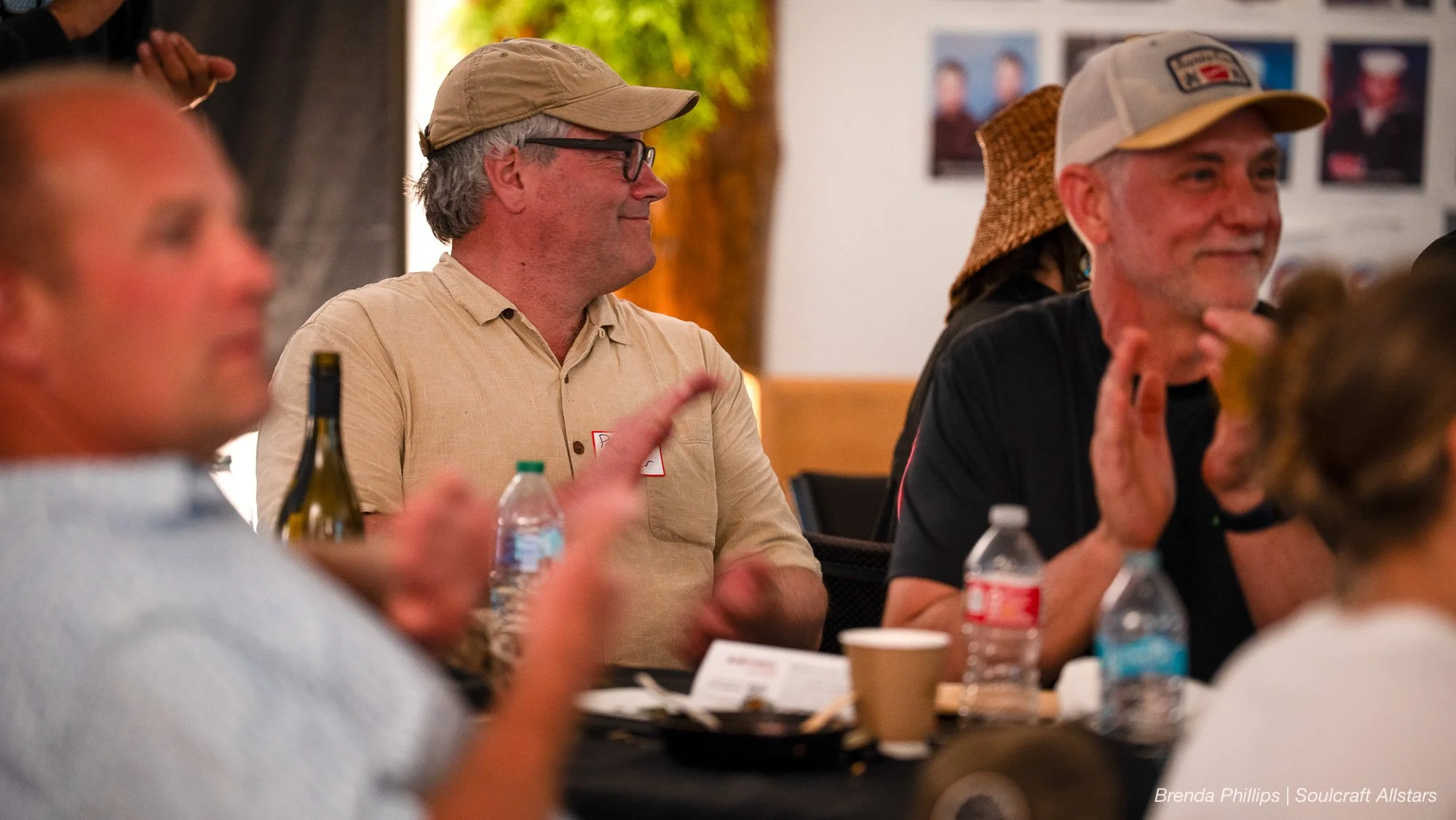
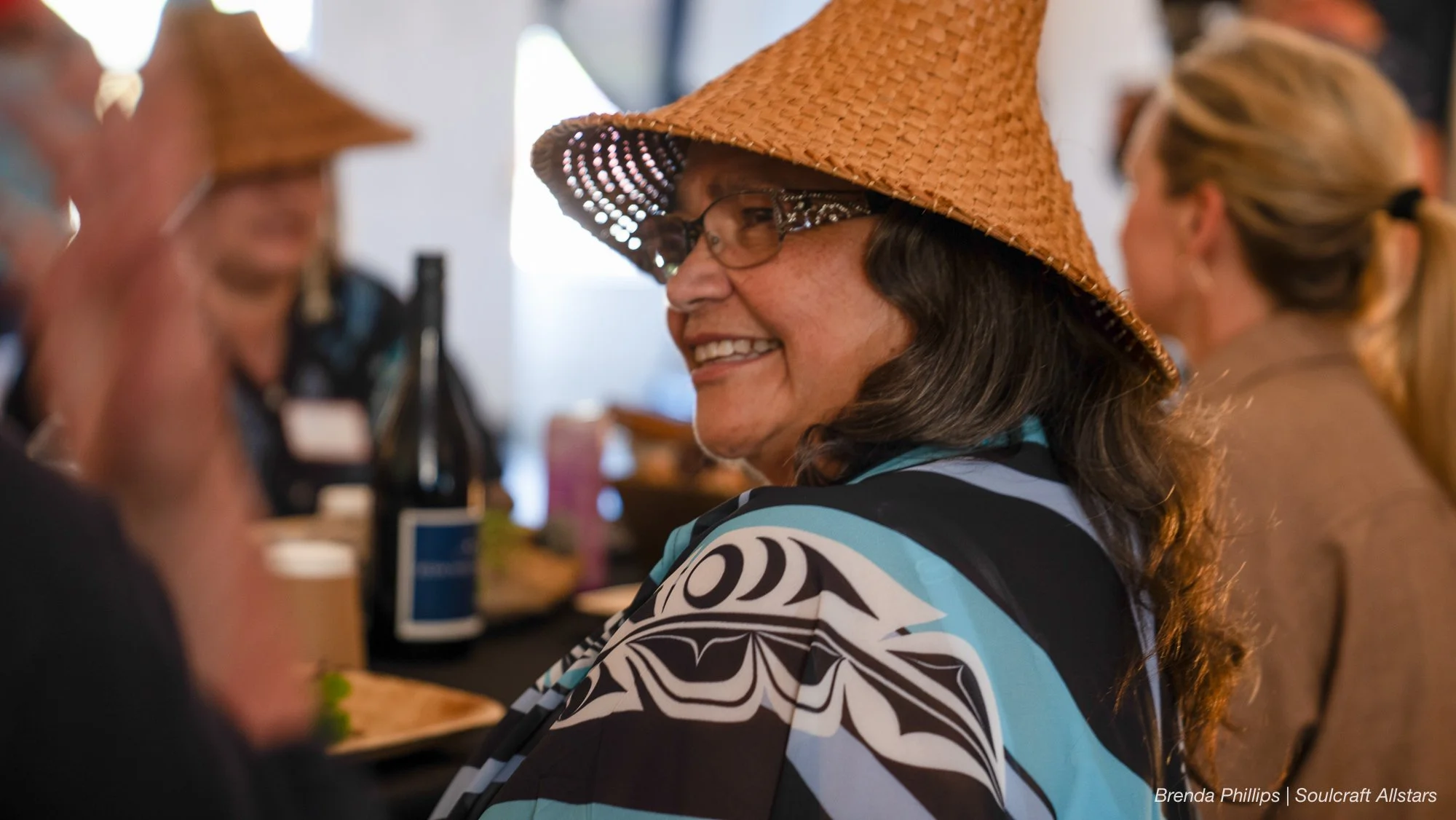
Free and Tallan Paul, speaking in his role as Xwlemi Chosen, a Lummi Nation leadership position, opened the space and welcomed everyone into an evening guided by Lummi protocol. Lummi elder Darrell Hilaire welcomed the group, his presence linking the formal ceremony to the locally caught Chinook salmon his brother Terry had spent the day preparing. A dance and drum troop performed a welcome as drinks were served and people found their seats.
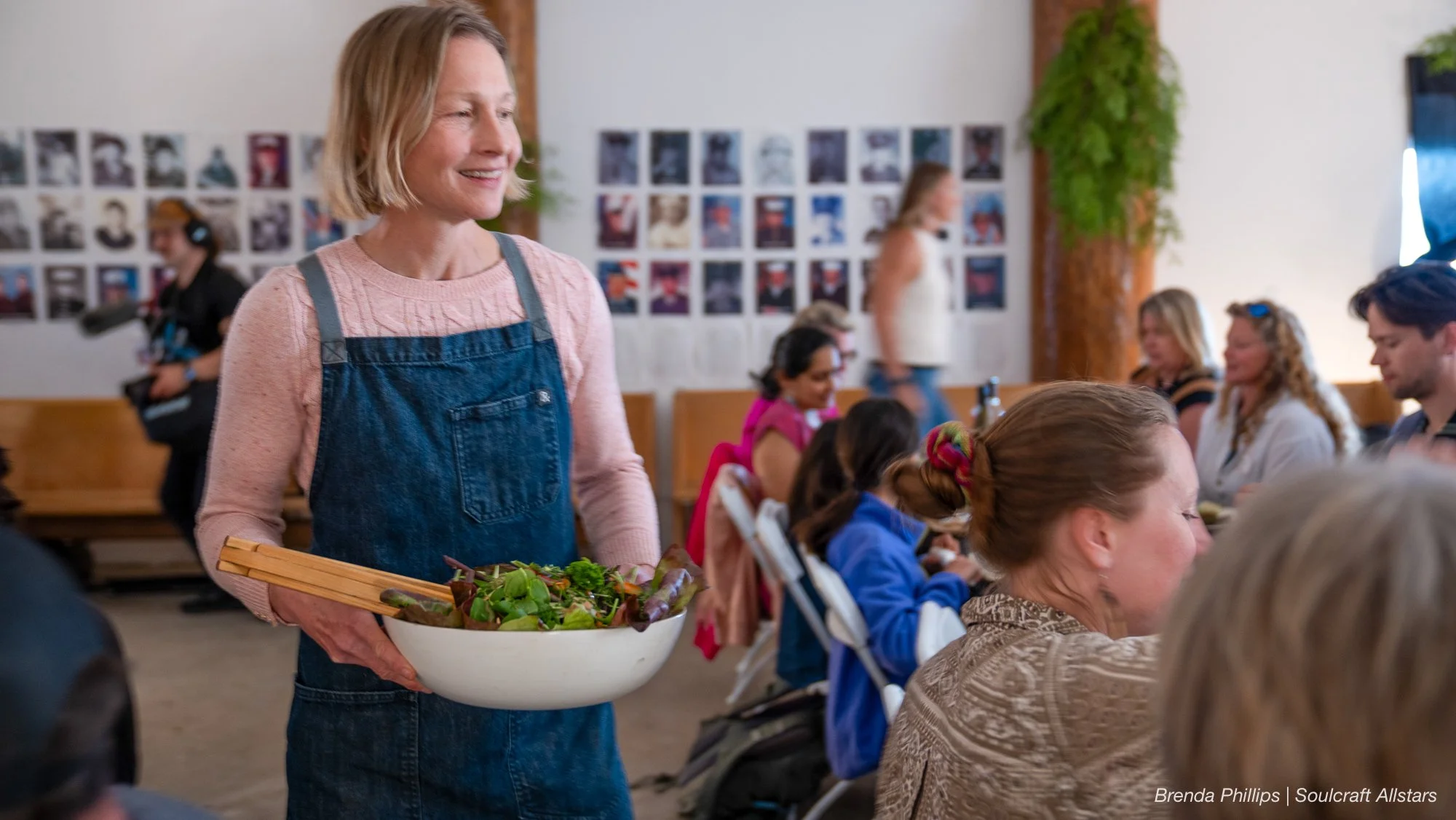
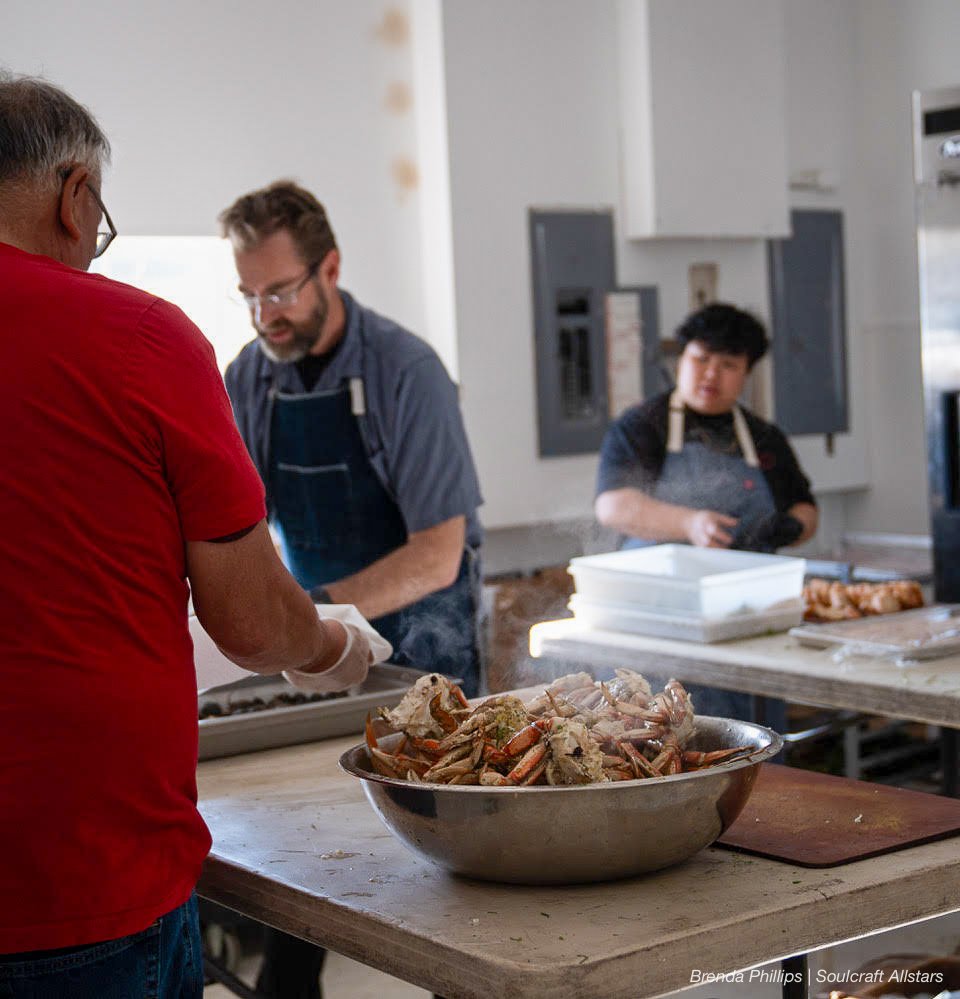
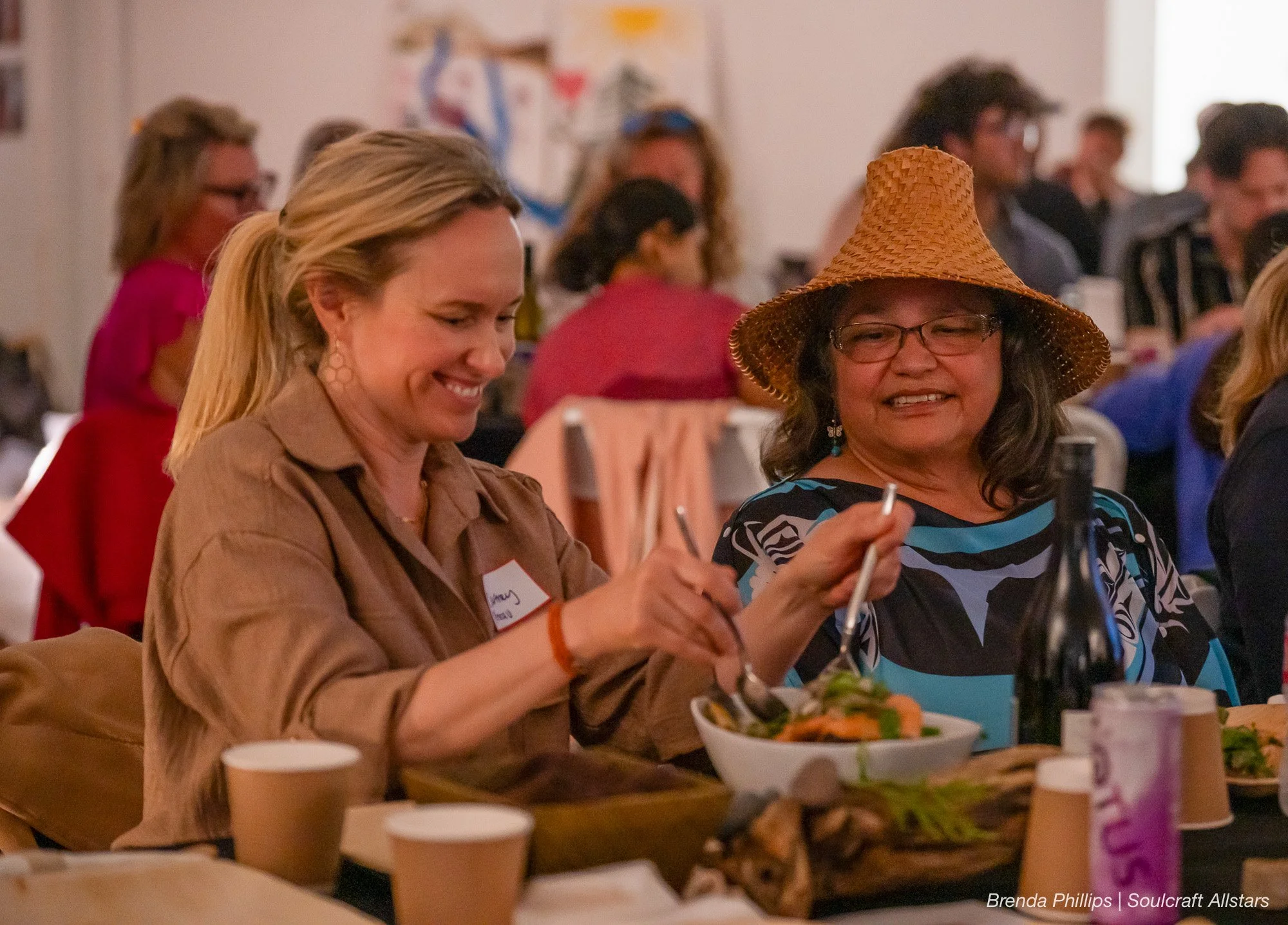
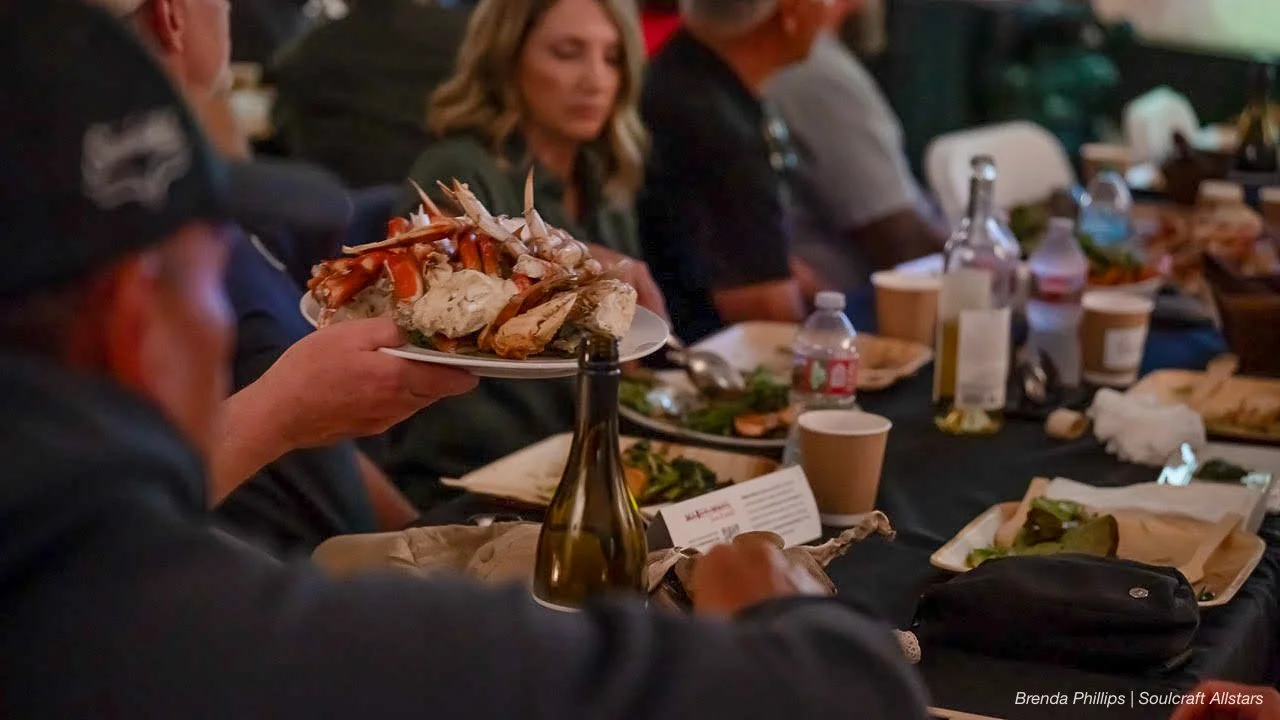
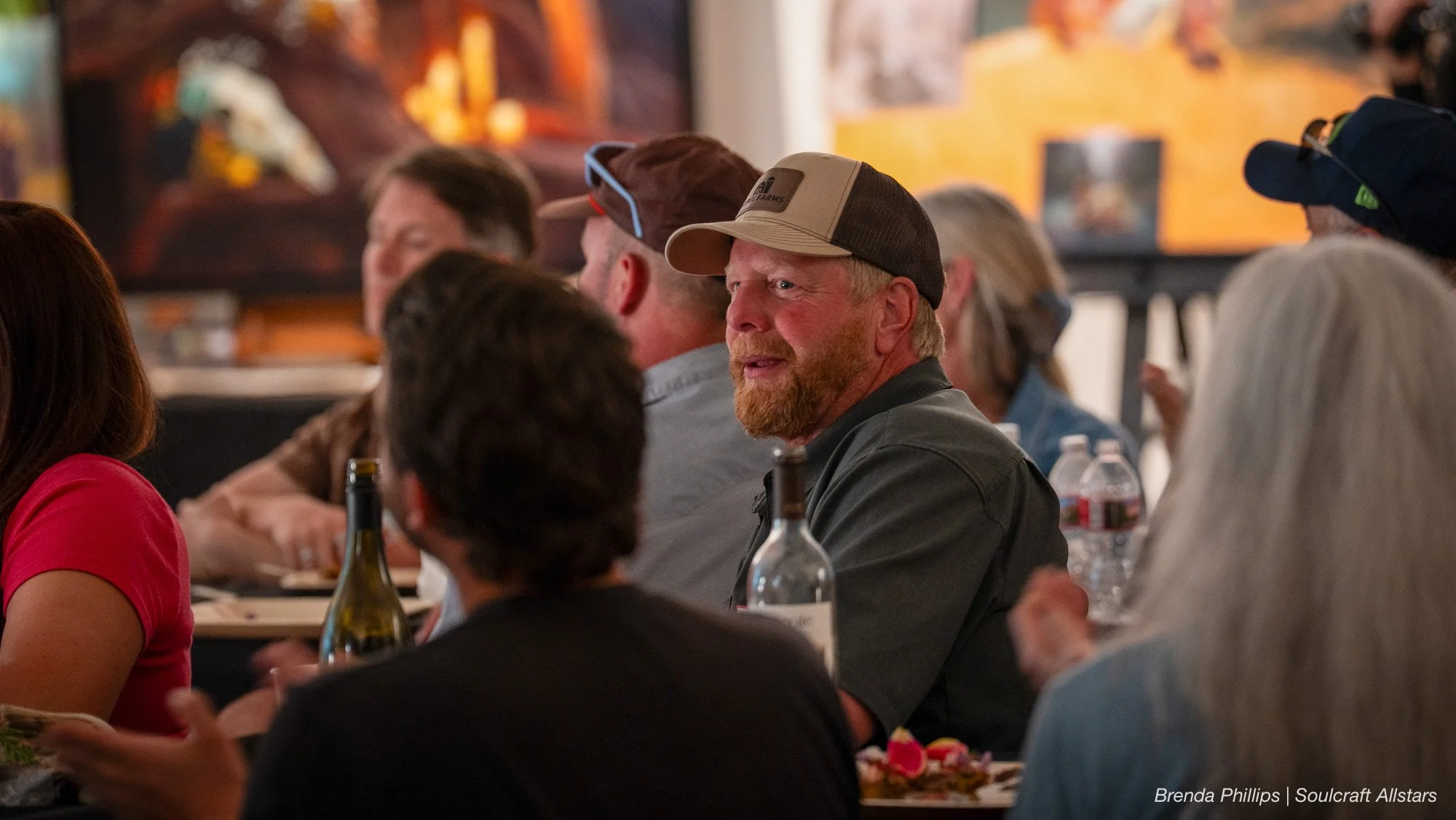
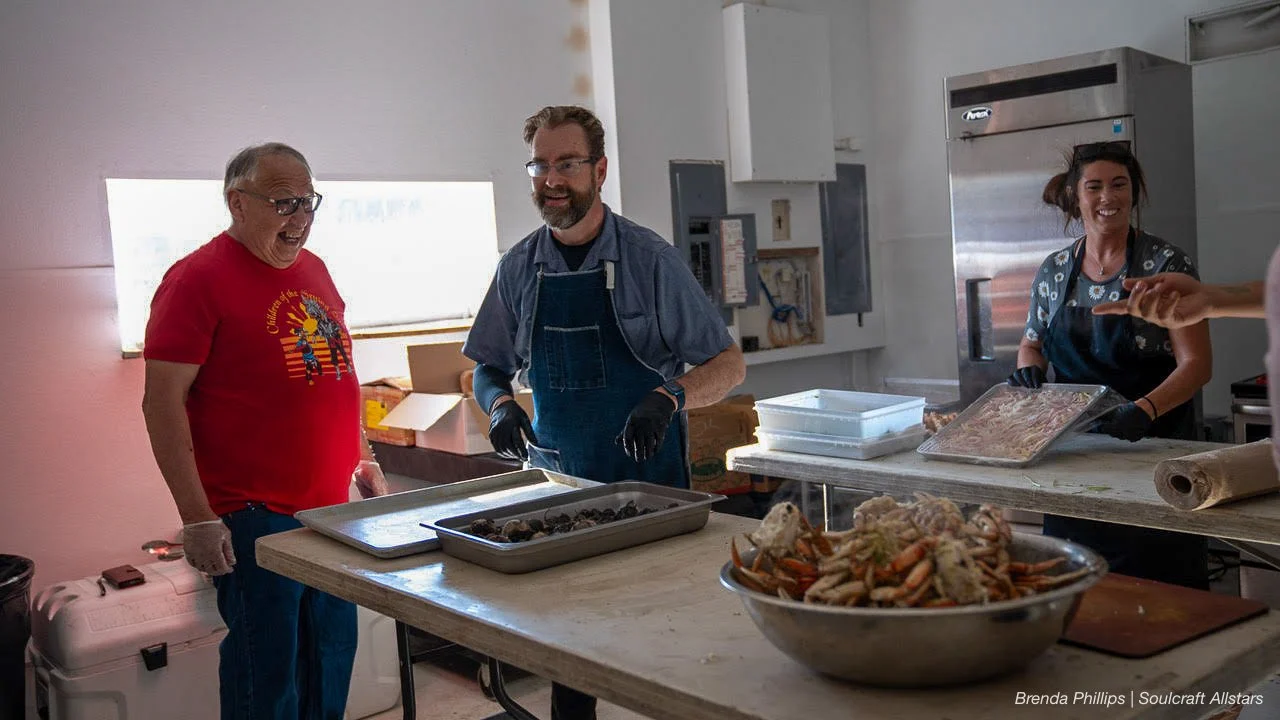
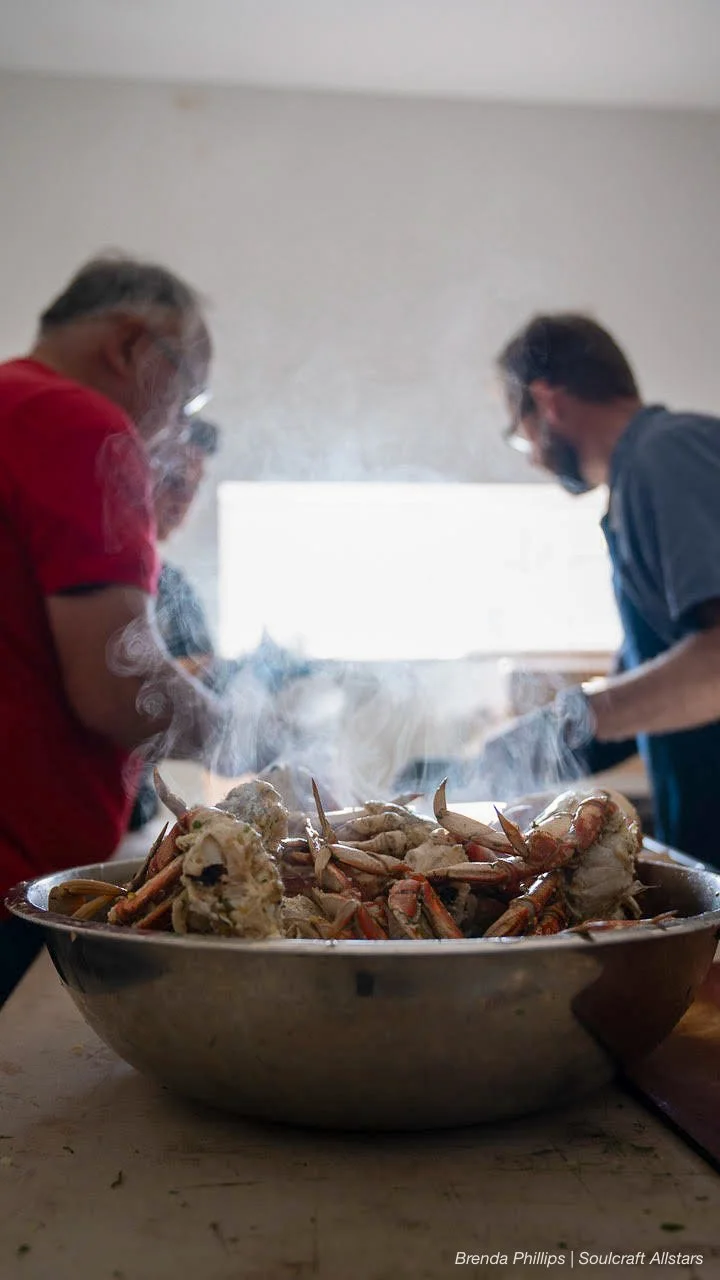
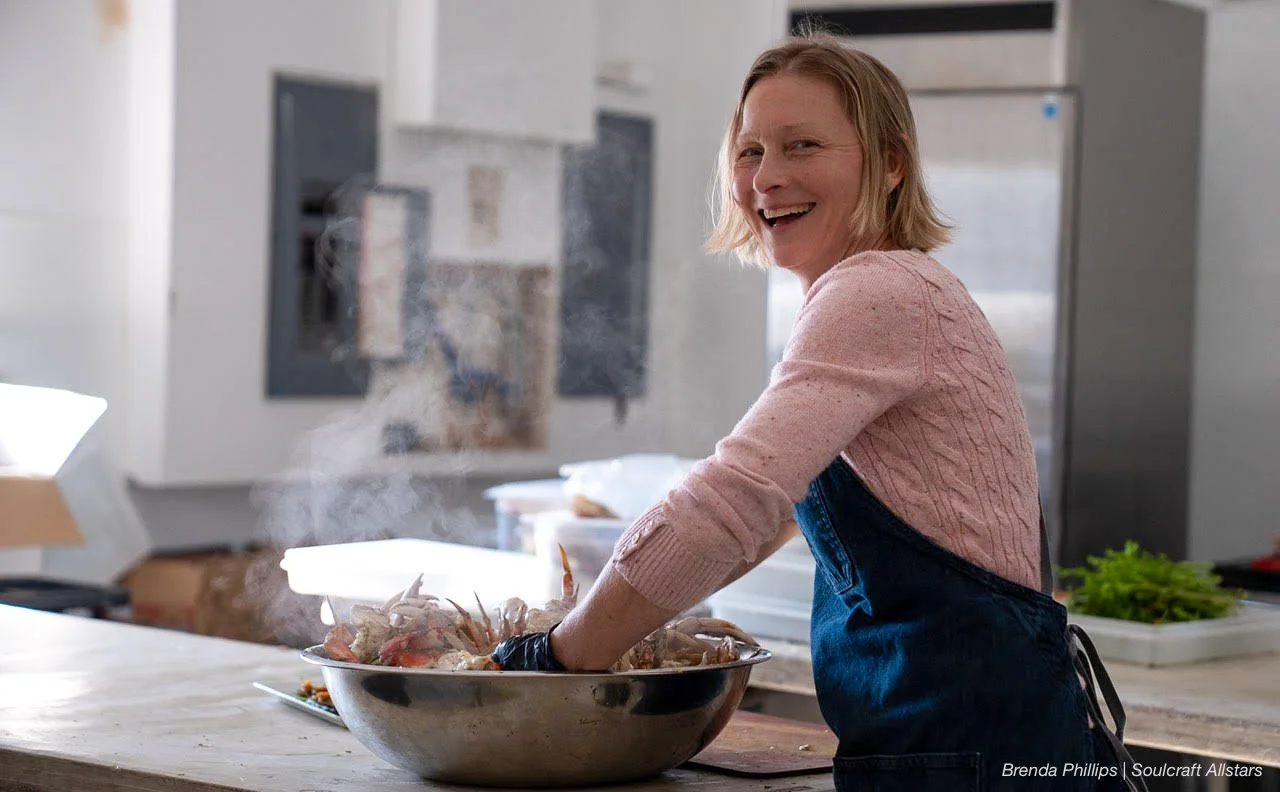
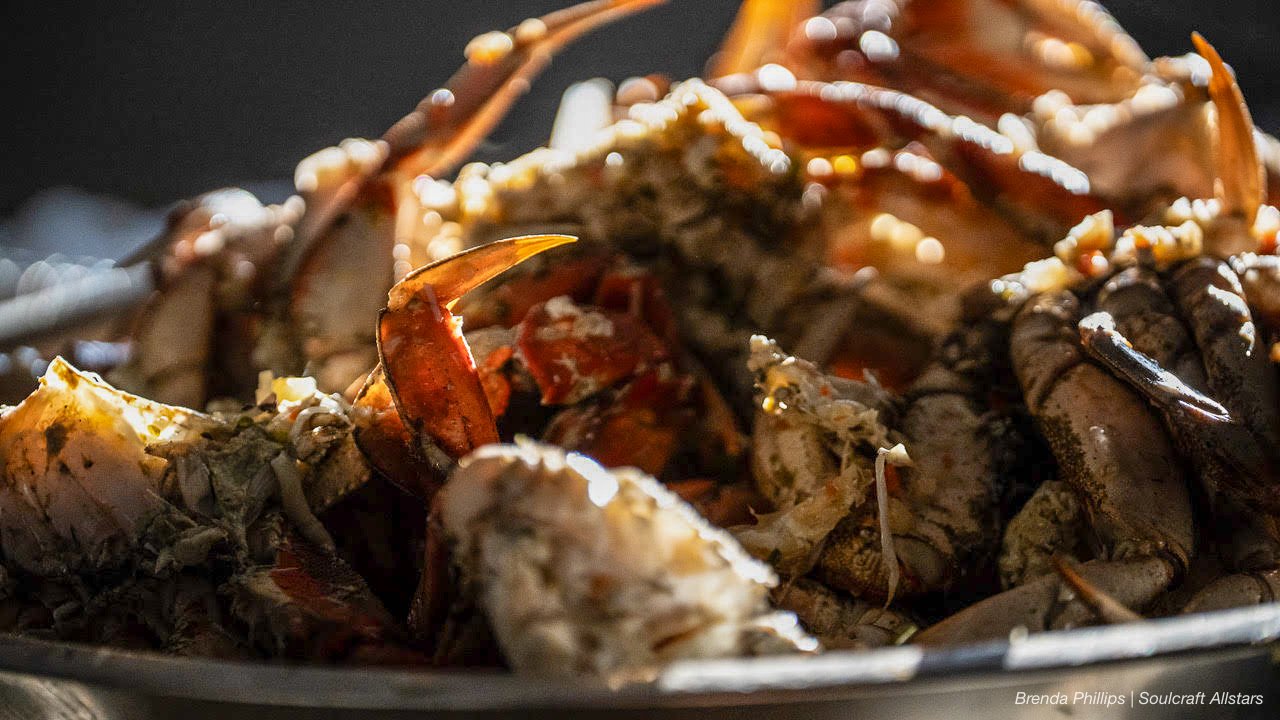
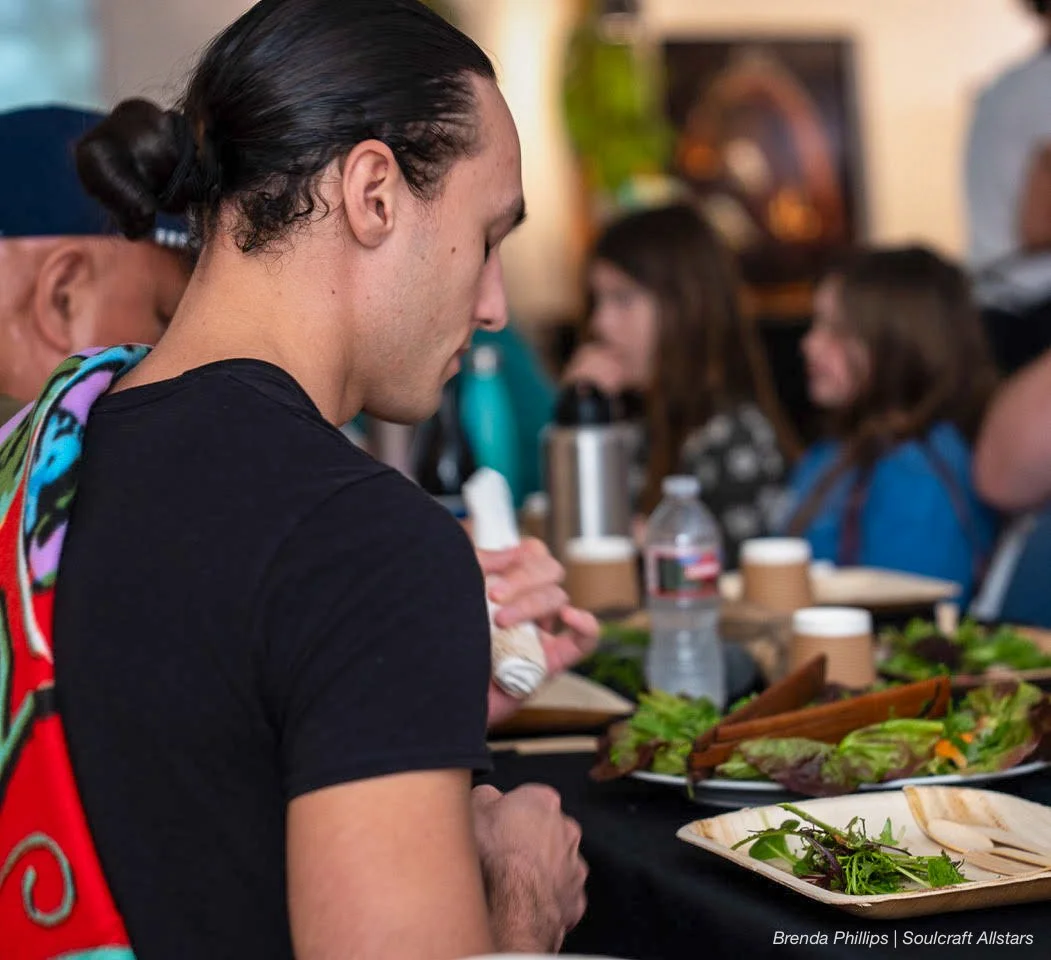
Chef Mattaio Gillis described how the meal had come together: Terry’s salmon cooked on a fire so hot it had taken on smoke all the way through, buttery and particular to this place. Root vegetables roasted in that same fire. A salad from locally sourced ingredients. Manila clams and other shellfish from the morning's harvest on the delta, the one everyone had watched from the sea ponds overlook hours before. Crab from Jay Julius's morning trip to San Juan Island. A dessert featuring berries and skyr from farmers seated at the tables.
A meal from these specific waters. Prepared by these specific hands.
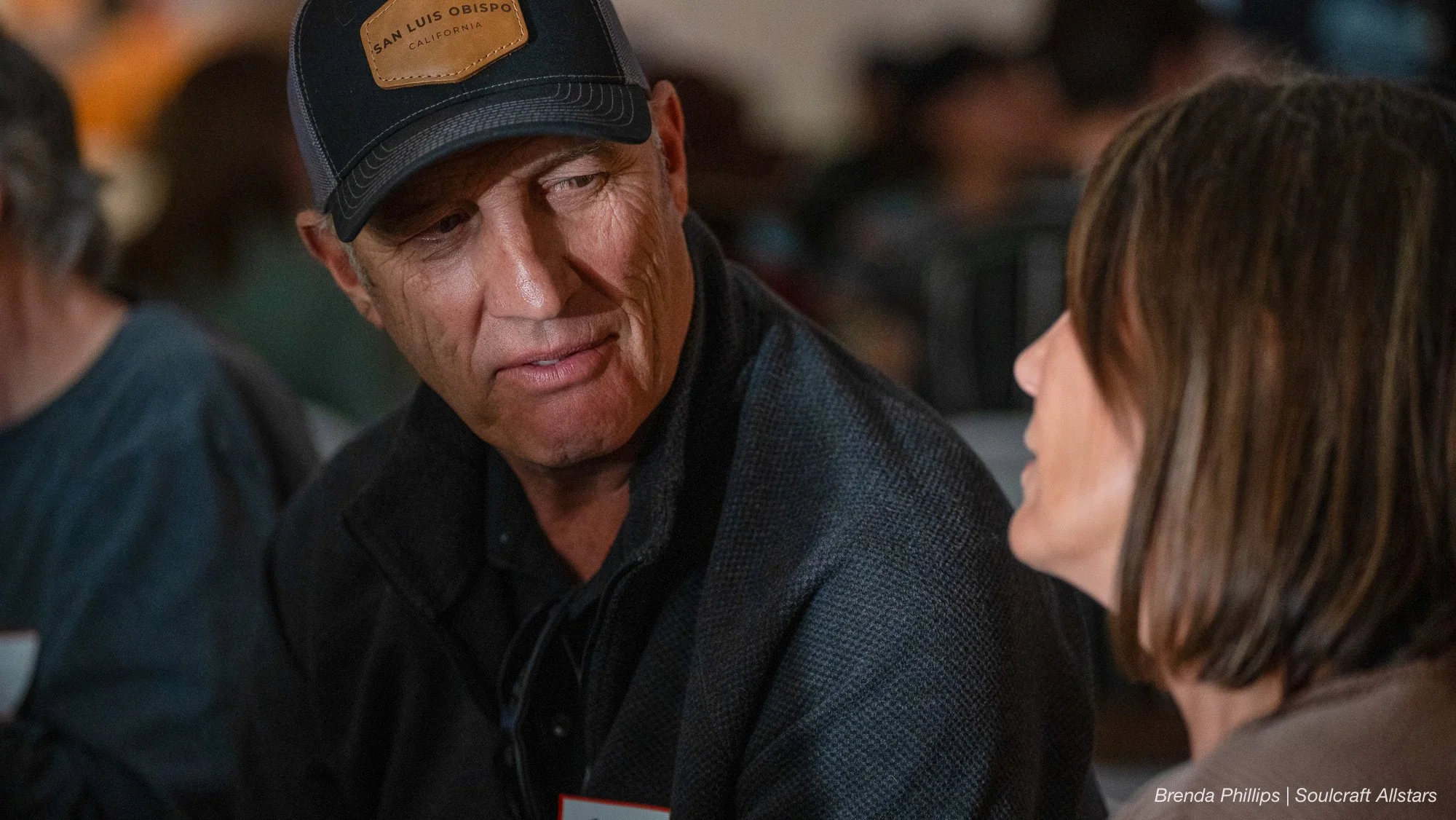
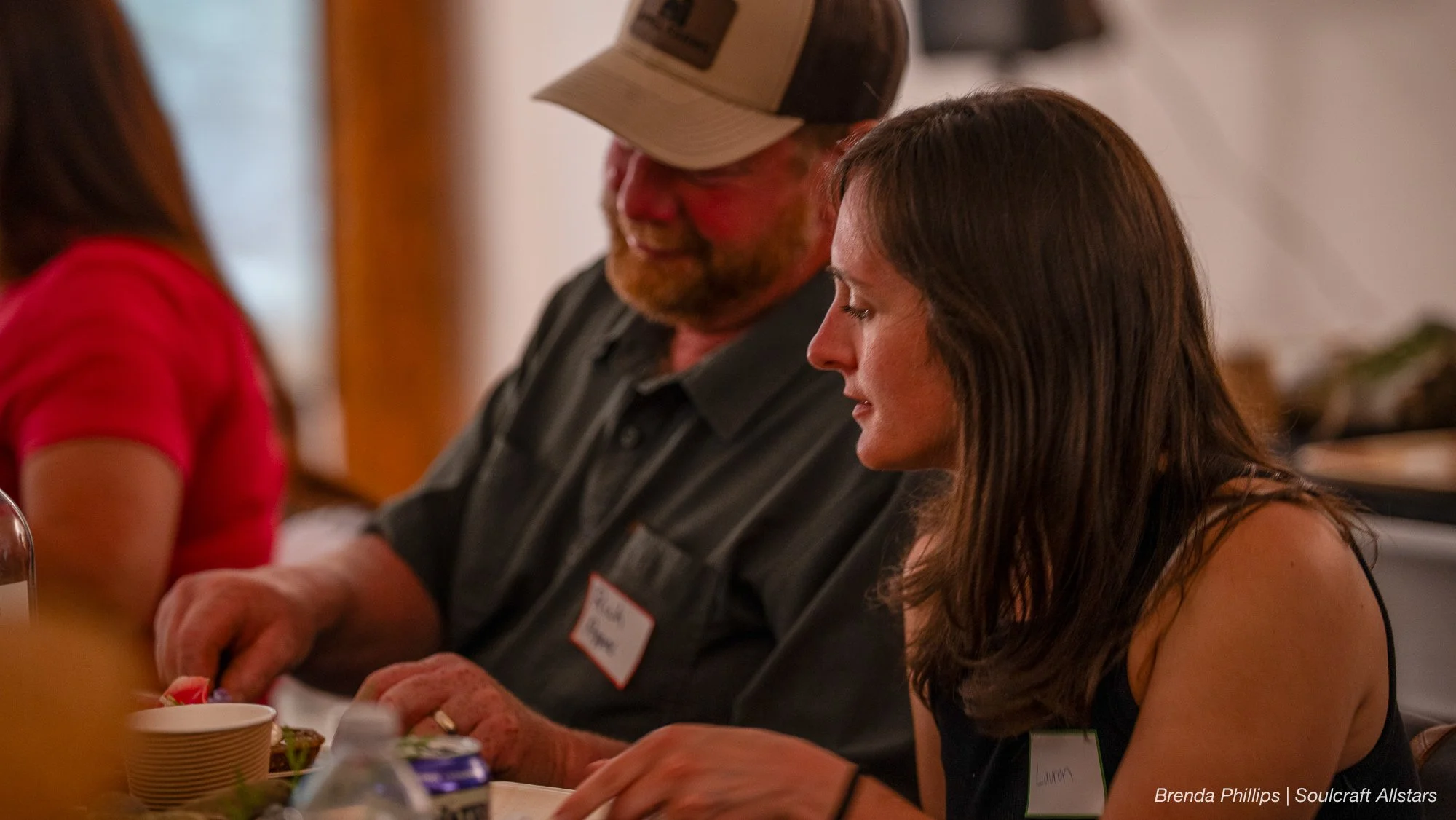
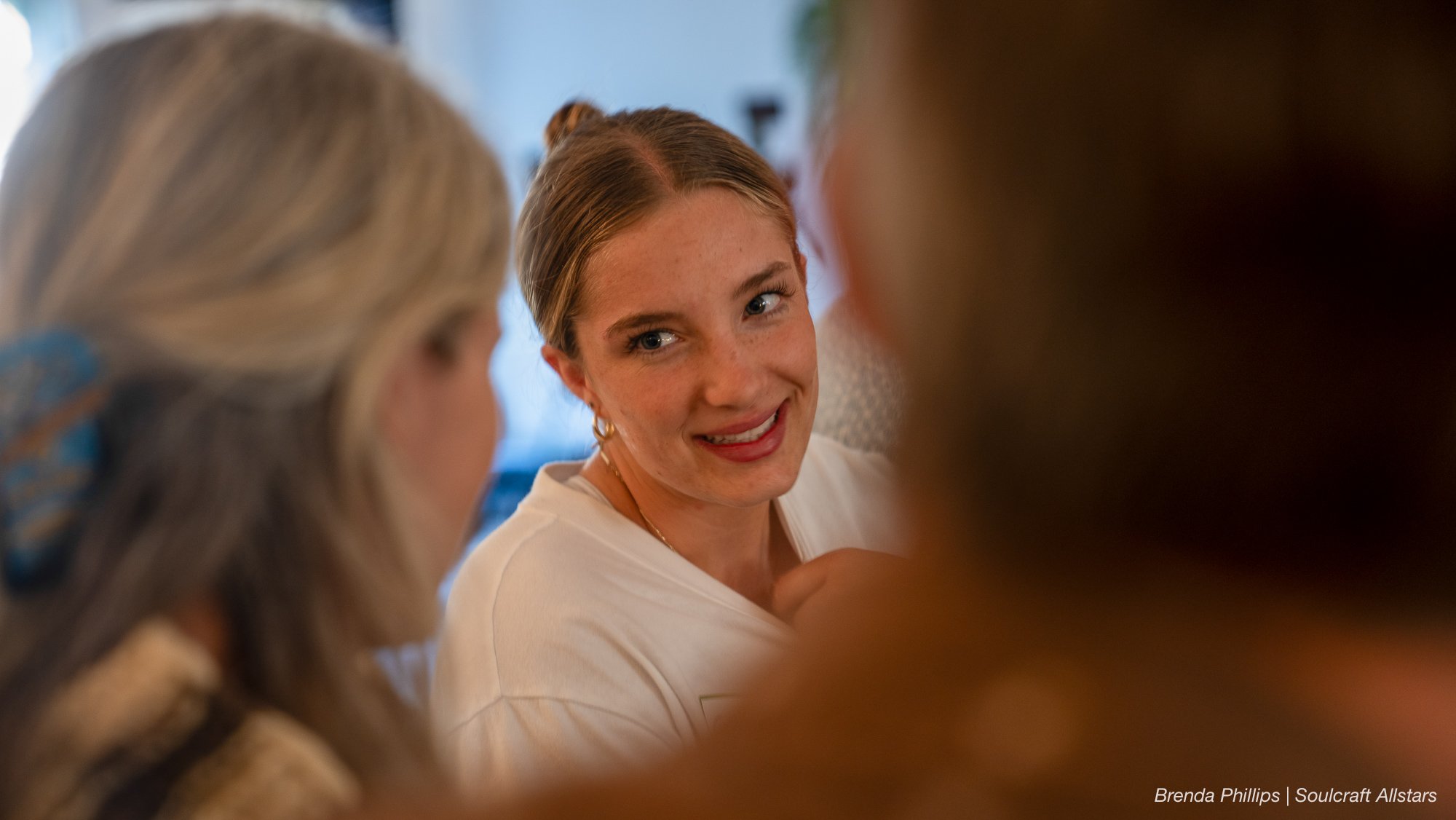
Everyone was asked to sit next to someone they didn't know. To serve their neighbor before themselves.
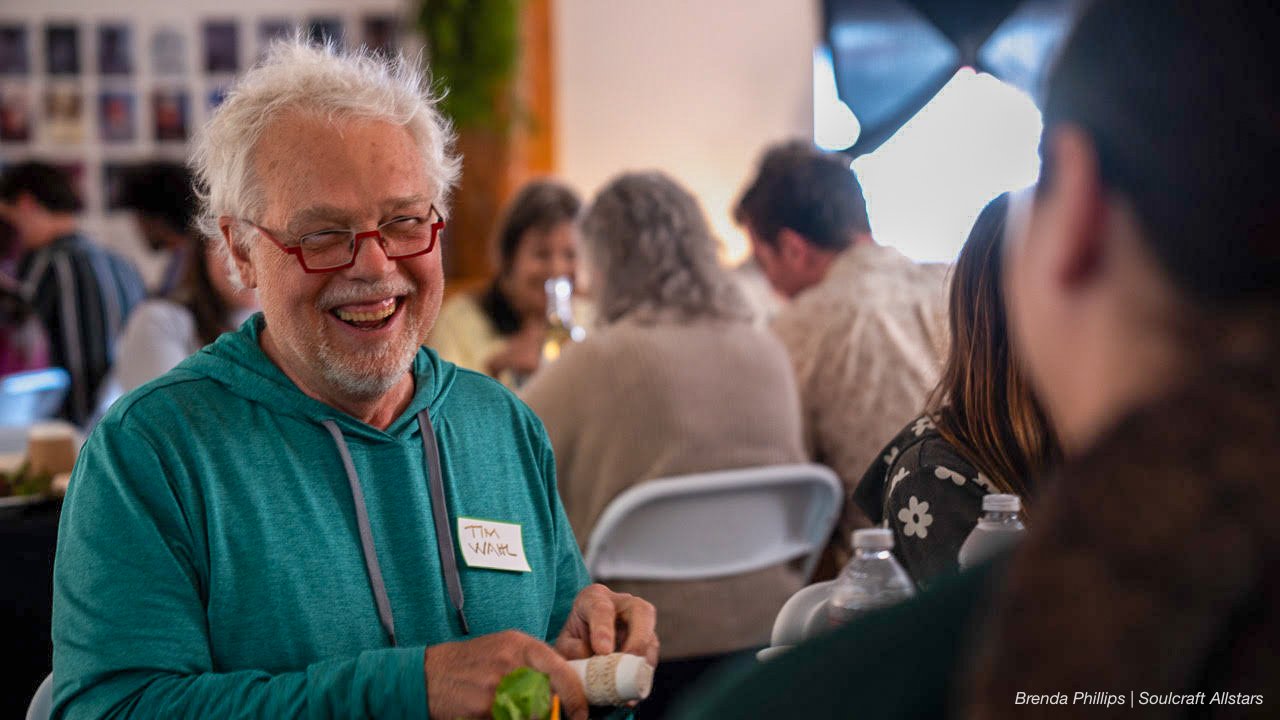
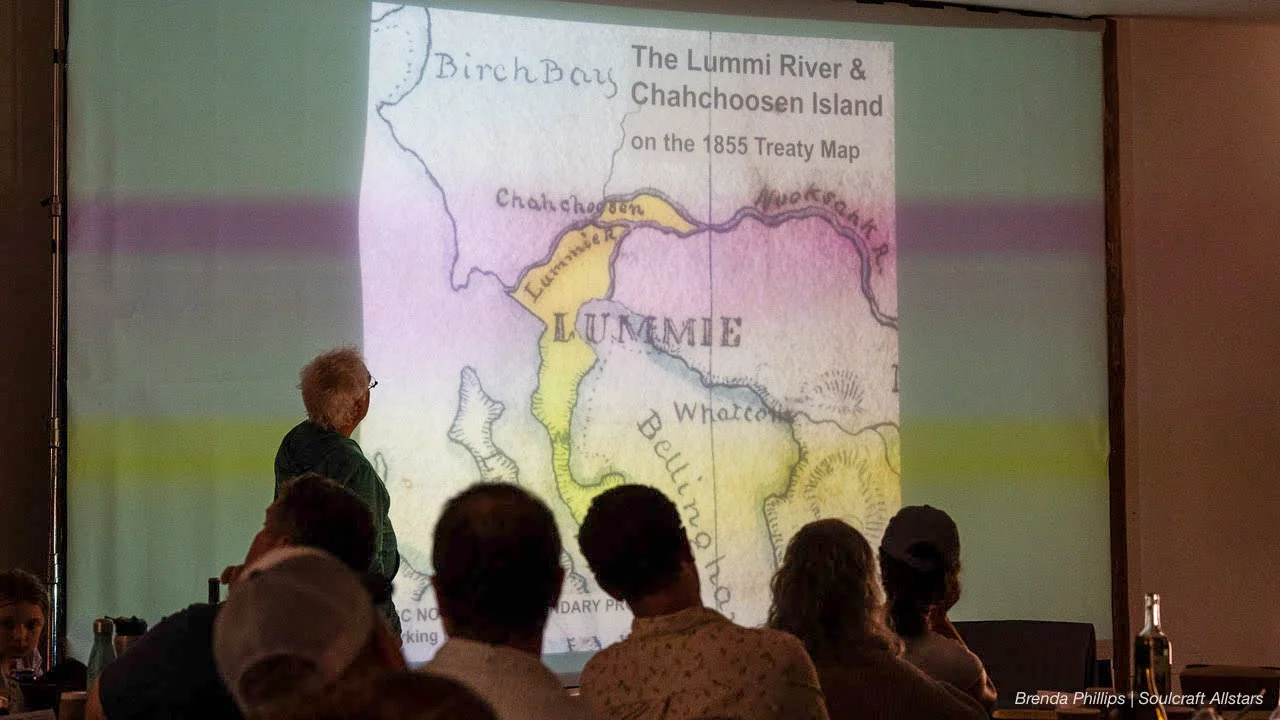
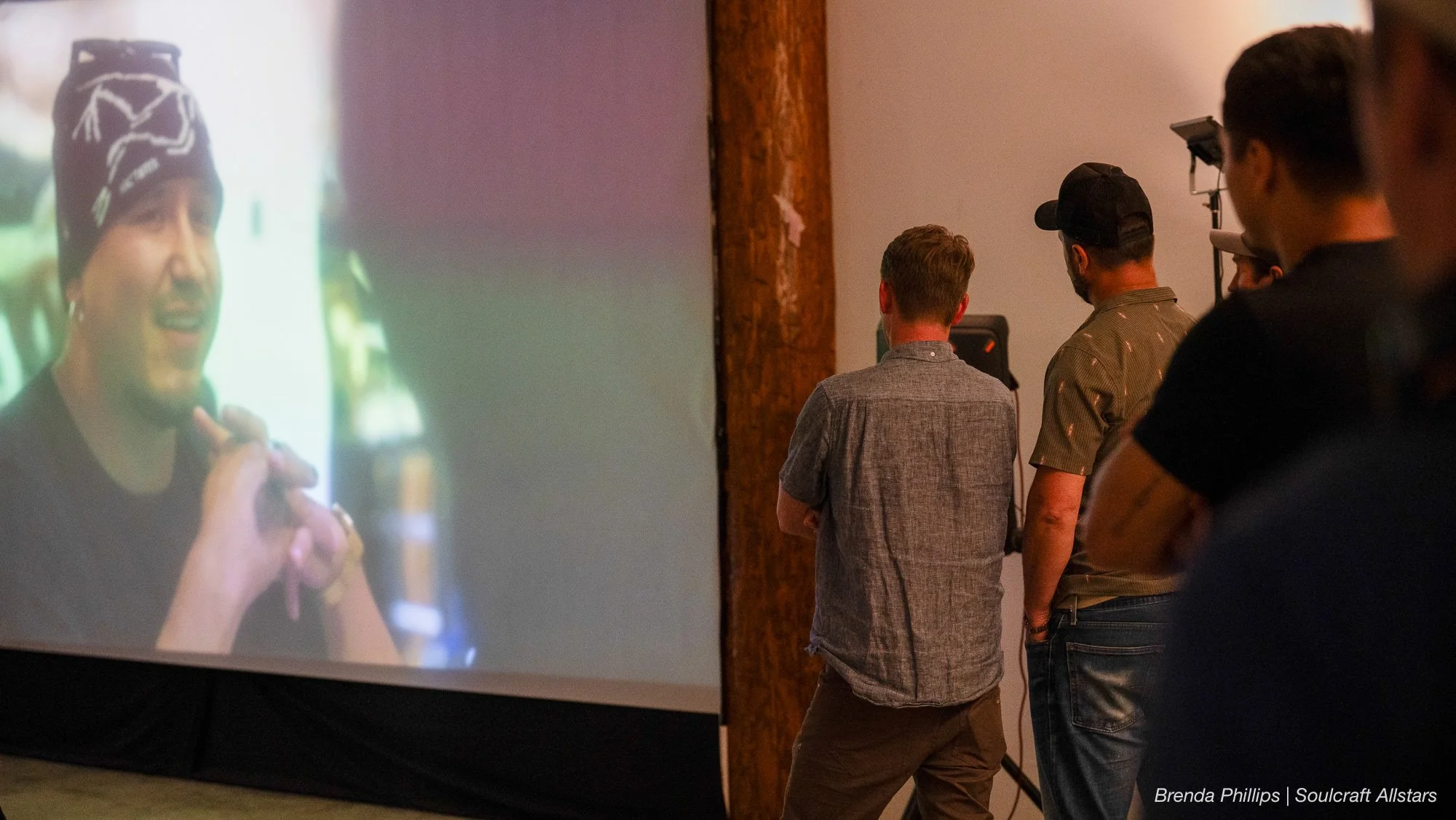
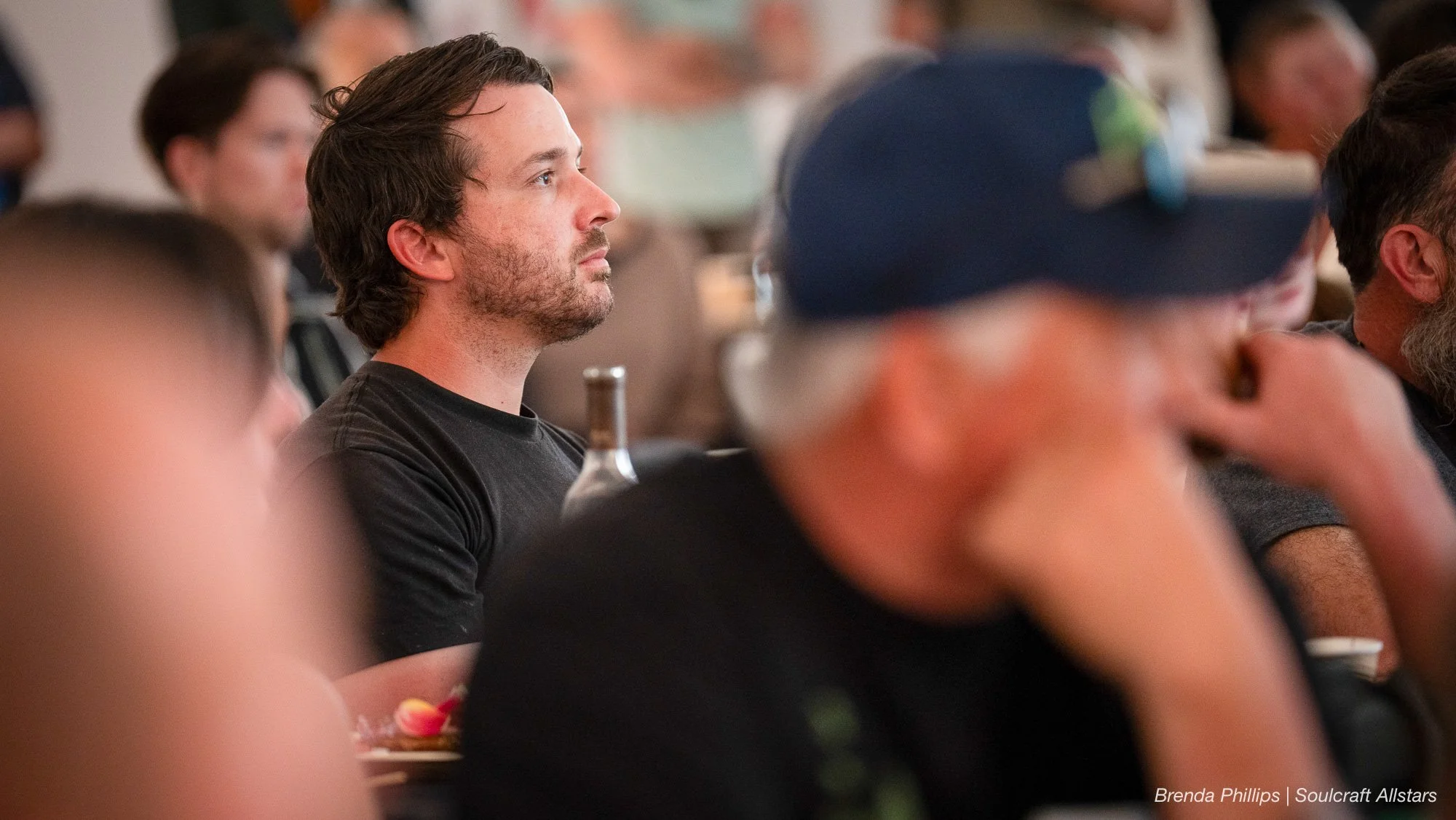
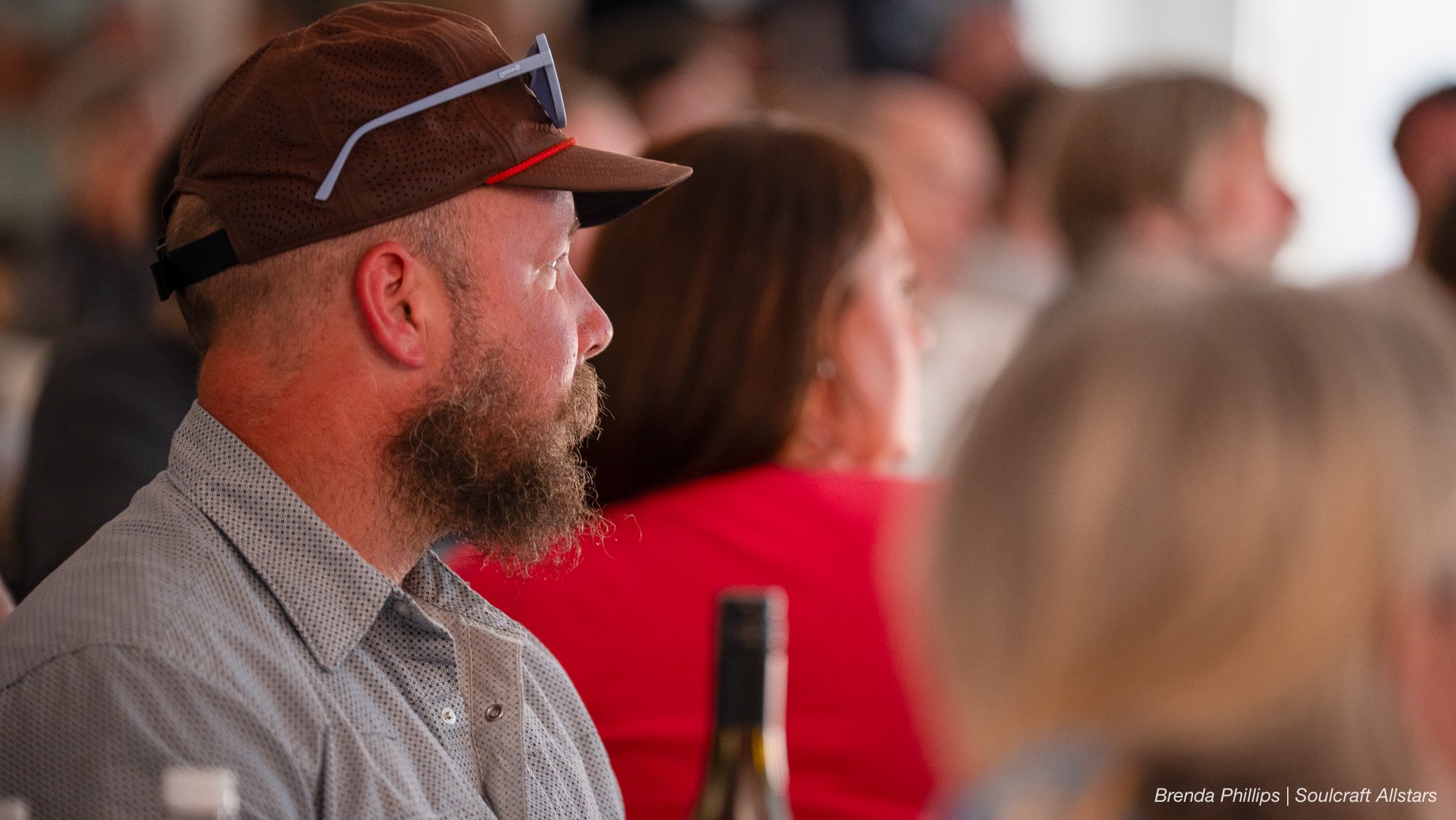
Partway through dinner, the Water Wars (how to avoid) team came forward to speak about the project and show a recap video of the previous gathering on Nooksack lands—featuring many of the same people seated around Stommish Hall. Tim Wahl shared rarely seen historical maps tracing the evolution of waterways throughout the Nooksack delta over two centuries. Jay and Free spoke, weaving together what the day had offered and what it was pointing toward.
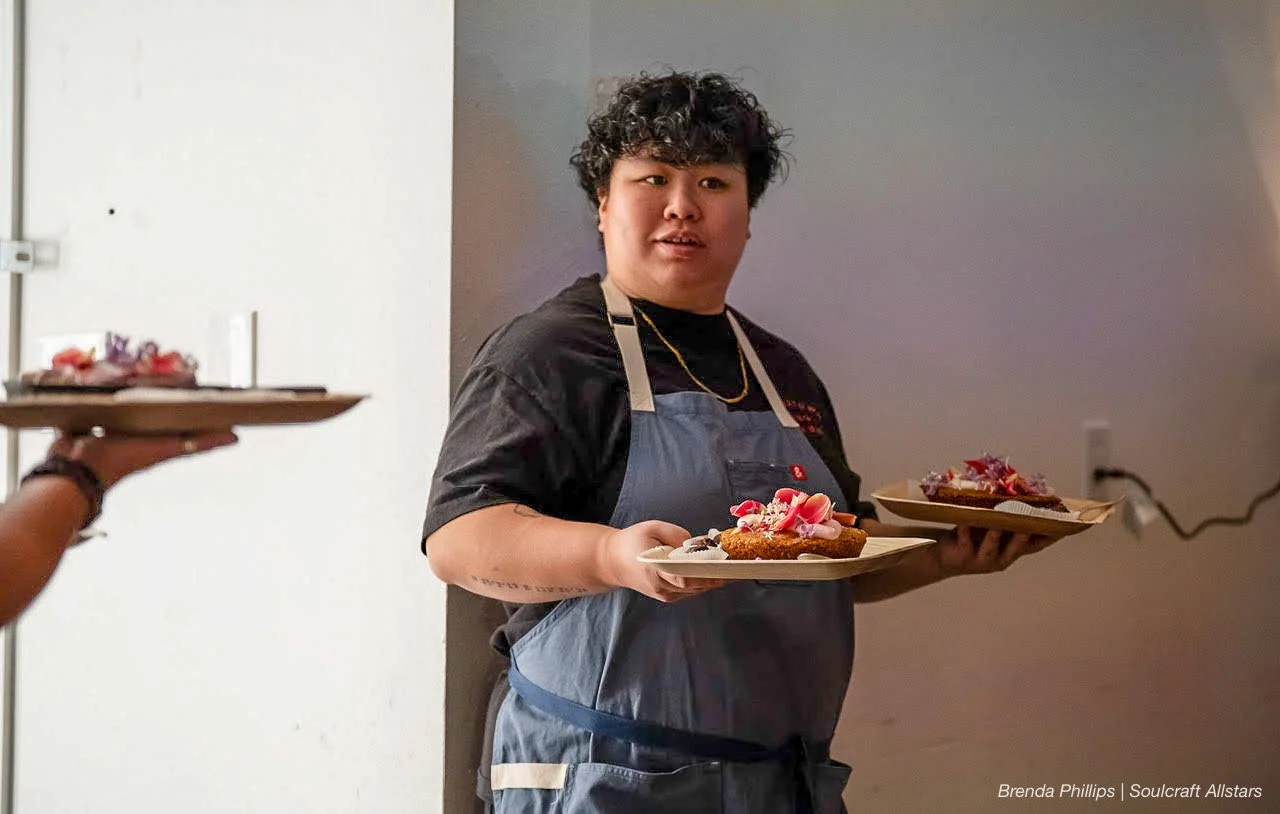
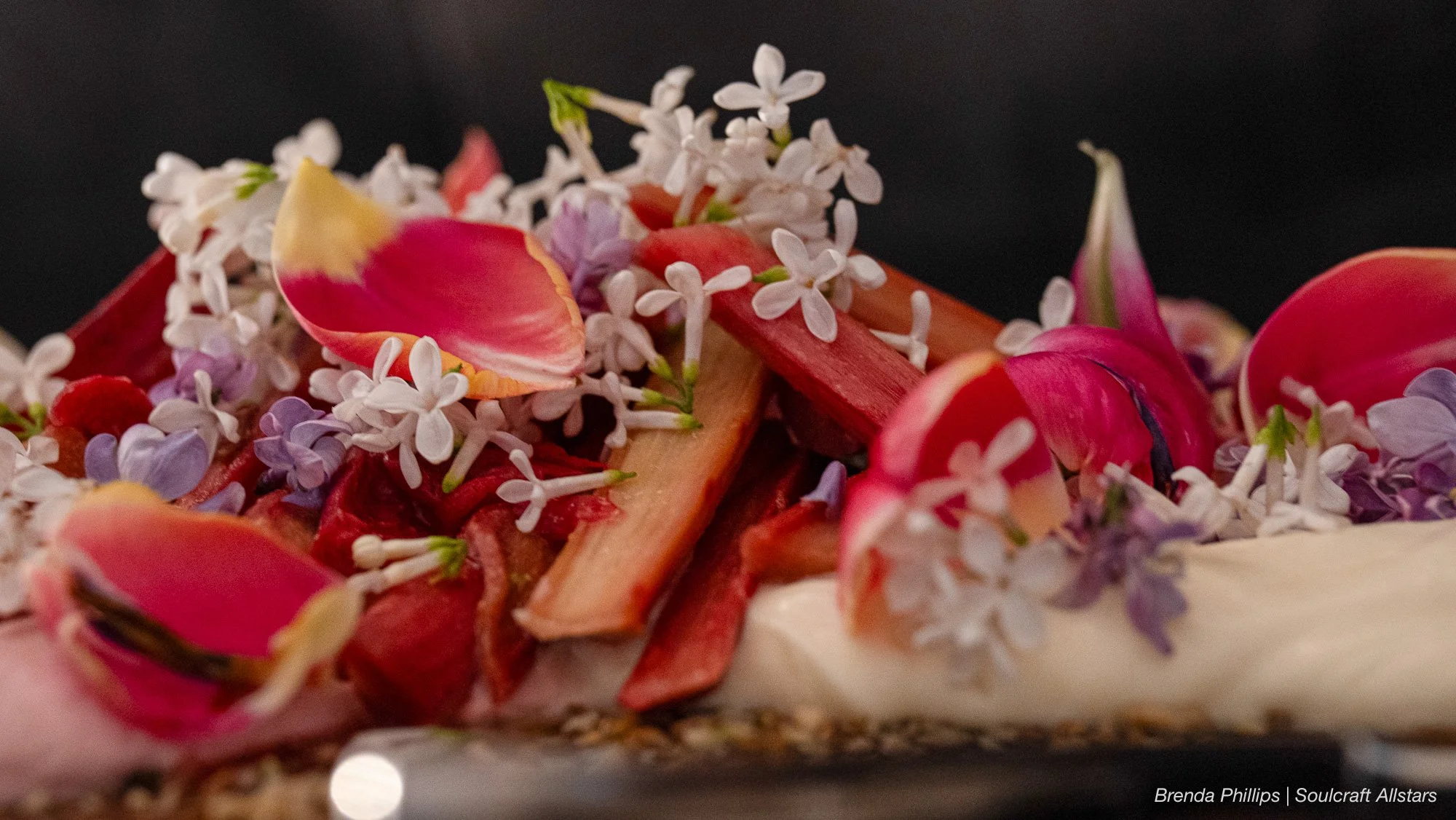
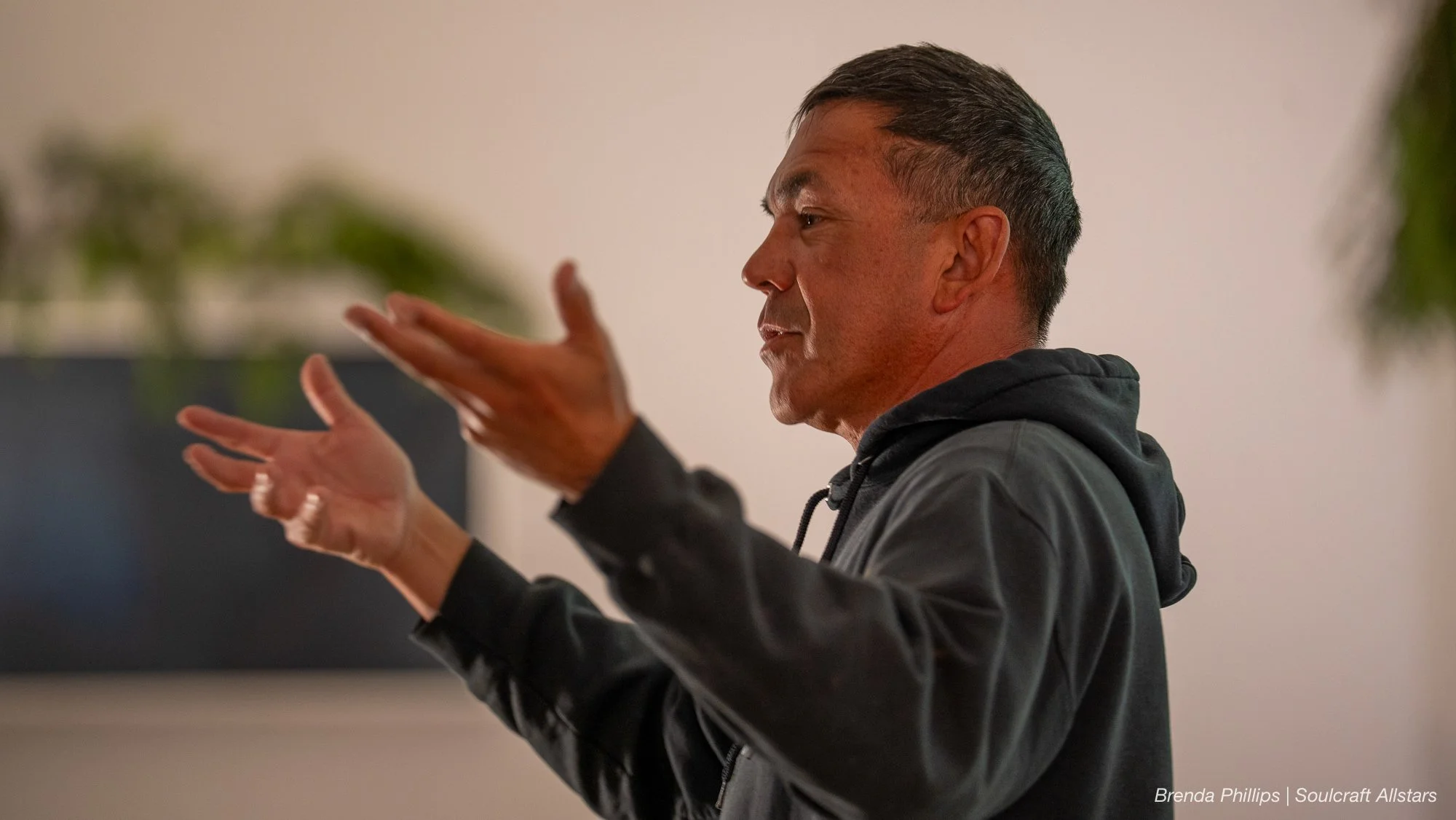
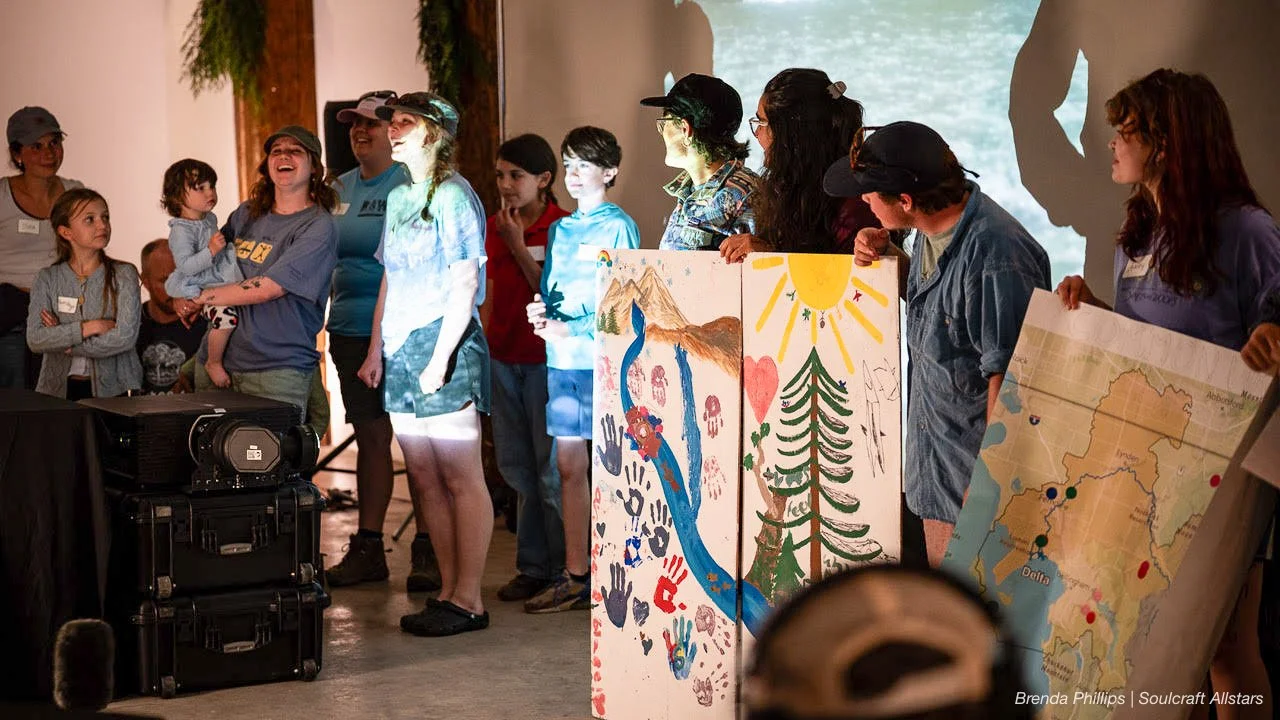
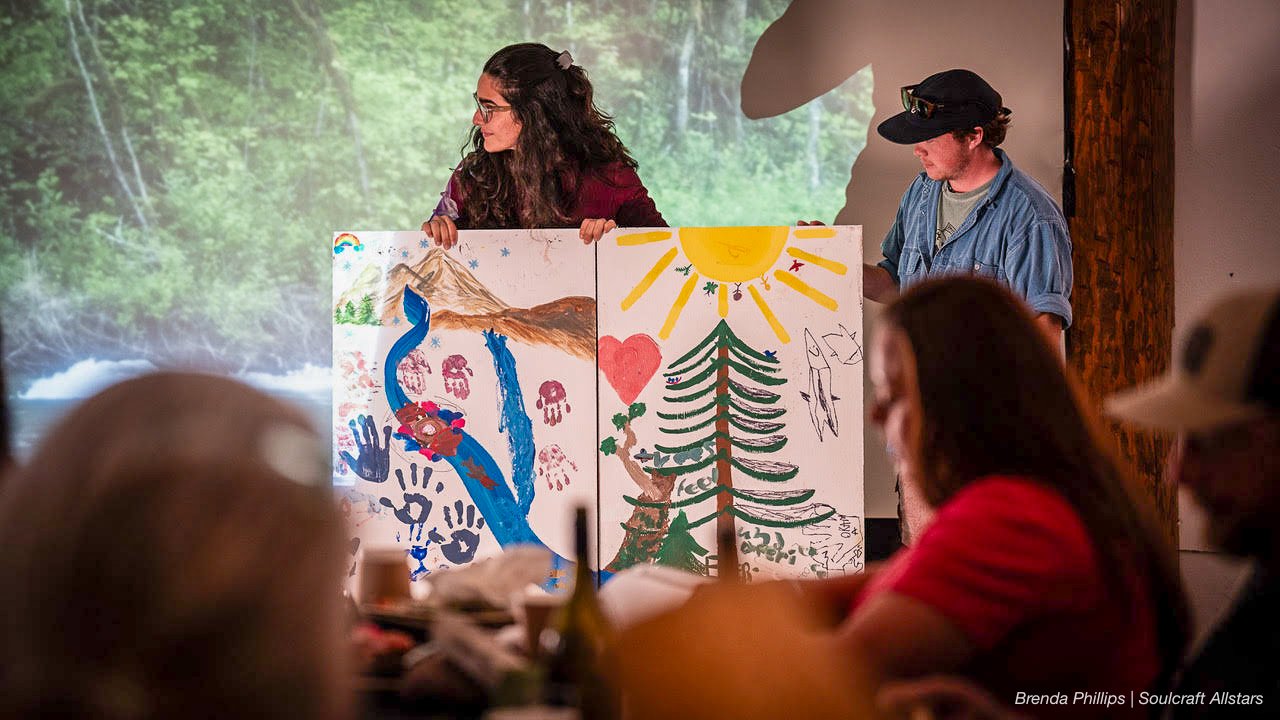
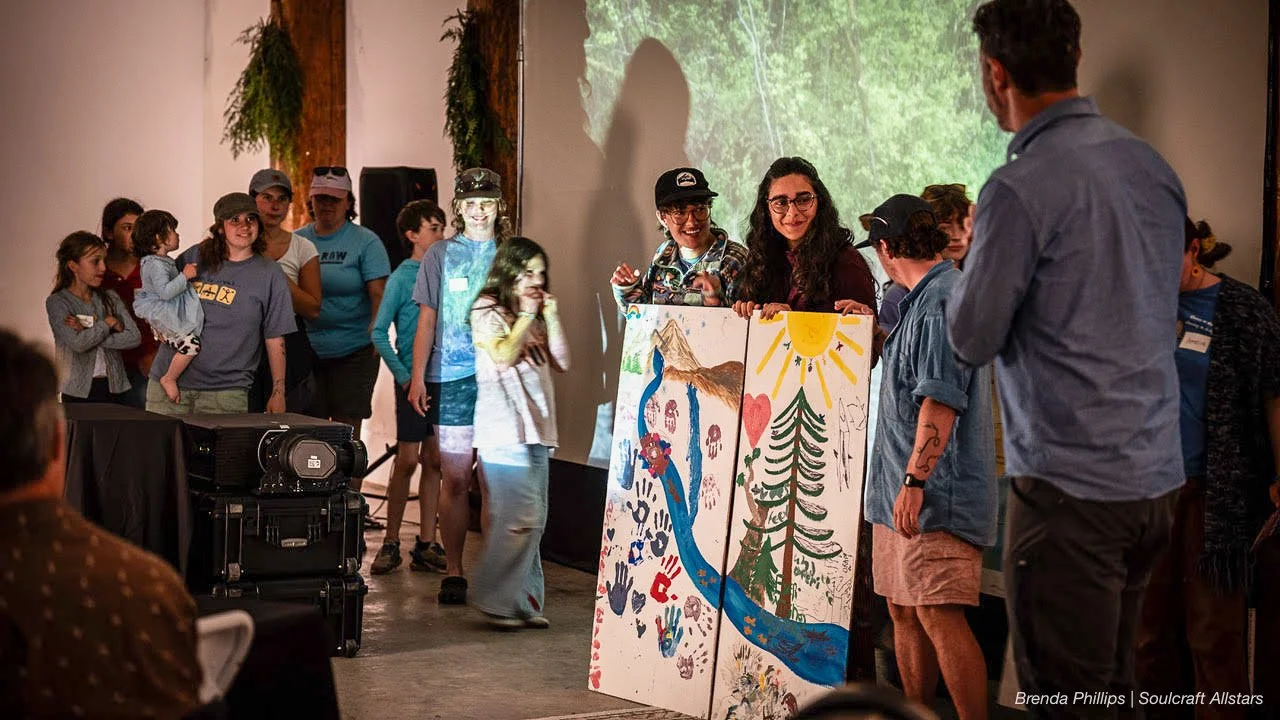
Then the children came in.
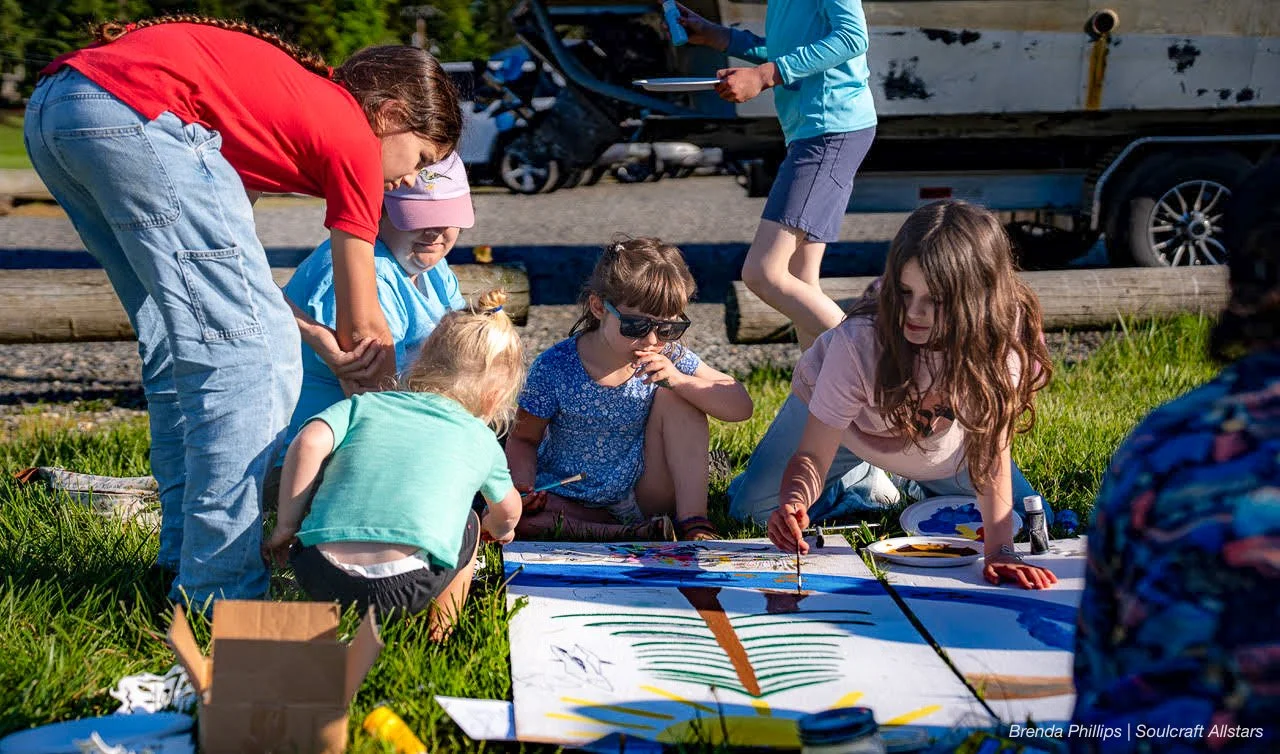
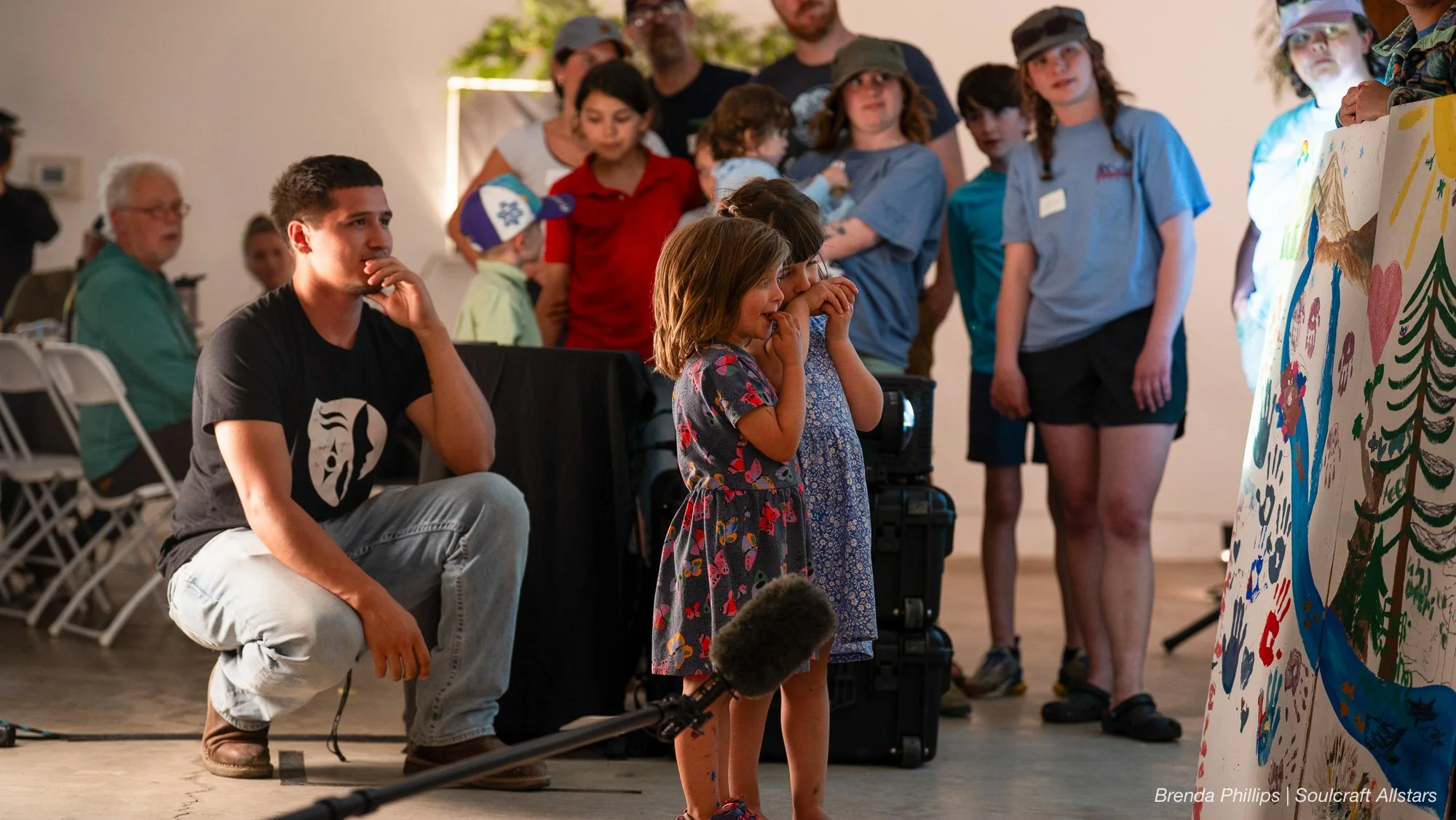
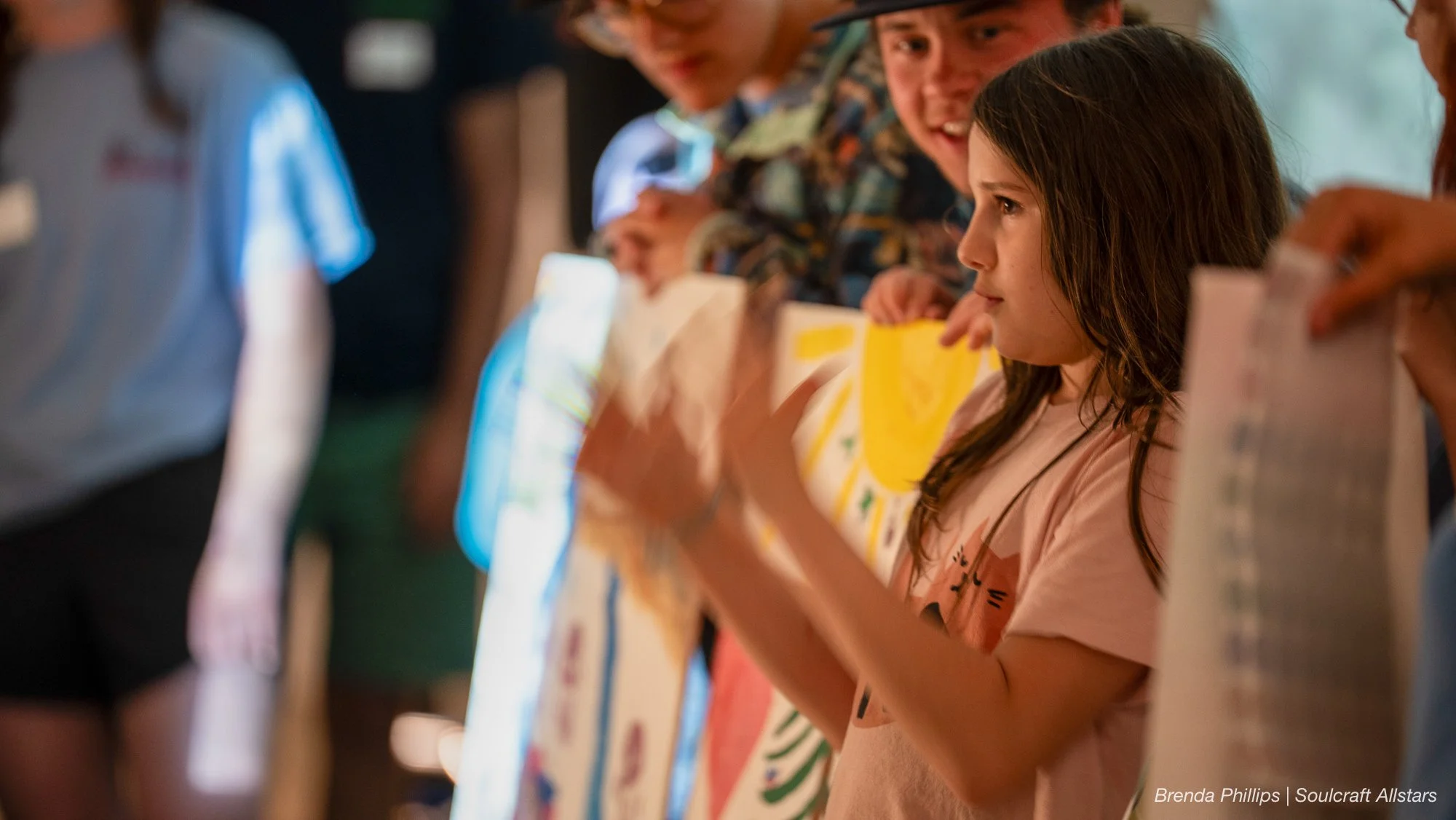
They had been outside all evening, working on a mural with the day's stories still fresh in them. They carried it inside and shared it with the room. They spoke about what they had heard, what they had made, what they were beginning to understand about the place they live. Their voices were clear and unhurried.
The phrase they had arrived at together: We all believe. We all belong.
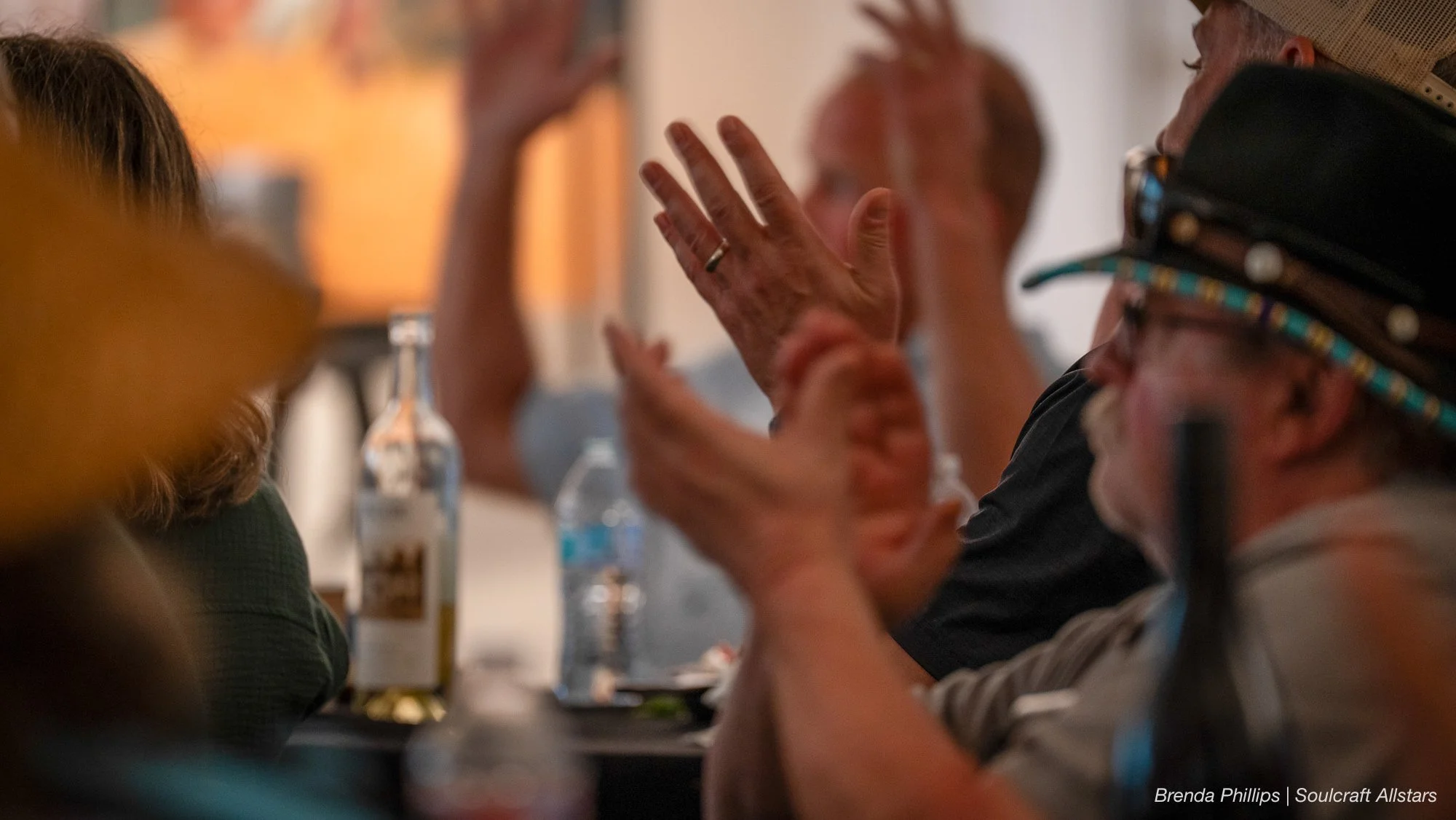
Every person in the hall said it back to them.
The Turn
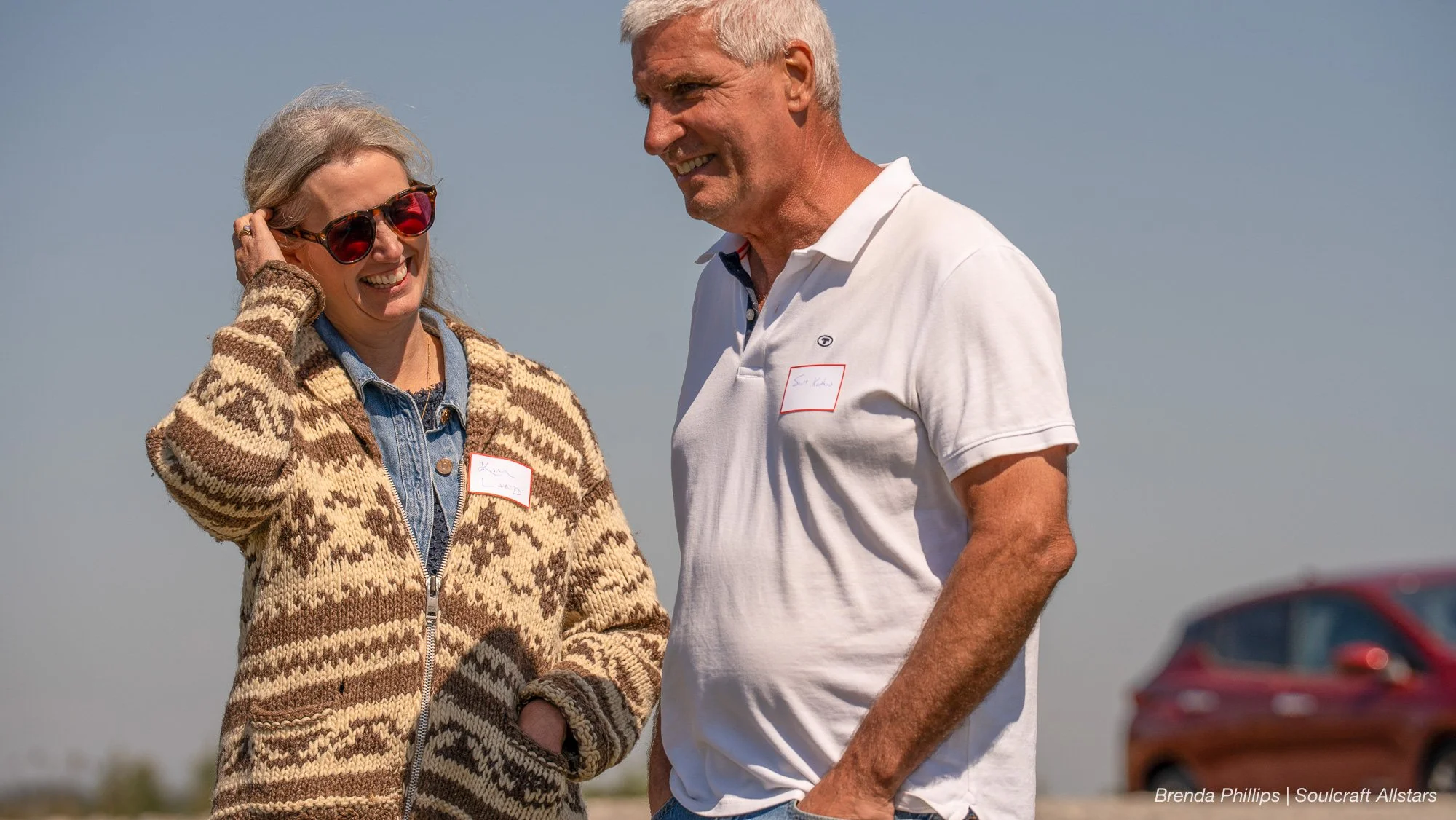
Witnesses were called forward in Lummi tradition: berry farmer Brad Rader, dairy farmer Rich Appel, Bellingham Mayor Kim Lund, Nooksack Tribe storytellers Angela Latoi and Tammy Cooper-Woodrich.
Mayor Lund said she had learned more in that one day about Lummi Nation than in all her years growing up and attending school in Whatcom County. She said it plainly, without qualification. In a room full of people who had spent decades making decisions about this place, that was not a small thing to say.
Brad spoke of responsibility and connection, and of a journey he was proud to be on alongside his daughters.
Rich shared that the day had given him a surge of hope and clarity he hadn't realized he'd been lacking.
Tammy and Angela offered gratitude, stories of cooperation across difference, and a blessing.
The signal was clear: we are ready to work together. Not in the abstract, but around real questions of water, salmon, farms, and how this place can hold all of them.
Free closed with a story of his journey to this evening.
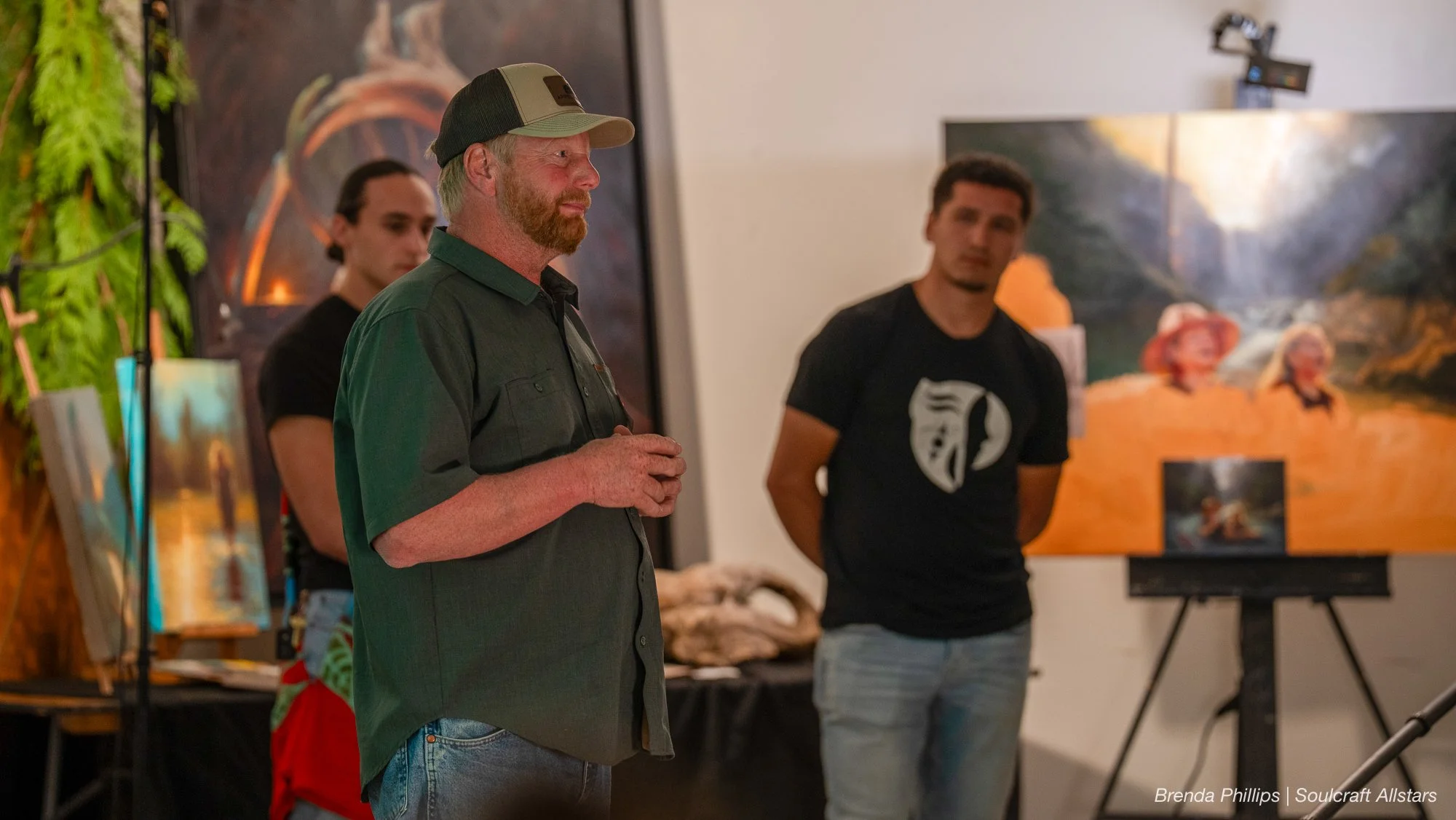
Three years ago, when Aaron first approached him about this project, he said no. He did not want to hear the farmers' stories. He had heard enough of those. But he kept showing up. He kept listening. Over time he began to see that many of these people genuinely wanted to learn.
Wanted relationship.
That didn't happen in a meeting room. It happened in kitchens and on riverbanks and in circles like this one, over years.
His heart opened. And so he invited his new brothers and sisters to Lummi Nation to witness.
And they came.
That has always been what this project was building toward. On May 2nd, it was spoken plainly, by the people who needed to say it, in the place where it needed to be said.
Because something happens when people spend time together.
There is healing. The slow, hard, necessary kind. The kind that unfurls possibility once unimaginable.
So we listened to the old stories
And we told new stories together.
And we heard these stories spoken
in the language heard by these waters
for thousands of years.
- Aaron Straight
What Comes Next
Programming ran past sunset, and golden light lingered as people stepped outside. Conversations continued for another hour, inside the hall and down to the beach. The day had built something real, and even as we write this several weeks later, people aren't ready to leave it behind.
This third Common Waters gathering closes the first chapter of Water Wars (how to avoid). Three events. Three stretches of the same watershed. The farms and floodplains. The upper river. The delta. One story told in three places over a single year.
A new chapter opens now.
The readiness spoken by farmers, tribal leaders, and civic officials on May 2nd is the foundation this project has been laying for nearly three years. What working together actually looks like is the question we are now exploring, together, in very concrete ways: which projects to pursue, which doors to knock on, which rooms we need to walk into side by side. We will bring you along as that work takes shape.
On November 19th at the Pickford Film Center, we are inviting the broader community into the full story: photography, art, an immersive experience, panel discussions, and the first episodes of our film. Save the date.
With Gratitude
Thank you to our Lummi hosts for the leadership it took to extend this invitation and the generosity with which you held the day. What happened on May 2nd was made possible first by you.
Deep thanks to the Whatcom Community Foundation and their Project Neighborly program. Project Neighborly was built on a premise that is simple and, in practice, rare: give people the resources to connect with neighbors they would not otherwise meet, and trust what becomes possible. WCF's investment was there at the very beginning of this project and has been a through-line in how it has grown. We are grateful to them and to all our donors whose generosity made the work on the ground real. Please contribute if you can; donations are tax deductible through WCF.
Thank you to every speaker and sharer: Rich Appel, Free Borsey, Raven Borsey, Darrell Hilaire, Jay Julius, Angela Latoi, Tallan Paul, Rena Priest, Brad Rader, Tim Wahl, Dana Wilson, Lisa Wilson, Tammy Cooper-Woodrich, and many more.
Thank you to Connor and Sharleen Harron, Angela Latoi, Melody Woodrich, and the WWU students who designed and led the youth program. And to the children, who had the clearest eyes in the room.
Thank you to everybody who gathered, prepared, and served food for our bellies: Terry Hillaire, Mattaio and Jessica Gillis, Carla Shaver, Jesse and Zurai Straight, Hanako Dionne, Oma, and many more.
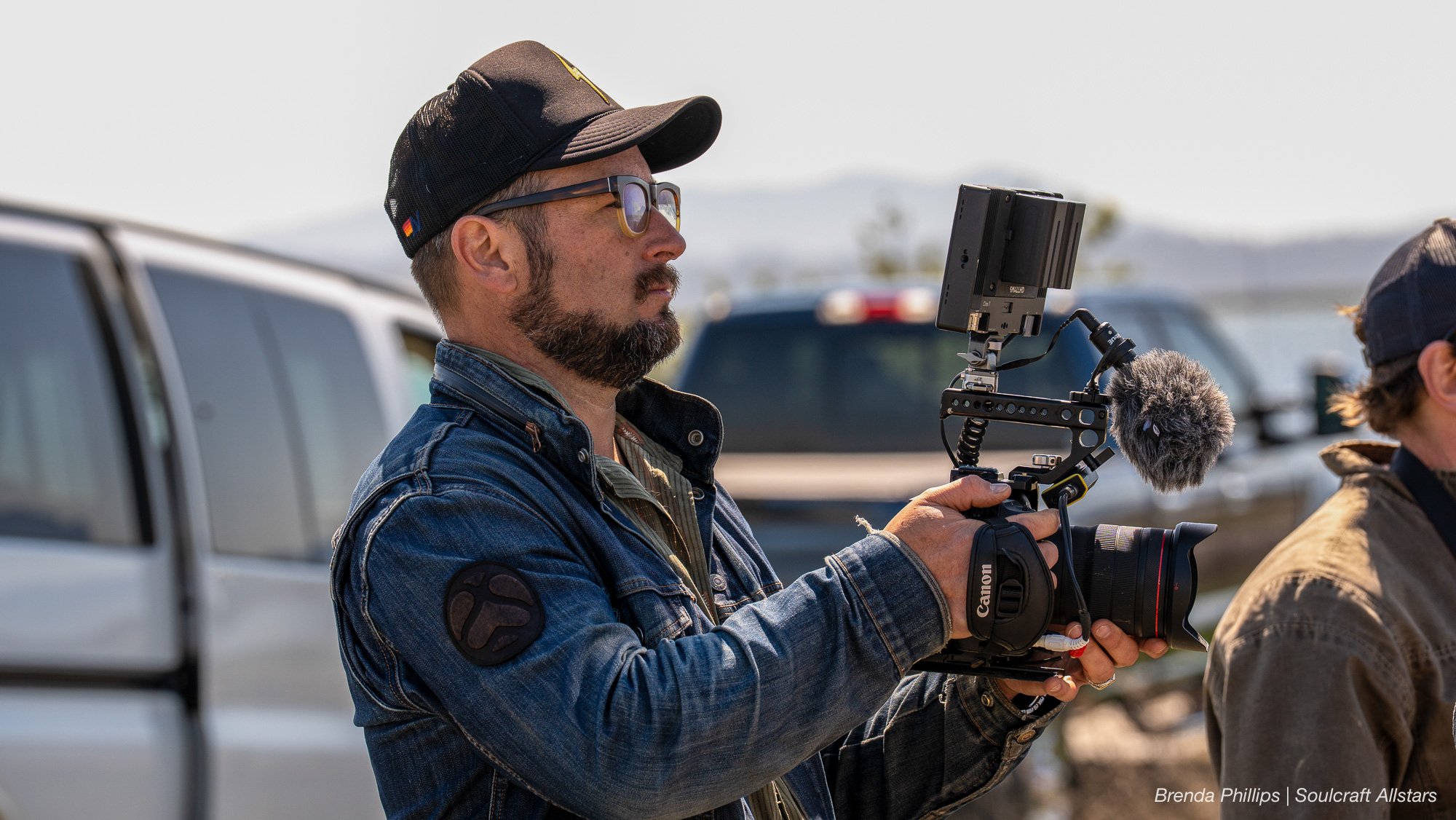
Thank you to the Soulcraft Allstars, who have amplified this work through expert documentation, and hold the creative through-line: Mark Simon, Guido Ronge, Brenda Phillips, Andy Rick, Mitch Olsen, Zurai Straight, Jamie Valenta, and Aaron Straight.
We have found few things more meaningful than this work: collaborating with friends and neighbors on something difficult, sometimes succeeding, sometimes falling short, but always moving together toward something worth reaching for. Joy. Gratitude. And now, the slow, shared work of learning how to live in right relationship with the place we call home.
Thank you to the farmers, civic leaders, environmentalists, and community members who stepped outside their comfort zones and showed up. And thank you to everyone who came ready to listen with both ears and an open heart. Because in the end, the biggest part of the work is simply this: showing up.
Respect,
Aaron Straight, Jeff Bos, Christopher Remmers, and Ethan Smith
In closing, we’ll leave you with this poem Jeff drafted as he reflected on the day…
Song of a River Delta
Hearts blown open,
stories,
poems,
connections with,
and by the river.
Children’s dream boats
filled with inspiration
from stories of
past and future generations —
prayers floating on currents
Float past wandering adults
quietly wondering
along the rivers edge
if she (the river)
would claim them.
Sweatered chickens,
story poles,
speakers,
witnesses,
calls to account and
to come together —
to ride the backs of salmon
toward a future worthy of this river
and the generations to come.
This gathering of humans,
fed with gifts of river, ocean, and land,
hearts full
from the generous welcome
onto these lands,
into this deep and living culture —
and full, too,
of the river herself,
of Cilla, of mother —
spill out onto this rocky, starlit beach
committed
to a new way forward,
together
believing in,
and belonging to,
a future worthy of it all.
- Jeffrey Duncan Bos